
San Jose Audio Tour: Innovation, Icons & Legends of Downtown
A whisper of innovation pulses beneath San Jose’s glass towers, where the past and future quietly collide. This self-guided audio tour leads you between icons like The Tech Interactive, the San Jose Museum of Art, and Adobe Inc. Unearth hidden corners and surprising stories that most city wanderers never discover. Who tried to shut down a city-wide protest that once started near these very streets? What secret artwork is said to be hiding within the museum’s walls? Why did a single decision in a 1990s Adobe boardroom shake Silicon Valley’s power structure? Move through downtown as history thrums underfoot. Feel the energy of invention, scandal, and artistic rebellion with every step. Each landmark reveals another layer, turning ordinary intersections into stages for drama and transformation. Ready to crack open San Jose’s secrets and see what lies beyond the skyline? Start the adventure now.
Tour preview
About this tour
- scheduleDuration 90–110 minsGo at your own pace
- straighten3.5 km walking routeFollow the guided path
- location_onLocationSan Jose, United States
- wifi_offWorks offlineDownload once, use anywhere
- all_inclusiveLifetime accessReplay anytime, forever
- location_onStarts at Adobe Inc.
Stops on this tour
lock_open 3 free previews · 11 unlock with purchase
To spot Adobe Inc., look for two tall, modern, glass-and-concrete towers with hundreds of windows and a red Adobe logo perched on the corner near the roof-just look up, and you…Read moreShow less
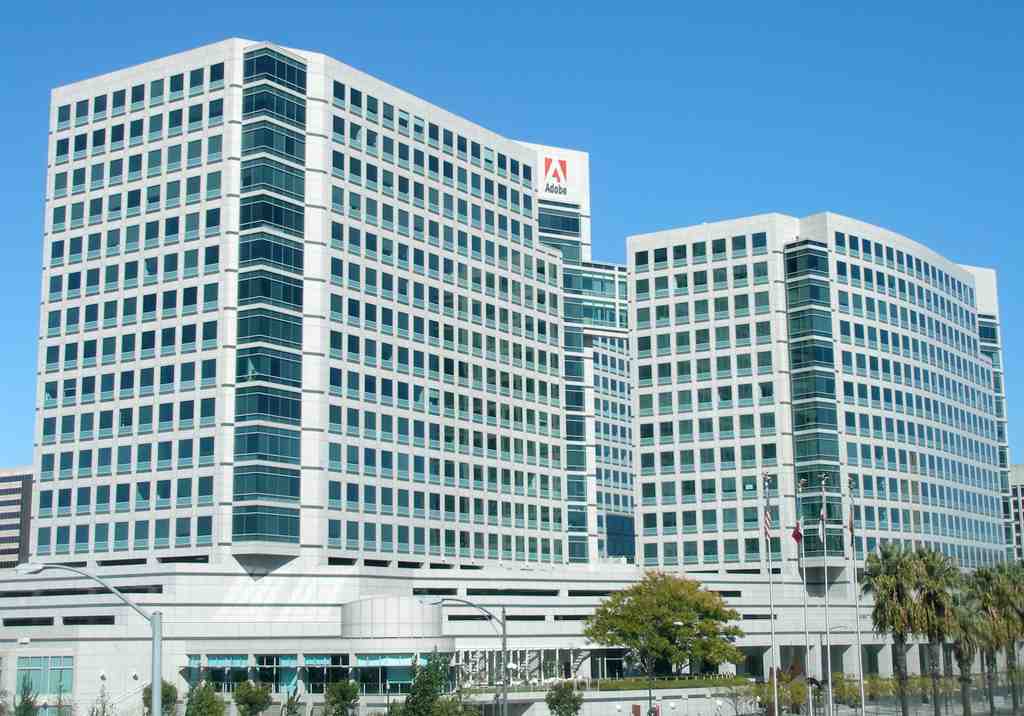
To spot Adobe Inc., look for two tall, modern, glass-and-concrete towers with hundreds of windows and a red Adobe logo perched on the corner near the roof-just look up, and you can’t miss it! Welcome to Adobe’s headquarters! Right in front of you stands the iconic home base of the creative revolution, but believe it or not, it all began in a humble garage. Picture the year: 1982, floppy disks everywhere, mullets as far as the eye can see, and two men-John Warnock and Charles Geschke-poring over handwritten code as the California sun dips behind Adobe Creek, which ran right behind Warnock’s house. That little creek lent its name, and a bit of muddy inspiration, to what would become a household name-Adobe. If you ever wondered, “Why Adobe?”-well, nothing says world-changing software like good ol’ Californian mudbrick. Now, imagine the first days. A young Steve Jobs bursts in with a $5 million dollar offer to buy the whole thing. Warnock and Geschke say no, but they compromise: Jobs gets a slice, some software…and a license that helps launch the LaserWriter printer, sparking the desktop publishing revolution. You know, the smell of fresh-printed paper-back when that was more exciting than an email notification! But Adobe didn’t stop with printers. The company spent the ‘80s and ‘90s crafting digital magic: Photoshop for your wild edits and memes, Illustrator for every slick graphic you’ve ever admired, Premiere Pro for filmmakers everywhere, and the mighty PDF, born from a project called Camelot-which is probably the closest anyone’s ever gotten to knights and chivalry in Silicon Valley. Ever zoomed in on a PDF until the text looks like Tetris blocks? Thank Adobe for making it readable at any size. Fast forward to the 2000s, and Adobe’s on a software shopping spree. Ever used Flash for games? Dreamweaver for making websites circa “MySpace is king?” Or maybe sneaked a session with Audition if you wanted to sound like a podcast superstar? Adobe picked up Macromedia, folded in brilliant tools, and kept rolling. They bundled everything into the Creative Suite, then wrapped it all up again in Creative Cloud, changing the way artists, designers, and dreamers work all over the planet. Suddenly, you could rent your creative powers by the month-like Netflix, but for imagination! Of course, every fairy tale has its drama. Hackers tried to steal the magic-okay, the software and some seriously sensitive customer info. Customers got grumpy about high prices, especially outside the U.S. And in the 2020s, Adobe faced criticism over its subscription model, those infamous early termination fees, and a lawsuit from the Federal Trade Commission. If you ever rage-quit Photoshop over a surprise bill, you’re definitely not alone! Still, Adobe’s always evolving. From AI-powered features to an ongoing promise they won’t use customer data for training their AI models, the company keeps pushing ahead, growing to over 26,000 employees worldwide, from San Jose to India. They’ve faced their share of bumps with canceled mergers (like the Figma deal), legal skirmishes, and customers who demand more transparency, but their legacy is everywhere: in every edited selfie, every blockbuster film, every glossy magazine cover. Standing here beneath the shining windows, across from the palm trees and city noise, you can almost imagine the digital gears whirring inside, millions of creative projects coming to life every second. Not bad for something that started in a garage by a muddy creek, right? Now, ready to continue our digital adventure?
Open dedicated page →

Show 11 more stopsShow fewer stopsexpand_moreexpand_less
To spot the Signia by Hilton San Jose, look for a tall, light-colored 22-story tower with a grand, angular roof and rows of windows rising above the trees and fountains right in…Read moreShow less
To spot the Signia by Hilton San Jose, look for a tall, light-colored 22-story tower with a grand, angular roof and rows of windows rising above the trees and fountains right in front of you. Standing here, you’re gazing up at a hotel that’s lived at least three lives-maybe four, if you count the fact that some days it probably wishes it could go on a vacation itself! The Signia by Hilton San Jose wasn’t always a Hilton. When it first opened its shiny postmodern doors in 1987, it was known as the Fairmont San Jose, part of a big dream to put some extra sparkle into downtown San Jose. You can’t miss its flair: it’s got 22 stories, a dramatic rooftop, and enough meeting space to host everything from championship chess tournaments to chicken dance contests at wedding receptions. But here’s where things get deep-and a little bit mysterious. The ground beneath your feet was once Market Street Chinatown, a thriving community from the 1860s until a terrible fire destroyed it in 1887. The flames weren’t an accident; it was arson, a dark moment that changed the city forever. A plaque out front remembers this history, making this spot a place that whispers stories as much as it glitters at night. When construction crews broke ground to build the hotel, they rushed to salvage artifacts-pottery, dishes, memories-before the new era took over. By the late ’80s, this spot became the glamorous Fairmont, boasting a billiards-table-flat rooftop pool with a custom windscreen-because even in Silicon Valley, they don’t want tech execs getting blown away while sunbathing. Fast-forward to the 2000s, the hotel added a curvy new tower. The developers actually moved the historic Hotel Montgomery 186 feet just to make space, rolling it down the street like the world's slowest parade float until it found its next act as a Four Points by Sheraton. Life hasn’t always been a five-star experience for the hotel. In 2021, after the pandemic left its ballrooms empty and its beds unmade, the hotel closed and changed owners. A year later, it bounced back as the Signia by Hilton, and in a modern twist, gave up its south tower to become Spartan Village on the Paseo: a dorm for San Jose State University students. In 2024, hotel workers flexed their own muscle, striking for better contracts before earning a big win by Halloween. This building’s seen blockbuster galas, late-night cramming sessions, and the kind of survival plot twists that would make it the hero in any good Netflix series. Not bad for a hotel, right?
Open dedicated page →To spot the Circle of Palms Plaza, look for a perfect ring of tall, slender palm trees gathered in a circle like a crowd of gossiping friends, right between the towering Fairmont…Read moreShow less
To spot the Circle of Palms Plaza, look for a perfect ring of tall, slender palm trees gathered in a circle like a crowd of gossiping friends, right between the towering Fairmont San Jose Hotel, the KQED building, and the San Jose Museum of Art. Now, picture this: you’re standing where California’s drama-packed, gold-rush government story began! In the heart of this palm-ringed plaza lies the state seal, marking the exact site where California’s very first capitol once stood. Flash back almost two centuries-imagine dust swirling, sun blazing, and a bustling town where hopeful dreamers, politicians, and adventurers gathered. In 1850, San Jose, already the oldest civilian settlement since 1777, became the state capital. The first lawmakers didn’t meet in a grand dome-they gathered upstairs in a creaky two-story adobe hotel, which probably leaked when it rained and may have squeaked with every historic vote. California’s laws, arguments, and dreams all took shape right here, powered by determination (and probably some very strong coffee). But wait-this plaza has more than political chatter in its soil. From 1866 to 1887, it was home to Market Street Chinatown, the beating heart of Chinese American life in Santa Clara Valley, until fire and prejudice wiped it out in an act of arson. Today, the circle remembers all those lives and stories with every footstep. Around the seal, you’ll see words etched in concrete: real quotes from the 1849 state constitutional convention, where San Jose was chosen as the seat of government. Each winter, the ring of palms transforms into a glimmering ice rink, where laughter and skates echo where lawmakers and pioneers once hurried. And if you squint, you might just catch a stray gold prospector or legislator sliding past you! Eager to learn more about the description, public activities or the photo gallery? Simply drop your inquiries in the chat section and I'll provide the details you need.
Open dedicated page →In front of you, you’ll spot a striking blend of old and new: a Romanesque sandstone building with a clock tower on the left and a bold, modern façade on the right that proudly…Read moreShow less
In front of you, you’ll spot a striking blend of old and new: a Romanesque sandstone building with a clock tower on the left and a bold, modern façade on the right that proudly displays a giant red sign reading "SAN JOSE MUSEUM OF ART" behind a row of tall palm trees. Let’s rewind to 1892-picture the streets echoing with the clatter of horseshoes and the gentle hum of early San Jose. Right here, workers quarried local sandstone from Greystone Quarry and stacked it into the sturdy walls you see, creating the original post office in that distinct Richardsonian Romanesque style. Imagine that clock tower looming above, keeping everyone’s mail-and gossip-on schedule. But this grand building has worn many hats over the years. After the 1906 earthquake, its steeple and clock tower were battered, but the walls stood strong, refusing to retire early. For a stretch from the late 1930s to the late 1960s, it watched over bookworms as San Jose’s library-so it’s never been a stranger to people hungry for ideas. But the real plot twist? By the late 1960s, demolition cranes were sharpening their blades, ready to flatten this local landmark. It almost became a parking lot! But then, a bold group of artists and community heroes (maybe with capes, maybe not) stepped in to save it. Their mission: transform it from an old post office into a vibrant space for art. That’s how the Civic Art Gallery was born, soon evolving into the San Jose Museum of Art in 1974. The SJMA continued to grow and attract attention. By 1991, the museum got a snazzy new wing-a modern space for ever-more ambitious exhibitions. Architects Skidmore, Owings & Merrill made sure the addition could keep up with the creativity inside. Over the decades, the museum kept adapting. When the historic wing needed a seismic upgrade in the 1990s, the doors closed for almost three years. But when they swung back open, the building was ready for earthquakes-and a new wave of art fans. Nowadays, the museum carefully curates a wild and wonderful permanent collection-over 2,600 works. Sculptures, paintings, digital installations, photographs, and more from West Coast and Pacific Rim artists fill the galleries. It’s the largest employer of art education programs in Santa Clara County, guiding more than 45,000 kids each year. Imagine the buzz inside after a school field trip-sometimes you wonder what’s more chaotic, contemporary art or a bus full of students. The collection is no sleepy old attic, either. In recent years, SJMA has snagged future-forward works from artists like Ian Cheng, Hito Steyerl, and the renowned Chinese-born Hung Liu. In 2018, they added sculptures by Alexander Calder and Louise Nevelson, along with pieces from Palestinian artist Mona Hatoum and several American visionaries. Diversity is more than a buzzword here-exhibition information comes in English, Spanish, Tagalog, and Vietnamese, reflecting the colorful tapestry of San Jose’s community. Exhibitions have ranged from the hypnotic light art of Leo Villareal to a large-scale show by Dinh Q. Lê, a Vietnamese photographer. And talk about celebrating local heroes! The museum commissioned the mural “Sophie Holding the World Together,” by El Mac and The Propeller Group, depicting youth activist Sophie Cruz. It’s just one of many projects that’s won them a trophy case of awards, including accolades from the American Alliance of Museums and even a pride-filled “Giant Artichoke video”-never say this place can’t have a little fun. So, whether you’re wandering in for a quick culture fix or ready to let your jaw drop at some of the Pacific Rim’s boldest voices, remember that the San Jose Museum of Art is built on rescue missions, resilience, and a healthy appetite for the unexpected. If art had a secret lair, this might just be it-and you’ve found the entrance. To expand your understanding of the about, architecture or the collections, feel free to engage with me in the chat section below.
Open dedicated page →Alright, take a look right in front of you for a grand white building with tall twin towers, large columns, and a golden cross on top-if you see that, you’ve found the Cathedral…Read moreShow less
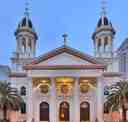
Alright, take a look right in front of you for a grand white building with tall twin towers, large columns, and a golden cross on top-if you see that, you’ve found the Cathedral Basilica of St. Joseph! Now, let’s whisk you back in time-picture yourself standing here over 200 years ago, on old adobe ground, where the very first non-mission parish in California rose up in 1803 for Spanish settlers. Back then, the earth would shake now and then-sometimes a little too much! In fact, earthquakes in 1818 and 1822 rattled the original church so badly that rebuilding became a local hobby. When you look at this basilica, think of all the drama and determination packed into its walls. After the first church got battered by quakes, a generous local named Antonio Suñol jumped in, donating land in 1835 for a bigger, better church. He and his brother-in-law, Antonio María Pico-imagine these two wrangling builders and bricks for eight long years-finally opened the second church in 1846. But luck was not on their side: the Hayward earthquake of 1868 came through like a bull in a china shop, leaving another mess. Not ones to give up, the townspeople started church number three in 1869. Yet fate must’ve had a sense of humor, because in 1875, a fire blazed through and reduced it to ashes. The locals set up a temporary spot nearby while they built the fifth-and current-version you see now, finished up in the 1880s. Big celebrations must’ve rung out when that final dome was completed! Inside, you’ll find stained glass windows telling stories from saints and the Bible, and an Odell pipe organ-imagine forty thousand parts and a sound that could raise the roof! This basilica has not only survived lightning, quakes, and fire; in 1981, it began a big restoration, becoming the heart of the Catholic community here. By 1997, it was made a minor basilica, so you’re standing at a true San Jose survivor. Imagine the echo of prayers and the weight of history, and give a smile to St. Joseph, the city’s namesake and quiet hero in these stories!
Open dedicated page →Looking straight ahead, you’ll see a striking, modern cube of a building wrapped in shimmering gold-tinted glass right at the corner-just follow the sunlight bouncing off those…Read moreShow less
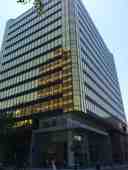
Looking straight ahead, you’ll see a striking, modern cube of a building wrapped in shimmering gold-tinted glass right at the corner-just follow the sunlight bouncing off those windows and you’ve found Tower 55. Now, imagine it’s 1985 and this sparkling golden tower just burst onto the San Jose skyline, ruffling a few feathers with its dazzling, mirror-like façade-locals jokingly called it the “Gold Building,” but let’s be honest, some probably wished they’d brought sunglasses. Its futuristic glow didn’t immediately charm everyone, though-it was so bright it could practically roast marshmallows by reflection! Early on, the ambitious plan to fill it with shops and offices flopped, forcing the owners to put the place up for sale. Fast-forward, and nerds from all over the world started flocking here-not for shopping, but because Tower 55 became a digital lifeline. Tucked up on the 13th floor is MAE-West, one of the world’s internet “grand central stations” where networks of all shapes and sizes meet and mingle. If you feel electric energy in the air, that’s because this place is still buzzing with the hum of data moving around the world. Oh, and a fun twist-before its 2012 makeover, the entrance featured San Jose’s first public nude sculpture, but now the IRS keeps it all strictly business inside. So, while Tower 55 may look like another glitzy office block, it’s actually a digital powerhouse-proof that sometimes the real magic happens on the inside!
Open dedicated page →Look straight ahead and spot a towering iron structure that rises like a skinny pyramid above the intersection, its spidery frame holding a dazzling electric glow high over the…Read moreShow less
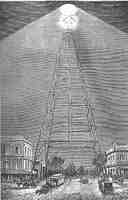
Look straight ahead and spot a towering iron structure that rises like a skinny pyramid above the intersection, its spidery frame holding a dazzling electric glow high over the city. Alright, time for a little light show-imagine yourself in downtown San Jose in 1881. The streets are dim, gas lamps splutter and flicker, and everything feels a tad mysterious after dark. Suddenly, right where you’re standing now, an iron giant begins to rise! This, my friend, is Owen’s Electric Light Tower, or as the newspapers liked to brag: “the moon on stilts.” J.J. Owen, the ambitious publisher of the San Jose Mercury, dreamed it up after seeing the wonders of electric light in San Francisco. He was convinced he could light up the whole city with one giant tower, saving everyone the hassle-and expense-of gas lamps. The townsfolk chipped in what they could; a little here, a little there, until they raised nearly $3,500, ready to turn night into day. Now, get ready for the spectacle: the tower, stretched 207 feet into the sky-taller than any building around-and at the top, blazing arc lamps threw out a glow of 24,000 candlepower. That’s bright enough that even a chicken on a nearby farm couldn’t get a good night’s sleep! Its dazzling beams could be seen all the way to San Francisco, and at night, people said it felt like walking under a full moon. I bet you never thought city lights could mess with a hen’s bedtime! The tower itself had no cables holding it steady; its iron frame stood proud and free-no chance of collapse from a snapped cord like that ill-fated tower in Ohio. The base was a whopping 75 feet wide, straddling the intersection, and below its spherical light, streetcars rattled by and businesses flourished. Photographers clambered up for a bird’s eye view; during Christmas, decorations dangled from its beams, and local cops even made a little extra on the side, selling birds who, shall we say, failed their “flight exams” into the glowing structure. But where’s a landmark without a bit of drama? Along came the San Jose Electric-Light War! After Owen sold the tower to the Brush Electric Light Company to cover debts, the power struggles began-literally. Soon, two rival electric companies were at each other’s throats. They swapped out bulbs, rewired connections, even staged midnight sabotages, all fighting for the right to electrify San Jose. One Sunday night, under the cover of stormy darkness, a daring crew from the Electric Lighting Company crept in and rewired the tower themselves, risking electrocution and the wrath of rival companies. The court battles that followed saw both sides fined and a dizzying succession of light and darkness. For decades, the tower stood as the city’s luminous centerpiece-sometimes draped in banners, sometimes swamped by swarms of beetles and hungry birds, and always a magnet for curious locals and newspaper writers. Some say its design even inspired Gustave Eiffel’s famous Parisian tower! In fact, San Jose once held a mock trial to accuse Paris of copying their tower-that’s how proud everyone was. But time (and weather) are the real heavyweights in this story. By 1915, unrelenting California winds did what all the city’s feuding electricians couldn’t: they brought the tower crashing down during a vicious storm. It was a sad day, but no one was hurt, and San Jose’s spirit soared again. In 1977, a smaller version of the tower was built in Kelley Park, shining once again as a beacon of local pride. And who knows-one day soon, thanks to wild new designs and passionate dreamers, San Jose’s sky might sparkle once more with a spectacular tower, showing the world you can never keep a good light down.
Open dedicated page →To spot the Sarah Knox-Goodrich landmark, look for a stately woman sitting confidently in a chair, dressed in a long dark Victorian gown, often depicted with a no-nonsense…Read moreShow less
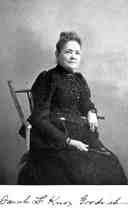
To spot the Sarah Knox-Goodrich landmark, look for a stately woman sitting confidently in a chair, dressed in a long dark Victorian gown, often depicted with a no-nonsense gaze-she’ll be looking right at you, almost as if she’s sizing up your resolve for justice! Alright, let’s rewind the clock to a time when San Jose’s streets were a little dustier, the carriages were a little rattle-ier, and women weren’t allowed to vote-unless, of course, they were as determined as Sarah Knox-Goodrich. Imagine the bustling whirr of horses' hooves and merchants calling out their wares, while a young Sarah, born all the way back in 1825 Virginia, grows up knowing what it means to carve your own destiny. Her life brought her from Virginia to Missouri, then over the wild trails to California during the chaos of the Gold Rush. With her first husband, William Knox, Sarah arrived in San Jose, a city not yet sparkling with today’s tech but glimmering with ambition. William, a businessman turned state senator, and Sarah, a force of nature, paired up for a good old-fashioned power couple-at least, as much as a woman could be a “power” anything at the time. Knox famously helped draft Senate Bill 252, granting married women rights over their own property, but behind the scenes it was Sarah, with that iron will, who made sure justice didn’t just linger in the air like California dust. Sarah’s journey was never quiet, and she sure didn’t let widowhood slow her down. After William’s sudden death, she married Levi Goodrich, San Jose’s own “starchitect.” Levi designed grand courthouses, but Sarah built something of her own-a movement. She took Levi’s sandstone from his quarry and, in 1889, erected the Knox-Goodrich Building. Just imagine huge blocks being hoisted, stone masons chipping away beneath the sun, carving out massive Romanesque arches and intricate capitals. High up, the intertwined letters ‘G’ and ‘K’ and the proud date-1889-still watch over Fountain Alley. But her real legacy was out on the streets, in the ruckus of parades and protests. Picture July 4, 1876: while most carriages in San Jose jostled for the best view of the fireworks, Sarah’s was loaded with banners-“We are the disfranchised Class,” “We are Taxed without being Represented.” As the parade organizers planned to tuck her and her fellow suffragists at the end, right next to the African-Americans but ahead of the Chinese immigrants, Sarah turned that discomfort into a teachable moment about women’s lack of rights, and the city made her lead the parade instead. Now, that’s a traffic jam worth joining! Inside the stately Knox-Goodrich Building, everyday life bustled-shops on the bottom, bustling tenants upstairs debating the issues of the day. All the while, Sarah, who often wrote for the Woman’s Journal and the San Jose Mercury, kept the presses rolling with ideas about fairness and opportunity. She lobbied and petitioned lawmakers, even nominating herself for the California Assembly in 1877. She was ahead of her time-bold enough to say, in writing, “Remove my political disabilities!” Her efforts made women eligible to run for educational offices years before they could actually cast a ballot. And when legendary suffragist Susan B. Anthony rolled into town, who do you think hosted her and then marched beside her to Sacramento? You guessed it-Sarah Knox-Goodrich. She used not only her voice, but her fortune, funding campaigns and sponsoring trailblazing women like Laura de Force Gordon to bring the gospel of equality up and down the coast. Today, as you stand before this landmark, close your eyes and feel the echoes of those old parades, the chisel against stone, the determined clacking of a typewriter. Sarah may be gone, but her “common sense and abundance of bank stock” still guide the dreams of San Jose. And next time you see a parade, maybe give a little wave to the spirit of Sarah, riding proudly at the front. Curious about the biography, suffragist activities or the knox-goodrich building? Don't hesitate to reach out in the chat section for additional details.
Open dedicated page →To spot the Dr. Martin Luther King Jr. Library, look for a striking, modern eight-story building with lots of glass and white stone, towering on both sides with a grand glass…Read moreShow less
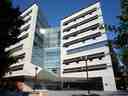
To spot the Dr. Martin Luther King Jr. Library, look for a striking, modern eight-story building with lots of glass and white stone, towering on both sides with a grand glass atrium in the center-right in front of you. Let me take you on a little adventure, right here where you’re standing. Imagine you’re in the heart of downtown San Jose, and looming above you is a story factory built between a university’s lively campus and a city that never seems to sleep. The building you see now opened its doors in August 2003, and since then, it’s become the largest library building in the western United States built all at once. With over 475,000 square feet and enough room for nearly 2,000 book lovers at a time, it feels less like a typical library and more like a grand spaceship of imagination, knowledge, and community. Once upon a time, this exact spot was home to first the Main Carnegie Library, and, later, the Wahlquist Library. But with growing dreams and bigger ambitions, the city teamed up with San José State University to create something new-a library that would serve both students burning midnight oil and everyday folks just looking for a good novel or an internet connection. It’s not every day that a public library and a university library join forces, but that’s just what happened here. The result? In 2004, this place was crowned Library of the Year, thanks to its unique collaboration and sheer size. On its tenth anniversary, it still held the crown as the biggest library ever shared by a city and a university. The heart of the library, literally, is the Koret Atrium-a giant open space running up the middle, filled with light and sometimes, if you listen closely, the sound of pages fluttering after a particularly exciting plot twist. Suspended above the entrance, a glowing LED ticker flashes mind-boggling numbers, counting every book and DVD checked out since the millennium began. Spoiler alert: That number passed 240 million in 2025. Somewhere, a librarian is doing a happy dance. Wander through and you’ll find more than shelves; you might stumble upon Mel Chin’s quirky public artwork, inviting you to ponder what “Recollections” means to you. Need a place to study, work, or just people-watch? The library’s floors have you covered. Techies will love the sea of public computers-on lower levels, on the second and third floors, and scattered throughout the building-along with fast Wi-Fi and special print stations for those last-minute essays. Floors six, seven, and eight become calmer and quieter the higher you go, with one floor reserved for complete silence. It’s like leveling up in a video game, but instead of fighting dragons, you conquer term papers and research projects. On the fifth floor, adventure-seekers can visit entire worlds: a Beethoven collection that would make even the composer himself stop humming, a room full of Steinbeck treasures, rare Californian artifacts, and a civil rights collection honoring Dr. King. It’s where music, history, literature, and justice come together for a cup of coffee, if only books could drink. Today, students and locals blend together, making this place a true crossroad-a hub of learning, discovery, and community spirit, at the very core of San Jose. Now, don’t get lost! We still have more to see.
Open dedicated page →
Frequently asked questions
How do I start the tour?
After purchase, download the AudaTours app and enter your redemption code. The tour will be ready to start immediately - just tap play and follow the GPS-guided route.
Do I need internet during the tour?
No! Download the tour before you start and enjoy it fully offline. Only the chat feature requires internet. We recommend downloading on WiFi to save mobile data.
Is this a guided group tour?
No - this is a self-guided audio tour. You explore independently at your own pace, with audio narration playing through your phone. No tour guide, no group, no schedule.
How long does the tour take?
Most tours take 60–90 minutes to complete, but you control the pace entirely. Pause, skip stops, or take breaks whenever you want.
What if I can't finish the tour today?
No problem! Tours have lifetime access. Pause and resume whenever you like - tomorrow, next week, or next year. Your progress is saved.
What languages are available?
All tours are available in 50+ languages. Select your preferred language when redeeming your code. Note: language cannot be changed after tour generation.
Where do I access the tour after purchase?
Download the free AudaTours app from the App Store or Google Play. Enter your redemption code (sent via email) and the tour will appear in your library, ready to download and start.
If you don't enjoy the tour, we'll refund your purchase. Contact us at [email protected]
Checkout securely with 




