
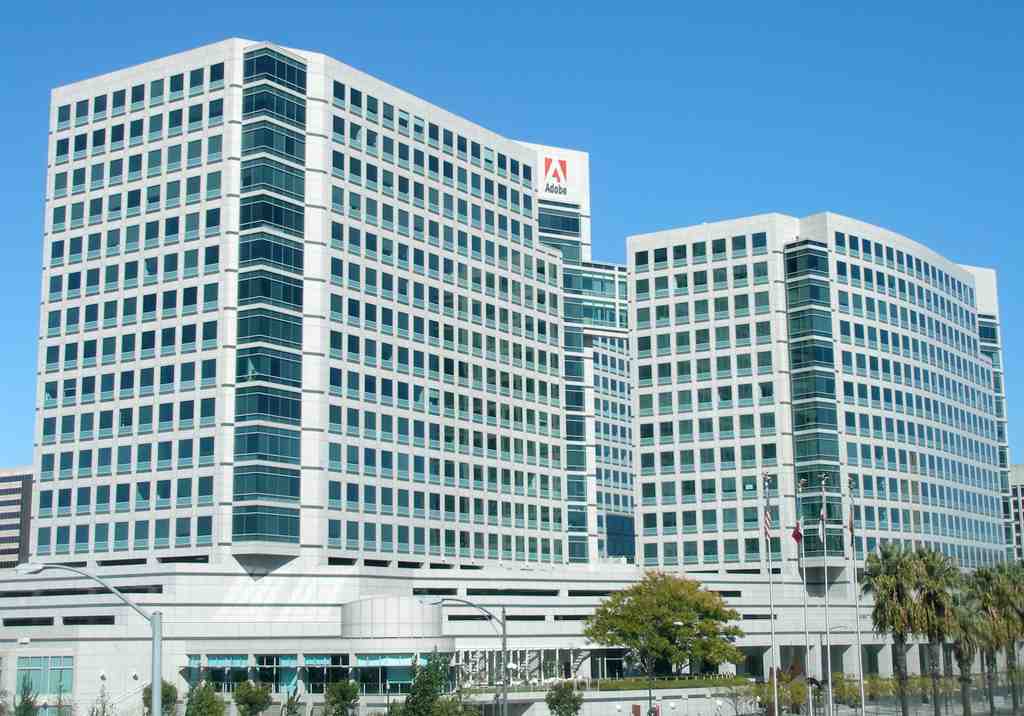
To spot Adobe Inc., look for two tall, modern, glass-and-concrete towers with hundreds of windows and a red Adobe logo perched on the corner near the roof-just look up, and you can’t miss it!
Welcome to Adobe’s headquarters! Right in front of you stands the iconic home base of the creative revolution, but believe it or not, it all began in a humble garage. Picture the year: 1982, floppy disks everywhere, mullets as far as the eye can see, and two men-John Warnock and Charles Geschke-poring over handwritten code as the California sun dips behind Adobe Creek, which ran right behind Warnock’s house. That little creek lent its name, and a bit of muddy inspiration, to what would become a household name-Adobe. If you ever wondered, “Why Adobe?”-well, nothing says world-changing software like good ol’ Californian mudbrick.
Now, imagine the first days. A young Steve Jobs bursts in with a $5 million dollar offer to buy the whole thing. Warnock and Geschke say no, but they compromise: Jobs gets a slice, some software…and a license that helps launch the LaserWriter printer, sparking the desktop publishing revolution. You know, the smell of fresh-printed paper-back when that was more exciting than an email notification!
But Adobe didn’t stop with printers. The company spent the ‘80s and ‘90s crafting digital magic: Photoshop for your wild edits and memes, Illustrator for every slick graphic you’ve ever admired, Premiere Pro for filmmakers everywhere, and the mighty PDF, born from a project called Camelot-which is probably the closest anyone’s ever gotten to knights and chivalry in Silicon Valley. Ever zoomed in on a PDF until the text looks like Tetris blocks? Thank Adobe for making it readable at any size.
Fast forward to the 2000s, and Adobe’s on a software shopping spree. Ever used Flash for games? Dreamweaver for making websites circa “MySpace is king?” Or maybe sneaked a session with Audition if you wanted to sound like a podcast superstar? Adobe picked up Macromedia, folded in brilliant tools, and kept rolling. They bundled everything into the Creative Suite, then wrapped it all up again in Creative Cloud, changing the way artists, designers, and dreamers work all over the planet. Suddenly, you could rent your creative powers by the month-like Netflix, but for imagination!
Of course, every fairy tale has its drama. Hackers tried to steal the magic-okay, the software and some seriously sensitive customer info. Customers got grumpy about high prices, especially outside the U.S. And in the 2020s, Adobe faced criticism over its subscription model, those infamous early termination fees, and a lawsuit from the Federal Trade Commission. If you ever rage-quit Photoshop over a surprise bill, you’re definitely not alone!
Still, Adobe’s always evolving. From AI-powered features to an ongoing promise they won’t use customer data for training their AI models, the company keeps pushing ahead, growing to over 26,000 employees worldwide, from San Jose to India. They’ve faced their share of bumps with canceled mergers (like the Figma deal), legal skirmishes, and customers who demand more transparency, but their legacy is everywhere: in every edited selfie, every blockbuster film, every glossy magazine cover.
Standing here beneath the shining windows, across from the palm trees and city noise, you can almost imagine the digital gears whirring inside, millions of creative projects coming to life every second. Not bad for something that started in a garage by a muddy creek, right? Now, ready to continue our digital adventure?




