
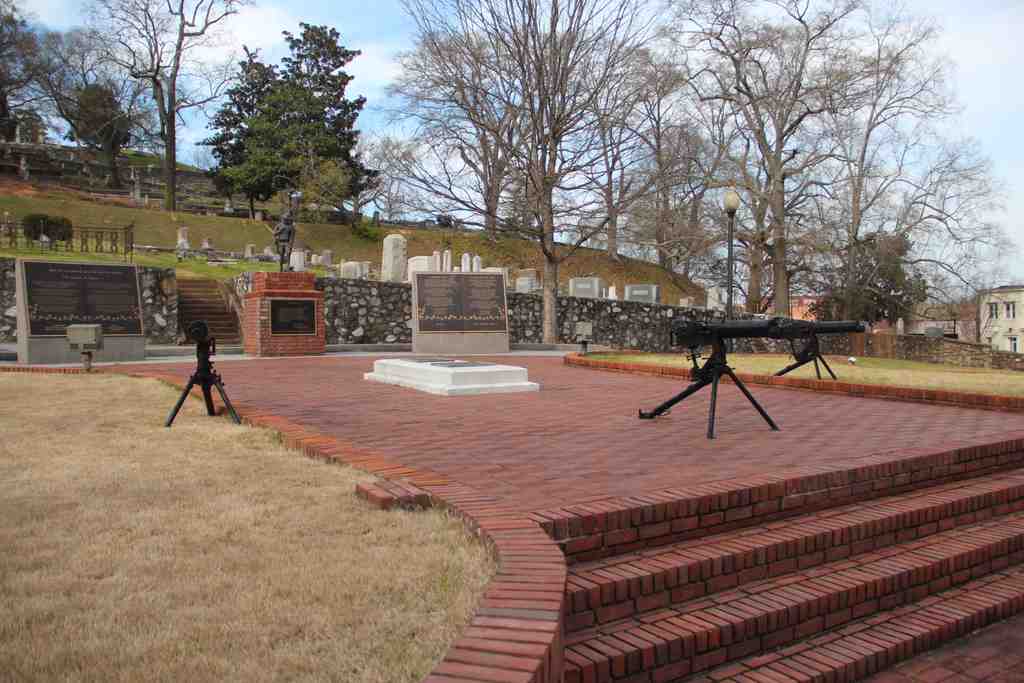
On your left, look for the low, white tomb-like slab set into a brick plaza, flanked by two dark, tripod-mounted guns and backed by bronze memorial panels and a stone wall.
This is the Tomb of the Known Soldier, and the name behind it is Private Charles Graves of Rome, Georgia. In August 1917, he enlisted at eighteen… barely old enough to shave without nicking himself, old enough to be sent across an ocean to fight on the Western Front. He ended up near Neuroy, France, where the war was mud, wire, and artillery that could find you even when you thought you were safe.
On October 5, 1918, Graves was killed by German shrapnel on the Hindenburg Line. Fourteen months from enlistment to death… and then, like so many families, his mother had to live with the waiting. His body didn’t come home until 1922, arriving on a troopship called the Cambria.
Here’s the twist: the government was planning big national symbols-an Unknown Soldier, and even a “Known Soldier” for Arlington. Graves was selected by pure chance: a blindfolded sailor drew his name from a list. The War Department wanted pageantry-flag-draped coffin, Fifth Avenue, generals, the whole show. But his mother said no. She buried him near Antioch Church instead.
After she died, the community stepped in. In 1923, Graves was moved here to Myrtle Hill… his third and final burial. On Armistice Day, they honored him and the 33 other Floyd County men lost in World War I, with three Maxim guns and 34 magnolia trees. Today, this spot isn’t just about one soldier… it’s a quiet roll call for all the known who never made it back.
When you’re set, South Broad Street Historic District (Rome, Georgia) is a 2-minute walk heading south.




