
Rome Audio Tour: Echoes of Time Between the Rivers
A city named for ancient Rome hides rebellion and secrets beneath its Southern charm. Stand beneath the silent gaze of the Clock Tower or among the worn stones of Myrtle Hill Cemetery and you sense deeper stories pulsing just below the surface. This self-guided audio tour leads you through the true heart of Rome, Georgia. Move beyond the usual sights to uncover the city’s buried dramas and scandalous moments that most visitors never find. What sparked a political brawl that echoed through Barron Stadium? Which forgotten figure shaped a tragedy at Myrtle Hill and vanished from the records? Why do locals whisper about midnight bells ringing at the Clock Tower and leave small offerings in its shadow? Let remarkable tales pull you down ancient streets and across moody riverbanks. Walk where legends refuse to rest and every step unfolds a new layer of intrigue. Unlock Rome’s hidden stories. Press play and begin.
Tour preview
About this tour
- scheduleDuration 90–110 minsGo at your own pace
- straighten4.3 km walking routeFollow the guided path
- location_onLocationRome, United States
- wifi_offWorks offlineDownload once, use anywhere
- all_inclusiveLifetime accessReplay anytime, forever
- location_onStarts at Myrtle Hill Cemetery
Stops on this tour
lock_open 3 free previews · 8 unlock with purchase
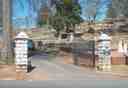
Look for the iron gate between two chunky white stone pillars, opening onto a paved lane that climbs up through terraced rows of headstones on the hillside. Alright, welcome to…Read moreShow less
Look for the iron gate between two chunky white stone pillars, opening onto a paved lane that climbs up through terraced rows of headstones on the hillside. Alright, welcome to Myrtle Hill Cemetery... a place that manages to be peaceful, scenic, and quietly packed with history all at once. Standing here at the entrance, you’re looking up at a hill laid out in steps-six terraces, spread over about 32 acres-almost like the town decided to build a “wedding cake” out of marble and granite. Not everyone gets a view like this forever, but apparently a lot of folks applied. There’s a practical reason it’s on a hill. Rome sits at the meeting point of three rivers-the Etowah and Oostanaula join to form the Coosa-and those rivers have always had a habit of spreading out when they feel like it. So early Romans picked higher ground for burial space: safer, drier, and less likely to float away. Myrtle Hill, Lumpkin Hill, Mount Aventine… the city’s hills weren’t just pretty; they were insurance policies. The name “Myrtle Hill” comes from a plant called trailing myrtle-Vinca minor-that used to grow wild here. It even had the cheery nickname “Flower of Death,” which, points for honesty, I guess. But before this became a cemetery, this hill had a rougher reputation. In 1793, it was part of a violent clash now remembered as the Battle of Hightower. General John Sevier brought about 800 men into the area-without official permission-chasing Cherokee warriors after attacks near Knoxville. Sevier wrote about trying to outsmart defenders: he made a move to cross the river downstream to draw them out, then doubled back and crossed here instead. The fight ended when a Cherokee leader known as Kingfisher was killed, and Sevier’s men burned the nearby village. Later, people reportedly found bones and relics tucked into the hill’s crevices. History doesn’t always stay neatly in the past… sometimes it turns up under your feet. Fast forward to the 1800s. After gold was discovered in Georgia in 1829 and after the Cherokee were forced out during the years of removal, Rome was founded in 1834. The city’s first cemetery, Oak Hill, opened in 1837-but by mid-century it was filling up. So in 1850, locals chose this hill near the rivers, and a civil engineer named Cunningham Pennington designed the layout to work with the steep terrain: looping roads, tiered levels, and that layered look you see now. Myrtle Hill officially opened in 1857, and one of the first burials was a man named John Billups. Then the Civil War arrived, because of course it did. In 1863, Rome spent $3,000-about $75,000 today-building earthen forts to defend the city. One of them, Fort Stovall, sat up near this crest. You won’t see it now; terracing and time erased the surface evidence. But the hill’s height made it a prime lookout, and it likely buzzed with activity during the brief standoff when Union forces approached in May 1864. Today, more than 20,000 people rest here-founders, politicians, doctors, soldiers, even a U.S. First Lady: Ellen Axson Wilson, who grew up in Rome and later returned here after her death in 1914. And up at “Crown Point,” the Confederate soldier monument still watches over it all, carrying its own complicated history-including vandalism in 2017 that left it scarred. When you’re set, the Tomb of the Known Soldier is a 5-minute walk heading west.
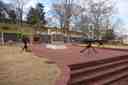
Open dedicated page →On your left, look for the low, white tomb-like slab set into a brick plaza, flanked by two dark, tripod-mounted guns and backed by bronze memorial panels and a stone wall. This…Read moreShow less
On your left, look for the low, white tomb-like slab set into a brick plaza, flanked by two dark, tripod-mounted guns and backed by bronze memorial panels and a stone wall. This is the Tomb of the Known Soldier, and the name behind it is Private Charles Graves of Rome, Georgia. In August 1917, he enlisted at eighteen… barely old enough to shave without nicking himself, old enough to be sent across an ocean to fight on the Western Front. He ended up near Neuroy, France, where the war was mud, wire, and artillery that could find you even when you thought you were safe. On October 5, 1918, Graves was killed by German shrapnel on the Hindenburg Line. Fourteen months from enlistment to death… and then, like so many families, his mother had to live with the waiting. His body didn’t come home until 1922, arriving on a troopship called the Cambria. Here’s the twist: the government was planning big national symbols-an Unknown Soldier, and even a “Known Soldier” for Arlington. Graves was selected by pure chance: a blindfolded sailor drew his name from a list. The War Department wanted pageantry-flag-draped coffin, Fifth Avenue, generals, the whole show. But his mother said no. She buried him near Antioch Church instead. After she died, the community stepped in. In 1923, Graves was moved here to Myrtle Hill… his third and final burial. On Armistice Day, they honored him and the 33 other Floyd County men lost in World War I, with three Maxim guns and 34 magnolia trees. Today, this spot isn’t just about one soldier… it’s a quiet roll call for all the known who never made it back. When you’re set, South Broad Street Historic District (Rome, Georgia) is a 2-minute walk heading south.
Open dedicated page →
Show 8 more stopsShow fewer stopsexpand_moreexpand_less
Coming up on your right... this is the Noble Brothers Foundry site. Today it’s quiet, but around 1855 this spot was the kind of place where the air would’ve tasted like coal smoke…Read moreShow less
Coming up on your right... this is the Noble Brothers Foundry site. Today it’s quiet, but around 1855 this spot was the kind of place where the air would’ve tasted like coal smoke and hot metal, and the soundtrack was hammers, steam, and a whole lot of stubborn ambition. James Noble Senior and his six sons built a major ironworks here, and they weren’t thinking small. They ordered a huge lathe from Pennsylvania... then hauled it an absurdly complicated way: by boat to Mobile, up the Coosa River until the water wouldn’t cooperate anymore, then by horse and cart the rest of the way to this corner of town. If you’ve ever complained about delivery fees, just remember these guys dragged industrial machinery across half the South. The foundry turned out steamboat engines, furnaces, and locomotives. In 1857 they built the first locomotive for the Rome Railroad... and it was a big deal: the first locomotive manufactured south of Richmond. Then the Civil War hit, and the Confederate government came calling for cannons. The Nobles were so valuable that Jefferson Davis basically said, “Let other folks fight... we need these men making artillery.” Nothing says job security like being too useful to send to the battlefield. There’s a twist, though: cannon work got investigated and halted, but the foundry still produced war materials, especially locomotives... which helped put Rome on the Union army’s target list in 1864. When Sherman’s troops left, they burned the place and tried to wreck that giant lathe with sledgehammers. The lathe survived anyway, and those hammer marks are still visible... a sort of tantrum in iron. When you’re set, Between the Rivers Historic District is a 7-minute walk heading northeast.
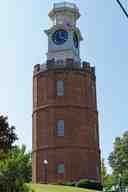
Open dedicated page →On your left, look up to the top of the hill for a tall red brick tower with four big white clock faces, capped with a little belfry. This is Rome’s Clock Tower, planted on the…Read moreShow less
On your left, look up to the top of the hill for a tall red brick tower with four big white clock faces, capped with a little belfry. This is Rome’s Clock Tower, planted on the summit of Clock Tower Hill, also called Neely Hill... one of the city’s “Seven Hills,” because Rome’s never met a good nickname it didn’t like. The tower you’re seeing started life in 1871 with a very unglamorous job: holding water. James Noble Junior and his family oversaw the build, and it was basically a massive water tank wrapped in red brick to look respectable. Inside, the tank rose about 63 feet high and 26 feet wide, built around a frame made from 10-foot iron sheets. Practical... and just a little intimidating. Then in 1872, the city decided the utilitarian tower needed some flair. Up went four clock faces and a bell, turning it into an instant centerpiece. The clocks came from the E. Howard Clock Company, and each face is a full nine feet across. The hour hand alone is three and a half feet long... which is a polite way of saying, “You will know what time it is whether you asked or not.” The bronze bell is 40 inches wide, with “1872” engraved on its rim, like a signature on a job well done. By the 1890s, Rome outgrew the tank, and the tower drifted into mild neglect for decades. Then, in 1986, the Rome Jaycees raised over $80,000... about $230,000 today... to spruce up the hilltop, and by 1995 they helped open it as a museum. Inside: 107 spiral steps and artwork displayed in the old tank space. Not bad for a retired water bucket. When you’re set, the Floyd County Administration Building is a 4-minute walk heading south.
Open dedicated page →On your left, look for the long, tan-brick government building with rows of arched second-floor windows and a big central entrance set between pale stone columns. This place…Read moreShow less
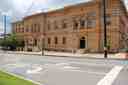
On your left, look for the long, tan-brick government building with rows of arched second-floor windows and a big central entrance set between pale stone columns. This place started life in 1896 as Rome’s U.S. Post Office and Courthouse… which is a fancy way of saying it handled your letters AND your legal trouble under one dignified roof. Over the years it got stretched out-additions in 1904, 1911, and again in 1941-like a building that kept loosening its belt after a few big meals. Take in the exterior: that clean, balanced, horizontal look is the clue. It’s styled in what historians call “Second Renaissance Revival,” with hints of earlier Italian Renaissance details in the decorative relief. Translation: it’s trying to look calm, orderly, and important… the architectural version of clearing your throat before speaking. And in the Rome area, it’s basically the only one of its kind, so it’s been quietly showing off for more than a century. Inside, the setup was all business. Back in the 1970s, the first floor was a big post office workroom-imagine the clatter of sorting, the thump of stamps, the smell of paper and ink. Upstairs, the courtroom sat on the second floor, soaring up through the next level, with the judge and clerk close by. The third floor tucked under the low roof was part offices, part attic. In 1975, an Atlanta architectural historian, Elizabeth Z. Macgregor, helped get it listed on the National Register-right when it was sitting empty, waiting for a second act. That same year, Floyd County bought it, and today it runs as the County Administration Building-those commissioners meeting upstairs are likely sitting where the courtroom once held sway. Meanwhile, the modern federal building moved down the street, complete with a post office and federal courts. When you’re set, DeSoto Theater is a 5-minute walk heading northwest.
Open dedicated page →On your right, look for the pale blue and white storefront with the bright Art Deco “DeSoto” marquee and a classic cinema signboard hanging over the sidewalk. This is the DeSoto…Read moreShow less
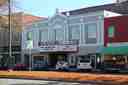
On your right, look for the pale blue and white storefront with the bright Art Deco “DeSoto” marquee and a classic cinema signboard hanging over the sidewalk. This is the DeSoto Theatre, downtown Rome’s old-school showstopper... the kind of place built to make everyday folks feel like royalty for the price of a ticket. Back in the early 1900s, a local entertainment man named O. C. Lam decided Rome deserved a real “movie palace,” not just a room with a screen. He bought prime main-street property for about $37,000 at the time... roughly around $700,000 today... and aimed high, taking inspiration from the big, glamorous theaters up north. When the DeSoto opened in August 1927, it cost about $110,000 to build... something like $2 million today... and it seated around 1,500 people. That’s not a neighborhood screening, that’s an event. And it wasn’t just fancy, it was futuristic: it was built specifically for sound films, making it the first theater in the Southeast designed for “talkies,” complete with a Vitaphone system. Add early heating and cooling tech, and enough exits to clear the place in two minutes... because nothing kills the mood like a fire hazard. The building even carries older layers: before this theater, the site housed Rome’s Freedmen’s Bureau office. Then came thirty-ish years where this marquee basically served as Northwest Georgia’s living room. When it closed as a movie house in 1982, it didn’t stay quiet for long. The Rome Little Theatre moved in, and today a nonprofit foundation keeps it going, still showing off that mirrored entrance, Georgian-style interior, and that stubbornly charming marquee... while working to restore more. When you’re set, Sara Hightower Regional Library System is a 5-minute walk heading northeast.
Open dedicated page →On your left, look for a sturdy red-brick building with a bright white arched entrance and the words “HAWKES CHILDRENS LIBRARY” across the top. Now, a small confession: when…Read moreShow less
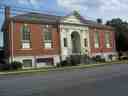
On your left, look for a sturdy red-brick building with a bright white arched entrance and the words “HAWKES CHILDRENS LIBRARY” across the top. Now, a small confession: when people say “the library,” they usually mean one building. Around here, it’s more like a whole neighborhood of libraries working together. The Sara Hightower Regional Library System covers six public libraries serving Floyd, Polk, and Chattooga Counties, with headquarters at the Rome-Floyd County Library. Think of it as a team effort… with fewer pep rallies and more paper cuts. The big magic trick is the PINES library card. One card, a whole lot of temptation. If you’re a Georgia resident, you can use it not just in this regional system, but across roughly 275 participating libraries statewide. That’s the kind of networking LinkedIn wishes it had. And the system also connects with GLASS, a statewide service that helps people who are blind or physically disabled get access to library materials-making “open to everyone” mean something real. Because this system stretches across multiple counties, it becomes a high-speed exchange zone for books. In 2015 alone, about 30,000 books moved through interlibrary loan-basically a constant relay race of novels, cookbooks, and last-minute school projects. Somewhere, a librarian’s sorting cart is still recovering. The roots of all this go back to the early 1900s, when Rome wanted a proper public library and civic leaders wrote to Andrew Carnegie-the steel tycoon who loved funding libraries almost as much as he loved rules. On December 24, 1909, he approved $15,000 for a building-around $500,000 today-on the condition the town paid $1,500 a year for upkeep, about $50,000 today. And he had one firm preference: no big auditorium inside. Carnegie didn’t want libraries turning into lecture halls… he wanted them turning people into readers. That first public library opened in 1911 with about 1,800 books, many coming from an older subscription collection-the kind where reading came with a membership fee, like a gym, but with less sweating and more Shakespeare. When you’re set, Forum River Center is a 10-minute walk heading north.
Open dedicated page →On your right, look for the big red-brick complex with those tall, half-moon black windows and a broad staircase leading up to the entrance marked “THE FORUM.” This is the Forum…Read moreShow less
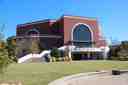
On your right, look for the big red-brick complex with those tall, half-moon black windows and a broad staircase leading up to the entrance marked “THE FORUM.” This is the Forum River Center, or as locals keep it simple... “The Forum.” It’s Floyd County-owned, which means it’s basically Rome’s living room: one week it’s sports, the next it’s suits and name tags, and by the weekend it might be a full-on concert. Inside, the arena flexes-about 2,140 seats for arena football, up to 3,116 for other sports, and nearly 3,932 when the stage goes up and the amps come on. For trade shows, it opens into roughly 21,000 square feet of floor space, plus another 14,269 square feet of meeting rooms for all the serious conversations that somehow require pastries. It even hosted the Georgia Fire indoor football team-and on March 9, 2024, it turned into a political spotlight when Donald Trump held a campaign rally here, right before Georgia’s primary. When you’re set, Barron Stadium is an 8-minute walk heading northwest.
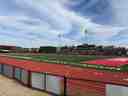
Open dedicated page →Look to your right for a wide bowl of bleachers facing a bright green turf field wrapped by a red running track, with tall light poles and a big scoreboard anchoring the far…Read moreShow less
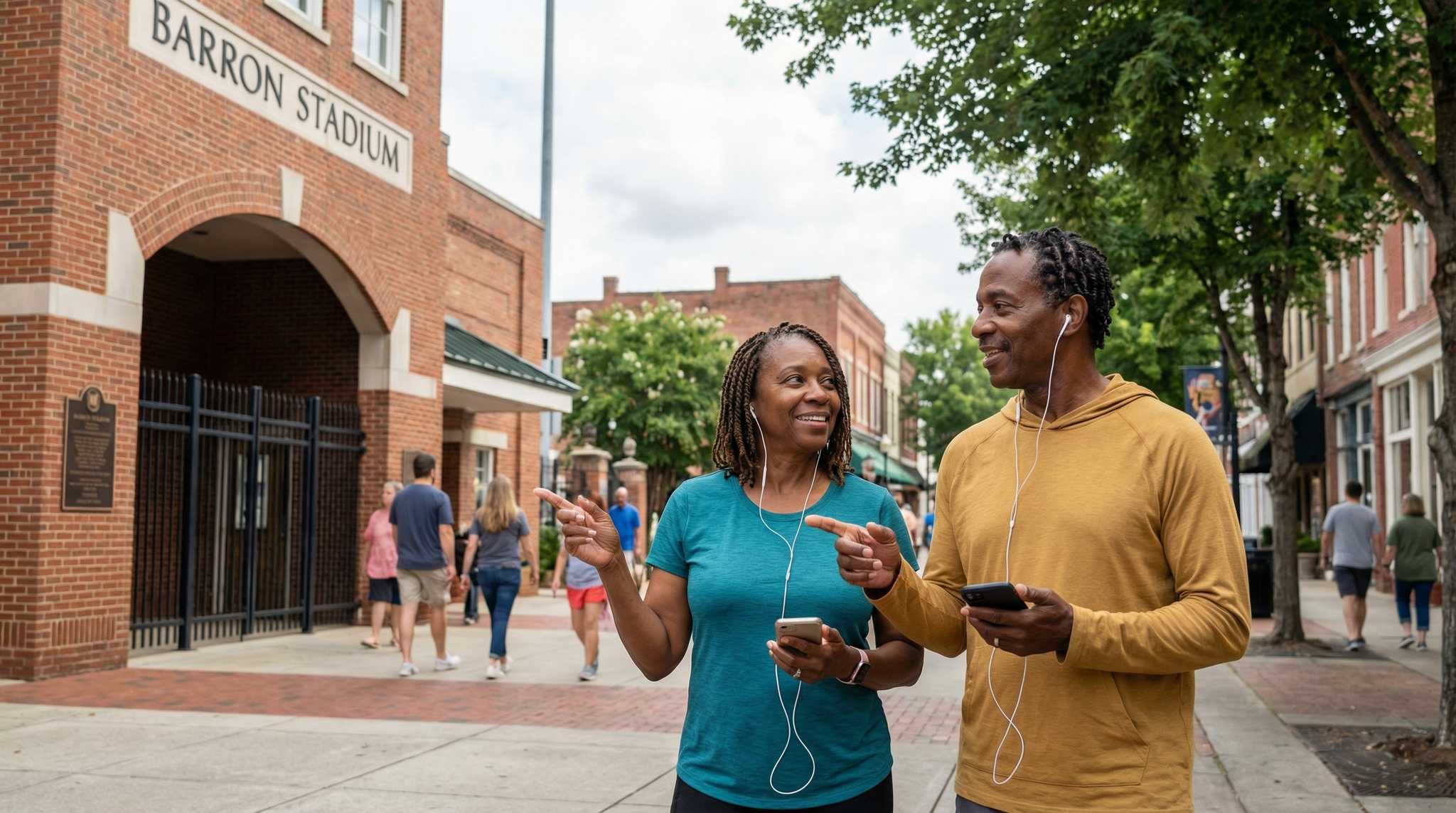
Look to your right for a wide bowl of bleachers facing a bright green turf field wrapped by a red running track, with tall light poles and a big scoreboard anchoring the far end. Alright, you’ve made it to Barron Stadium… a place that looks like “just a football field” until you realize it’s been soaking up Friday-night nerves and hometown pride for more than a century. In stadium years, that’s practically ancient Rome… and yes, we’re in Rome, Georgia, so the joke is legally required. This is a 6,500-seat football and track stadium, and on game nights it can feel like every one of those seats has an opinion. It’s home turf for Rome High’s Wolves and Shorter University’s Hawks, which means the paint lines and goalposts have seen everything from pep-band joy to the quiet, dramatic misery of a last-second fumble. The story starts way back when this ground was known as Hamilton Field-over 100 years ago. In 1925, it became Barron Stadium, named for local businessman William F. Barron, who helped secure the property. The Barron name had some fizz behind it too: his father founded the Rome Coca-Cola bottling plant in 1901. So if you’ve ever associated football with soda… congratulations, you’re historically accurate. By 1937, the stadium got lights-because nothing says “community gathering” like playing football under towering bulbs while somebody yells advice from the stands like they’ve been personally hired by the coaching staff. Operation shifted around over the decades: the school district handed it to the city recreation department in 1957, and today it’s owned by the Rome-Floyd Parks and Recreation Authority-a city-county team-up-but operated by the Rome City School District since 2015. It’s a whole relay race of responsibility… which feels right for a track stadium. And speaking of the track: it’s named for John Maddox, a local standout and 1932 Olympics hopeful who pushed hard for a better municipal track and helped launch the Rome News Relays. After he died suddenly, the city named the track for him in 1971-one of those quietly meaningful tributes that sticks. Barron’s hosted serious football history too: state championship games here in multiple years, plus championship wins for East Rome and West Rome in the late ‘70s and ‘80s. The last East-versus-West crosstown rivalry game played here happened in 1991, before the schools consolidated. Nothing like a merger to end a perfectly good grudge. In 2010, the place got a major glow-up-about $3.4 million at the time, roughly $4.8 million in today’s money-funded by local sales tax. That brought in artificial turf, an NCAA-certified track, a new scoreboard, and expanded facilities. It also hosted big-time events like the NAIA Football National Championship from 2008 to 2013, and even served as a filming location for the 2021 movie Black Widow. So yes… your humble stadium has been in the same cinematic universe as superheroes. Take a second and listen… you can almost hear the echo of cleats, the starter pistol, the crowd rising like a wave. That’s Barron Stadium-Rome’s long-running stage for sweat, speed, and just enough drama to keep everyone coming back.
Open dedicated page →

Frequently asked questions
How do I start the tour?
After purchase, download the AudaTours app and enter your redemption code. The tour will be ready to start immediately - just tap play and follow the GPS-guided route.
Do I need internet during the tour?
No! Download the tour before you start and enjoy it fully offline. Only the chat feature requires internet. We recommend downloading on WiFi to save mobile data.
Is this a guided group tour?
No - this is a self-guided audio tour. You explore independently at your own pace, with audio narration playing through your phone. No tour guide, no group, no schedule.
How long does the tour take?
Most tours take 60–90 minutes to complete, but you control the pace entirely. Pause, skip stops, or take breaks whenever you want.
What if I can't finish the tour today?
No problem! Tours have lifetime access. Pause and resume whenever you like - tomorrow, next week, or next year. Your progress is saved.
What languages are available?
All tours are available in 50+ languages. Select your preferred language when redeeming your code. Note: language cannot be changed after tour generation.
Where do I access the tour after purchase?
Download the free AudaTours app from the App Store or Google Play. Enter your redemption code (sent via email) and the tour will appear in your library, ready to download and start.
If you don't enjoy the tour, we'll refund your purchase. Contact us at [email protected]
Checkout securely with 




