
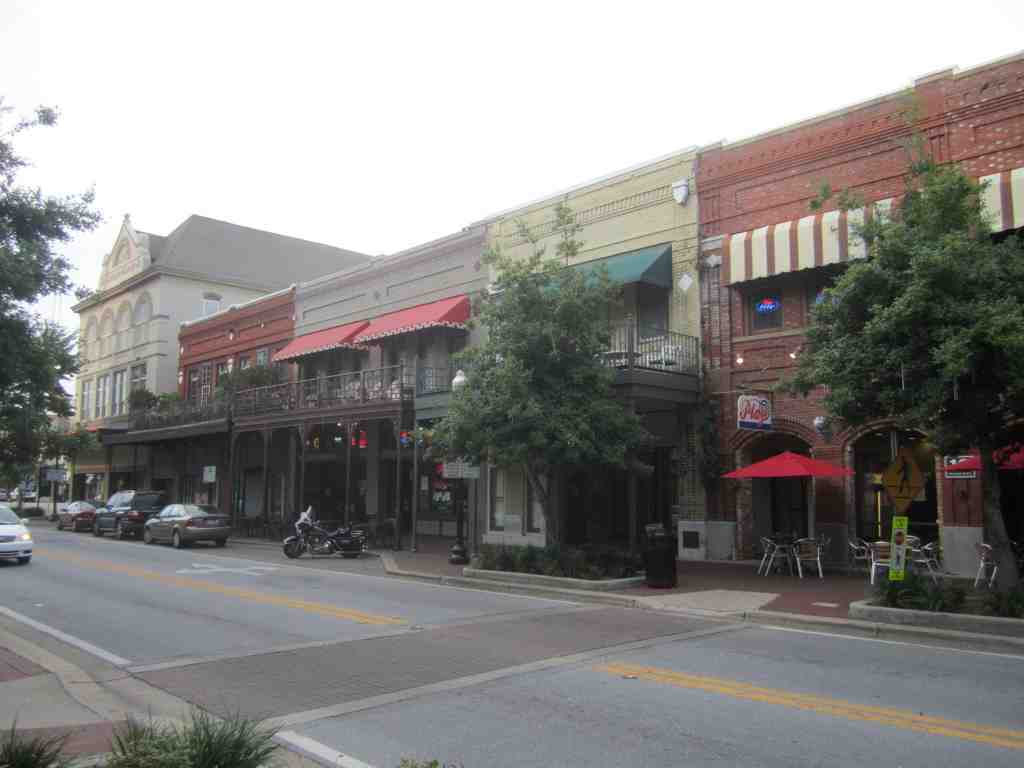
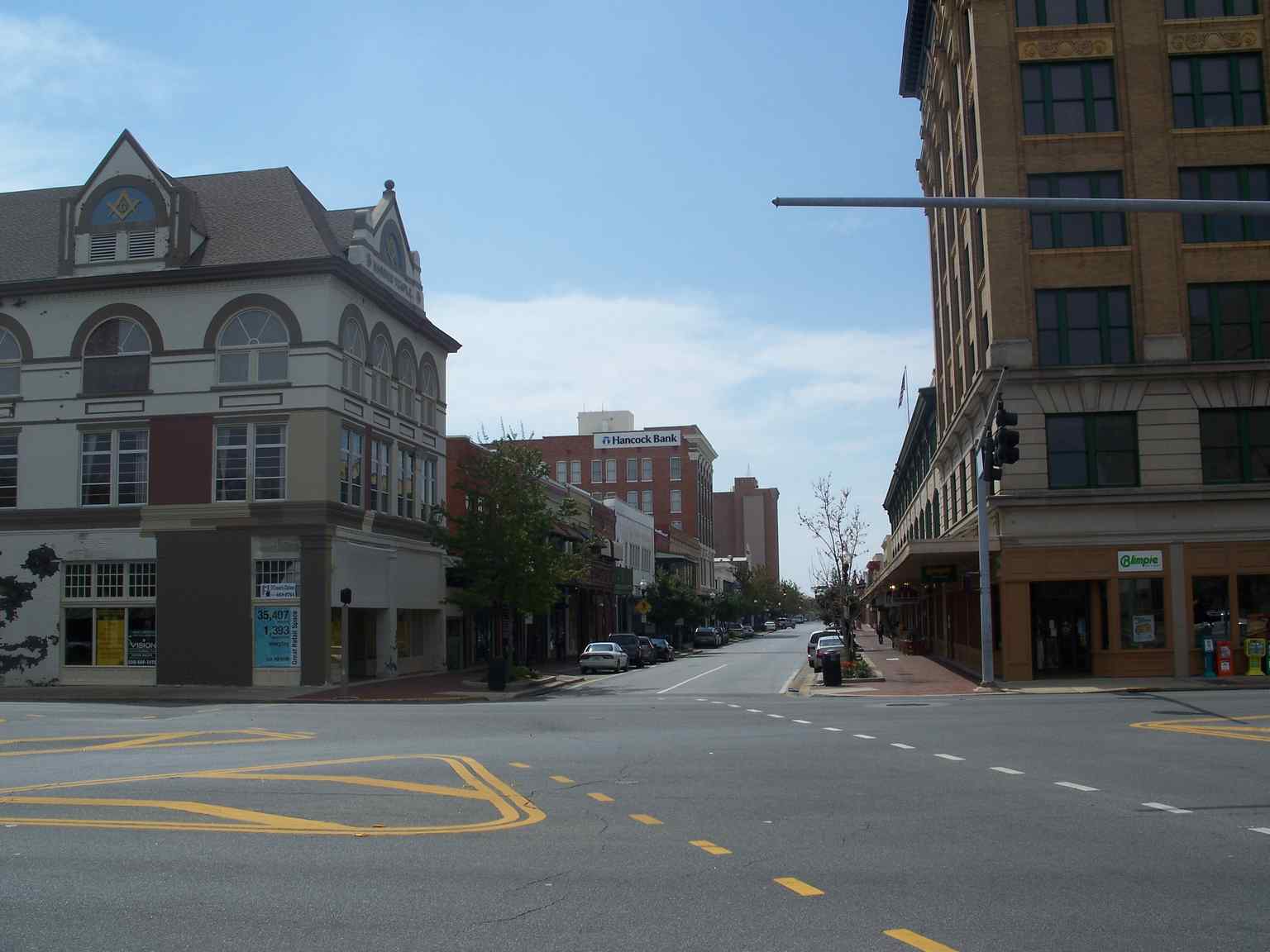
Notice the row of buildings on your right, defined by their classic red brick facades, varied rooflines, and striking metal balconies draped with bright red awnings. The story of this street is really the grand story of North America's first European colony! It began way back in 1559, when Spanish explorer Don Tristan de Luna y Arellano arrived with eleven ships and fifteen hundred people to settle here. But after a massive hurricane obliterated their ships and supplies, the desperate colonists only managed to hang on for two years before fleeing back to Mexico. That early disaster set the stage for a dramatic, centuries long tug of war over this highly coveted deep water port. Over nearly five hundred years, a dizzying parade of shifting empires claimed this land, and five different flags have flown over the city. Spain, France, Great Britain, the United States, and the Confederate States of America all left their mark. The result is a vibrant, multicultural patina that runs right through the architecture you are looking at today. Fast forward to the turn of the twentieth century, when ambitious locals wanted to turn Palafox Street into a cosmopolitan hub. In 1901, a Danish immigrant named Christen Thiesen built Pensacola's very first skyscraper right here. It was a total marvel, boasting the city's first elevator and steam heating system. When it opened on April first, 1902, Thiesen threw a massive cornet band concert on the roof garden, proudly raising both the American and Danish flags.
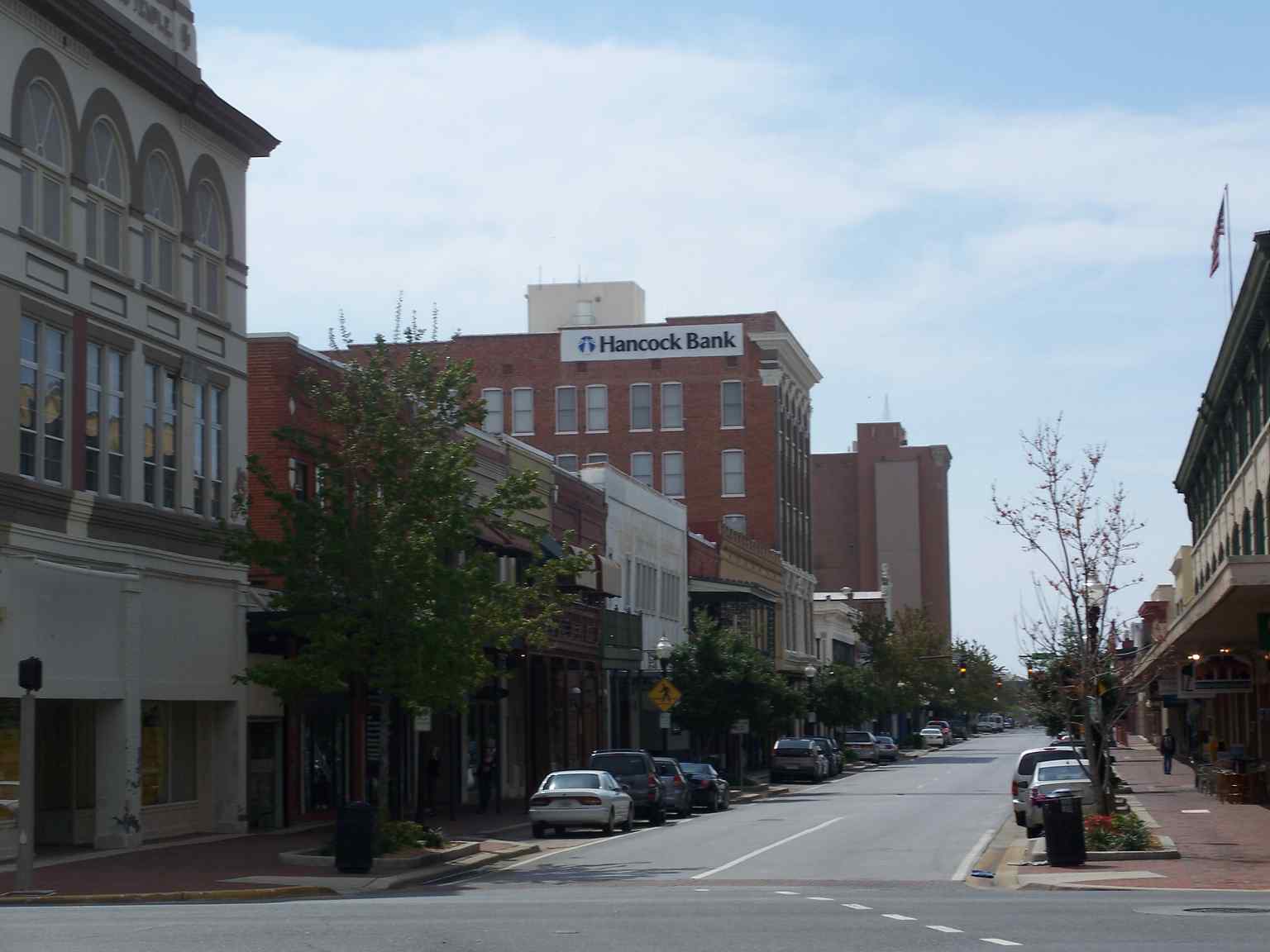
But progress here never comes easy. On a dark night in 1905, a devastating fire roared through the west side of South Palafox Street. The raging flames completely destroyed an entire commercial block, causing three hundred thousand dollars in damage, which is over seven million dollars today! Yet from those literal ashes, the city rebuilt. They erected the magnificent San Carlos Hotel in 1910 for half a million dollars, an opulent seven story structure complete with its own rooftop water purification system. Known affectionately as the Gray Lady of Palafox, it hosted legends from John Wayne to Liberace. Sadly, the Gray Lady fell victim to the rise of highway motels, sitting completely vacant for a decade. Despite being added to the National Register of Historic Places, the official federal list of historic sites worthy of preservation, refurbishing the decaying structure was estimated at over fifteen million dollars. City officials made the heartbreaking choice to demolish it in 1993. Thankfully, the loss of the San Carlos sparked a fierce fight to save what was left. In 2011, a graduate student named Cynthia Catellier spent weeks physically walking these blocks, digging through local infrastructure records to prove this district was an overlooked cultural treasure. Her relentless work paid off in 2016 when the Palafox Historic District was officially protected, saving architectural gems like the Saenger Theatre, built in the ornate, dramatic Spanish Baroque style, from the wrecking ball. One of the greatest examples of what rose from the ashes of that Halloween fire is our next destination. Let's make the seven minute walk to the Blount Building, where another massive disaster forever reshaped the Pensacola skyline.


