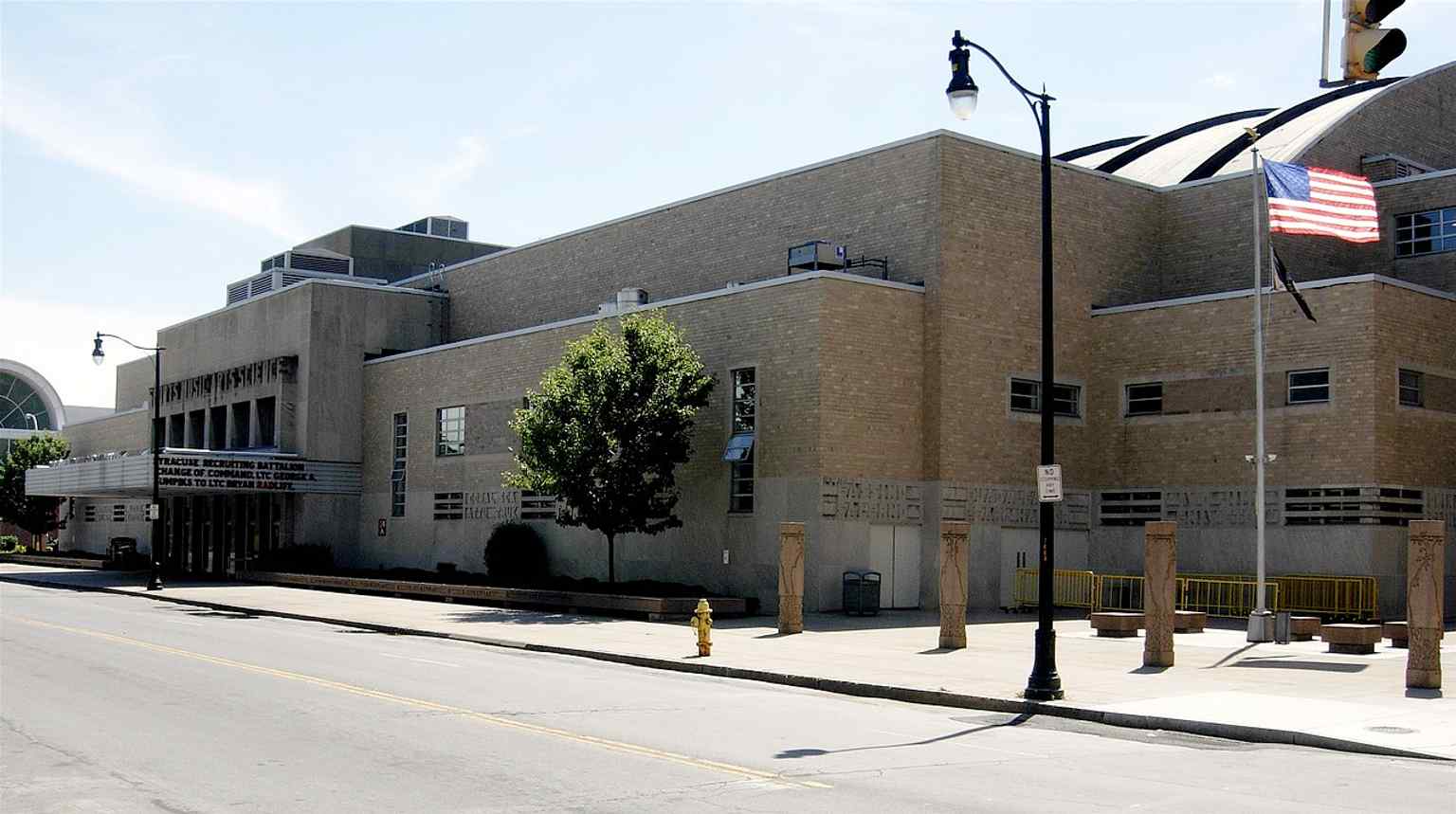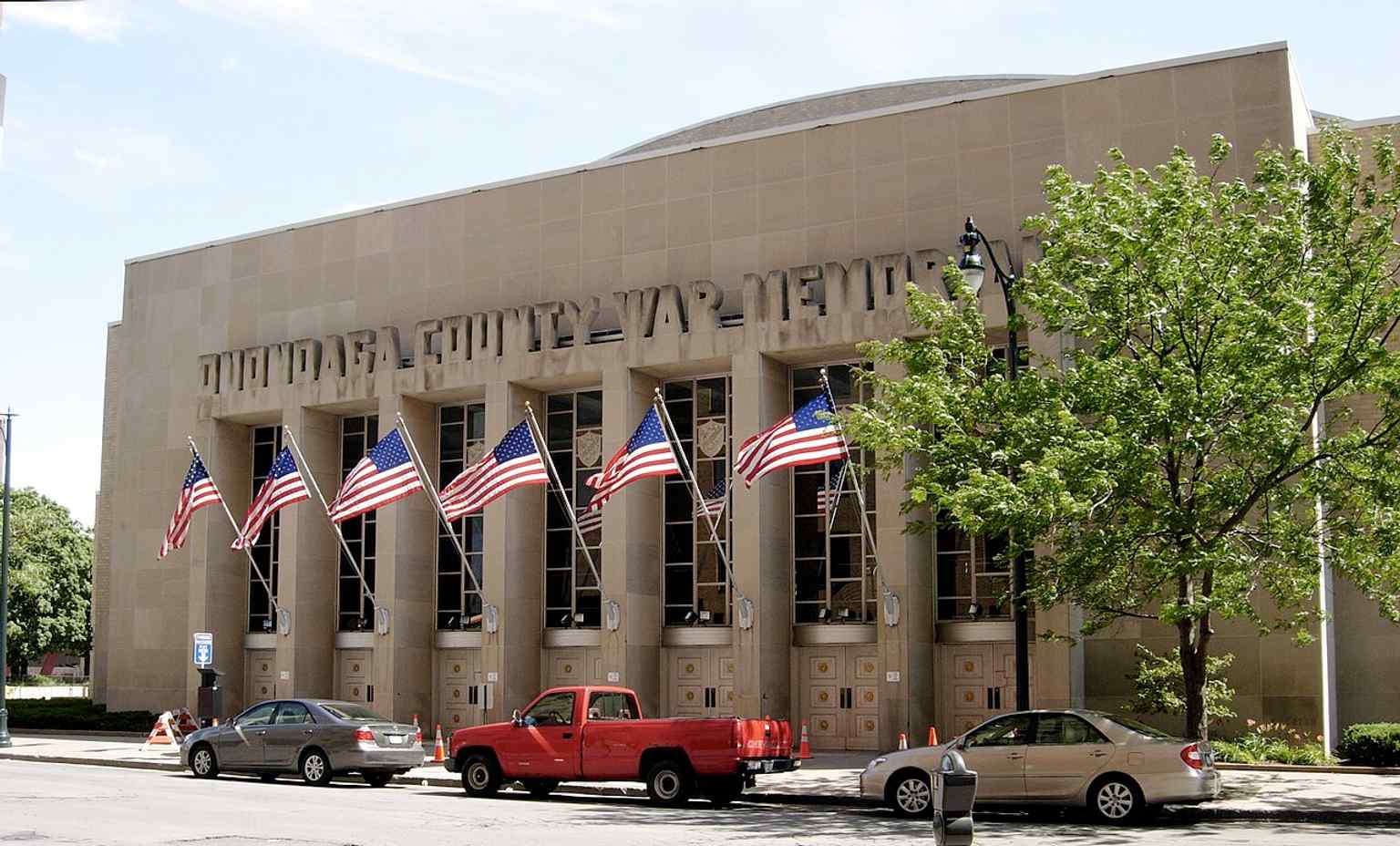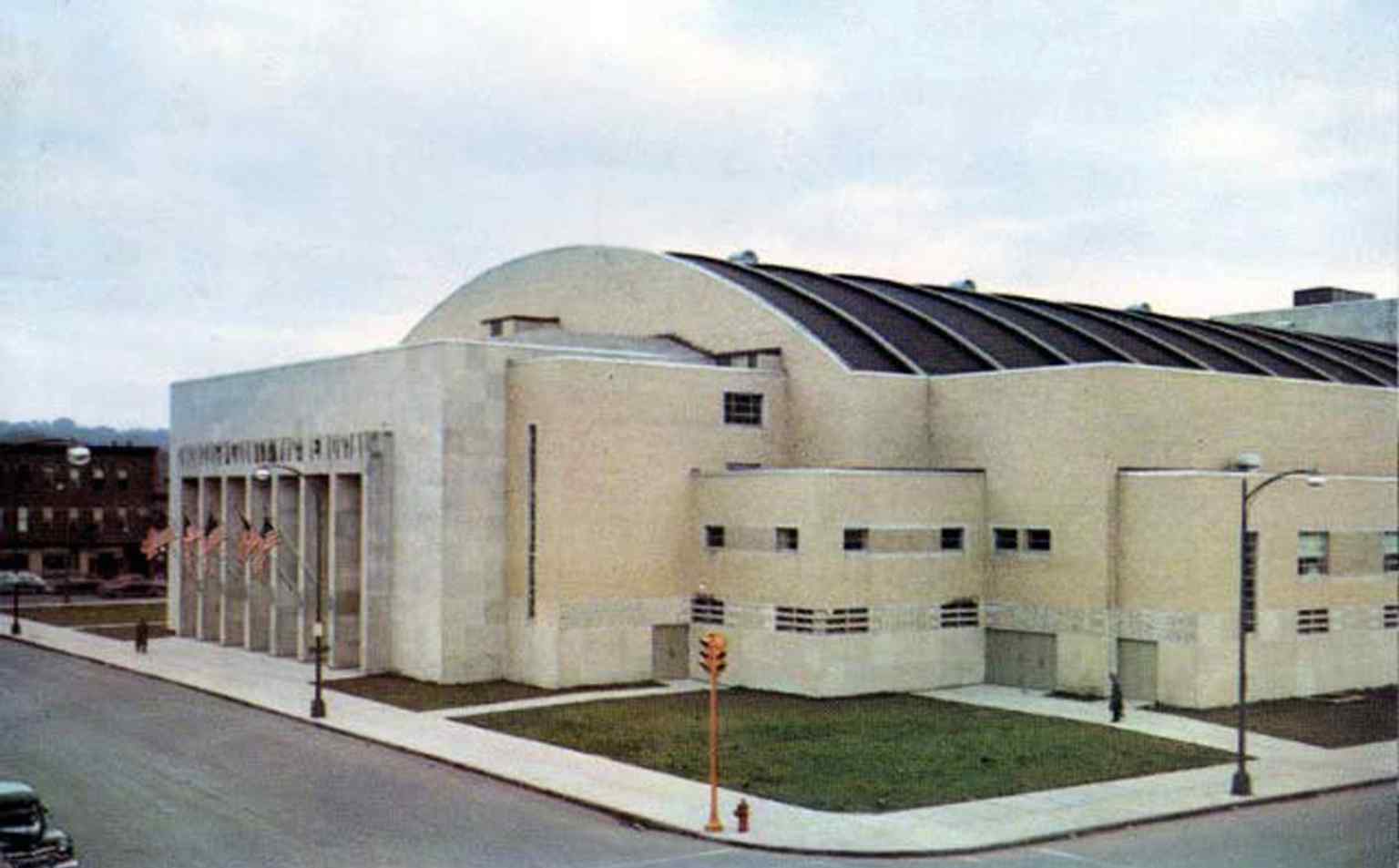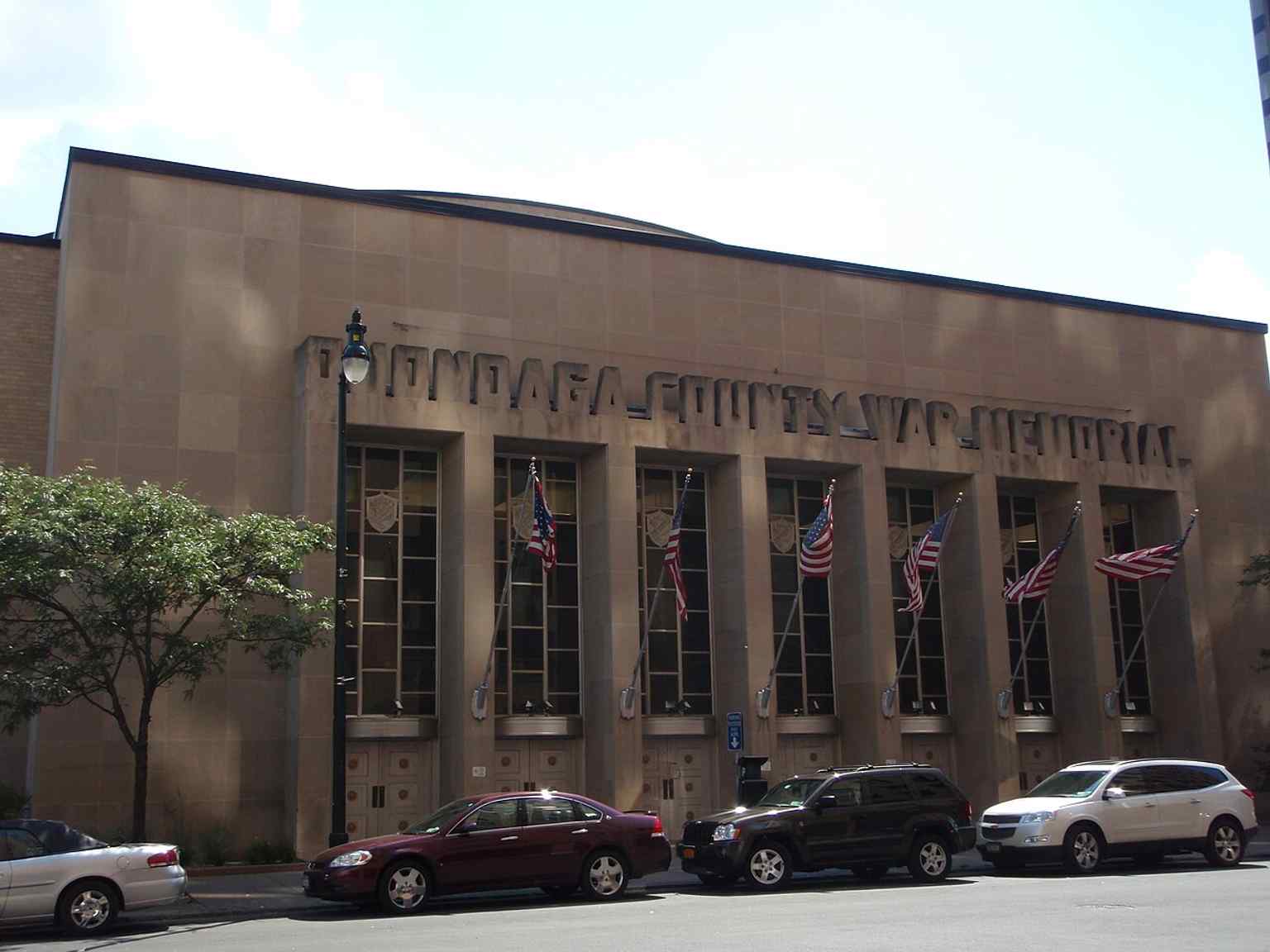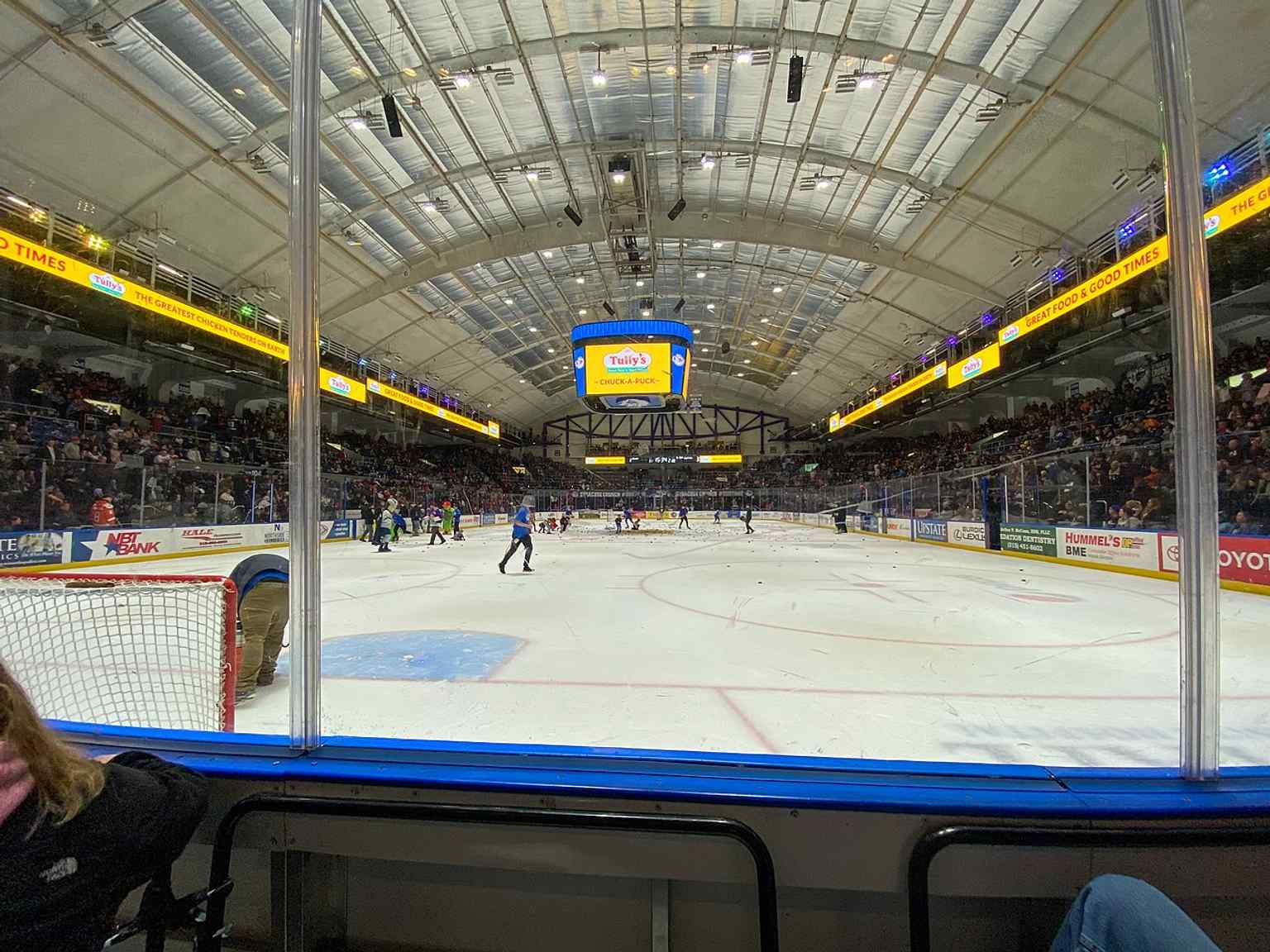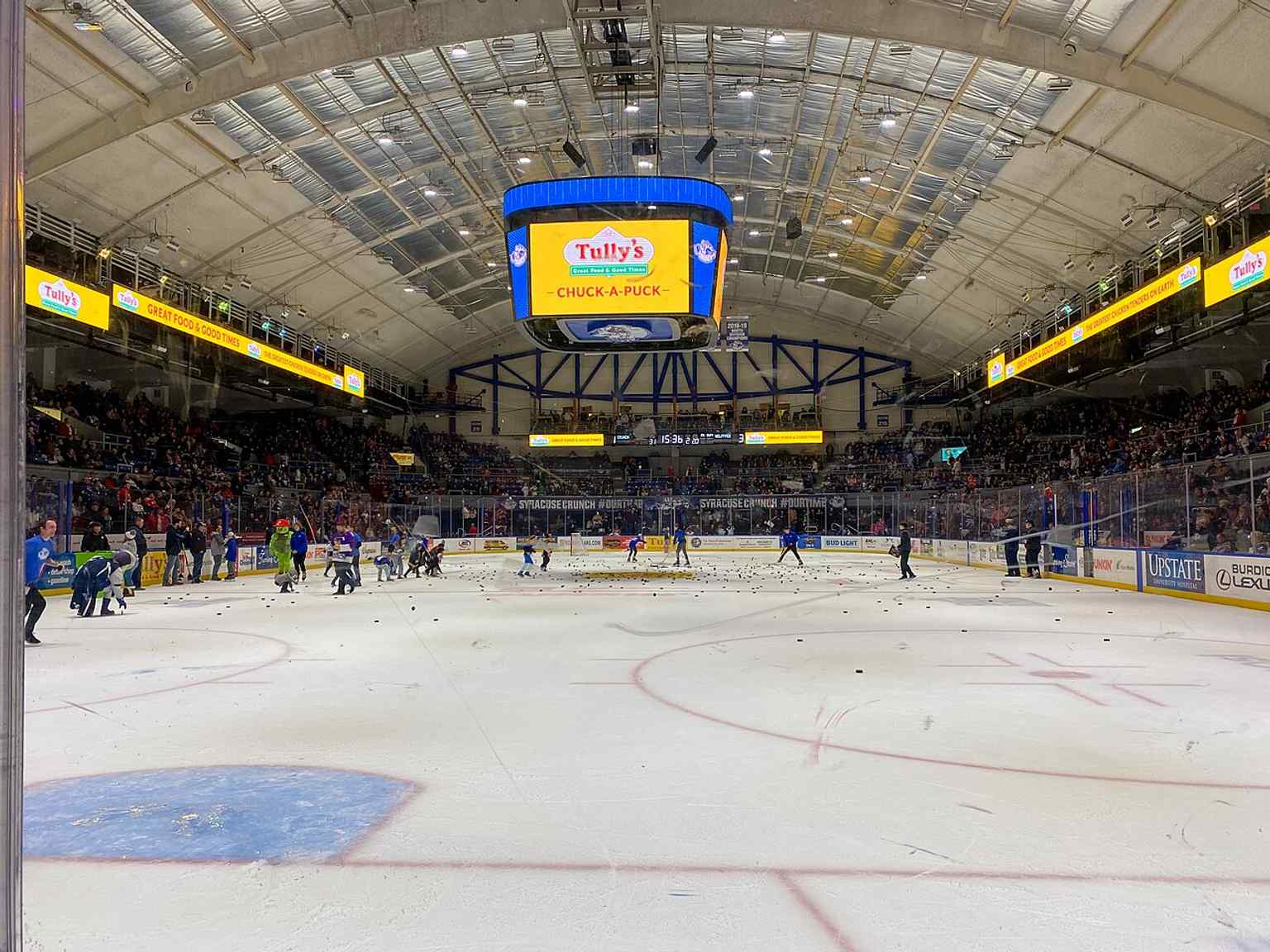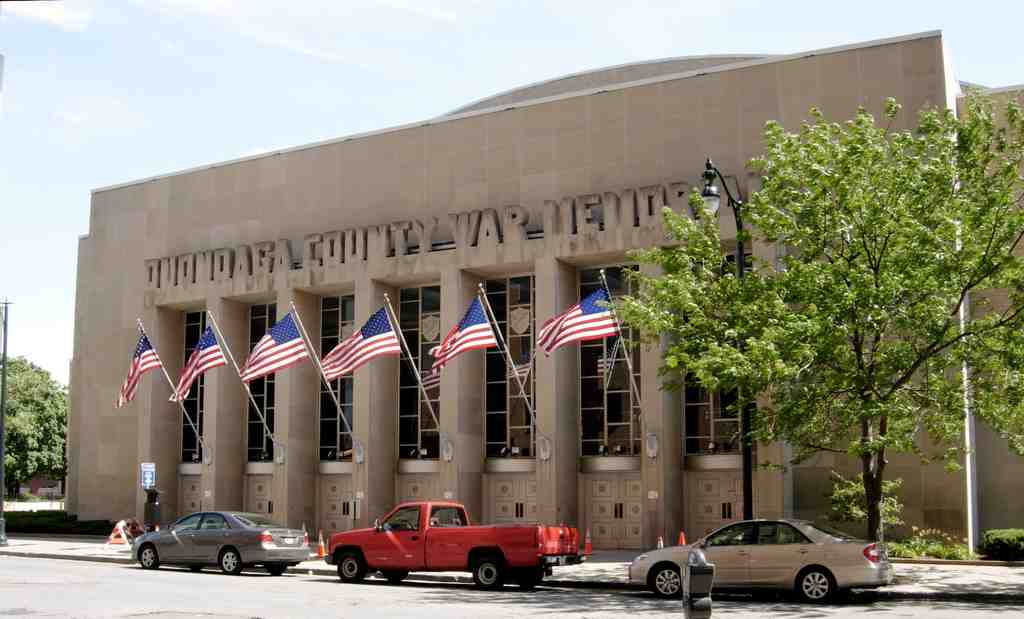
Look for the broad brick-and-stone arena with its low curved concrete roof and formal central entrance, a sturdy mid-century monument that feels more civic hall than ordinary stadium.
This place began as a promise of memory. In nineteen forty-nine, Gold Star Mothers, women whose children had died in military service, helped launch the project that became the Onondaga County War Memorial. So before Syracuse cheered here, it remembered here. Architects Edgarton and Edgarton gave that grief a public shape between nineteen forty-nine and nineteen fifty-one: a memorial for veterans from several wars, wrapped inside an arena bold enough to use a thin-shell concrete roof, a wide single-span structure that covered a huge space without a forest of interior supports.
And yet memory in a city rarely stands still. This building also answered a practical wound. After the nineteen forty-seven fire at Archbold Gymnasium, Syracuse University men’s basketball needed a home. When this arena opened in nineteen fifty-one, it brought the program back downtown and turned remembrance into daily civic life.
If you glance at the before-and-after image in the app, you can see how the Montgomery Street entrance stayed recognizable even as the streetscape around it changed.
That double identity never really left. Inside, the Syracuse Nationals won the nineteen fifty-four to nineteen fifty-five N-B-A championship in a seventh game thriller, ninety-two to ninety-one. Years later, this floor also became part of a quieter history: Earl Lloyd and Jim Tucker, Black players in the early N-B-A, helped make this arena part of the league’s slow breaking of the color line. So this memorial held more than names from wars; it also held the difficult work of widening who belonged in American public life.
And what happens when a memorial must also survive as a working arena... does commerce weaken the meaning, or keep the meaning alive by keeping the doors open?
Syracuse wrestled with that question out loud. Renovations came in nineteen ninety-four and again in two thousand eighteen. In two thousand seventeen, county officials argued bluntly over money, naming rights, bathrooms, lighting, accessibility, veterans exhibits, even a new club space. Then came the two thousand nineteen sponsorship with Upstate Medical University: a new name, health programming, and support for a veterans foundation through the Syracuse Crunch. The name changed, but the old tension stayed visible. What do we preserve here: the words, the purpose, or the gathering itself?
That may be this building’s real legacy. Like the opera house and the towers we’ve met downtown, it keeps reinventing public spectacle: parades became games, ceremonies, concerts, testing clinics, and community rituals. Syracuse does not freeze memory in place. It puts memory to work.
From here, the Everson Museum of Art is about a four-minute walk, where that same stubborn act of making culture after loss takes a very different shape. If you want to check posted information, the arena offices generally keep weekday hours from ten in the morning to five in the afternoon and stay closed on weekends.