

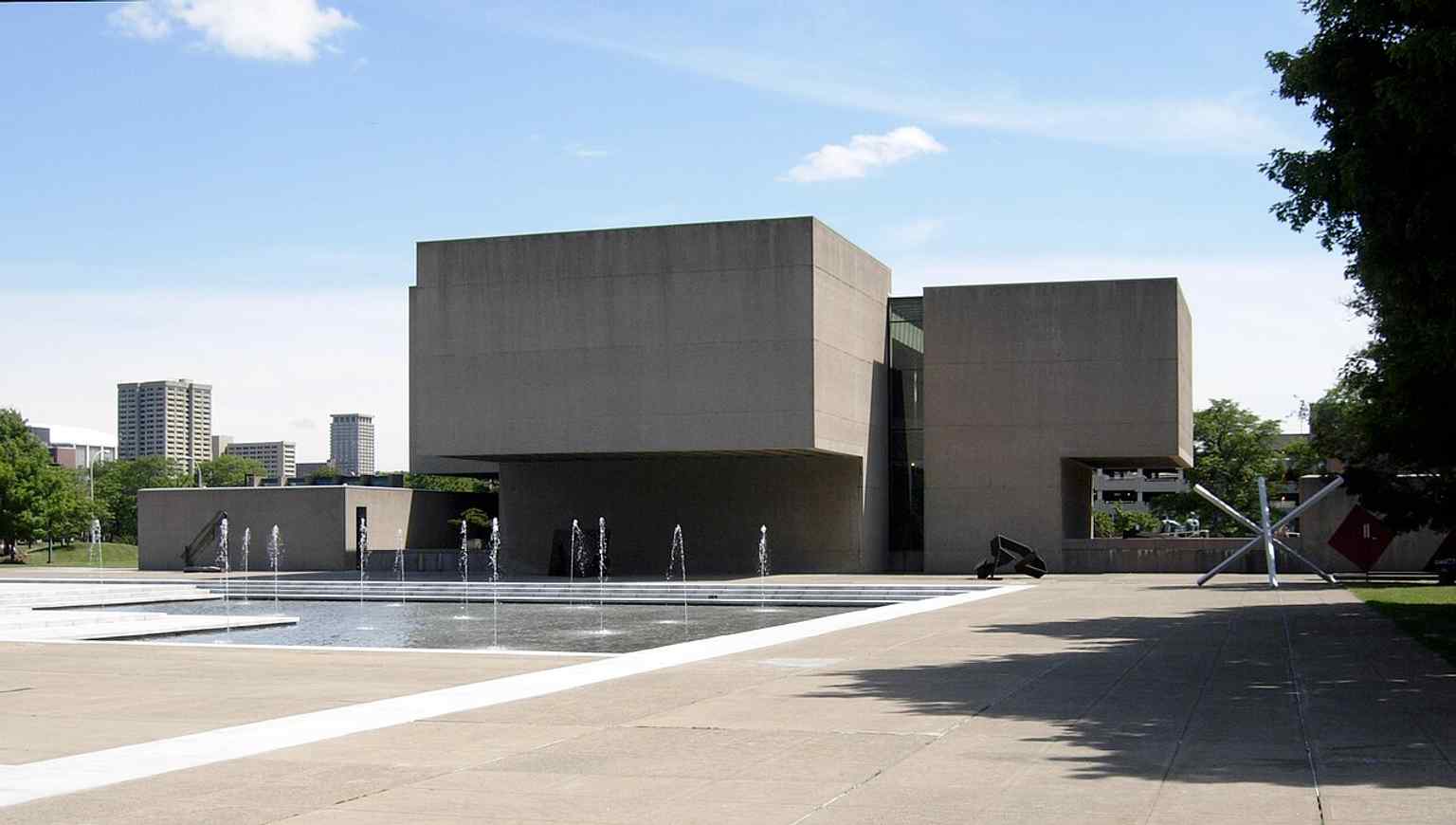
Look for the pale concrete museum formed from stacked square volumes, with deep cantilevered edges and a broad geometric plaza that makes the whole building feel like a sculpture.
The Everson feels certain of itself now... but Syracuse’s art museum began in a much more wandering way. On the evening of the twenty-second of January, eighteen ninety-seven, art historian George Fisk Comfort gathered people at May Memorial Church for the museum’s inaugural meeting. Comfort was the kind of institution-builder who changed the shape of a city’s ambitions; he also helped found the Metropolitan Museum of Art and served as the first dean of Syracuse University’s College of Fine Arts. He and his fellow organizers were saying, very plainly, that art here deserved a public life.
Most visitors never hear that before this museum had a home of its own, it lived wherever Syracuse could tuck it in, including the Onondaga Savings Bank and the Syracuse Public Library. That small local detail says a lot. Long before the city could make art look permanent, it protected it any way it could.
In nineteen eleven, the museum committed itself to collecting only American art. Then Anna Wetherill Olmsted gave Syracuse another lasting identity. In nineteen thirty-two, she started the Ceramic Nationals as a tribute to potter Adelaide Alsop Robineau. The first exhibition looked almost homemade, displayed on draped crates borrowed from a local coffin company... and still, artists immediately urged Olmsted to open it to the whole country. She did. Within a few years, Syracuse had become one of the most important places in America for studio pottery.
Robineau’s presence still feels close here. Her Scarab Vase, carved over more than one thousand hours, became one of the museum’s signature treasures. If you glance at the image in the app, the interior view gives you a sense of the calm, open space created to honor objects like that.
The city’s larger declaration came because Helen Everson gave Syracuse one million dollars in nineteen forty-one, a huge sum at the time, to build an art museum. When this building opened in nineteen sixty-eight, I. M. Pei did not design a simple container. He shaped a work of art in concrete, with four bold square forms thrusting outward. The exterior photo on your screen catches that sculptural confidence well.
There is a harder truth in the ground beneath it. The Everson stands on land reshaped by the displacement of many Black residents from Syracuse’s Fifteenth Ward during urban renewal in the nineteen sixties. So this place keeps memory in a complicated way: through paintings, ceramics, video, and also through the city’s choices about what to preserve, what to celebrate, and what it once erased.
That may be the most lasting thing here. Syracuse gave art a permanent civic address, and then kept widening the definition of what belonged inside it. The facade itself still becomes a screen through public art collaborations, which makes our final stop feel like a natural next step. Light Work is about an eleven-minute walk from here. If you want to come back inside later, the museum is closed Monday and Tuesday, then open Wednesday through Sunday, with later hours on Thursday.





