
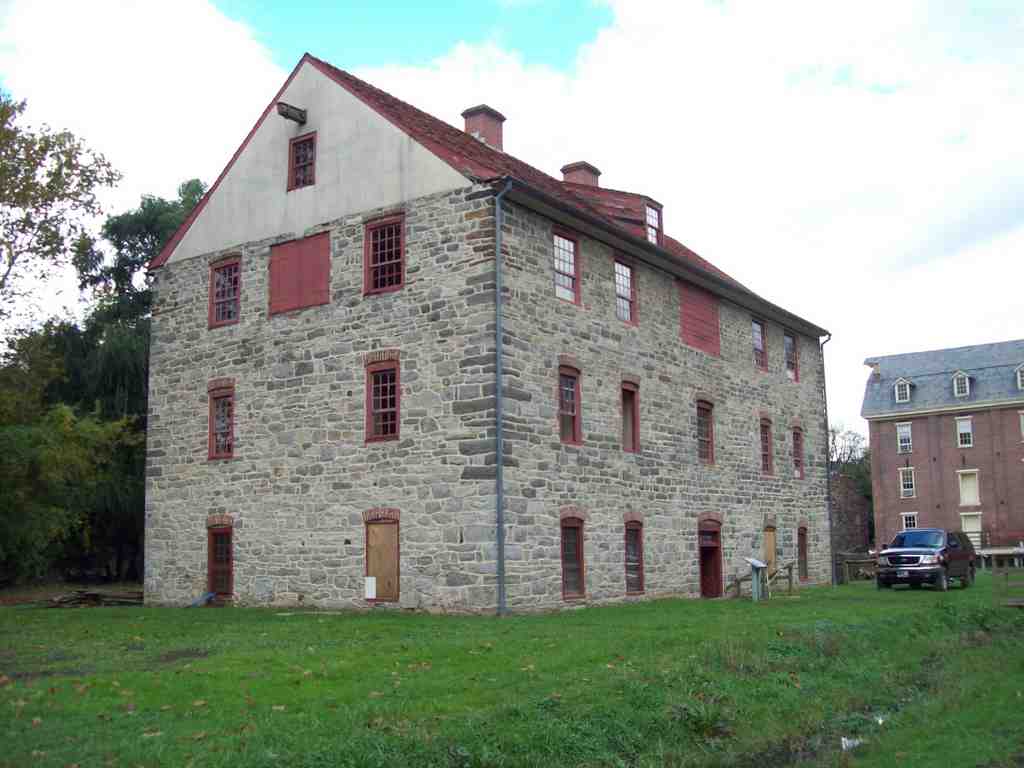
On your right, look for the big, rectangular gray-stone building with red-trimmed windows and a steep reddish roof sitting low in the grass like it’s been patiently waiting since colonial times… because it has.
This is The Tannery, built by Bethlehem’s Moravians-first as a modest log setup back in 1743, then upgraded to this solid limestone workhorse in 1761. If the stone walls feel a little no-nonsense, that’s the point: this place wasn’t for show. It was for turning raw animal hides into leather-one of the most useful materials in an early American town and, conveniently, one of the most profitable. Shoes, harnesses, saddles… if it creaked, flexed, buckled, or had to survive weather and hard use, leather was the answer.
By the 1760s, this operation was processing something like 1,000 to 2,000 hides a year. That’s not “a quaint craft demo,” that’s production. Colonial Bethlehem had hobbies, sure… but it also had a supply chain. The Moravians here were feeding leather to local shoemakers and tradespeople in Bethlehem, Nazareth, and nearby communities.
Then came the American Revolution, and with it the sudden end of smooth trade with England. Leather demand didn’t politely dip-it spiked. The Continental Army needed hard-wearing gear: boots, caps, coats, buckets, saddles. This tannery ramped up to an estimated 3,000 hides per year. Picture the yard busy with soaking pits, the sharp tang of wet hide, and that earthy bite of ground oak and hemlock bark-the “tanbark” that made the chemistry happen.
And the chemistry was… intense. The full process could take up to two years. Hides got washed and trimmed, then sat in lime for weeks. After that came scraping the hair off-heavy work when a wet hide can weigh a few hundred pounds. Then the worst part: “bating,” a soak in water, salt, and manure to neutralize the lime and soften the skin. Yep. History has smells. Next, months in vats with tanbark “liquor,” then pounding, drying, and sometimes extra finishing by a currier for softer, more waterproof leather.
One odd detail I love: when this building went up in 1761, you would’ve walked UP steps to reach the first floor. Today you walk down. Archaeology found the land around it was later filled in-by seven or eight feet-quietly reshaping the whole scene.
The Moravians ran tanning here until 1829, and tanning finally stopped in 1873 when tanbark got too expensive. After that, the building had a rougher chapter-turned into housing, later surrounded by an auto junkyard, and sliding toward ruin. Restoration work in the late 1960s and early 1970s brought it back, and it even reopened for tours for a time-until storm damage shut things down again. It’s city-owned now, leased to Historic Bethlehem Museums & Sites, but not currently open inside.
When you’re set, Bethlehem Waterworks is a 2-minute walk heading south.




