

Fort Lauderdale Audio Tour: Riverfront Stories & Timeless Treasures
A century ago, the New River carried whispers of fortune seekers, scandal, and secret rendezvous beneath the sunbaked palms of old Fort Lauderdale. With this self-guided audio tour, uncover the city's hidden layers where opulent mansions stand beside relics of intrigue and rebellion—stories that escape the guidebooks. What desperate pact at the Stranahan House nearly changed Florida's fate overnight? Why did the Bienes Museum of the Modern Book become a lightning rod for art world conspiracies? And which odd signature left deep inside the Bryan Building baffles historians even now? Glide from riverside hideaways to silent stacks, tracing the shadows of defiant visionaries, bold plotters, and the quirky dreamers who shaped this city’s wild heart. Each step and story pulls you deeper into Fort Lauderdale’s vivid, unseen past. Start the tour now and discover what still lingers beneath the palms.
Tour preview
About this tour
- scheduleDuration 90–110 minsGo at your own pace
- straighten3.7 km walking routeFollow the guided path
- location_onLocationNorth Lauderdale, United States
- wifi_offWorks offlineDownload once, use anywhere
- all_inclusiveLifetime accessReplay anytime, forever
- location_onStarts at Fort Lauderdale Woman's Club
Stops on this tour
lock_open 3 free previews · 9 unlock with purchase
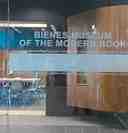
On your right, look for the modern glass-front entrance with big white lettering that reads “BIENES MUSEUM OF THE MODERN BOOK,” paired with warm, curved wooden walls just…Read moreShow less
On your right, look for the modern glass-front entrance with big white lettering that reads “BIENES MUSEUM OF THE MODERN BOOK,” paired with warm, curved wooden walls just inside. This place is basically proof that Fort Lauderdale doesn’t just do beaches… it does BOOKS, too. The Bienes Museum of the Modern Book is the rare book department of the Broward County Library, and it opened to the public on December 5, 1996. Picture that moment: a city better known for sun and sand quietly cutting a ribbon for a museum dedicated to paper, ink, and the oddly thrilling smell of old pages. You know the one. It started in large part thanks to philanthropists Diane and Michael Bienes, who put up a $1 million donation to get things rolling… which is roughly about $2 million in today’s dollars. Not a bad way to say, “Yes, culture matters.” The launch also leaned on support from the Broward Public Library Foundation, plus funding from the Florida Department of State Division of Cultural Affairs and the Florida Arts Council. And the Bienes didn’t just write a check-they also donated books and artifacts from their own collection, which is the kind of generosity that makes librarians do a quiet little victory lap. Step mentally inside for a second. The museum sits in an 8,300-square-foot space designed by architect Donald Singer, and it’s got this elegant, curved wood ceiling hovering above slatted wood walls, mixed with glass, granite, and ceramic tile. It’s part library sanctuary, part design statement-a place that makes you want to lower your voice even if nobody asked you to. There’s also a 25-seat conference room and a 60-seat ceremonial room for talks and programs, because books don’t just sit there… they bring people together. Now for the fun part: the collections. We’re talking more than 15,000 items-rare books, manuscripts, artifacts, reference materials-the whole paper-trail universe. Some highlights get wonderfully specific. There’s the Jean Fitzgerald WPA Federal Writers’ Project material, tying Fort Lauderdale to the New Deal era of the 1930s and early 1940s, when government programs put writers and cultural workers to work documenting American life. Then there’s Floridiana-archives and papers linked to Florida authors like Charles Willeford, Michael Shaara, Connie May Fowler, and Olivia Goldsmith. And if you think “rare books” sounds too serious, don’t worry. The children’s collections have real personality: over 2,000 alphabet items in the Nyr Indictor Collection, spanning languages from Arabic to Yiddish, plus alphabet-themed toys, puzzles, flash cards, and even wrapping paper. There are Big Little Books-those tiny 4-and-a-half-inch tall classics from 1932 onward-featuring characters like Dick Tracy, Flash Gordon, and Mickey Mouse. Add roughly 2,400 vintage comic books from the 1950s to 1980s, and suddenly “library” feels a lot more like “time machine.” Ready for Bryan Building? Just walk west for 4 minutes.
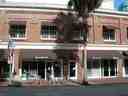
Open dedicated page →Look to your left for a sturdy two-story red-brick building with striped awnings over wide storefront windows and a simple row of upstairs windows trimmed in brick. This is the…Read moreShow less
Look to your left for a sturdy two-story red-brick building with striped awnings over wide storefront windows and a simple row of upstairs windows trimmed in brick. This is the Bryan Building... and in South Florida, a real brick façade is basically a personality trait. Most early buildings around here went with poured concrete or hollow clay tile, but this place doubled down on masonry: brick columns and pilasters dividing five street-level storefronts, big plate-glass windows meant to catch your eye, and upstairs, eight windows framed with a neat brick pattern that nods to a simplified Greek-key look. If you spot the arched doorway on the front, that’s your hint that there’s a second life above the shops-literally, since the main stairs to the upper floor run inside that entrance. And up there? Floors and ceilings made from Dade County pine-hard, local wood that helped buildings survive Florida’s long, humid grind. The building went up after the 1912 fire that tore through downtown Fort Lauderdale. Fires have a way of “editing” a city’s history, and Thomas Bryan helped write what came next. He was tied to the region’s growth through his father, Nathaniel Bryan, who oversaw construction of Henry Flagler’s Florida East Coast Railway extension from West Palm Beach to Miami-one of those projects that didn’t just connect dots, it created them. Thomas himself was plugged into local business and civic life, and his efforts helped push the creation of Broward County. Back then, this neighborhood was the original commercial heart of Fort Lauderdale-less glossy skyline, more hustle and dust. Inside these walls, the tenants changed with the times. The Post Office operated here from 1914 to 1925-imagine folks lining up with letters and money orders where retail displays sit now. Around that era, the Fort Lauderdale Bank held space on the ground floor too. Then upstairs became a revolving-door home for travelers and long-term renters: it went by names like the DeSoto, the Lee, the Boriss, and later the Dorsey-famously a men-only place with a cowboy theme. Because nothing says “Florida lodging” like pretending you’re in the Old West. By the 1960s, downtown business drifted outward with the suburbs, but this building stayed stubbornly intact-one of the least altered survivors of its time. It earned a spot on the National Register of Historic Places in 1997, and got a historically respectful renovation around 1998-part preservation, part the complicated trades cities make to save some history while losing other pieces. When you’re set, Girls’ Club Foundation is a 4-minute walk heading north.
Open dedicated page →
Show 9 more stopsShow fewer stopsexpand_moreexpand_less
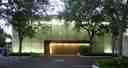
On your right, look for the boxy building with a pale, translucent green facade that seems to softly glow, with a warm wooden entry set back beneath the trees. This is the Girls’…Read moreShow less
On your right, look for the boxy building with a pale, translucent green facade that seems to softly glow, with a warm wooden entry set back beneath the trees. This is the Girls’ Club Foundation, and from the outside it already feels like it’s letting you in on a secret… just not all at once. In daylight, those fiberglass-resin panels read like a smooth, milky skin. But at night, when they’re lit from behind, the whole place turns into this gentle lantern on the block. It’s part gallery, part beacon-like the building is saying, “Yes, art is in here… and no, you can’t rush it.” Girls’ Club is a privately funded nonprofit, founded in 2006 by artist Francie Bishop Good and her husband, David W. Horvitz. Their big idea was simple, and kind of wild when you think about it: create a space in downtown Fort Lauderdale dedicated primarily to contemporary art by women-local artists alongside major names from around the world, and across a wide range of backgrounds. Not “women’s art” as a side category… but women as the main event. Imagine that. Step closer and notice how the architecture matches the mission. The building was designed by Fort Lauderdale architect Margi Glavovic Nothard, and the interior is made to shapeshift: pivoting, movable walls so exhibitions can keep changing without the space feeling trapped in one layout. It’s basically a gallery that refuses to sit still-appropriate for contemporary art, and honestly… for life. Their first exhibition opened in October 2007 with a show called “Talking Heads.” The theme was portraiture-but not just polite faces on a wall. Think photographs, paintings, and moving-image pieces that asked what a “portrait” even is. The works came from the Good-Horvitz collection, plus loans from other collections and galleries, and even directly from local artists’ studios-fresh enough that you can practically smell the paint. That show ran for a year, which is a confident way to open your doors. Then the exhibitions kept pushing. “Under The Influence” looked at how artists don’t stay in neat lanes-how they curate, write, critique, and generally stir the pot of community life. “Set To Manual” leaned hard into hand-made labor-animations painted by hand, film physically altered, drawings made by pricking holes in paper… the kind of work that makes your wrist hurt just thinking about it. Later, shows played with big ideas like iteration and copying-what counts as “the original” when our lives are basically screenshots of screenshots. And Girls’ Club doesn’t pretend the gallery walls are the whole world. Their mission includes education and career support for female artists, plus being a resource for students, scholars, curators, and working artists. They also make a point of helping local artists reach national and international audiences-through online projects, interviews, written pieces, and a blog that extends the conversation beyond this very quiet curb you’re standing on. So yeah… from the outside it’s calm. But inside, it’s built for questions. When you’re ready, Fort Lauderdale History Center is a 4-minute walk heading north.
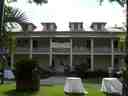
Open dedicated page →On your right, look for the long, pale wooden building with a shaded two-story porch, chunky white columns, and little dormer windows popping out of the roofline. This is the…Read moreShow less
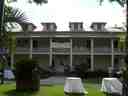
On your right, look for the long, pale wooden building with a shaded two-story porch, chunky white columns, and little dormer windows popping out of the roofline. This is the Fort Lauderdale History Center, run by the Fort Lauderdale Historical Society, and it’s less one “museum building” and more a whole little campus whose job is to keep Greater Fort Lauderdale from forgetting how it got here. The star of the show is the New River Inn, built in 1905 as a working hotel back when “downtown” was basically sand, sweat, and optimism. Today it holds the main local-history museum, packed with artifacts, photos, and displays… and yes, there’s even a room staged like a typical 1908 hotel room. Think: simple furniture, practical details, and the quiet reminder that air-conditioning was still a dream people hadn’t dared to have yet. But the History Center doesn’t stop with one building. Nearby is the King-Cromartie House from 1907, presented as a home around 1915-open by guided tour-so you get the domestic side of early Fort Lauderdale: the kind of place where the big “luxury upgrade” might’ve been a nice breeze and enough screens to keep the bugs from carrying you away. And then there’s the 1899 Replica School House, a throwback built in the 1970s for the American Bicentennial-because nothing says “let’s celebrate 200 years” like building a one-room schoolhouse and remembering how hard kids had it. Fun times. Behind the exhibits is the serious memory-keeping: the Hoch Heritage Research Center, in a 1949 former post office annex that became the Historical Society’s home in 1978. Inside are maps, blueprints, scrapbooks, oral histories, newspapers-plus manuscript collections tied to pioneers like the Stranahans, and an enormous photo archive with around 400,000 images documenting Broward County. That’s a lot of evidence… in case anyone tries to tell you Fort Lauderdale “came out of nowhere.” When you’re set, New River Inn is a 0-minute walk heading north.
Open dedicated page →Look straight ahead for the long, two-story, pale building with a deep wraparound porch and three little dormer windows popping out of the roof. This is the New River Inn, built…Read moreShow less
Look straight ahead for the long, two-story, pale building with a deep wraparound porch and three little dormer windows popping out of the roof. This is the New River Inn, built in 1905 when Fort Lauderdale was still more “frontier outpost” than “vacation playlist.” It was put up by Edwin T. King, the area’s first contractor, for Nathan Philemon Bryan who’d gone from Jacksonville to the United States Senate... and still wanted a proper hotel down here. The clever part is what it’s made of: hollow concrete blocks and sand dredged from the beach nearby. Because nothing says “welcome, traveler” like sleeping inside a building that’s part ocean. For its day, this place was downright fancy: sewer and irrigation systems, running ice water, and carbide lamps throwing a warm, flickering glow at night. It ran as a 24-room hotel until 1955, then earned National Register status in 1972. Today, it’s a time capsule-pioneer life, a recreated 1908 hotel room, and the “Panorama of the Past.” When you’re set, Bank of America Plaza is about a 12-minute walk heading east.
Open dedicated page →On your left, look up for the tall, pale concrete-and-glass tower with the “Bank of America” sign near the top, capped by a stepped, pyramid-like crown against the sky. This is…Read moreShow less
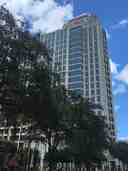
On your left, look up for the tall, pale concrete-and-glass tower with the “Bank of America” sign near the top, capped by a stepped, pyramid-like crown against the sky. This is 401 Las Olas, better known as Bank of America Plaza… a 23-story, 365-foot marker planted in downtown Fort Lauderdale in early 2003. At street level it keeps things friendly: a Bank of America branch, plus a small cluster of shops where the air-conditioning hits you like a polite slap. But then the building does a classic office-tower move: “Welcome in… and please don’t go anywhere.” The upper floors are for employees and clients only, and those elevators? They want to see an identification card before they’ll take you upstairs. The real show is the top: that 42-foot pyramidal crown. At night it lights up, and the skyline suddenly has a very confident hat. When you’re ready, Stranahan House is a 6-minute walk heading south.
Open dedicated page →On your left, look for the two-story white wooden house with deep green trim, wraparound porches, and a historic marker sign out front-tucked under big shade trees with the river…Read moreShow less
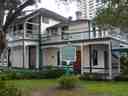
On your left, look for the two-story white wooden house with deep green trim, wraparound porches, and a historic marker sign out front-tucked under big shade trees with the river just beyond. This is the Stranahan House, and for a place that looks this calm and porch-friendly, it has seen some serious Florida drama. Built in 1901, it started life not as a cozy home, but as a working trading post on the New River-basically an early Fort Lauderdale “general store,” except your customers might arrive by dugout canoe. Frank Stranahan came here in 1893, 27 years old, hired to manage a camp and a ferry at Tarpon Bend. The river was the highway, and he quickly built a trading business with Seminole families who would come in groups, camp nearby for days, and do business face-to-face. Frank got a reputation for being fair… which, in any frontier economy, is a superpower. Not long after, he bought about ten acres and moved his operation farther west along the river, and that little patch became the center of the tiny settlement. He even became the postmaster-because if you were the guy everyone relied on, you might as well handle the mail too. Then comes Ivy. In 1899, the community finally got big enough to qualify for a teacher, and 18-year-old Ivy Julia Cromartie was hired for $48 a month-about $1,800 in today’s money. She taught nine students in a one-room schoolhouse the locals built for her. Frank and Ivy got to know each other during the months she lived here, and they married in 1900. By the rules of the time, Ivy had to give up her paid teaching job… but not the actual teaching. She began offering informal lessons for Seminole children at the trading post, doing it in a way that respected traditions, which helped earn trust and started a lifelong bond with the Seminole community. Now, look back at the building itself. When Frank built this structure in 1901, the downstairs was business-trading post-while upstairs functioned like a community hall. In 1906, after the railroad arrived nearby and Frank expanded into a general store and banking, this old post was remodeled into the Stranahans’ home. That’s when features like those bay windows and early gas lighting likely showed up. In 1913, they added an interior staircase and wired it for electricity. By 1915, water towers went in, and indoor plumbing probably followed… which, in Florida, is less a luxury and more a peace treaty with humidity. Their story turns darker in the late 1920s. The land boom collapsed, hurricanes hit, and Frank’s finances-and spirits-fell apart. In 1929, he died by suicide in the New River right in front of his home. It’s hard to stand here, in such a tidy place, and remember that grief can be just as permanent as wooden beams. Ivy stayed. She rented rooms, leased the ground floor to restaurants, and kept showing up for civic life-planning and zoning, the Homestead Exemption push, Red Cross work, Campfire Girls, and organizing support for Seminole communities. She lived here until 1971, passing at 90. The house later made the National Register of Historic Places in 1973, and after preservation work to restore its 1915 look, it reopened as a museum in 1984. If you want to go in, they typically run guided tours at 1, 2, or 3 p.m. most Tuesdays through Fridays-best to check the website so you’re not left negotiating with a locked door. Ready for New River Tunnel? Just head east for 0 minutes.
Open dedicated page →Look straight ahead for the wide, concrete mouth of the underpass with “HENRY E. KINNEY TUNNEL” stamped across the top, like a label on a very serious doorway. This is the New…Read moreShow less
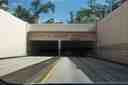
Look straight ahead for the wide, concrete mouth of the underpass with “HENRY E. KINNEY TUNNEL” stamped across the top, like a label on a very serious doorway. This is the New River Tunnel’s official nameplate… and it’s here because Fort Lauderdale once had a bridge problem. Back in 1926, a drawbridge carried the route across the river-great for boats, not so great for people trying to get anywhere before dinner. When that old bridge had to open, traffic could stack up so badly that drivers sometimes crawled across in 45 minutes. A river crossing shouldn’t feel like a long-term commitment. So the city argued it out-another bridge, or go underground? The tunnel won. Thorington Construction, led by Alfred Spear, built it, and when it opened in 1960 it was the ONLY public tunnel operating in Florida. In 1986, it was renamed for Henry E. Kinney, a newspaper editor who pushed hard to make this happen. Sometimes the pen really does beat the drawbridge. When you’re set, Las Olas Boulevard is a 7-minute walk heading north.
Open dedicated page →Look to your right for Las Olas Boulevard: a wide, palm-lined street with low-rise storefronts, dark awnings, and a steady stream of cars gliding past brick-trimmed…Read moreShow less
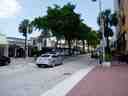
Look to your right for Las Olas Boulevard: a wide, palm-lined street with low-rise storefronts, dark awnings, and a steady stream of cars gliding past brick-trimmed sidewalks. Alright, welcome to Las Olas… which literally means “The Waves.” And like waves, this boulevard has spent the last century reshaping itself, again and again, depending on what Fort Lauderdale needed most: a path through a swamp, a shortcut to the beach, or a place to spend money you swear you were just “looking.” Back in 1917, this was barely more than a rough road pushed across soggy wetlands by S. P. Snyder and Son. Picture it: heat shimmering off mud, mosquitoes doing their usual customer-service routine, and the big ambition of connecting downtown out to the barrier island. Glamorous beginnings, as always. In the 1920s the city got even bolder-dredging and carving out the Las Olas Isles to create waterfront residential land. What you see today as neat canals and fancy addresses started as a full-on engineering makeover of the landscape. Then after World War II, the “Las Olas” most people mean took shape: a commercial strip lined with bars, boutiques, galleries, restaurants… and just enough nightlife to make you check your phone the next morning like, “Did I really text that?” As you head east, Las Olas crosses the Intracoastal and runs toward the beach; head west and it eventually shifts into a more high-rise downtown feel. Along the way it slides over the Henry E. Kinney Tunnel-one more reminder that in Fort Lauderdale, even the roads have to negotiate with water. The personalities tied to this stretch are almost as varied as the storefronts: Johnny Weissmuller of Tarzan fame, entertainers like Sonny and Cher, Lucille Ball and Desi Arnaz… and the Stranahans, early pioneers who helped plant roots here long before “Las Olas” meant valet parking. Ready to keep going? Walk west for about 2 minutes, and the Riverside Hotel will be on your left.
Open dedicated page →On your left, look for the pale green, old-school hotel with a long shaded porch arcade and a row of colorful flags out front… that’s the Riverside Hotel. Now, this place has…Read moreShow less
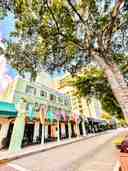
On your left, look for the pale green, old-school hotel with a long shaded porch arcade and a row of colorful flags out front… that’s the Riverside Hotel. Now, this place has been holding down Las Olas longer than just about anything around it. The building itself went up in 1925, but the Riverside as we know it opened in 1936, perched right by the New River and next door to the Stranahan House like an older sibling who’s seen some things and doesn’t need to brag about it. In 1934, three Wells brothers bought the hotel for $8,250 cash… which is roughly about $190,000 today. Not bad for a three-story, 30-room spot in a town that was still figuring out what kind of city it wanted to be. Back then it opened under the name “Champ Carr Hotel,” named for the first manager. Imagine being so good at your job they name the whole building after you… and then later change it back anyway. The Las Olas Company has kept ownership from the start, and the hotel’s had a real “come on in” reputation-especially in 1947, when a hurricane pushed locals to take shelter here. You can almost hear the wind outside and the low, nervous chatter inside…the kind of night that turns a hotel into a lifeboat. Over the years, plenty of big names checked in-politicians, governors, even a president-because nothing says “Florida business” like a meeting near the river with a breeze and plausible deniability. Totally just here for the sunshine. In 2002, they poured about $25 million into renovations-around $42 million today-adding a 12-story tower and doubling the rooms, while keeping the classic curb appeal. When you’re set, St. Anthony School is a 13-minute walk heading east.
Open dedicated page →On your left, look for the cream-colored, Spanish-style school building with red tile roofs, a long row of arches, and a cross perched on the front like it’s keeping an eye on…Read moreShow less
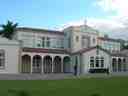
On your left, look for the cream-colored, Spanish-style school building with red tile roofs, a long row of arches, and a cross perched on the front like it’s keeping an eye on homework. This is St. Anthony Catholic School, the parish school tied to St. Anthony Catholic Church, right here at 820 Northeast 3rd Street. Take a second and picture 1926 Fort Lauderdale: fewer high-rises, more dust, and a whole lot of optimism. This building went up then, built by John Olsson and designed by architect Francis Abreu… and it still wears that Mediterranean look well-stucco walls, shaded arcades, and those big windows that practically demand Florida breezes. In 1997, it landed on the U.S. National Register of Historic Places… which is basically the country saying, “Hey, don’t mess this up.” And the alumni list? Not bad for a school day. Tennis legend Chris Evert and Jeanne Evert, NFL’s Brian Piccolo, Olympian sailor Sarah Lihan, All-Star catcher Mike Stanley, author Michael Connelly, Medal of Honor chaplain Charles Liteky, and federal judge William J. Zloch. Apparently recess was very competitive.
Open dedicated page →
Frequently asked questions
How do I start the tour?
After purchase, download the AudaTours app and enter your redemption code. The tour will be ready to start immediately - just tap play and follow the GPS-guided route.
Do I need internet during the tour?
No! Download the tour before you start and enjoy it fully offline. Only the chat feature requires internet. We recommend downloading on WiFi to save mobile data.
Is this a guided group tour?
No - this is a self-guided audio tour. You explore independently at your own pace, with audio narration playing through your phone. No tour guide, no group, no schedule.
How long does the tour take?
Most tours take 60–90 minutes to complete, but you control the pace entirely. Pause, skip stops, or take breaks whenever you want.
What if I can't finish the tour today?
No problem! Tours have lifetime access. Pause and resume whenever you like - tomorrow, next week, or next year. Your progress is saved.
What languages are available?
All tours are available in 50+ languages. Select your preferred language when redeeming your code. Note: language cannot be changed after tour generation.
Where do I access the tour after purchase?
Download the free AudaTours app from the App Store or Google Play. Enter your redemption code (sent via email) and the tour will appear in your library, ready to download and start.
If you don't enjoy the tour, we'll refund your purchase. Contact us at [email protected]
Checkout securely with 




