
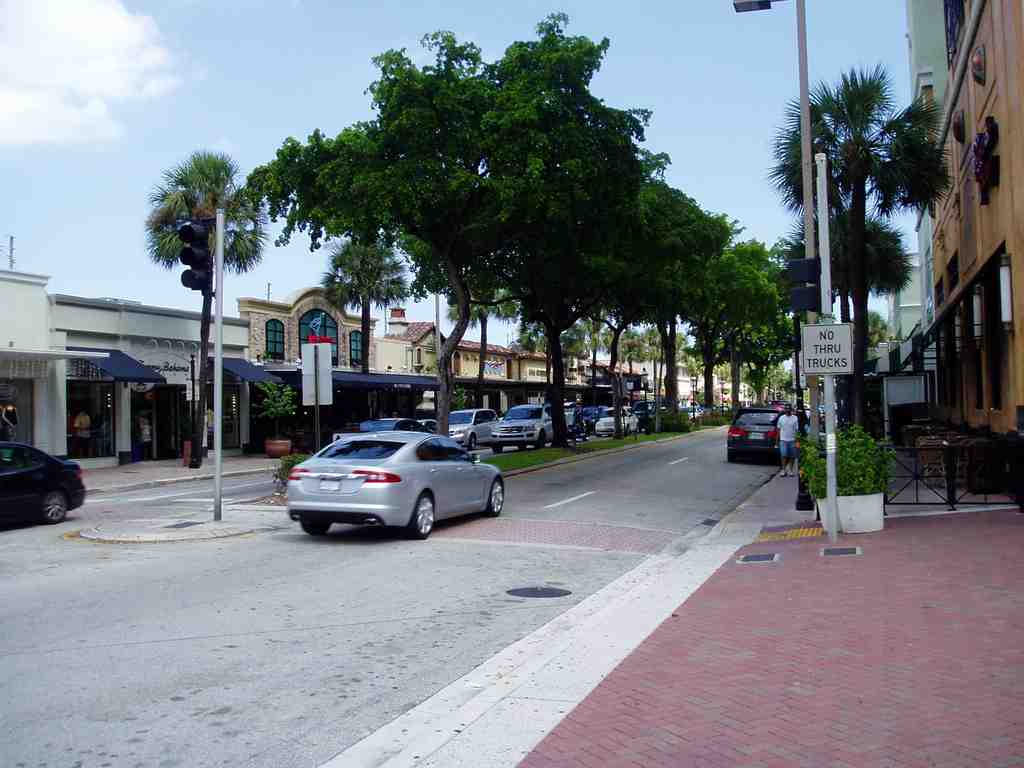
Look to your right for Las Olas Boulevard: a wide, palm-lined street with low-rise storefronts, dark awnings, and a steady stream of cars gliding past brick-trimmed sidewalks.
Alright, welcome to Las Olas… which literally means “The Waves.” And like waves, this boulevard has spent the last century reshaping itself, again and again, depending on what Fort Lauderdale needed most: a path through a swamp, a shortcut to the beach, or a place to spend money you swear you were just “looking.”
Back in 1917, this was barely more than a rough road pushed across soggy wetlands by S. P. Snyder and Son. Picture it: heat shimmering off mud, mosquitoes doing their usual customer-service routine, and the big ambition of connecting downtown out to the barrier island. Glamorous beginnings, as always.
In the 1920s the city got even bolder-dredging and carving out the Las Olas Isles to create waterfront residential land. What you see today as neat canals and fancy addresses started as a full-on engineering makeover of the landscape. Then after World War II, the “Las Olas” most people mean took shape: a commercial strip lined with bars, boutiques, galleries, restaurants… and just enough nightlife to make you check your phone the next morning like, “Did I really text that?”
As you head east, Las Olas crosses the Intracoastal and runs toward the beach; head west and it eventually shifts into a more high-rise downtown feel. Along the way it slides over the Henry E. Kinney Tunnel-one more reminder that in Fort Lauderdale, even the roads have to negotiate with water.
The personalities tied to this stretch are almost as varied as the storefronts: Johnny Weissmuller of Tarzan fame, entertainers like Sonny and Cher, Lucille Ball and Desi Arnaz… and the Stranahans, early pioneers who helped plant roots here long before “Las Olas” meant valet parking.
Ready to keep going? Walk west for about 2 minutes, and the Riverside Hotel will be on your left.




