
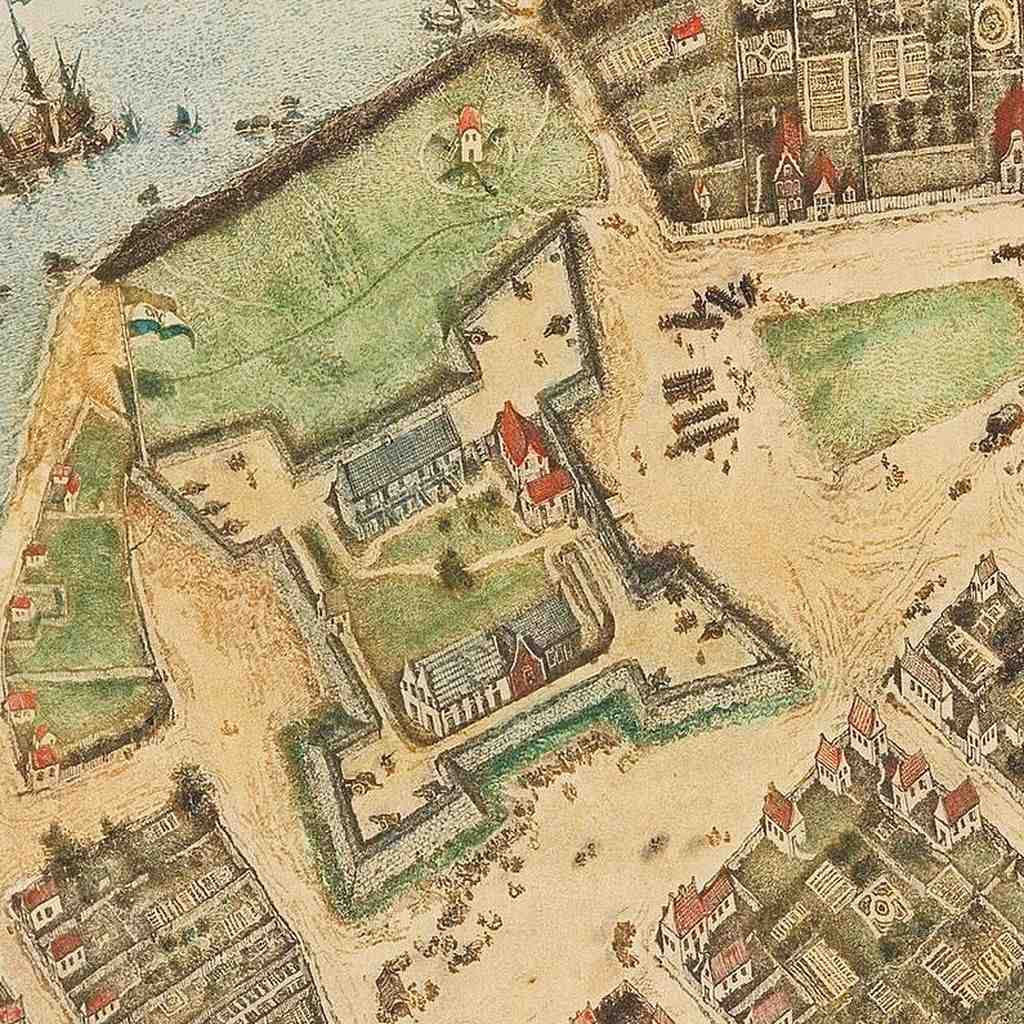
Check out the image in your app to see the star-shaped earthen fortification with its steep grassy walls and the distinctive red-roofed structures clustered tightly inside. This spot, once known as Fort Amsterdam and later Fort George, perfectly captures how this lower stretch of the island has constantly weathered intense conflict and reinvented itself time and time again.
It is the year 1765, and the air here is absolutely electric with anger. The British Parliament has just passed the Stamp Act, forcing the colonies to pay a direct tax on printed materials. When the first shipment of stamped paper arrives in New York harbor, two thousand furious colonists storm the docks. The British authorities panic. In the dead of night, they quietly smuggle the heavily guarded stamps right into this very fort.
Inside the walls sits Cadwallader Colden, the acting governor of the Province of New York. He is seventy seven years old, and he is trapped. He has a garrison, a small military unit of just two hundred regular soldiers, to defend against a rapidly growing mob. On October 31, the day before the tax is set to become law, thousands of New Yorkers take over the streets outside these gates. Knowing they are completely outnumbered, British forces quickly spike the extra cannons left outside the fort, hammering metal rods into the firing holes to render them permanently useless so the crowd cannot turn the artillery against them.
On November 1, the troops man the barricades. A courier pushes through the screaming crowd and hands a letter to the sentry at the gate. It is a terrifying ultimatum directly addressing Colden, threatening him with severe violence if he dares enforce the tax. Other stamp agents fleeing riots in neighboring colonies are now taking refuge inside these very walls.
Major Thomas James, the artillery commander, stands ready to fire. He later admits he could have easily wiped out nine hundred rioters right then and there. But he knows if he pulls the trigger, fifty thousand armed men will descend on the fort to tear it to the ground. The top British general later confesses that if Major James had fired into that crowd, the American Revolution would have erupted that exact day, a full decade early.
Instead, survival instincts kick in. Colden finally breaks. He strikes a compromise and surrenders the stamped paper to city officials, pulling the city back from the brink of total war and restoring a fragile peace to the streets. The massive gates of the fort are eventually thrown wide open, inviting the public inside.
Now, let us move toward the western waterfront and make our way to the Downtown Athletic Club, which is a six minute walk from here. The historic building that sits on this site today is open every day from 8 AM to 5 PM.




