
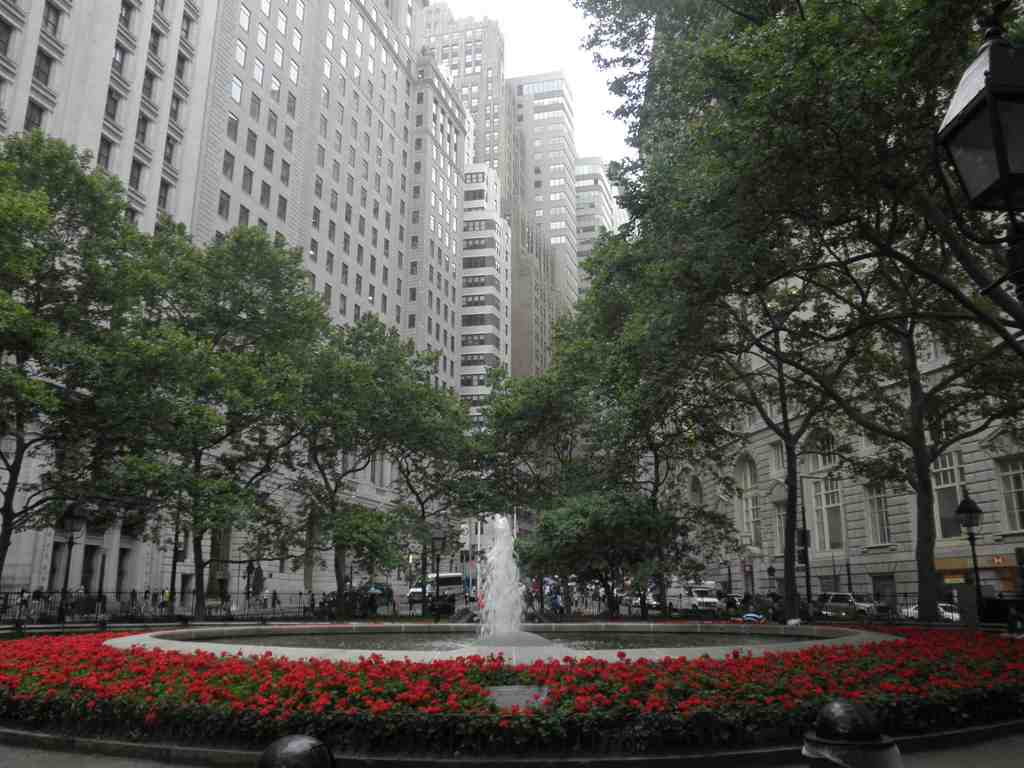
Looking to your right, you will see a teardrop-shaped plaza enclosed by a historic wrought-iron fence, with a large, circular stone fountain sitting right in the center. This small patch of green is actually the very origin point of the colonial settlement of New Amsterdam, which laid the literal and political foundation for the city we see today. But long before European ships arrived, this was a vital Lenape cultural site. Imagine a towering elm tree marking the southern end of a major trail that we now call Broadway. Legend says it was right here that Dutch Governor Peter Minuit bought the island of Manhattan in 1626 for twenty-four dollars' worth of goods, which is roughly four hundred dollars today.
Fast forward a bit, and this dignified plaza looked very different. During the early days of New Amsterdam, it was a muddy, chaotic cattle market and parade ground. By the early 1700s, it had become a public nuisance overrun by feral pigs. In 1733, three wealthy landlords leased the space for the cost of one peppercorn a year just to clean it up. They fenced it in, planted grass, and built a literal bowling green for lawn games.
The story of this park is really the story of a city constantly shifting its identity, turning symbols of power into tools for survival. In 1770, the British erected a massive, gilded lead statue of King George the Third right here. To protect it from protesters, they built the wrought-iron fence you are looking at right now, making it the oldest fence in New York City. Take a look at the image on your screen to see the grand architecture surrounding this historic space today. Now, picture that same spot on July ninth, 1776. The Declaration of Independence had just been read aloud, and furious rebels rushed down Broadway. They tied ropes to the king, pulled him to the dirt, and chopped up the four-thousand-pound statue. They melted the lead down to cast over forty-two thousand musket balls to fight the British. They even sawed off the finials, the decorative ornaments on top of the fence posts that were shaped like royal crowns, and you can still see the jagged saw marks on the ironwork today.
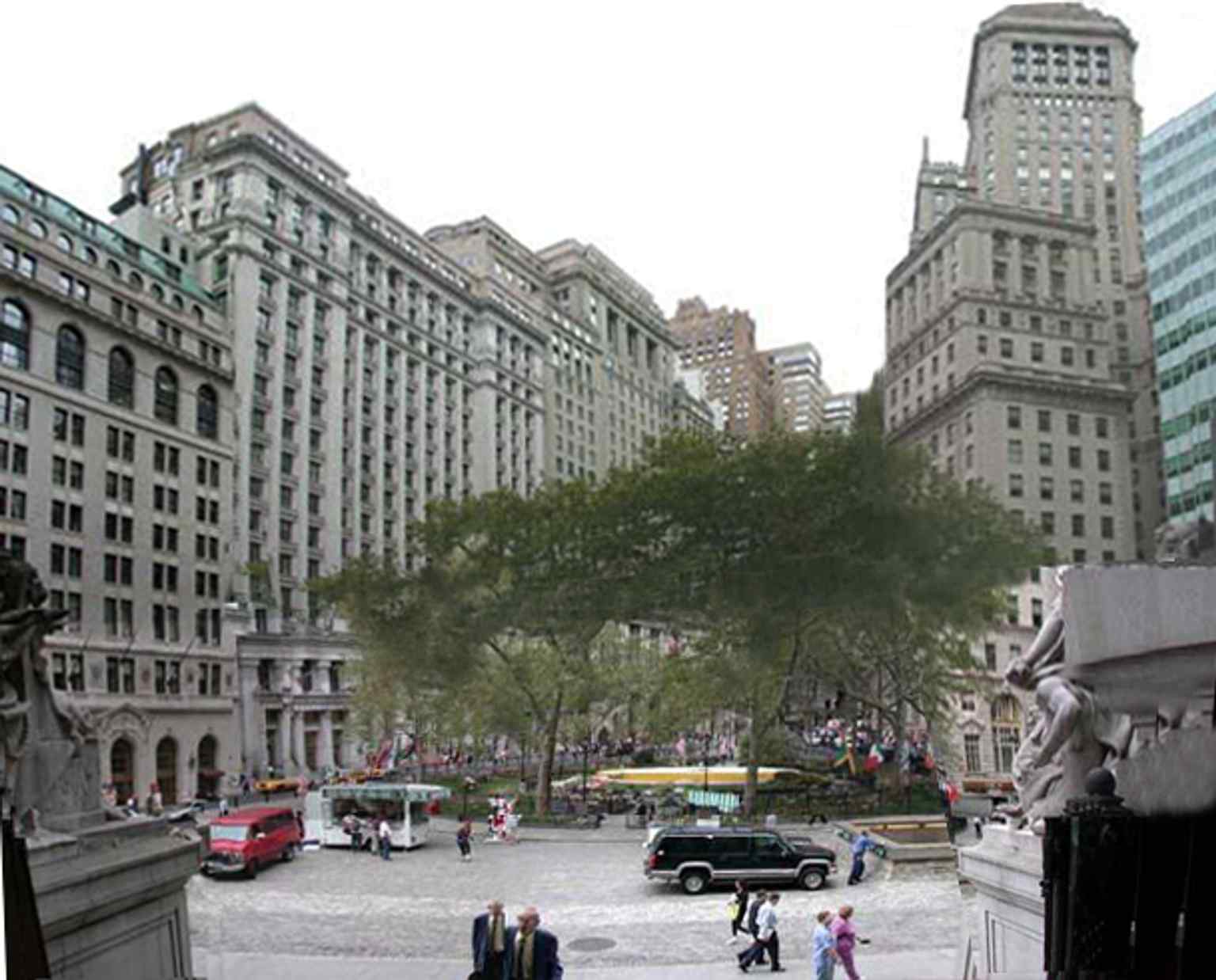
Seven years later, as the defeated British finally sailed away, a patriot sailor named John Van Arsdale had to climb a sabotaged, greased flagpole right here just to tear down the British colors and raise the Stars and Stripes.
As Lower Manhattan evolved from elegant colonial townhouses to towering commercial skyscrapers, the layers of the past were buried. But during subway renovations in the 1970s, archaeologists dug beneath the lawns and unearthed thousands of colonial artifacts, from clay tavern pipes to the original seventeenth-century cobblestones. This tiny teardrop is a true survivor, holding its ground while a massive metropolis exploded upward around it. As you take it all in, think about the imposing defensive walls that used to loom right next to this lively market. Next, we are going to walk just two minutes away to the site of that very stronghold, Fort Amsterdam.





