
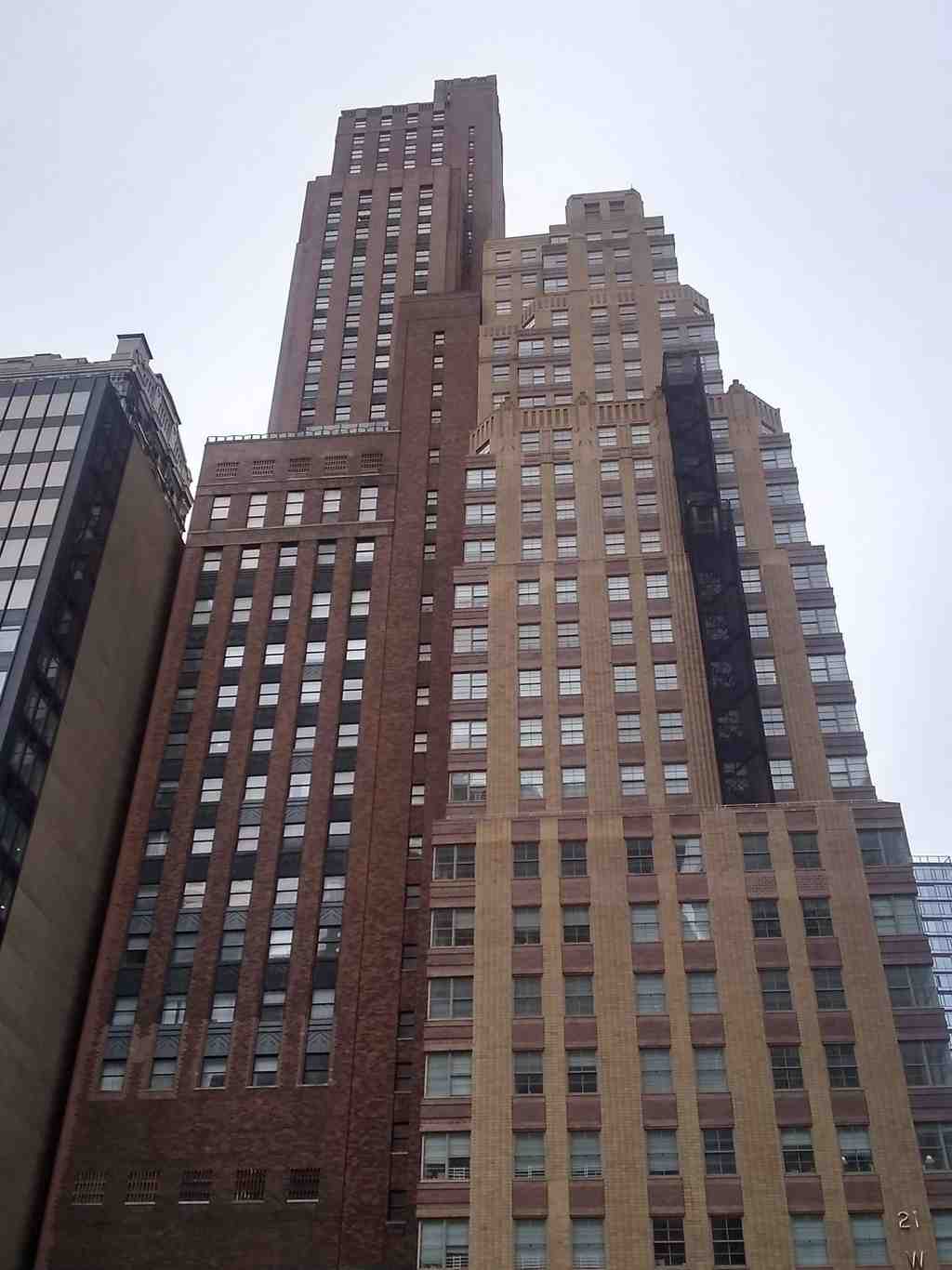
Look up at the towering Art Deco skyscraper made of dark, mottled orange brick, featuring distinct stepped terraces rising into a central tower that stands slightly taller than its lighter colored neighbor.
Welcome to the Downtown Athletic Club, a monument to the ultimate financial power of Wall Street. Built in nineteen thirty right on top of old filled land created from the debris of the Great Fire of New York, this was designed as the ultimate leisure space for the financial elite. They poured four and a half million dollars into it, roughly eighty million dollars today, to create an opulent playground for the titans of industry.
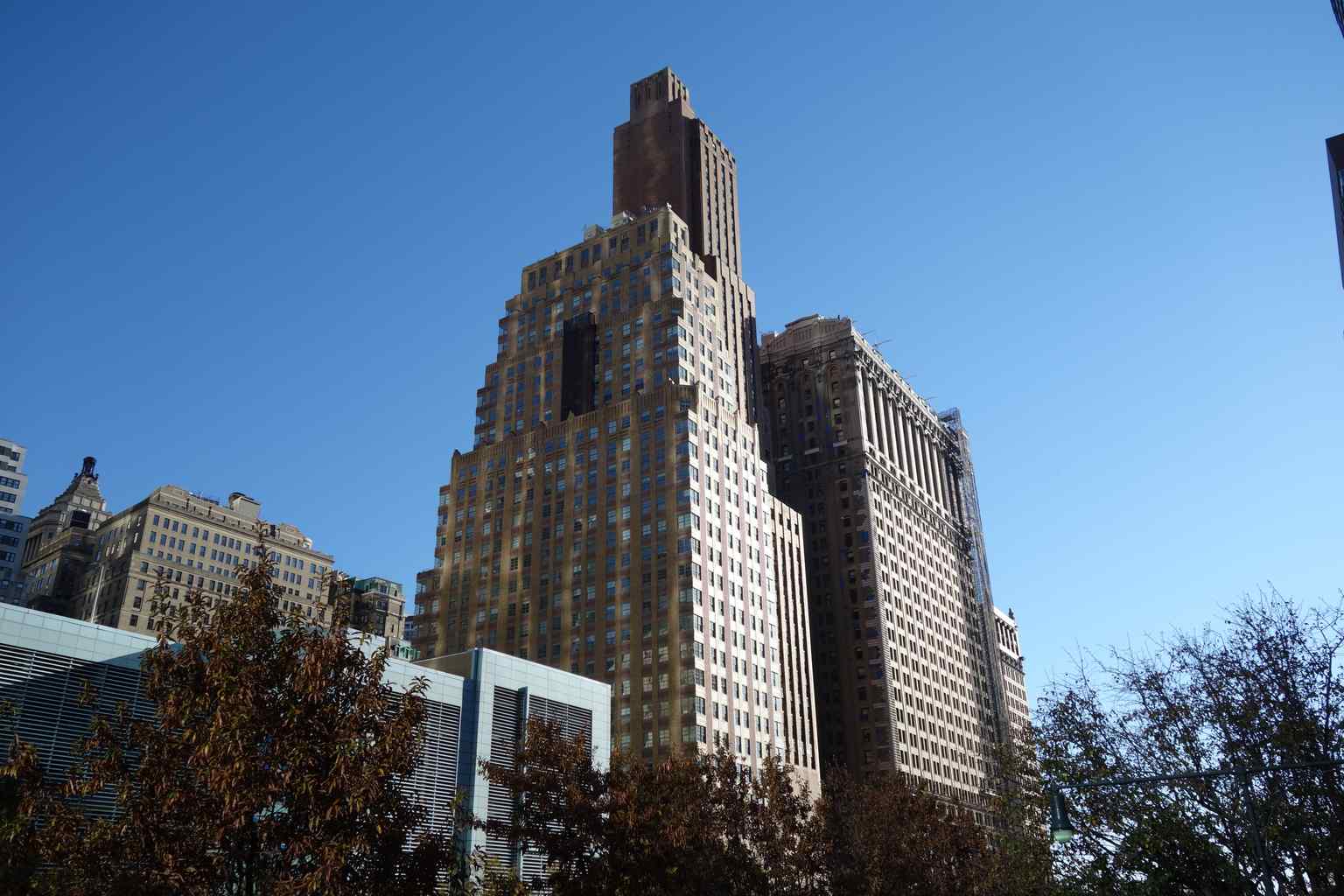
Inside, it was a completely surreal vertical utopia. The famous architect Rem Koolhaas was obsessed with how bizarrely these floors were stacked. You had a miniature golf course on the seventh floor, an elaborate swimming pool on the twelfth floor with underwater lighting that made frenetic swimmers appear to float in mid air against the electric skyline, and a ninth floor where members could eat oysters fresh from the river while wearing boxing gloves. Take a look at the third image on your screen to see how the building's striking exterior setbacks, those stair step cutaways mandated by city law to allow sunlight to reach the street below, elegantly disguise this massive stack of athletic arenas.
Now, you might know this place for something else. Check out the historical photo of John Heisman on your app. He was the club's first athletic director. The amazing irony is that Heisman was fundamentally opposed to honoring a single college football player, believing it went against the ultimate team sport. After his sudden death from pneumonia, the club went ahead and named their famous bronze award the Heisman Memorial Trophy anyway.
For over fifty years, this luxurious sanctuary was strictly for men. They finally voted to admit women in nineteen seventy seven, but not out of a sudden burst of progressive equality. They were just flat broke and desperately needed the resident dues to stay solvent.
That constant financial tightrope eventually snapped in two thousand one. On that Tuesday morning, the club was undergoing renovations and workers had left the upper windows wide open. When the nearby towers fell, the building acted like a giant vacuum, pulling massive amounts of toxic dust deep into the luxury suites and squash courts. Stuck inside a frozen police exclusion zone, nobody could get in to fix the burst water pipes or failing elevators.
The club bled money and permanently shut down. But this district is defined by its ability to absorb disaster and reinvent itself for a new era. The historic structure was gutted, scrubbed, and completely transformed into high end condominiums, meaning the building is naturally open twenty four hours a day for its current residents.
Let us leave the concrete behind and stroll toward the waterfront into The Battery, which is about a ten minute walk from here.





%2021%20-%2021%20West%20Street%2C%2020%20West%20Street%2C%20Whitehall%20Building%20Annex.jpg)