
New York City Audio Tour: Brooklyn History
Brownstone streets in Brooklyn Heights hide thunderous sermons, quiet power plays, and archives that can change what is believed about New York. This self guided audio tour leads through Plymouth Church, the Diocese of Brooklyn, the Center for Brooklyn History, and nearby corners most visitors rush past. Listen on the move and uncover political battles, rebellions, scandals, mysteries, and forgotten moments stitched into the neighborhood. What crisis once turned Plymouth Church into a stage for national fury? Which secret decisions inside the Diocese of Brooklyn reshaped lives in plain sight? And why does a single box at the Center for Brooklyn History mention a missing name, a dock, and a date that refuses to make sense? Walk from steeples to stoops to stacks of paper, feeling the city tighten and release with every block. Leave seeing Brooklyn as a living argument. Press play and follow the hidden thunder.
Tour preview
About this tour
- scheduleDuration 80–100 minsGo at your own pace
- straighten3.6 km walking routeFollow the guided path
- location_onLocationNew York, United States
- wifi_offWorks offlineDownload once, use anywhere
- all_inclusiveLifetime accessReplay anytime, forever
- location_onStarts at Center for Brooklyn History
Stops on this tour
lock_open 3 free previews · 7 unlock with purchase
Look up at this magnificent red brick corner building, featuring soaring arched windows and intricately sculpted terra cotta faces gazing out from the facade. You are standing in…Read moreShow less
Open dedicated page →Look up at this magnificent red brick corner building, featuring soaring arched windows and intricately sculpted terra cotta faces gazing out from the facade. You are standing in front of the Center for Brooklyn History, an institution that has been guarding the borough's secrets and stories since the middle of the American Civil War.
Back in 1863, a local heavy hitter named Henry Pierrepont founded this place as the Long Island Historical Society. But a fancy society needs a fancy headquarters. In the late 1870s, the society hosted a high stakes design competition. Fourteen architects battled it out, and the winner was George B. Post. He gave them this stunning Romanesque Revival masterpiece, completed in 1881. Post went all out with terra cotta, which is a type of fired clay perfect for molding detailed architectural ornaments. He hired sculptor Olin Levi Warner to create an absolutely wild roster of busts for the exterior. If you look closely at the building, you will spot Michelangelo, Shakespeare, Benjamin Franklin, and somehow, even a Viking. If you want a better view of those sculpted clay details without straining your neck, check out the photo on your phone.
The outside is impressive, but the inside is widely considered one of New York's greatest nineteenth-century interiors. Glance at your screen for a sneak peek into the magnificent Othmer Library, boasting grand wooden pillars and endless shelves of local lore. That library is a treasure hunter's dream. It holds the personal papers of the famous abolitionist clergyman Henry Ward Beecher, massive collections on the Brooklyn firefighting units, and an enormous catalog of historical maps.
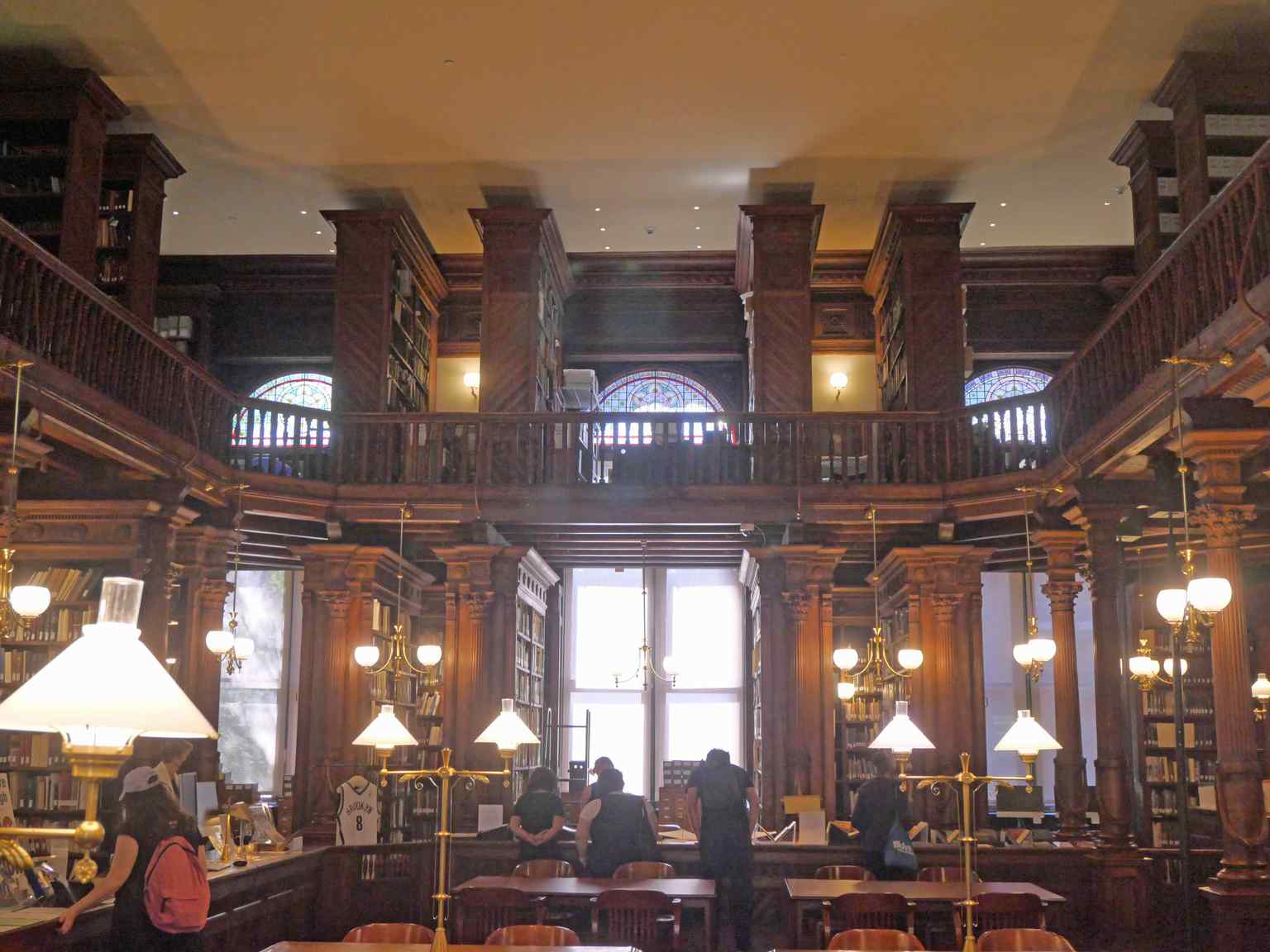
Step inside the Othmer Library, described as one of New York's great 19th-century interiors, which houses extensive collections including historic maps and family histories.Photo: Jim.henderson, Wikimedia Commons, CC BY 4.0. Cropped & resized. Speaking of maps, my favorite story from this place sounds like a movie plot. In 2010, the staff were doing a routine cataloging project. They were just digging through the archives, minding their own business, when they stumbled across a rolled up, completely uncatalogued map from the year 1770 by a British army officer named Bernard Ratzer. It was an incredibly rare, perfectly preserved colonial map of the city, just sitting right there under their noses for who knows how long.
The institution officially became the Center for Brooklyn History in 2020 when it merged with the Brooklyn Public Library. Today, they serve tens of thousands of school kids a year and host groundbreaking exhibitions, including the very first gallery in the United States entirely dedicated to oral history, which opened with the stories of Brooklyn's Vietnam veterans.
If you want to poke around inside, they are open Monday through Saturday, but keep in mind they are closed on Sundays.
Feel free to linger here. Once you are set, let us move on.
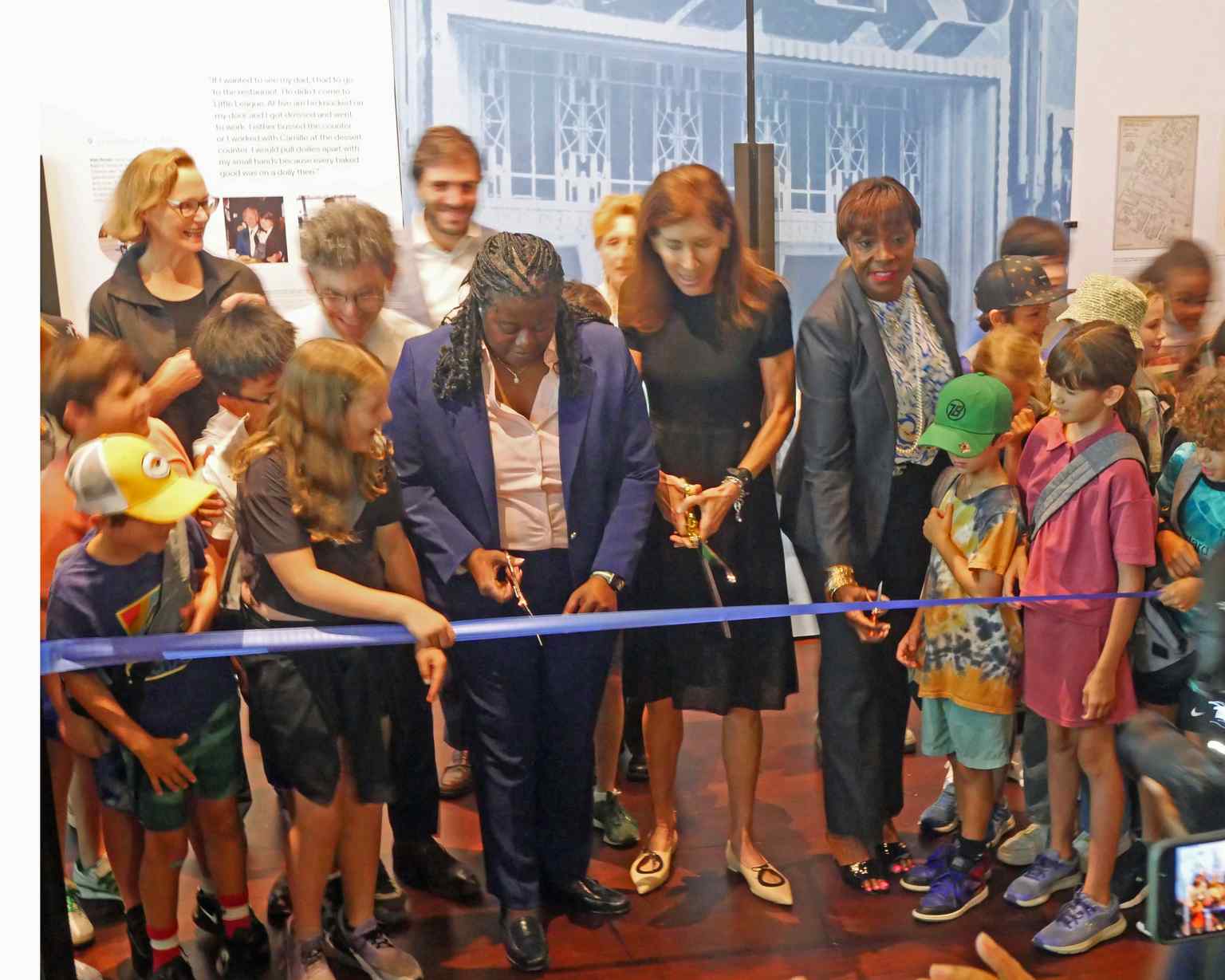
This ceremony marks a significant moment in the institution's evolution, which officially became the Center for Brooklyn History in 2020 after merging with the Brooklyn Public Library.Photo: Jim.henderson, Wikimedia Commons, CC BY 4.0. Cropped & resized. Look to your left for Grace Church, a striking building made of rough, dark brownstone featuring a steeply pitched roof and classic pointed arch windows. Imagine it is the early…Read moreShow less
Open dedicated page →
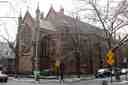
Grace ChurchPhoto: Beyond My Ken, Wikimedia Commons, CC BY-SA 4.0. Cropped & resized. Look to your left for Grace Church, a striking building made of rough, dark brownstone featuring a steeply pitched roof and classic pointed arch windows. Imagine it is the early eighteen forties, and you are a devout Episcopalian in Brooklyn. Every Sunday, you have to drag yourself across the East River on a ferry just to attend Grace Church in Lower Manhattan. That commute got old fast. So, locals started their own parish, which grew so rapidly they had to build something much grander, officially incorporating as Grace Church Brooklyn Heights in eighteen forty seven.
They hired Richard Upjohn, the superstar architect who designed Manhattan's Trinity Church. He gave them this gorgeous Gothic Revival design, meaning it mirrors medieval European cathedrals with those soaring arches meant to draw your eyes heavenward. The land cost fifteen thousand dollars and the structure itself ran about forty six thousand, which altogether is roughly two point four million dollars today. Honestly, two point four million for prime Brooklyn real estate is an absolute steal!
While you are standing outside, let me paint a picture of the spectacular interior. The original plain diamond pane windows were eventually swapped for stunning stained glass by legendary studios like Tiffany. And hovering above the nave, the long central hall where the congregation sits, is a total masterpiece. A recent five million dollar restoration uncovered the original open wooden ceiling beams, known as trusswork. They revealed a breathtaking swath of eight pointed gold, yellow, and red stars painted against a brilliant royal blue background.
Over the decades, notable locals have filled these pews, including folk rock legend Harry Chapin. Right next door is Grace Church School, the oldest preschool in Brooklyn, operating in the Parish House that replaced Upjohn's original school building.
If you want to check out those celestial stars yourself, the church is open Monday through Friday nine AM to five PM, closed Saturdays, and open Sundays eight AM to one PM. It is a true architectural gem with a surprisingly dramatic interior. Enjoy the peaceful vibe here, and just tap play when you reach our next destination.
Show 7 more stopsShow fewer stopsexpand_moreexpand_less
Up ahead on your left, look for the towering white marble figure standing atop a tall, fluted limestone column decorated with carved stone ropes near its base. This is the…Read moreShow less
Open dedicated page →Up ahead on your left, look for the towering white marble figure standing atop a tall, fluted limestone column decorated with carved stone ropes near its base. This is the Christopher Columbus Memorial, standing right outside the New York State Supreme Court in Columbus Park. If you check your screen, you can see how it commands the plaza. This piece was a tag-team effort. The pioneering sculptor Emma Stebbins carved the statue itself out of Italian marble, while architect Aymar Embury II designed that impressive limestone pedestal. A wealthy merchant named Marshal O. Roberts donated the whole thing, which was mighty generous considering shipping a giant block of Italian marble across the Atlantic is no small feat. Stebbins was actually one of the first notable American female sculptors, bringing a unique flair to public monuments in a field that was largely dominated by men. The park area around the statue is open daily from six in the morning until one in the morning if you ever want to come back. Take your time admiring the intricate stonework. Whenever you are ready, we will head over to our next stop.
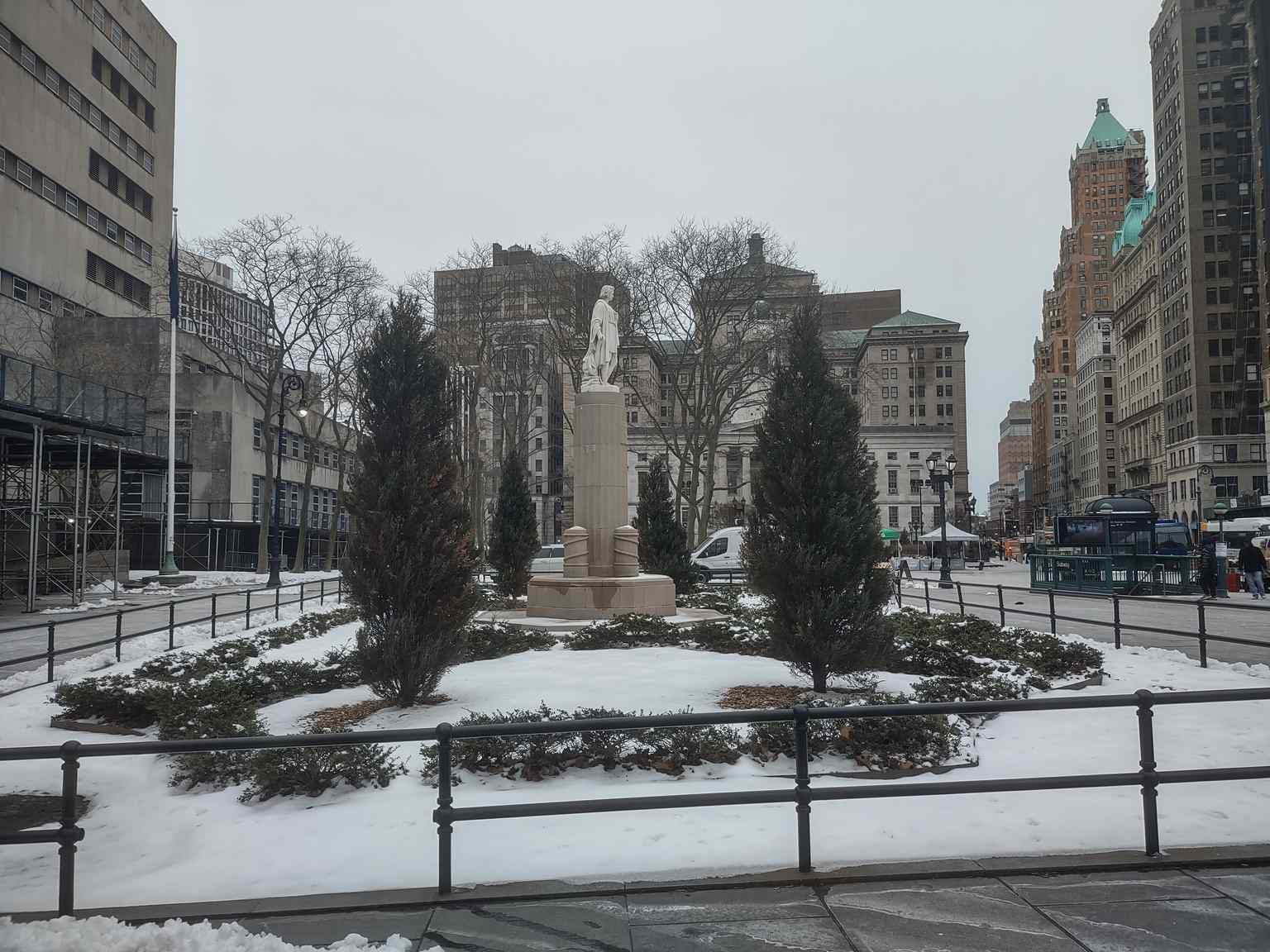
A view of Columbus Park in Brooklyn, the setting for the Statue of Christopher Columbus by Emma Stebbins and Aymar Embury II.Photo: Jim.henderson, Wikimedia Commons, CC BY-SA 4.0. Cropped & resized. Look for the towering bronze statue of a man on a square granite base, flanked by a bronze woman on one side and two children on the other. This is Henry Ward Beecher, a…Read moreShow less
Open dedicated page →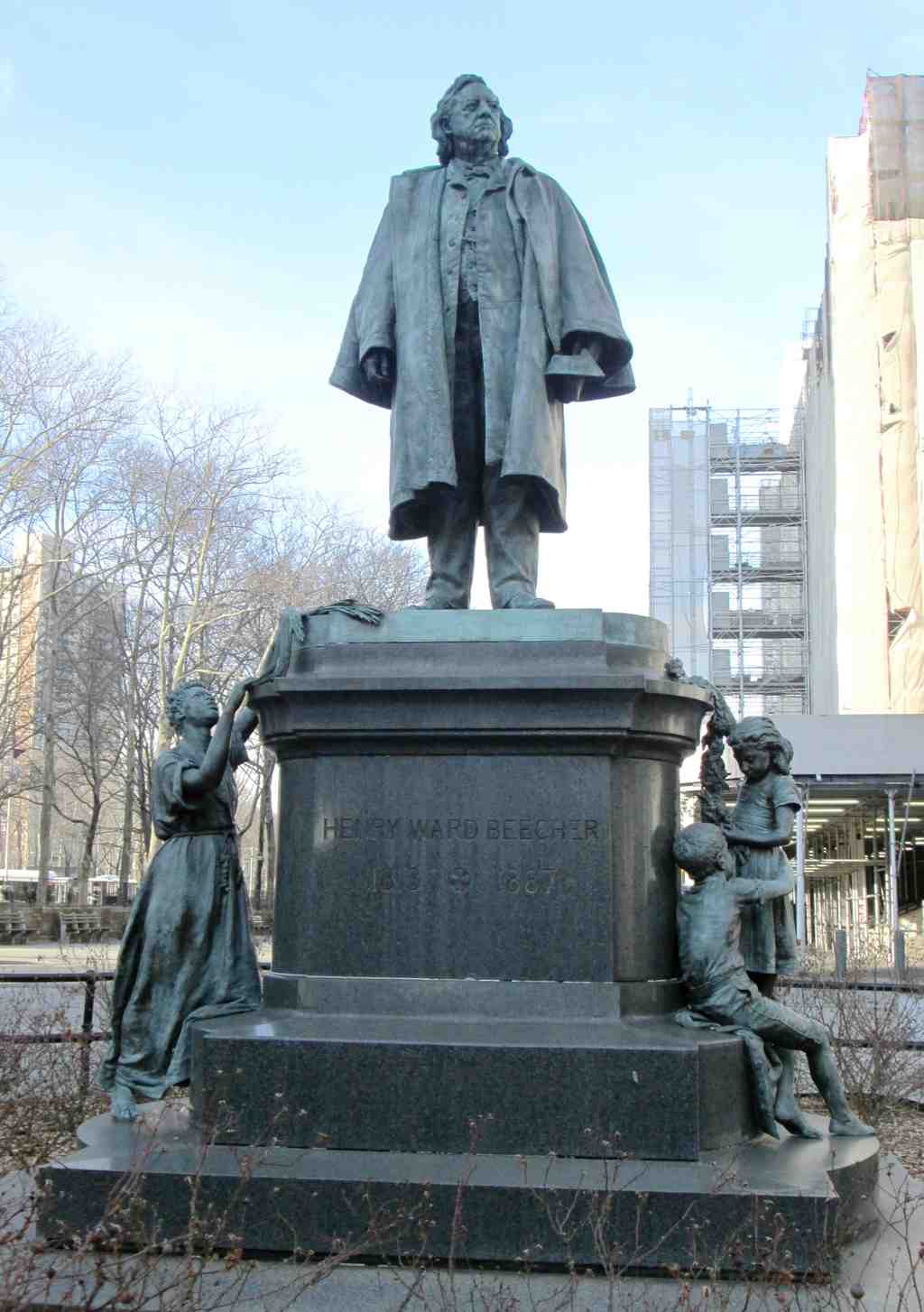
Henry Ward Beecher MonumentPhoto: Beyond My Ken, Wikimedia Commons, CC BY-SA 4.0. Cropped & resized. Look for the towering bronze statue of a man on a square granite base, flanked by a bronze woman on one side and two children on the other. This is Henry Ward Beecher, a progressive 19th-century preacher and orator, a highly skilled public speaker who pushed for social reform. Sculptor John Quincy Adams Ward cast this bronze in 1890, using photographs and a plaster cast of Beecher's face made right after he died, known as a death mask. Take a look at your device for a close-up of those intense bronze details.
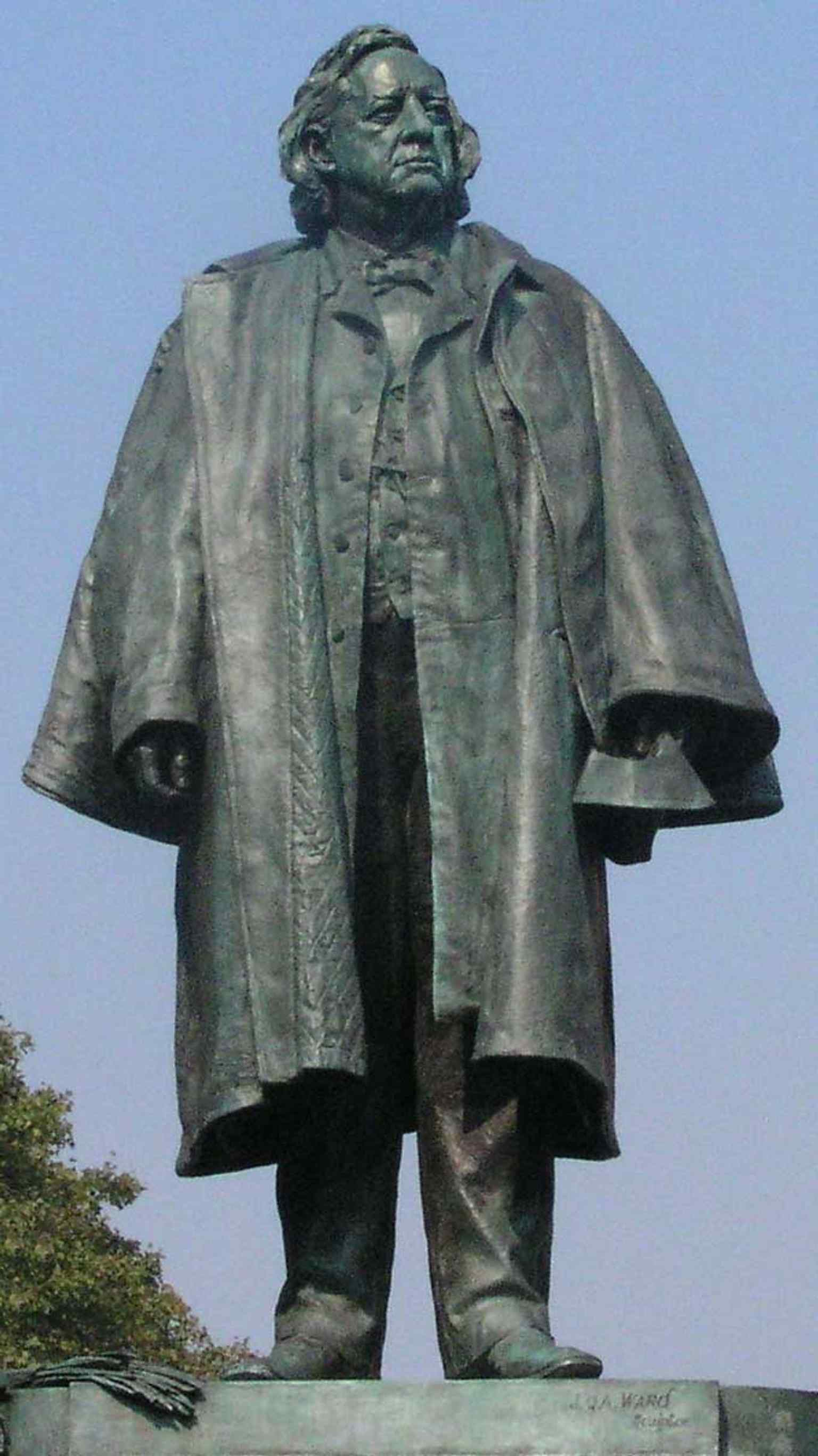
An exterior view of Henry Ward Beecher's statue, focusing on his main figure, which was created as a conscious effort to restore his public legacy after a major scandal.Photo: Wikipedia User:Alex756, all rights reserved., Wikimedia Commons, CC BY-SA 3.0. Cropped & resized. Why build such a grand monument? It was a deliberate public relations move. Beecher's pristine image masks one of the wildest scandals of the 1800s. We will dive into the wild details of that infamous trial later on, a spectacle that generated more headlines than the Civil War. For now, just know that his wealthy supporters funded this heroic statue specifically to scrub his reputation clean.
They originally lobbied to place him in Prospect Park but settled for this spot, where 15,000 people attended the 1891 unveiling. It is fascinating to look at the before-and-after picture on your device to see how more than a century of urban development has risen up around the monument since that dedication day.
At that dedication, a striking irony unfolded. The figures below Beecher symbolize his abolitionist work. He famously held reverse slave auctions, aggressively raising money from his congregation to purchase the freedom of enslaved individuals. The Black woman laying a palm branch at his feet is speculated to be Rose Ward, a woman freed this way. Yet, unveiling speakers completely ignored the emancipation of enslaved people, a glaring omission driven by New York City's lingering financial ties to the cotton trade.
Today, the layout draws sharp criticism for reinforcing a white savior narrative, placing the formerly enslaved woman in a subservient position below the clergyman. In 2007, conceptual artist David Hammons protested this dynamic. During a harsh winter storm, Hammons wrapped a physical scarf around the bronze woman's neck, an empathetic gesture symbolically protecting her while highlighting the indignity of her permanent placement.
The monument has drawn eccentric fans too, like a pioneer who drove an ox-drawn wagon from Washington State to Brooklyn in 1907 just to get his photo taken here, remembering his youth delivering newspapers to Beecher. You can visit this park from 6:00 AM to 1:00 AM any day of the week to ponder his complicated legacy. Take your time here, and we will catch up at the next spot.
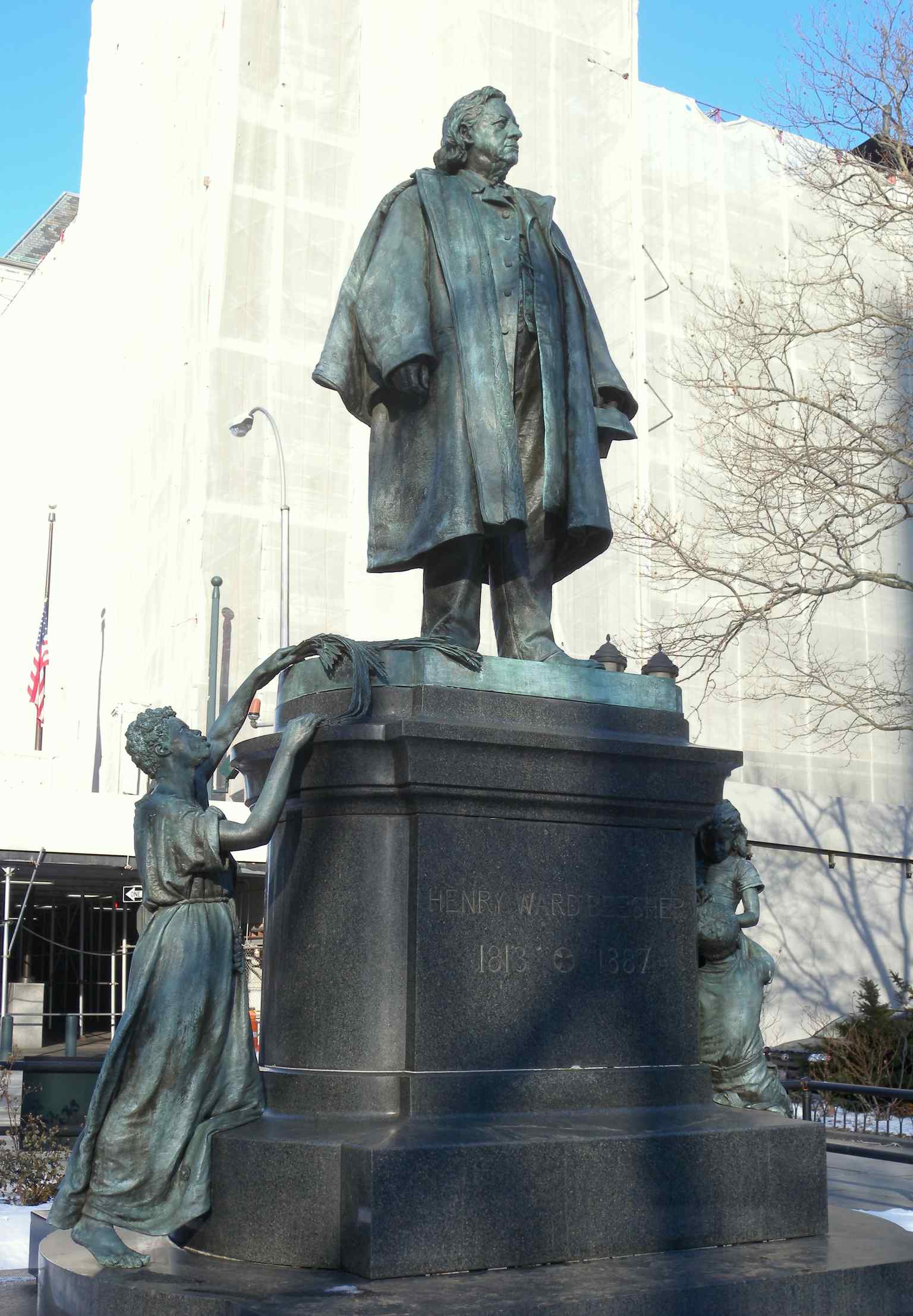
This full view captures the Henry Ward Beecher Monument in Cadman Plaza, featuring the main figure of Beecher alongside the symbolic Black female figure and children below.Photo: Jim.henderson, Wikimedia Commons, CC0. Cropped & resized. 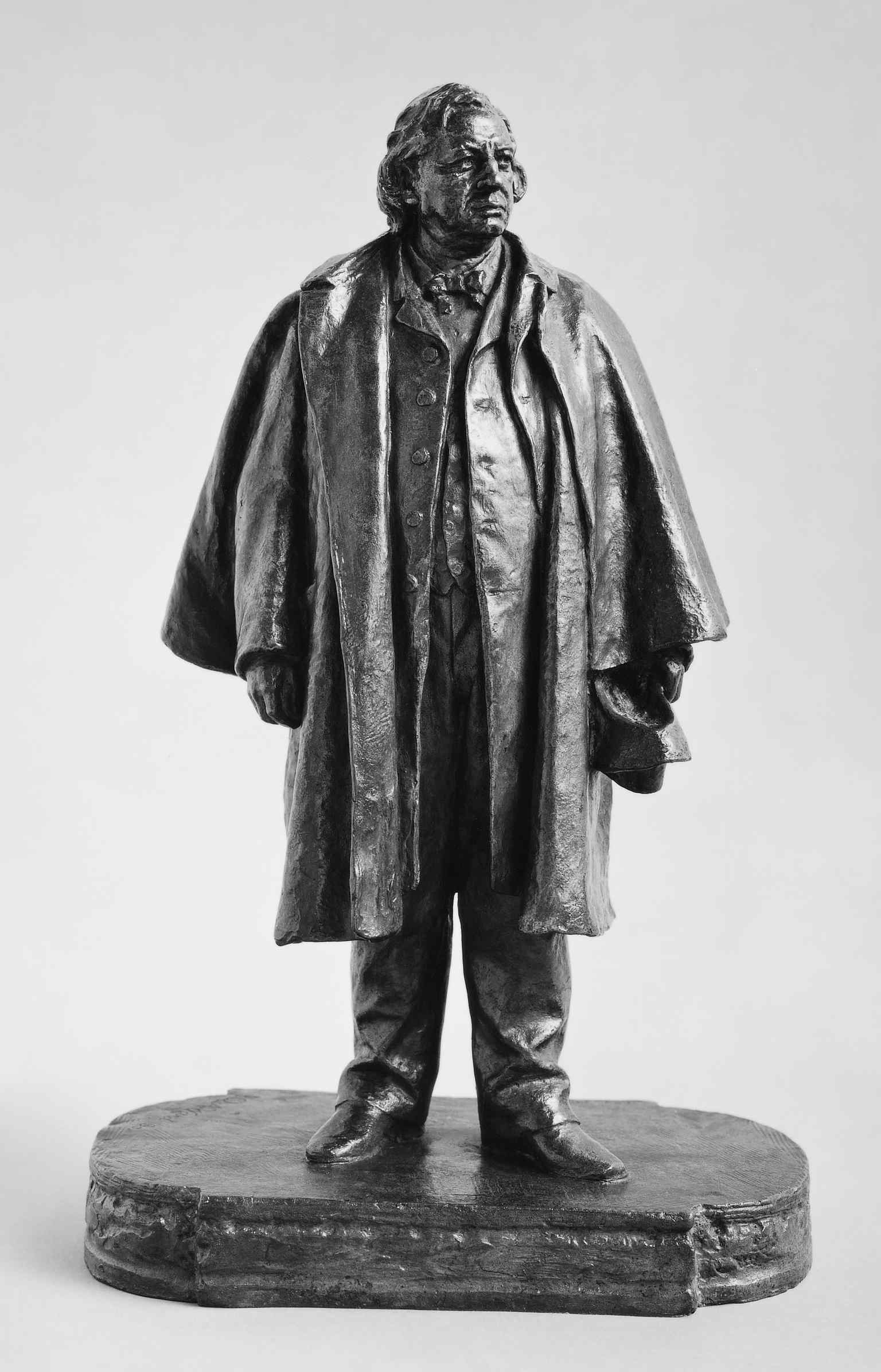
A historical image of the monument from its dedication year, 1891, when it was widely acclaimed as one of the finest public monuments in the country.Photo: John Quincy Adams Ward, Wikimedia Commons, CC0. Cropped & resized. 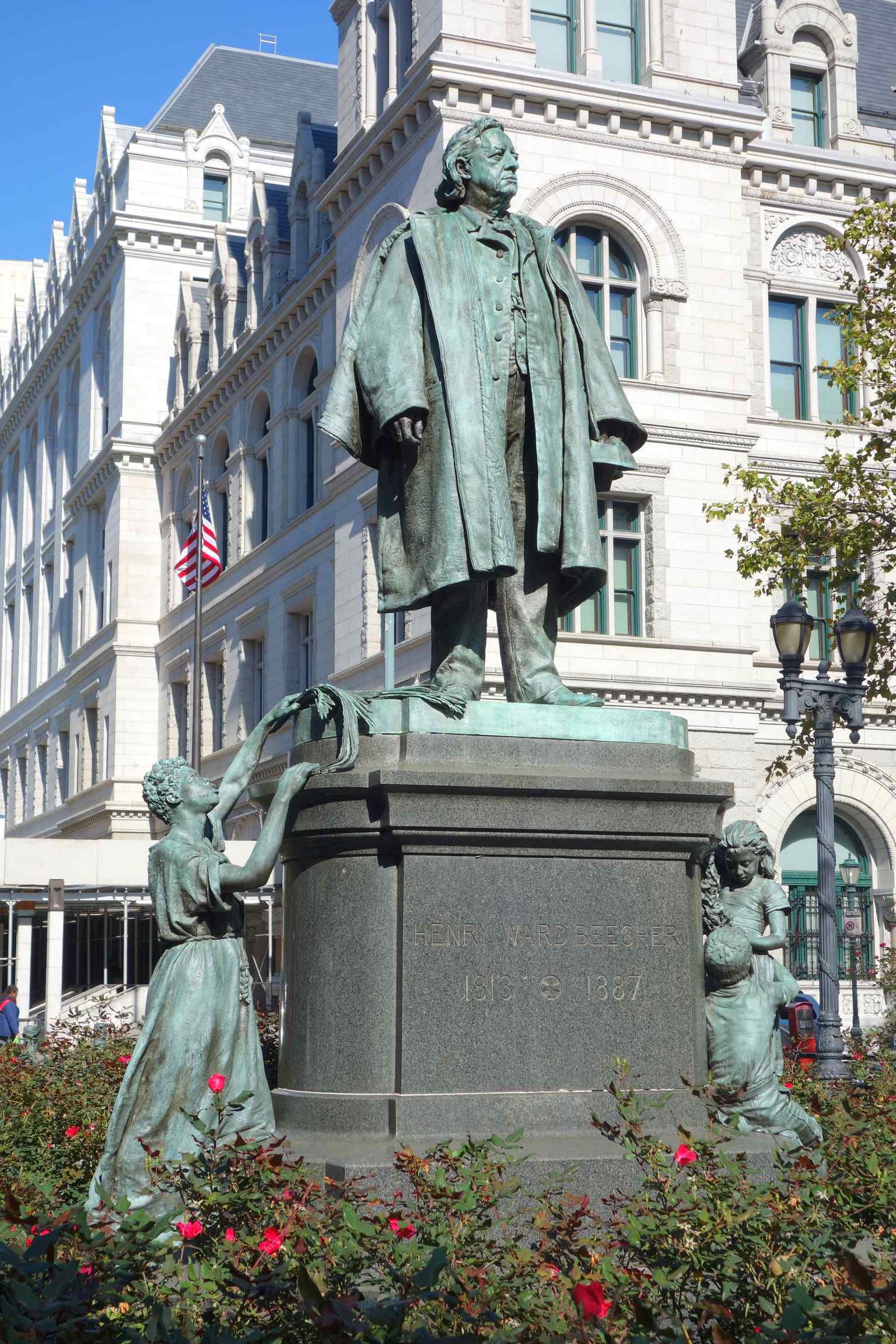
Another close-up detail of the Henry Ward Beecher statue, highlighting the bronze artistry that contributed to its acclaim as one of the nation's finest public monuments.Photo: Daderot, Wikimedia Commons, CC0. Cropped & resized. On your left, look for the stately brick building featuring a wide arched entrance and a distinct stone cross mounted high on the facade. Welcome to the headquarters of the…Read moreShow less
Open dedicated page →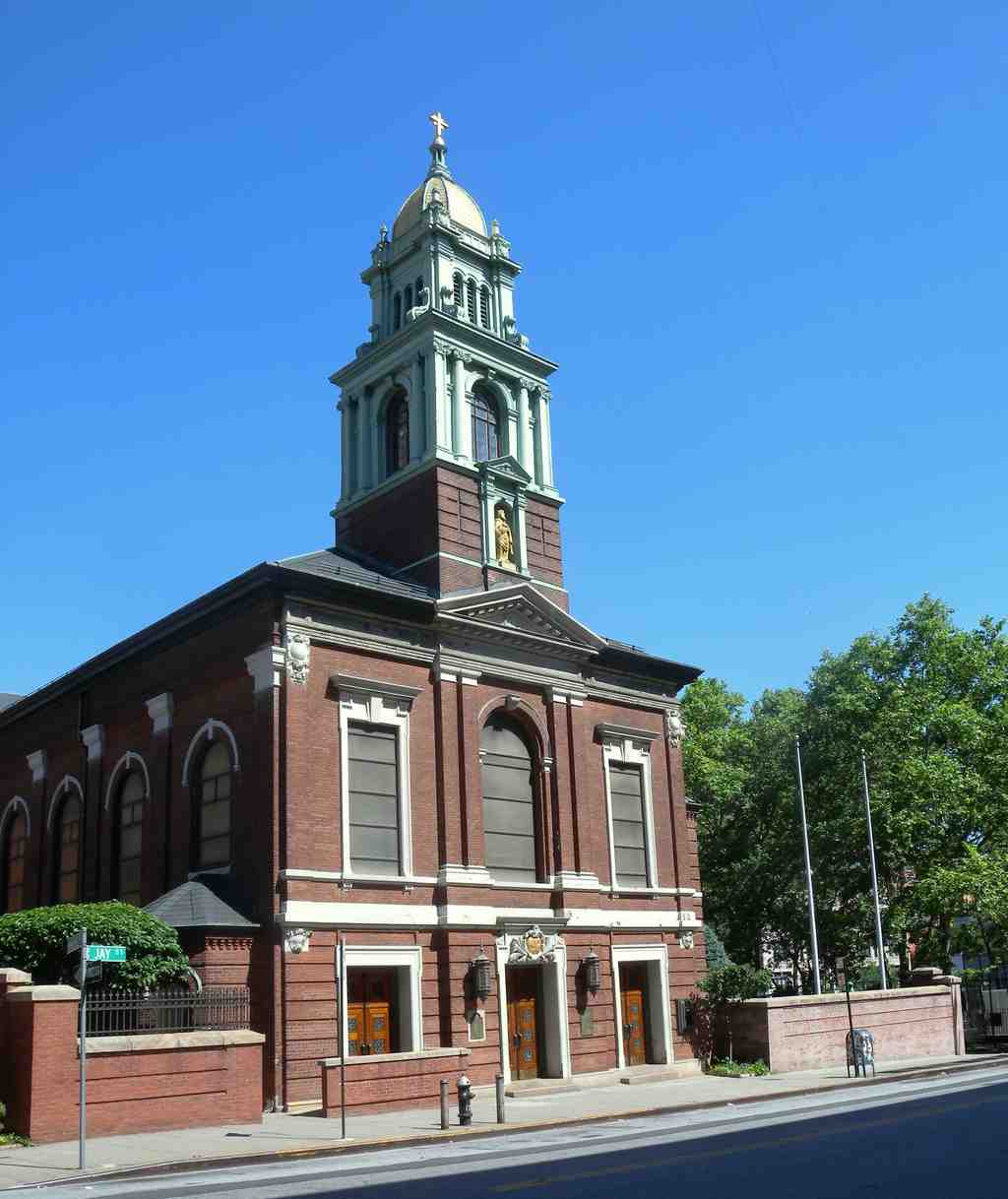
Diocese of BrooklynPhoto: Jim.henderson, Wikimedia Commons, CC0. Cropped & resized. On your left, look for the stately brick building featuring a wide arched entrance and a distinct stone cross mounted high on the facade.
Welcome to the headquarters of the Diocese of Brooklyn. Now, in the Catholic Church, a diocese is basically a geographical district under the pastoral care of a bishop. And this one is pretty special. It encompasses just Brooklyn and Queens, making it one of the very few dioceses in the entire United States that is one hundred percent urban territory. If you glance at the map on your app, you can see just how uniquely densely packed this jurisdiction really is.
Back in 1801, Catholic immigrants from Northern Ireland started pouring into the area to work at the Brooklyn Navy Yard. There were no Catholic parishes here at the time, so folks actually rowed or ferried across the East River to Manhattan just to attend Sunday Mass. Finally, in 1853, the Pope established Brooklyn as its own diocese and appointed John Loughlin as the first bishop. You can see a historical photo of Bishop Loughlin on your screen. Loughlin was a remarkably busy guy. During his thirty eight years in charge, the Catholic population here exploded from around fifteen thousand to nearly four hundred thousand. He started building a massive, glorious new cathedral in 1868, but he actually halted the construction halfway through so he could funnel all those funds into orphanages, hospitals, and local charities instead.
Today, the Diocese of Brooklyn operates nearly two hundred parishes serving one and a half million Catholic residents. And with a flock that large, they have definitely seen their fair share of modern drama. For instance, in May 2020, a burglar broke into Saint Augustine Church in nearby Park Slope and managed to steal a solid gold tabernacle. A tabernacle is the ornate, highly secure box resting on the altar where the consecrated communion bread is safely kept. The thief completely emptied the sacred contents onto the floor and made off with the box, a two million dollar piece of history.
But wait, there is more. In late 2023, the diocese made international pop culture headlines thanks to singer Sabrina Carpenter. She filmed a music video for her song Feather inside the Annunciation of the Blessed Virgin Mary Church right here in Brooklyn. The video featured Carpenter dancing around the sacred sanctuary with various provocative items placed right on top of the altar, all while appearing to wear no pants. The local bishop was absolutely shocked when the video dropped. The church pastor who had approved the filming had to issue a very public apology to the parish and was promptly disciplined by the diocese. You really never know what is going to happen in this borough.
From pioneers rowing across the East River for Sunday Mass to international pop star controversies, this local institution has truly seen it all. Whenever you are ready, let us keep moving.
Look for the massive red brick building with the grand arched roofline and the classic white pillared porch right over the entrance doors. Remember that monument of Henry Ward…Read moreShow less
Open dedicated page →Look for the massive red brick building with the grand arched roofline and the classic white pillared porch right over the entrance doors.
Remember that monument of Henry Ward Beecher we saw earlier on our walk? Well, this is his home turf. Plymouth Church was built in 1849, and Beecher served as its very first pastor. He was a fierce abolitionist, and under his leadership, this church became a massive hub for the Underground Railroad. They hid fugitives right down in the basement, moving so many people to safety that locals started calling the church the Grand Central Depot. Beecher was incredibly proud of this secret network, later bragging to his stenographer that he personally opened the doors to hide runaways and point them toward the North Star.
Beecher was also a master showman who knew how to work a crowd. To raise money to buy the freedom of enslaved people, he staged incredibly dramatic mock slave auctions right inside. If you glance at your app, you can see a photo of the main sanctuary. Notice how it looks less like a traditional church and more like a theater, with those curved pews facing a central stage. It was the perfect setup for his emotional performances. The most famous auction happened in 1860, when Beecher brought an enslaved child named Sally Maria Diggs before a crowd of three thousand people. The congregation threw cash into the collection plates, raising nine hundred dollars, which is over thirty thousand dollars today. Someone even tossed in a gold ring. Beecher slipped the ring onto the little girl's finger and declared, With this ring I do wed thee to freedom. Sixty-seven years later, she actually came back to the church and returned that very ring, which is still kept here as a prized artifact.
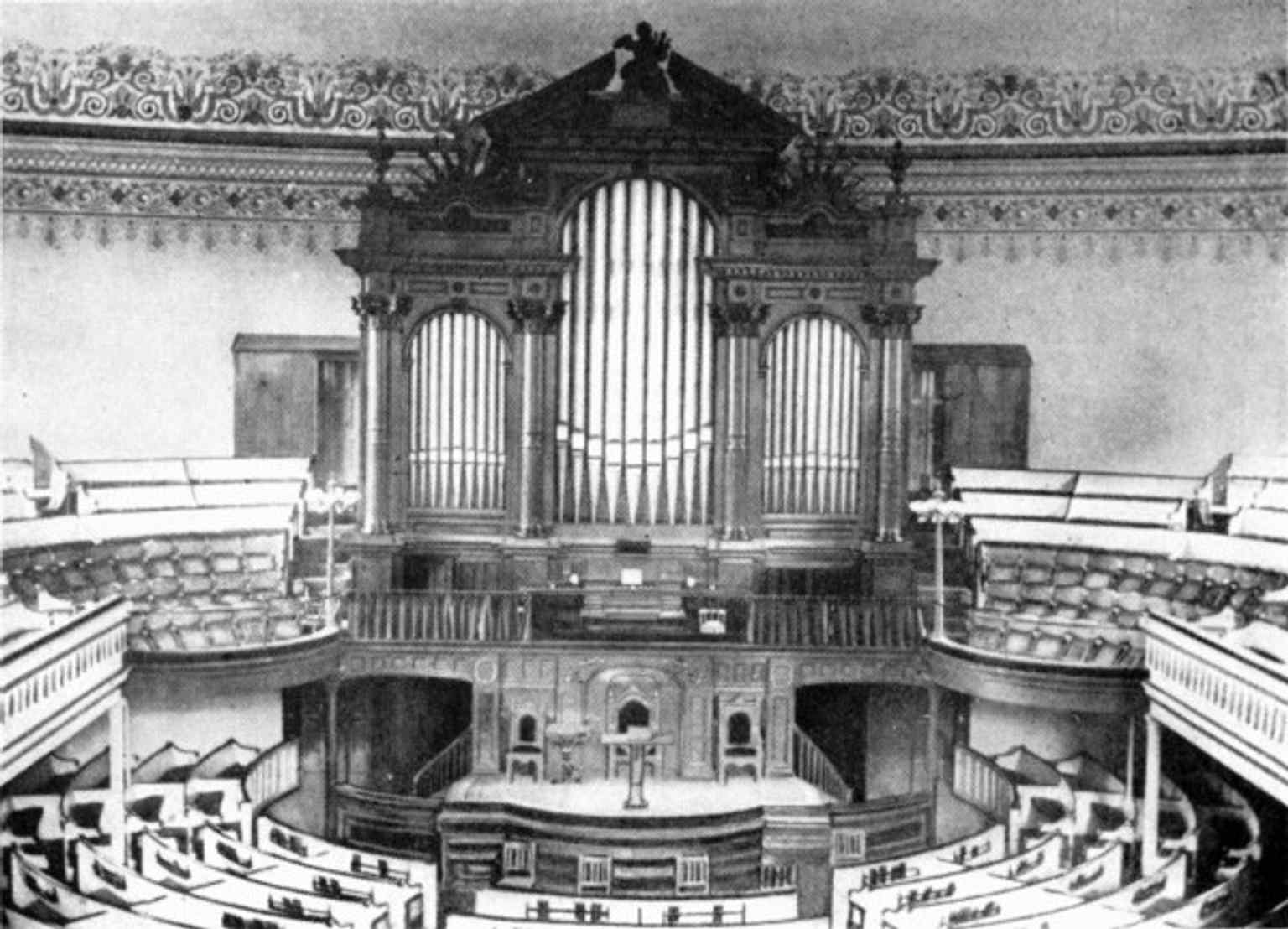
The main sanctuary's barn-like design with pews arranged in an arc, where Henry Ward Beecher delivered dramatic sermons and staged mock slave auctions to purchase the freedom of enslaved individuals.Photo: Stephen M. Griswold. No photo credit. Fleming H. Revell Company, Wikimedia Commons, Public domain. Cropped & resized. But Beecher's flair for drama eventually caught up with him in a massive, nationally publicized scandal. In 1872, a women's rights advocate named Victoria Woodhull publicly accused Beecher of having an affair with a parishioner, Elizabeth Tilton. Elizabeth's husband Theodore sued Beecher for criminal conversation, which was an old legal term that allowed a husband to seek financial damages from his wife's lover. Theodore demanded one hundred thousand dollars, a staggering sum equal to about three million dollars today. The trial was an absolute circus. While Theodore used five lawyers, Beecher hired an astonishing sixty-seven attorneys. Scalpers sold black market tickets to the courtroom for five dollars, roughly one hundred and thirty-five dollars today. Spectators routinely fainted from the overpowering perfume of massive floral displays sent by Beecher's adoring fans. After six months of madness, the jury deadlocked and could not reach a verdict. Beecher was cleared by the church, but Elizabeth was eventually excommunicated, and her disgraced husband fled to Paris.
Take a moment to soak up the history of this legendary brick facade. Whenever you are ready to keep exploring, we can stroll over to our final stop.
Look to your left and you will spot the massive red brick facade of the Eagle Warehouse, defined by its towering flat rectangular shape, a grand arched entranceway at the bottom,…Read moreShow less
Open dedicated page →Look to your left and you will spot the massive red brick facade of the Eagle Warehouse, defined by its towering flat rectangular shape, a grand arched entranceway at the bottom, and a large clock embedded at the very top. This architectural masterpiece was designed by Frank Freeman and completed in 1894 for three hundred thousand dollars, roughly ten million bucks today. The name comes from the Brooklyn Eagle, a famous local newspaper that stood on this exact spot. The legendary poet Walt Whitman was actually the editor there in the 1840s. When Freeman built this warehouse, he constructed it right around the old newspaper pressroom.
He designed the place to look like a medieval fortress. Check your screen to see an early illustration showing off its imposing original design. Notice the top of the building features a crenellated parapet, which is just an architectural term for a roofline with tooth-like gaps, exactly like a classic castle wall. Down at street level, that giant arch entrance leads into a magnificent barrel vault, basically a long, continuous curved ceiling like a tunnel. Back then, wealthy Brooklynites used this fireproof fortress to store their fancy furniture, keeping their silverware locked in massive basement vaults.
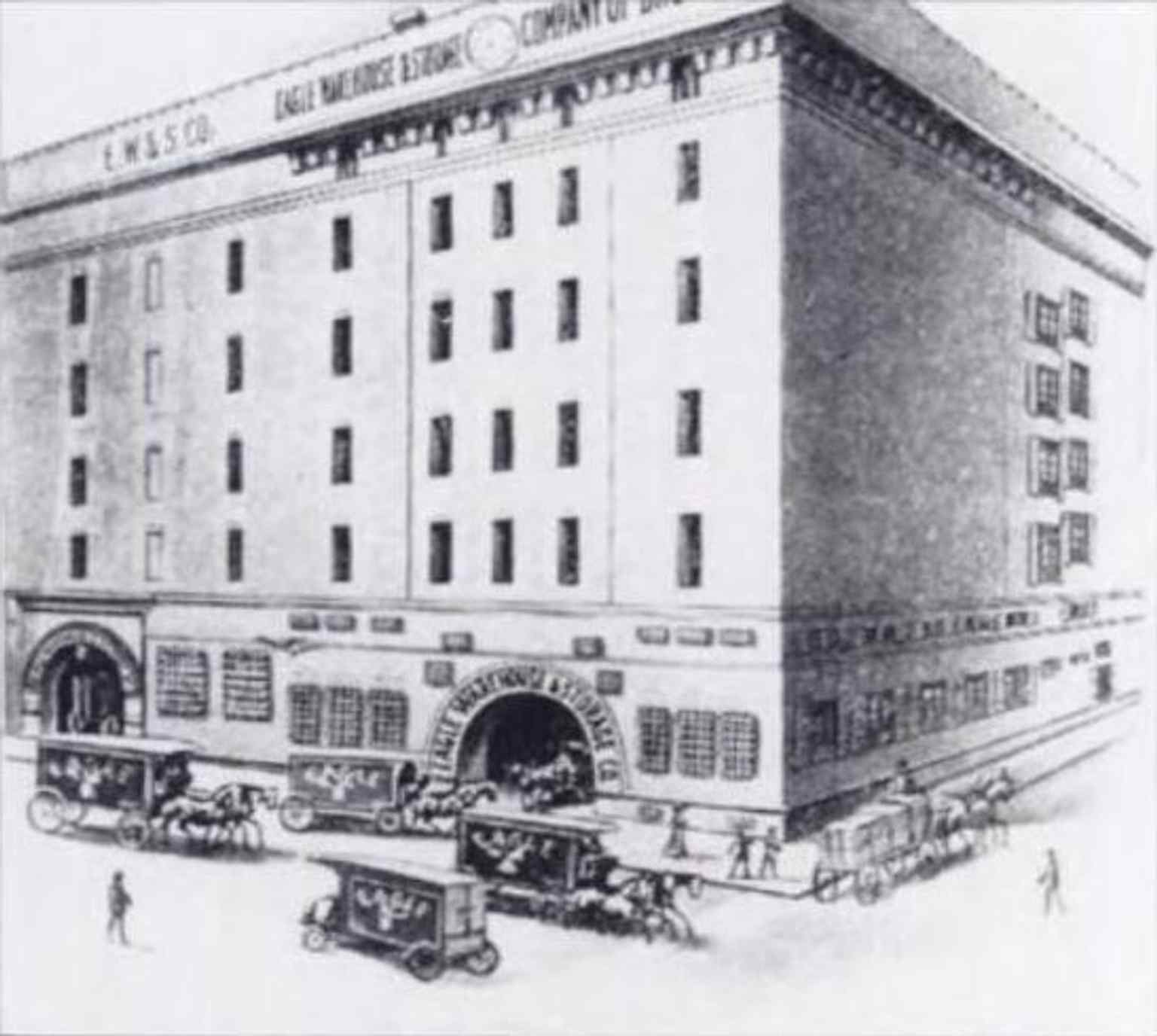
An early 20th-century illustration of the Eagle Warehouse, completed in 1894 by Frank Freeman and described as a 'masterpiece'.Photo: Unknown authorUnknown author, Wikimedia Commons, Public domain. Cropped & resized. But the wildest thing stored here was not silver. In 1905, newspaper magnate William Randolph Hearst lost the mayoral election to George McClellan Jr. Hearst furiously cried fraud. The contested ballot boxes were locked up inside this very warehouse pending a recount. Hearst even posted his own private guards outside to protect the boxes while the legal battle dragged on for years. Eventually, the courts ruled, and Hearst still lost the election.
By 1980, the warehouse was converted into luxury condominiums. They demolished the center of the building to create an atrium to let sunlight reach the inner apartments. That entire renovation cost three million dollars. To put that real estate shift into perspective, just one single apartment here sold for two and a half million dollars in 2021. Whoever lives in the penthouse gets to use that giant clock face on the roof as their window. Now that is a truly timeless Brooklyn view, and the perfect note to conclude our journey.
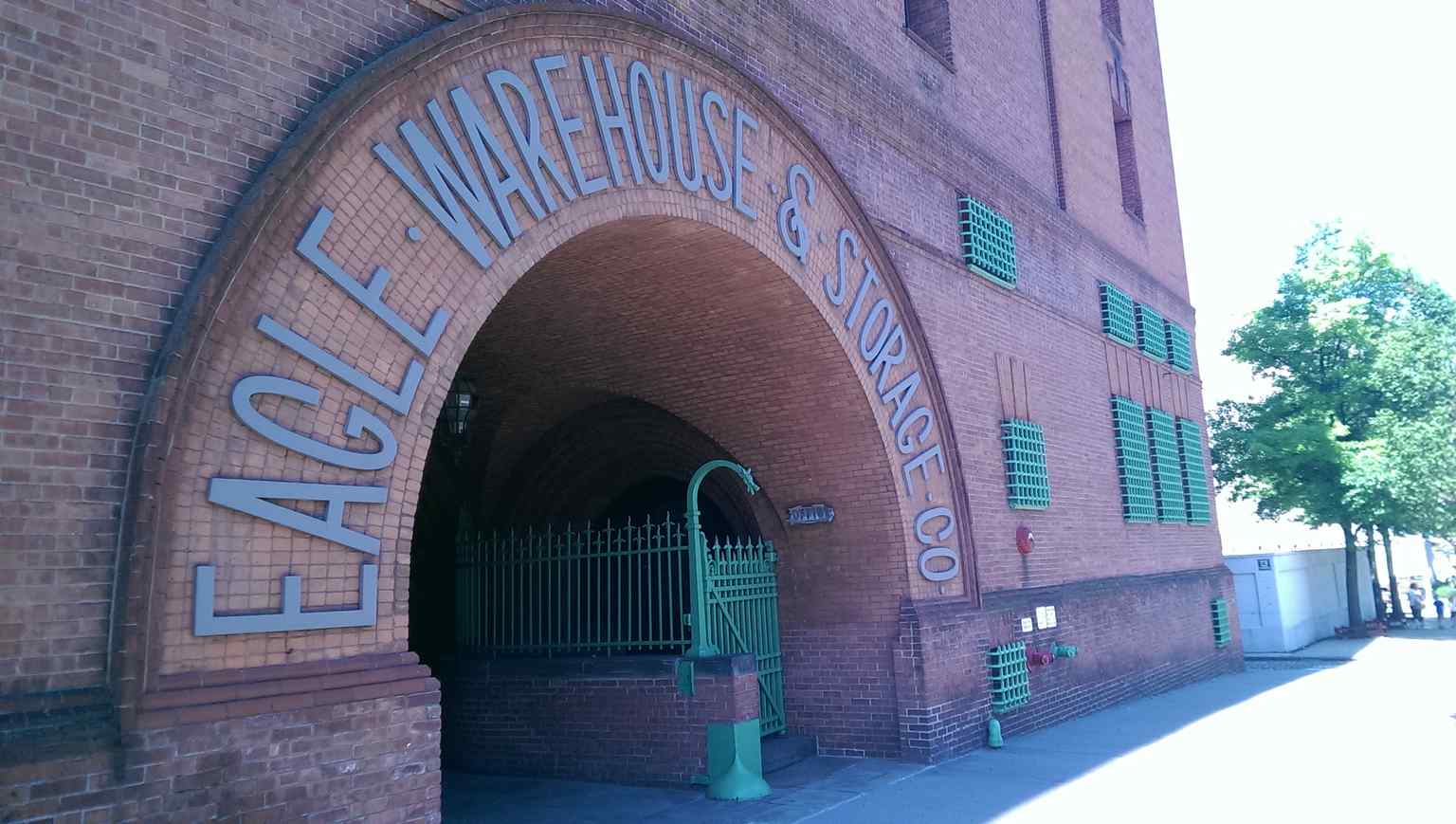
The Eagle Warehouse, built in 1894, stands on the former site of the Brooklyn Eagle newspaper, where Walt Whitman served as editor.Photo: Sagarjethani, Wikimedia Commons, CC BY-SA 3.0. Cropped & resized.
Frequently asked questions
How do I start the tour?
After purchase, download the AudaTours app and enter your redemption code. The tour will be ready to start immediately - just tap play and follow the GPS-guided route.
Do I need internet during the tour?
No! Download the tour before you start and enjoy it fully offline. Only the chat feature requires internet. We recommend downloading on WiFi to save mobile data.
Is this a guided group tour?
No - this is a self-guided audio tour. You explore independently at your own pace, with audio narration playing through your phone. No tour guide, no group, no schedule.
How long does the tour take?
Most tours take 60–90 minutes to complete, but you control the pace entirely. Pause, skip stops, or take breaks whenever you want.
What if I can't finish the tour today?
No problem! Tours have lifetime access. Pause and resume whenever you like - tomorrow, next week, or next year. Your progress is saved.
What languages are available?
All tours are available in 50+ languages. Select your preferred language when redeeming your code. Note: language cannot be changed after tour generation.
Where do I access the tour after purchase?
Download the free AudaTours app from the App Store or Google Play. Enter your redemption code (sent via email) and the tour will appear in your library, ready to download and start.
If you don't enjoy the tour, we'll refund your purchase. Contact us at [email protected]
Checkout securely with 





%202023%20jeh.jpg)


