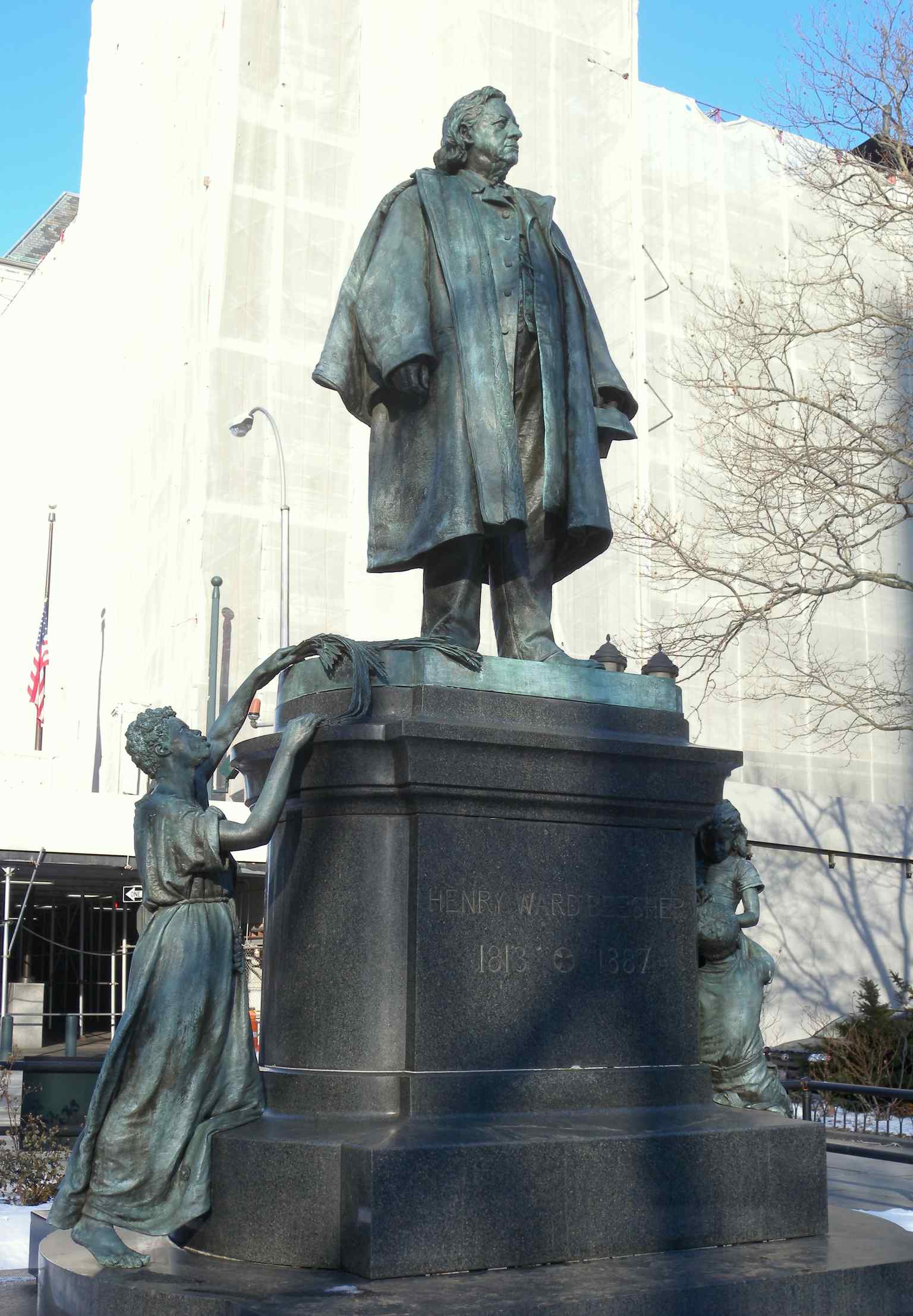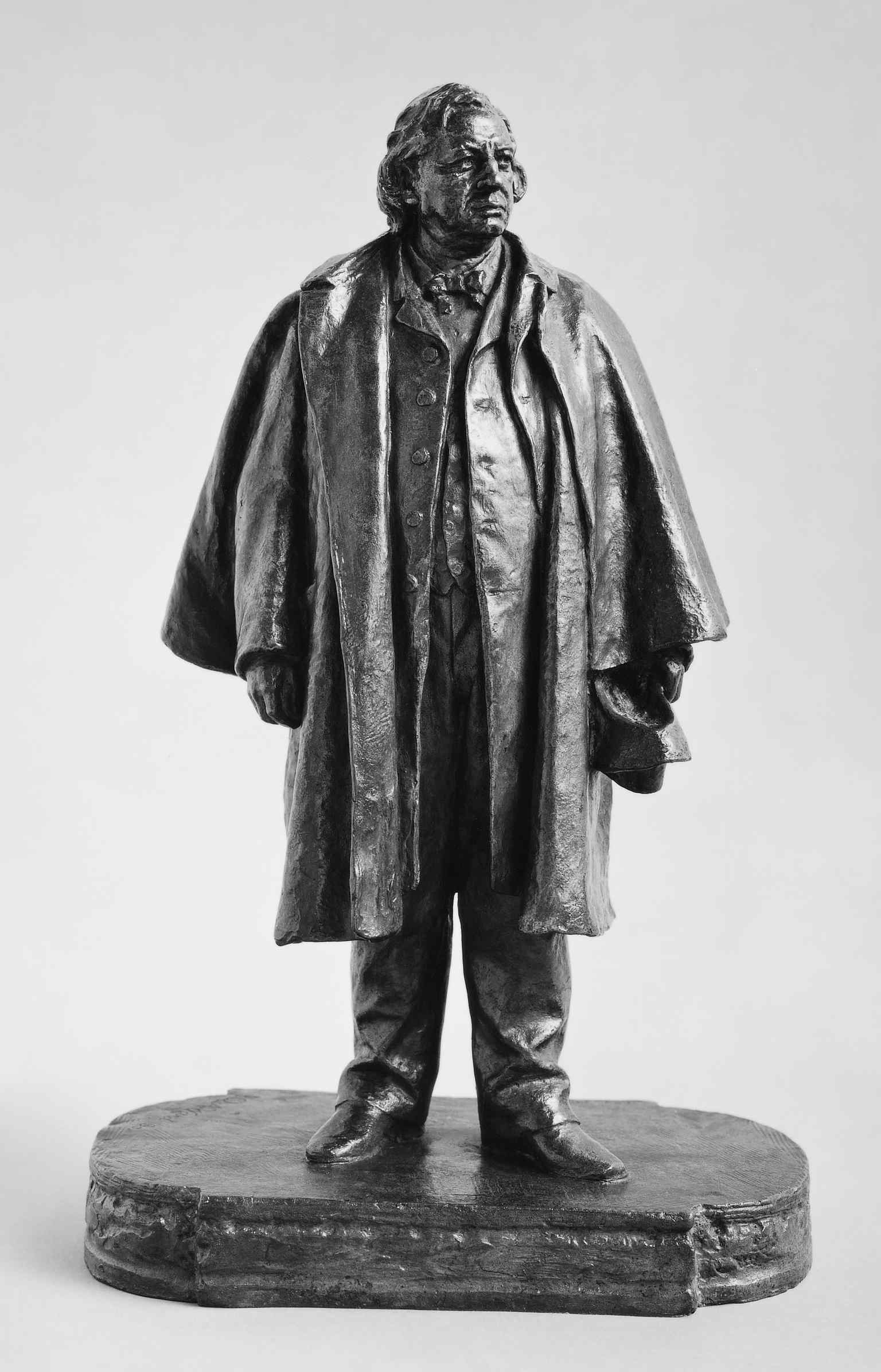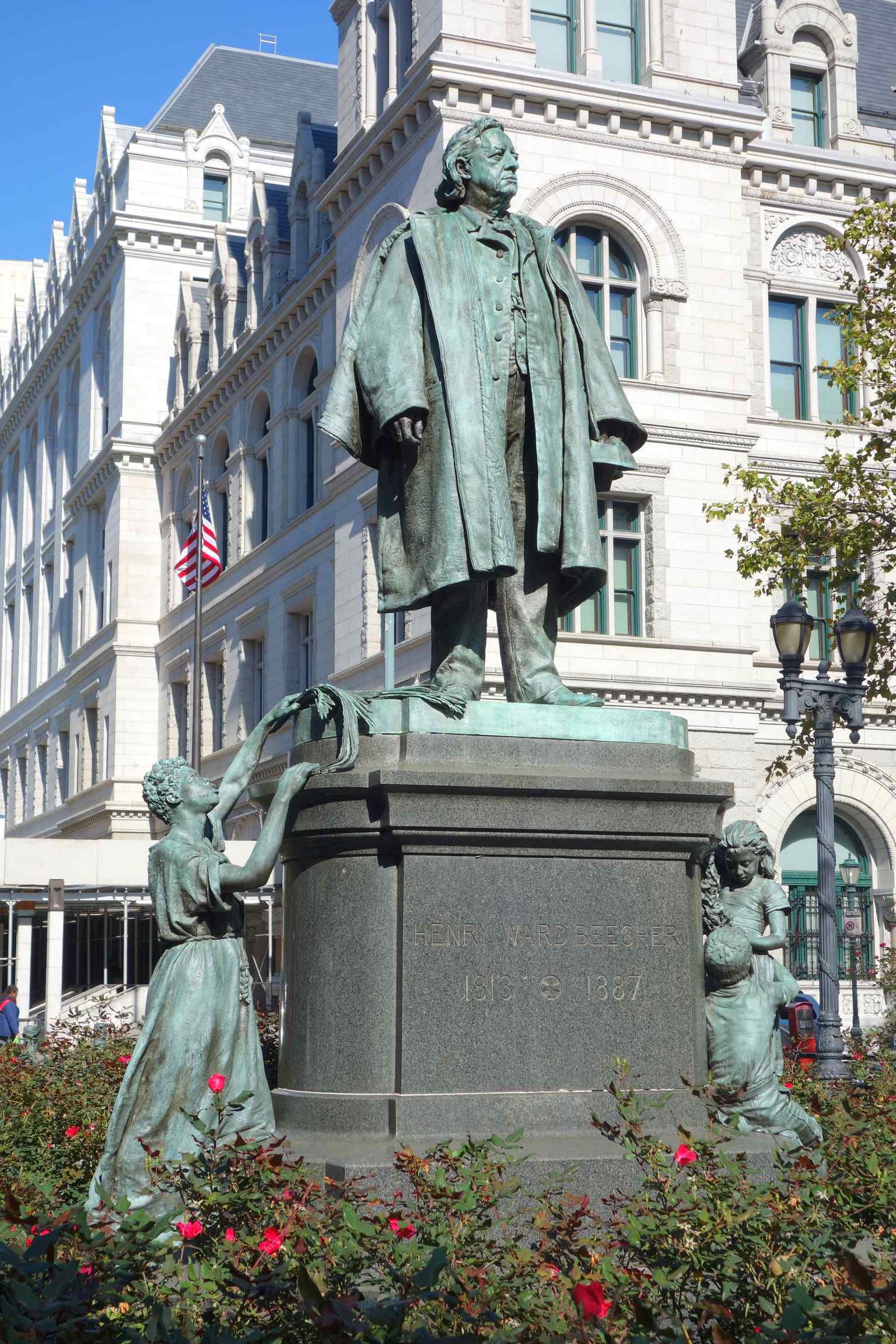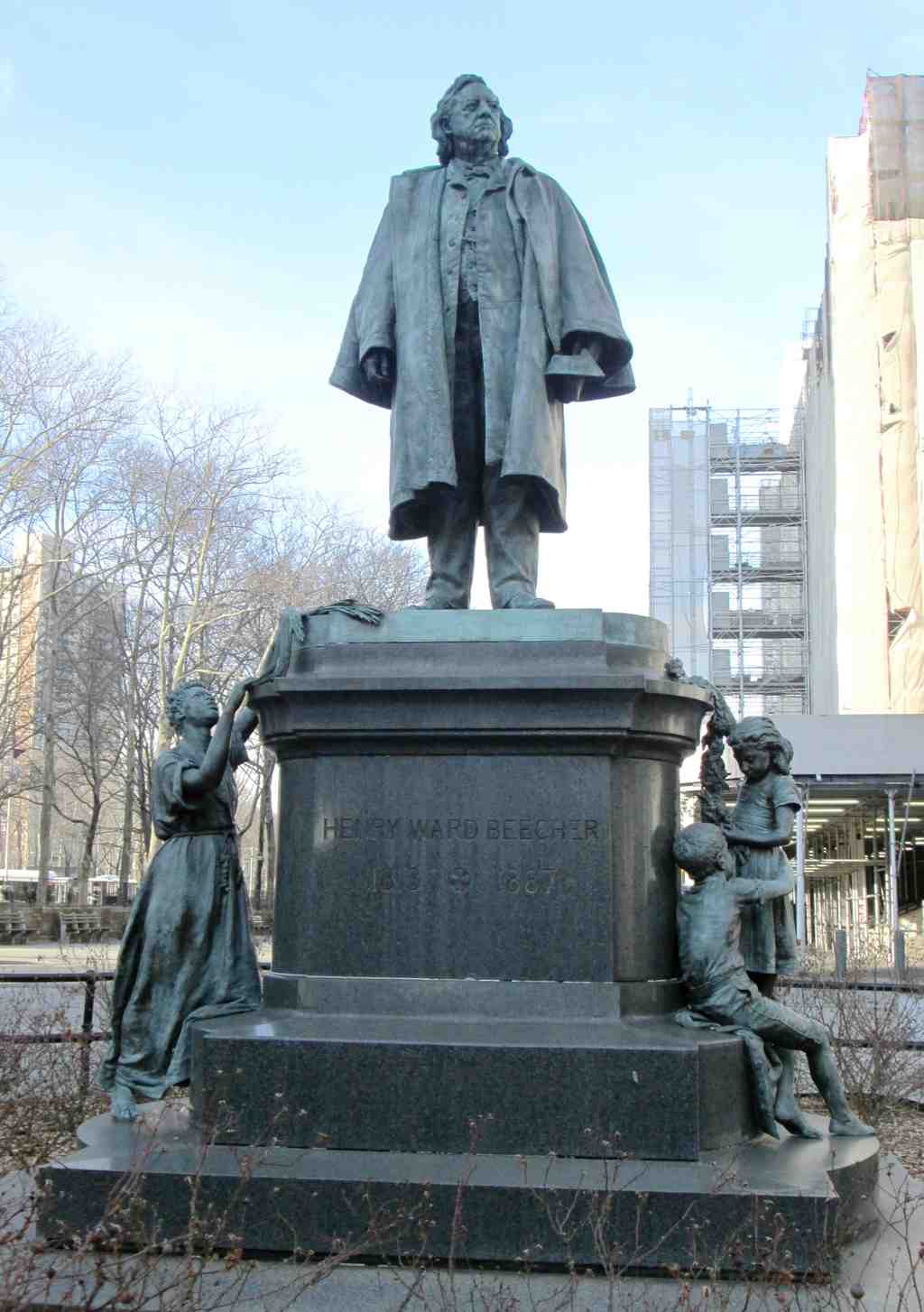
Look for the towering bronze statue of a man on a square granite base, flanked by a bronze woman on one side and two children on the other. This is Henry Ward Beecher, a progressive 19th-century preacher and orator, a highly skilled public speaker who pushed for social reform. Sculptor John Quincy Adams Ward cast this bronze in 1890, using photographs and a plaster cast of Beecher's face made right after he died, known as a death mask. Take a look at your device for a close-up of those intense bronze details.
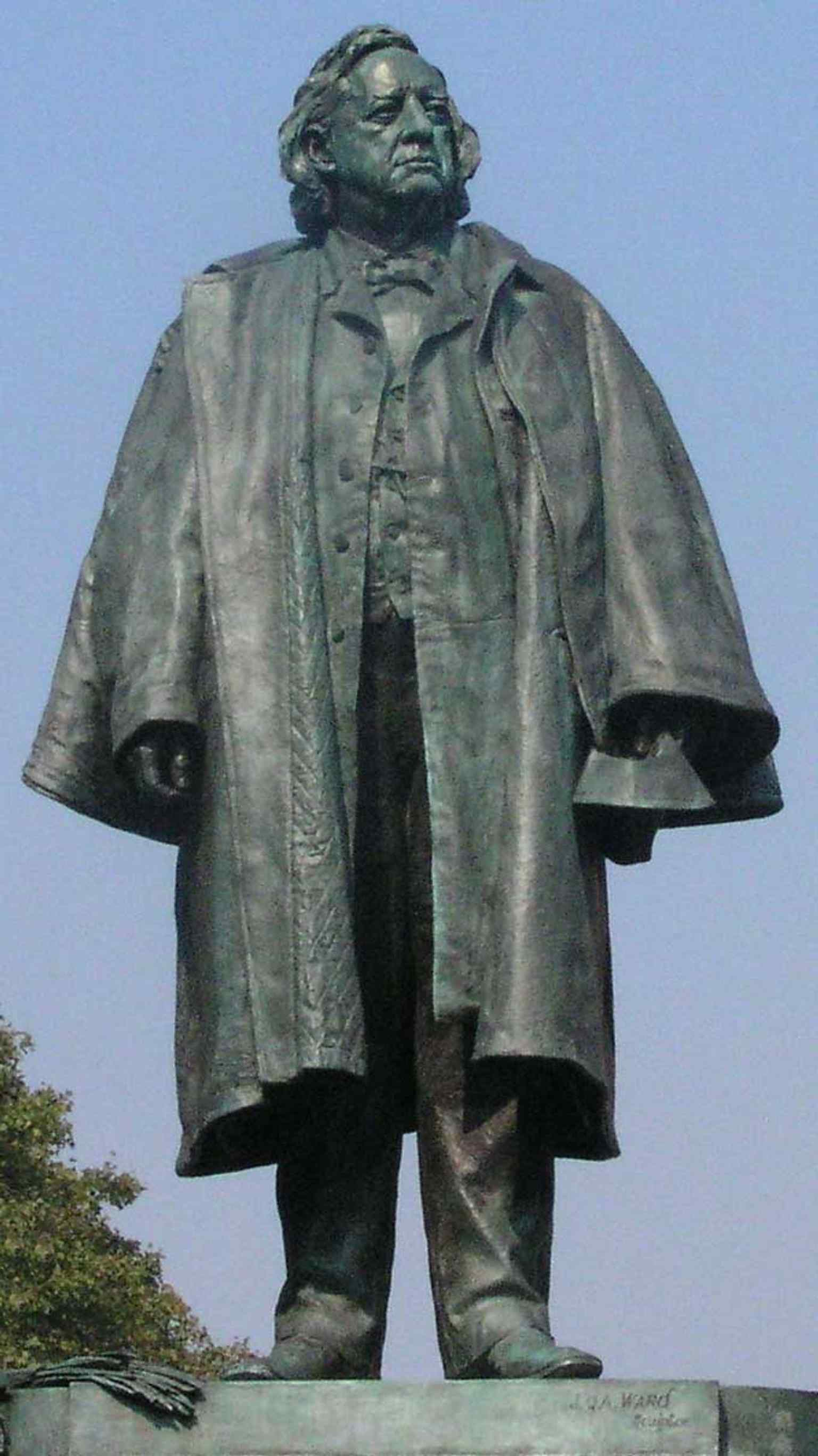
Why build such a grand monument? It was a deliberate public relations move. Beecher's pristine image masks one of the wildest scandals of the 1800s. We will dive into the wild details of that infamous trial later on, a spectacle that generated more headlines than the Civil War. For now, just know that his wealthy supporters funded this heroic statue specifically to scrub his reputation clean.
They originally lobbied to place him in Prospect Park but settled for this spot, where 15,000 people attended the 1891 unveiling. It is fascinating to look at the before-and-after picture on your device to see how more than a century of urban development has risen up around the monument since that dedication day.
At that dedication, a striking irony unfolded. The figures below Beecher symbolize his abolitionist work. He famously held reverse slave auctions, aggressively raising money from his congregation to purchase the freedom of enslaved individuals. The Black woman laying a palm branch at his feet is speculated to be Rose Ward, a woman freed this way. Yet, unveiling speakers completely ignored the emancipation of enslaved people, a glaring omission driven by New York City's lingering financial ties to the cotton trade.
Today, the layout draws sharp criticism for reinforcing a white savior narrative, placing the formerly enslaved woman in a subservient position below the clergyman. In 2007, conceptual artist David Hammons protested this dynamic. During a harsh winter storm, Hammons wrapped a physical scarf around the bronze woman's neck, an empathetic gesture symbolically protecting her while highlighting the indignity of her permanent placement.
The monument has drawn eccentric fans too, like a pioneer who drove an ox-drawn wagon from Washington State to Brooklyn in 1907 just to get his photo taken here, remembering his youth delivering newspapers to Beecher. You can visit this park from 6:00 AM to 1:00 AM any day of the week to ponder his complicated legacy. Take your time here, and we will catch up at the next spot.