
Look for the massive red brick building with the grand arched roofline and the classic white pillared porch right over the entrance doors.
Remember that monument of Henry Ward Beecher we saw earlier on our walk? Well, this is his home turf. Plymouth Church was built in 1849, and Beecher served as its very first pastor. He was a fierce abolitionist, and under his leadership, this church became a massive hub for the Underground Railroad. They hid fugitives right down in the basement, moving so many people to safety that locals started calling the church the Grand Central Depot. Beecher was incredibly proud of this secret network, later bragging to his stenographer that he personally opened the doors to hide runaways and point them toward the North Star.
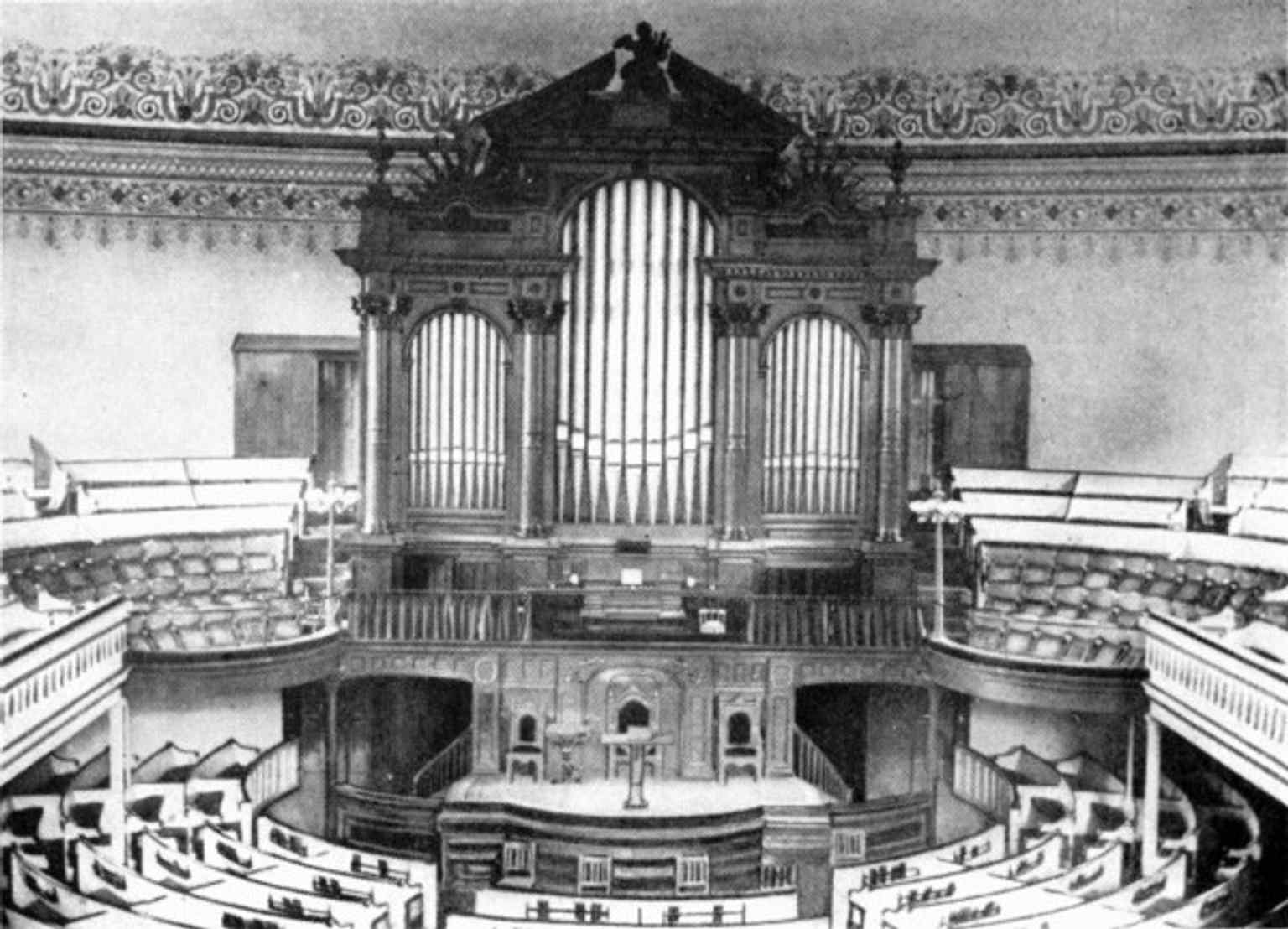
Beecher was also a master showman who knew how to work a crowd. To raise money to buy the freedom of enslaved people, he staged incredibly dramatic mock slave auctions right inside. If you glance at your app, you can see a photo of the main sanctuary. Notice how it looks less like a traditional church and more like a theater, with those curved pews facing a central stage. It was the perfect setup for his emotional performances. The most famous auction happened in 1860, when Beecher brought an enslaved child named Sally Maria Diggs before a crowd of three thousand people. The congregation threw cash into the collection plates, raising nine hundred dollars, which is over thirty thousand dollars today. Someone even tossed in a gold ring. Beecher slipped the ring onto the little girl's finger and declared, With this ring I do wed thee to freedom. Sixty-seven years later, she actually came back to the church and returned that very ring, which is still kept here as a prized artifact.
But Beecher's flair for drama eventually caught up with him in a massive, nationally publicized scandal. In 1872, a women's rights advocate named Victoria Woodhull publicly accused Beecher of having an affair with a parishioner, Elizabeth Tilton. Elizabeth's husband Theodore sued Beecher for criminal conversation, which was an old legal term that allowed a husband to seek financial damages from his wife's lover. Theodore demanded one hundred thousand dollars, a staggering sum equal to about three million dollars today. The trial was an absolute circus. While Theodore used five lawyers, Beecher hired an astonishing sixty-seven attorneys. Scalpers sold black market tickets to the courtroom for five dollars, roughly one hundred and thirty-five dollars today. Spectators routinely fainted from the overpowering perfume of massive floral displays sent by Beecher's adoring fans. After six months of madness, the jury deadlocked and could not reach a verdict. Beecher was cleared by the church, but Elizabeth was eventually excommunicated, and her disgraced husband fled to Paris.
Take a moment to soak up the history of this legendary brick facade. Whenever you are ready to keep exploring, we can stroll over to our final stop.





