
New York City Audio Tour: Medieval Treasures
High above the Hudson River lies a Manhattan that the guidebooks forgot. Beneath the canopy of Fort Tryon Park, the ghosts of revolutionary cannon fire still echo against the stone walls of a medieval palace transplanted from Europe. This self-guided audio tour navigates the hidden corridors of Washington Heights. Uncover the forgotten struggles and scandals buried beneath these iconic landscapes. Which desperate rebellion turned this hilltop into a bloody battlefield? Why did a billionaire mastermind ship an entire French monastery across the Atlantic piece by piece? And exactly which clandestine meeting held in a basement lounge shifted the city power balance forever? Stroll through shifting shadows and unravel centuries of drama. Experience the visceral thrill of discovery as history breathes through every stone path. Transform your perspective on the urban horizon. Put on your headphones and reclaim the secrets of the Heights.
Tour preview
About this tour
- scheduleDuration 30–50 minsGo at your own pace
- straighten0.5 km walking routeFollow the guided path
- location_onLocationNew York, United States
- wifi_offWorks offlineDownload once, use anywhere
- all_inclusiveLifetime accessReplay anytime, forever
- location_onStarts at The Cloisters
Stops on this tour
lock_open 2 free previews · 0 unlock with purchase
Ahead of you, a pale limestone and granite mass rises in stepped terraces, with blocky tower-like forms and pointed Gothic windows that make the hilltop look half fortress, half…Read moreShow less
Open dedicated page →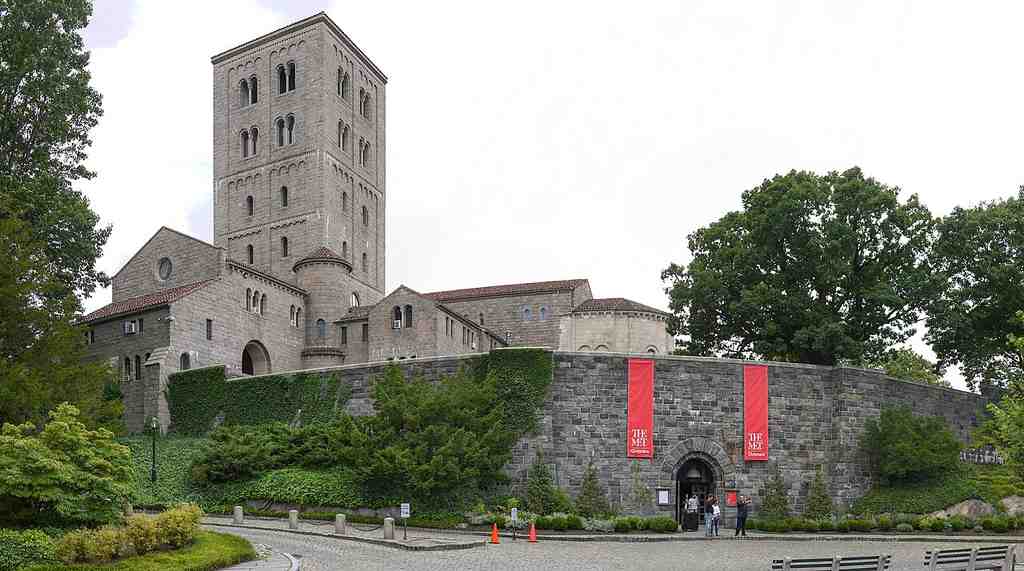
The CloistersPhoto: Christopher Down, Wikimedia Commons, CC BY 4.0. Cropped & resized. Ahead of you, a pale limestone and granite mass rises in stepped terraces, with blocky tower-like forms and pointed Gothic windows that make the hilltop look half fortress, half monastery.
A medieval museum on a Manhattan ridge still feels like a deliciously impossible idea. And that’s the first secret of The Cloisters: this is not the Middle Ages simply surviving in place. This is a curated past, assembled from imported stone, reconstructed courtyards, and carefully edited mood, so the hill can feel older than the city around it.
The beauty gets even stranger when you know how intentional it was. Preserving fragile pieces of Europe here meant transforming this whole crest of Upper Manhattan. In nineteen thirty, John D. Rockefeller Junior bought the land; in nineteen thirty-one, he gave it to the Metropolitan Museum of Art. He wanted elevation, distance, and that long sweep over the Hudson. Architect Charles Collens then designed a building that could seem to grow out of the rock while folding in actual medieval fragments from places like Cuxa, Saint-Guilhem, Bonnefont, and Trie-sur-Baïse.
And behind all that polished generosity, there’s one wonderfully unruly character: George Grey Barnard. Barnard was a sculptor, collector, and charming chaos machine who roamed the French countryside hunting medieval carvings, buying columns and capitals from farmers, dealers, and ruined religious sites. He loved the romance of fragments more than tidy scholarship. He once described himself almost like a knight on a bicycle, rescuing forgotten stone from fields and streams.
Most visitors never realize this museum had a rough draft. In nineteen fourteen, Barnard opened an earlier medieval-style museum on Fort Washington Avenue, a churchlike brick installation filled with rescued pieces. It was improvised, atmospheric, and a little ruin-like - basically the first version of the dream standing in front of you now. When his finances collapsed, he sold his collection to Rockefeller in nineteen twenty-five for a significant sum. That sale turned one man’s obsession into an institution.
Take a moment and study the building itself... the heavy stone, the terraces, the way the walls tuck around space instead of spreading wide. Does it feel like something discovered on the hill, or something planted here very carefully so it could pretend to be discovered?
If you want a quick visual for that whole transformation story, take a peek at the before-and-after image in the app.
Inside, the theater continues. The museum holds about five thousand works of medieval European art, but it doesn’t behave like a neutral container. Chapels, gardens, tapestries, stained glass, and carved cloisters all collaborate to create a feeling. If you glance at your screen, the Cuxa Cloister shows the trick beautifully: pink marble columns, a square garden, and the sense that silence itself has architecture.
When The Cloisters opened in nineteen thirty-eight, people praised it for stirring the imagination, not just displaying objects. That’s the real ambition here - beauty with a little stagecraft under it. To understand why this place belongs exactly here, though, you have to read the hillside beyond the museum walls. Fort Tryon Park, about a seven minute walk away, tells that part of the story.
If you want to come back and go inside, The Cloisters is open from ten to five every day except Wednesday.
On your right, look for the park’s rough gray stone retaining walls, the sweeping curved drives climbing a long ridge, and the broad terrace overlooks cut into the hillside. Fort…Read moreShow less
Open dedicated page →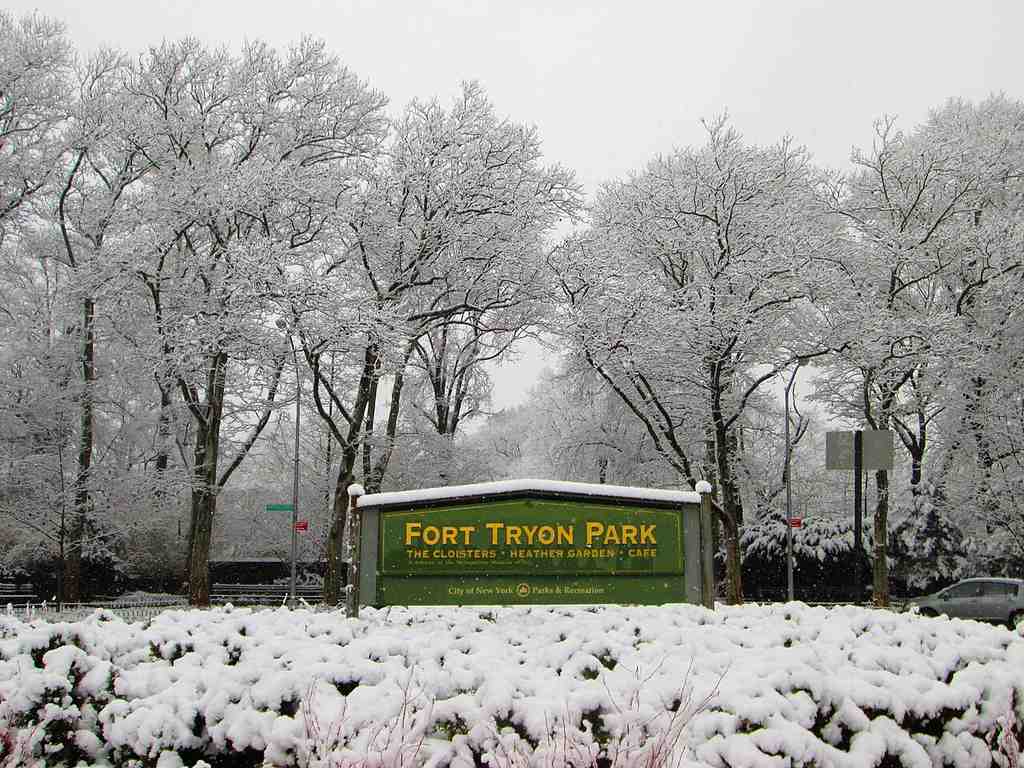
Fort Tryon ParkPhoto: Beyond My Ken, Wikimedia Commons, CC BY-SA 4.0. Cropped & resized. On your right, look for the park’s rough gray stone retaining walls, the sweeping curved drives climbing a long ridge, and the broad terrace overlooks cut into the hillside.
Fort Tryon Park feels peaceful now, but this hill has always attracted people who understood one simple thing: high ground means power. Up here, a ridge above the Hudson gave you reach, visibility, and a kind of authority before you ever built a wall, planted a garden, or hung a tapestry.
Long before any of that, the Lenape knew this place as Chquaesgeck. Their story is the first layer here, and it matters, because the hill did not begin as a blank canvas for colonists, collectors, or philanthropists. Dutch settlers later called it Lange Bergh, or Long Hill... a practical name for a place that kept announcing itself.
Then came war. During the Battle of Fort Washington on the sixteenth of November, seventeen seventy-six, fighting tore across this ridge while the main American fort stood a little south of here. Margaret Corbin became the human face of that violence. After her husband fell at his cannon, she took his place, kept firing, and suffered terrible wounds of her own. That’s why her name lives on at the park’s main circle: not as decoration, but as memory.
And under all of it is rock older than memory itself. This park sits on Manhattan schist, a hard metamorphic stone, marked by glacial striations, which are scratches left by ancient moving ice. So even the ground under your feet carries drama: first fire and pressure, then ice, then battle, then landscape design.
By the early twentieth century, millionaires looked at this same ridge and saw private theater. C. K. G. Billings built Tryon Hall here with stables, boat docks on the Hudson, formal gardens, and a winding driveway meant to impress. If you check your screen, the old Billings Arcade still shows that estate-world peeking through the public park.
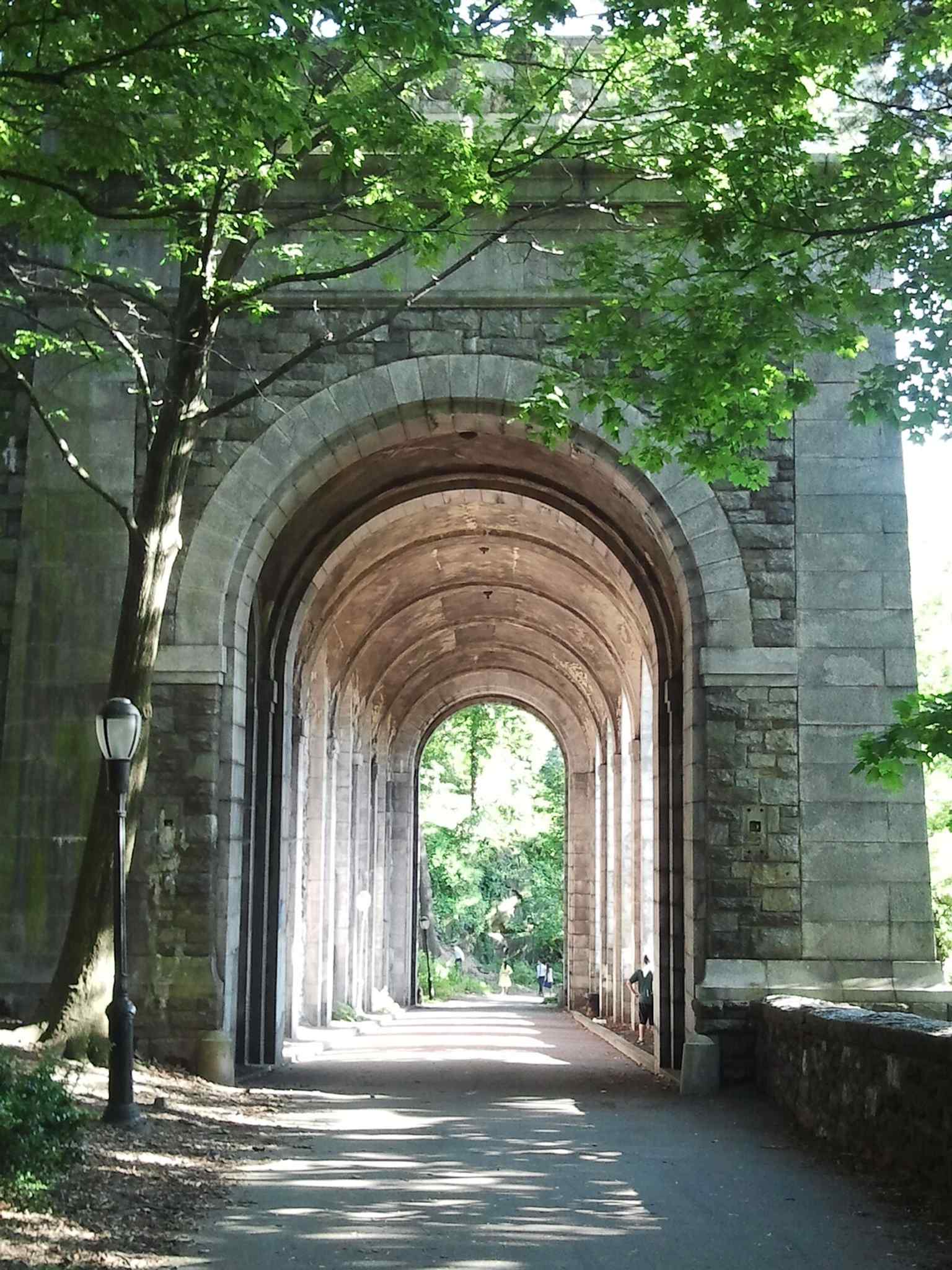
The Billings Arcade survives from the old estate that Rockefeller transformed into the park.Photo: Gigi alt, Wikimedia Commons, CC BY-SA 3.0. Cropped & resized. Then John D. Rockefeller Junior stepped in. He had loved this ridge since childhood walks with his father, and beginning in nineteen seventeen he started buying the estates, not just to save land, but to shape an experience. He bought George Grey Barnard’s medieval art collection, helped give it to the Metropolitan Museum of Art, and backed the Cloisters here. So the museum and the park were never really separate ideas. One curates history indoors; the other curates feeling outdoors.
Frederick Law Olmsted Junior and the Olmsted Brothers, with planting designer James W. Dawson, turned that idea into paths, arches, terraces, meadows, and gardens. During the Depression, hundreds of workers carved out roads and overlooks from a huge amount of schist. They planted mature trees and more than sixteen hundred species so the place would feel natural... even though nearly every view was carefully framed. Take a look at Linden Terrace on your phone. That open sweep is not accidental. It’s composition.
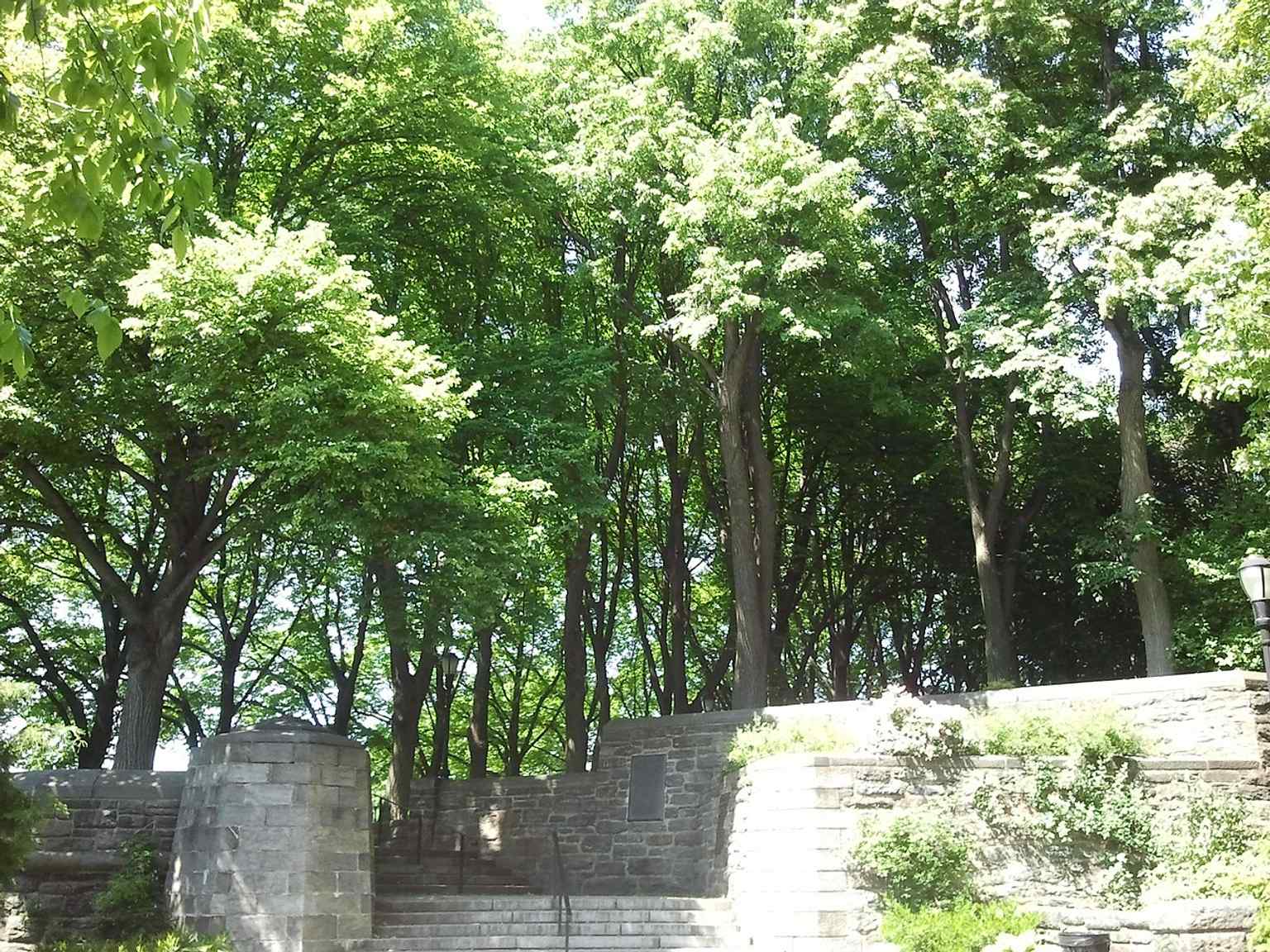
Linden Terrace, the park’s highest point, where Olmsted’s design opens up sweeping Hudson River views.Photo: Gigi alt, Wikimedia Commons, CC BY-SA 3.0. Cropped & resized. So here’s the parting thought. When a hill holds Lenape memory, wartime loss, private wealth, ancient stone, and crafted beauty, what are we preserving... and what are we gently editing?
Maybe that’s the real magic of this ridge. It does not hide its layers. It lets them rest together, until the whole hill feels less like a park beside a museum and more like one long, deliberate act of seeing.
If you want to linger, Fort Tryon Park is open every day from six in the morning until one in the morning.
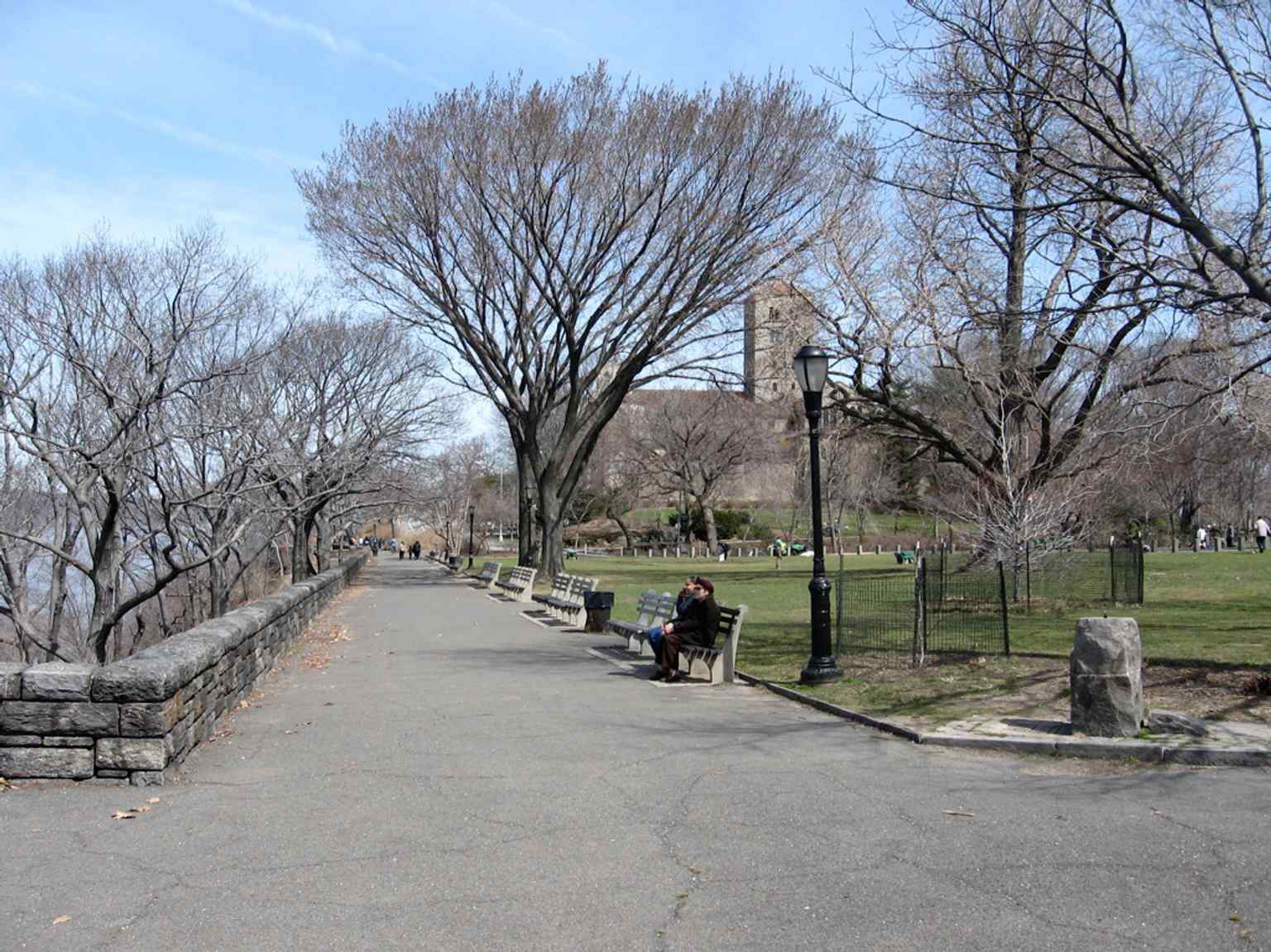
A classic view north toward the Cloisters, showing how the museum crowns Fort Tryon Park’s ridge above the Hudson.Photo: Rockingabe at English Wikipedia, Wikimedia Commons, Public domain. Cropped & resized. 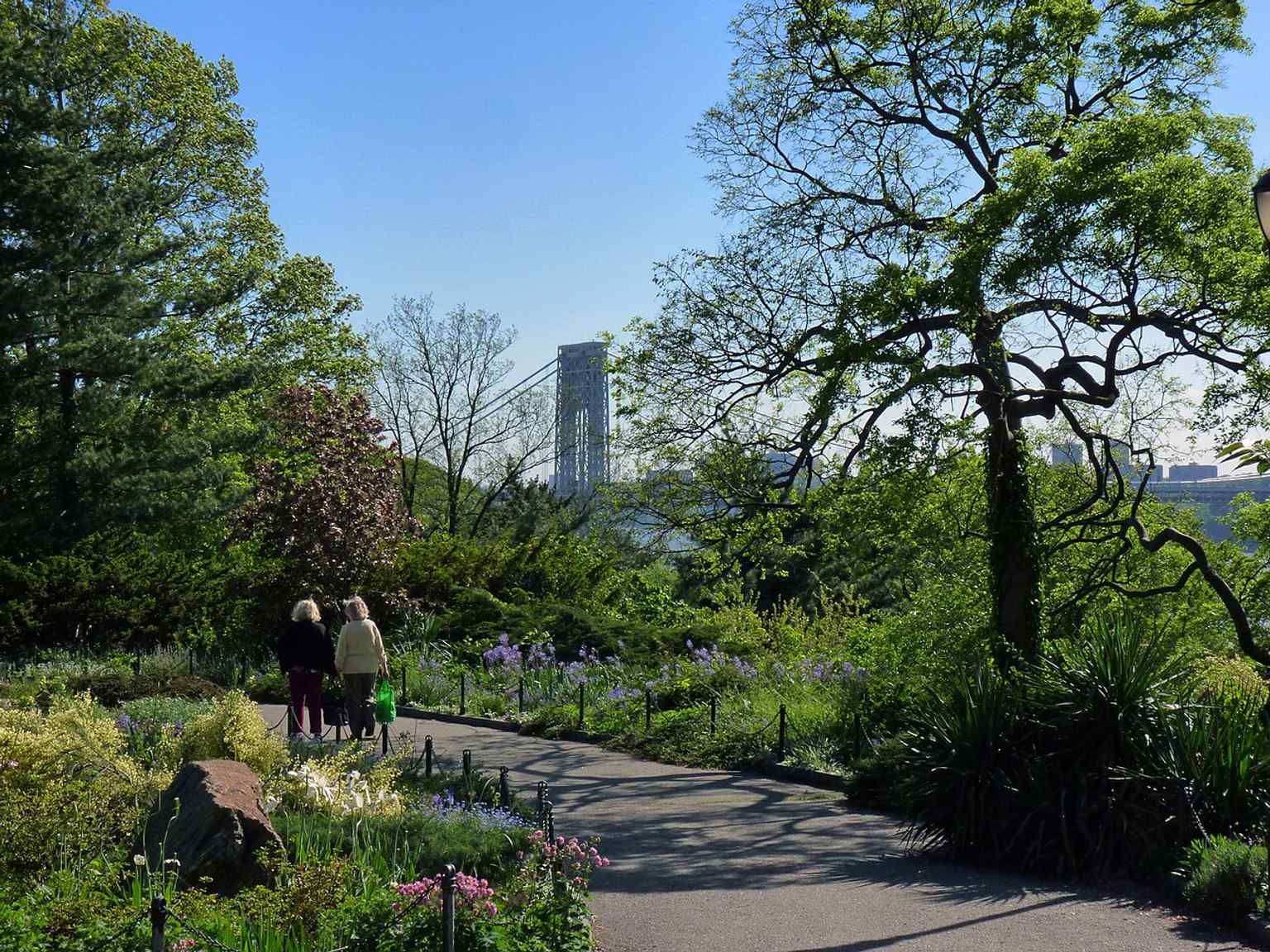
The Heather Garden in bloom, with the George Washington Bridge in the distance — one of the park’s signature scenic views.Photo: Lionel Martinez, Wikimedia Commons, CC BY-SA 3.0. Cropped & resized. 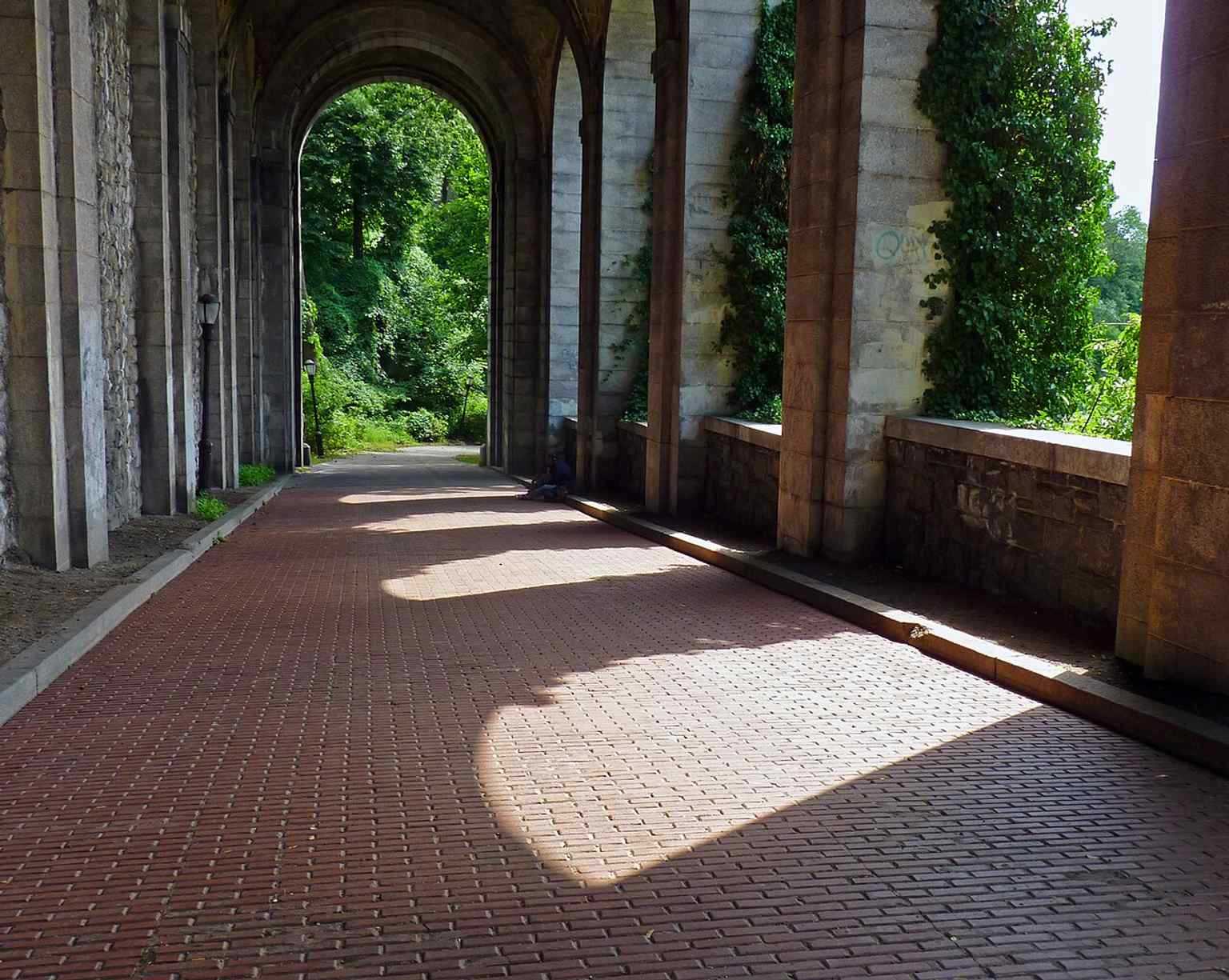
The Billings Road arches show how the former estate driveway was folded into the park’s path system.Photo: Lionel Martinez, Wikimedia Commons, CC BY-SA 3.0. Cropped & resized. 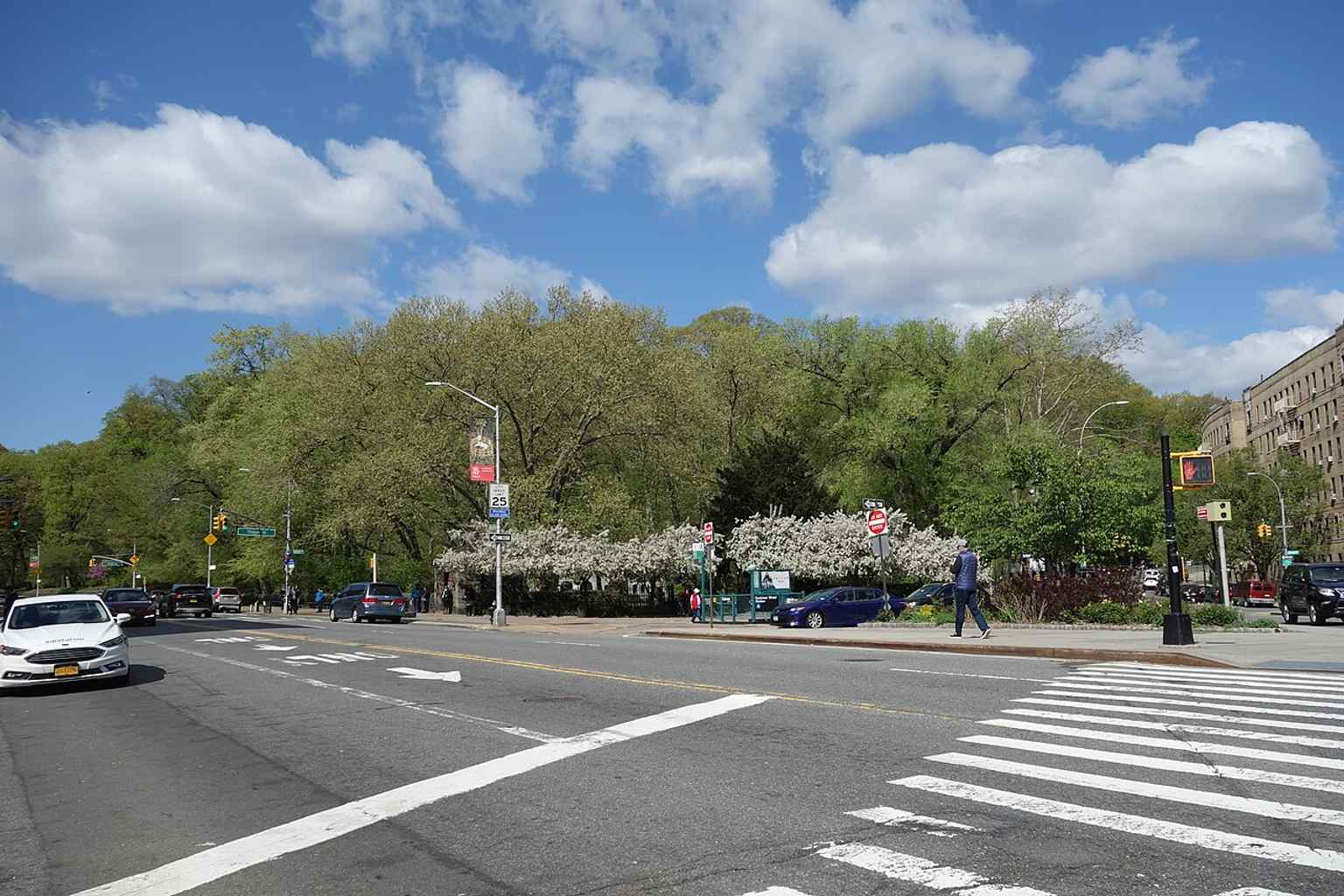
A wide look at the park’s northern tip by Dyckman Street, where Fort Tryon meets Inwood and the subway entrance sits at the edge.Photo: Tdorante10, Wikimedia Commons, CC BY-SA 4.0. Cropped & resized. 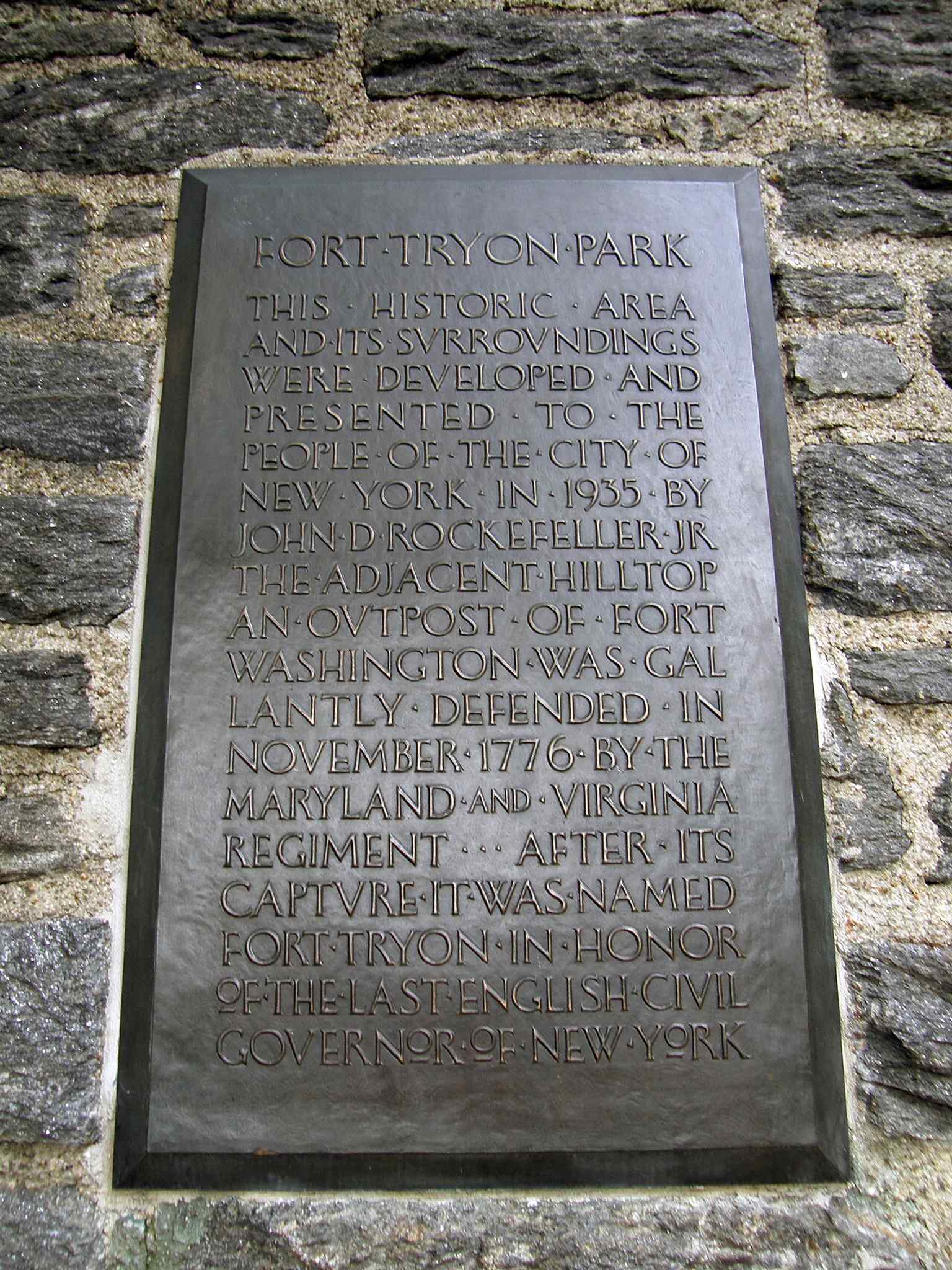
A plaque marking the Battle of Fort Washington, recalling the Revolutionary War fighting on this ridge in 1776.Photo: Kathleen Cole, Wikimedia Commons, CC BY-SA 4.0. Cropped & resized.

Frequently asked questions
How do I start the tour?
After purchase, download the AudaTours app and enter your redemption code. The tour will be ready to start immediately - just tap play and follow the GPS-guided route.
Do I need internet during the tour?
No! Download the tour before you start and enjoy it fully offline. Only the chat feature requires internet. We recommend downloading on WiFi to save mobile data.
Is this a guided group tour?
No - this is a self-guided audio tour. You explore independently at your own pace, with audio narration playing through your phone. No tour guide, no group, no schedule.
How long does the tour take?
Most tours take 60–90 minutes to complete, but you control the pace entirely. Pause, skip stops, or take breaks whenever you want.
What if I can't finish the tour today?
No problem! Tours have lifetime access. Pause and resume whenever you like - tomorrow, next week, or next year. Your progress is saved.
What languages are available?
All tours are available in 50+ languages. Select your preferred language when redeeming your code. Note: language cannot be changed after tour generation.
Where do I access the tour after purchase?
Download the free AudaTours app from the App Store or Google Play. Enter your redemption code (sent via email) and the tour will appear in your library, ready to download and start.
If you don't enjoy the tour, we'll refund your purchase. Contact us at [email protected]
Checkout securely with 





.jpg)


%2006%20-%20Fort%20Tryon%20Park.jpg)
