
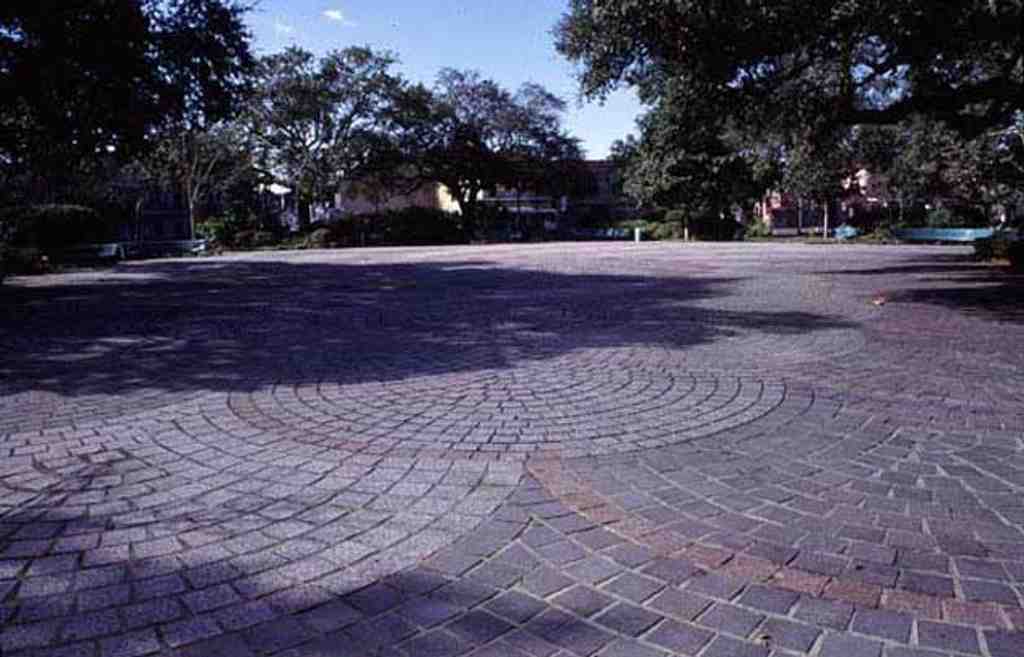
In front of you, you’ll spot a wide, open plaza paved with swirling patterns of stone, framed by huge, shady oak trees-just look ahead for the circular bricks in the middle of all that sunlight, right in the heart of Louis Armstrong Park.
Ah, welcome to Congo Square! Today it looks peaceful-dappled sunlight, the rustle of oak trees, and maybe someone drumming quietly in the distance. But imagine it two centuries ago: a Sunday afternoon, the air thick with the scent of roasting food, the quick rhythm of drums, the calls of vendors, and bursts of laughter. Let your mind fill with the colors and energy because this place was once the beating heart of New Orleans’ African community and the cradle of American jazz.
Back in the 1700s and 1800s, when Louisiana was under French and Spanish rule, enslaved Africans were “officially” given Sundays off, thanks to the Code Noir. Laws may have tried to stop their gatherings, but the spirit of these people couldn’t be bottled up. So on Sundays, hundreds-even thousands-came here to the edge of town, setting up markets, selling handcrafts, and sharing news and stories from distant lands.
If you stood here back then, take a deep breath-you might catch the sharp scent of spices and sweet fruits sold at makeshift stalls, and see folks dressed in a riot of color: the latest French silks, Caribbean headwraps, handmade jewelry, and even animal tails jangling on dancers’ ankles. Whole crowds would cluster around musicians wielding drums, flutes made from river reeds, and homemade banjos. Just imagine the feet stomping along to rhythms from Africa, Haiti, and the Americas. There were dances with names as lyrical as their movements: the Bamboula, Calinda, Congo, and Juba. Some dances, like the Bamboula, were so powerful and hypnotic, visitors swore they could feel the ground vibrating.
But Congo Square was more than just a Sunday party. As new laws came in-like the city of New Orleans restricting Black gatherings only to Congo Square in 1817-resilience grew stronger here. Enslaved people could sell goods, sometimes making enough money to buy their freedom. And music-a blend of African, Caribbean, and European styles-kept evolving, each beat handing down hope, history, and heartache. These rhythms are still pulsing through New Orleans jazz funerals and Mardi Gras parades today.
It wasn’t all music and markets, though. Some Sundays, as dusk settled over the square, you might hear whispered prayers and mysterious chants. Congo Square was also the center of spiritual life and voodoo ceremonies, led by legendary figures like Marie Laveau. She’d begin a dance, and before long, hundreds were swirling under the open sky, their voices rising like the wind off Lake Pontchartrain. Voodoo here was a celebration, not just a secret-an expression of longing, freedom, and community.
Even after the music gatherings faded in the late 1800s as the city’s laws grew harsher, the magic never really left. The square was renamed “Beauregard Square” for a while-though locals never stopped calling it Congo Square, and thanks to dedicated citizens like Freddi Williams Evans, the old name was officially restored in 2011. So, jazz up your day-literally!-because some of the world’s greatest music composers, from Gottschalk to Wynton Marsalis, wrote pieces inspired by moments right here.
These days, Congo Square is still alive with music, drum circles, weddings, wild festivals, and even the famous Red Dress Run-don’t worry, you don’t have to change in public! Every Sunday, folks still gather, keeping the ancient rhythms alive, just like their ancestors.
So, take a moment to listen-you just might hear echoes of joy, struggle, and rhythm swirling through the branches above. Welcome to Congo Square, where every step is a beat in the song of New Orleans.


