
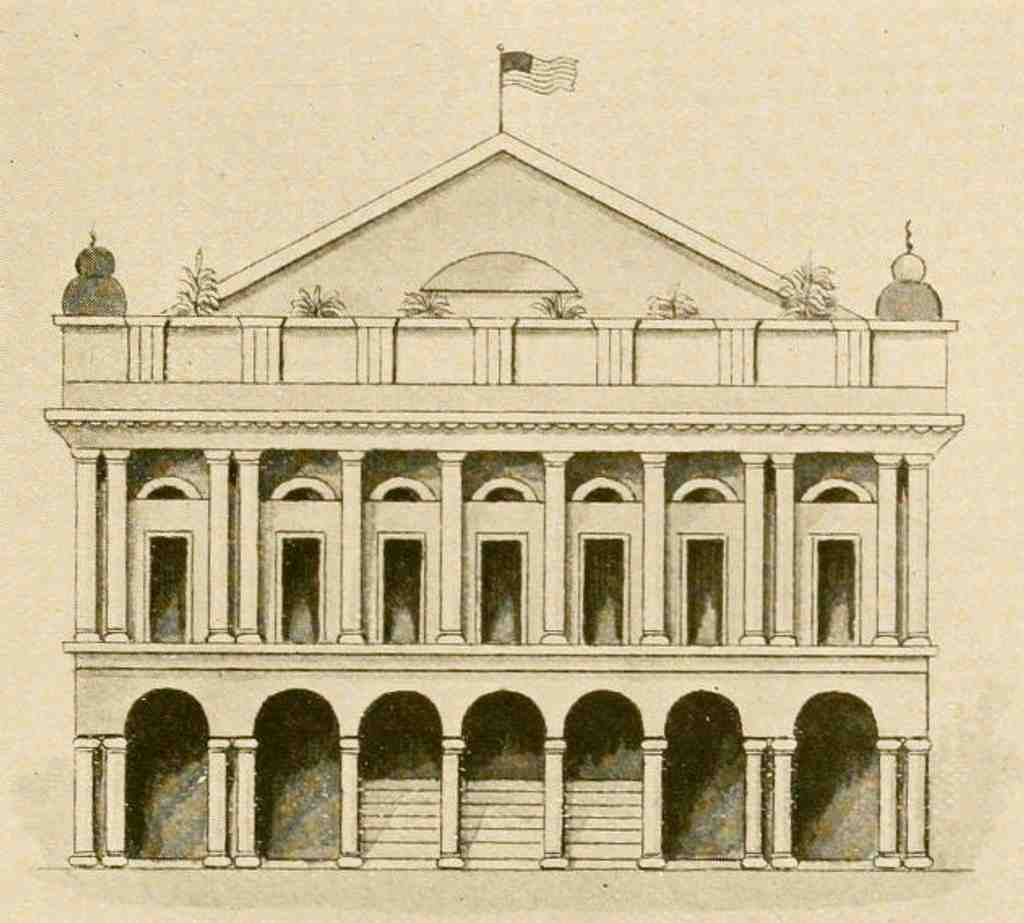
Right in front of you, you’ll spot a grand, classical building with tall columns, rounded arches, and a triangular roof crowned by an American flag-just gaze above the arches and you'll know you've arrived at the legendary Théâtre d'Orléans!
Imagine standing on Orleans Street in the 1820s. The air is thick with anticipation, a few horses clop past, and elegant carriages pull up to this sparkling theater, the most important opera house in all of New Orleans. Brightly lit windows cast golden light over crowds in feathers and finery. Inside, a French melody might drift out as voices rehearse for that evening’s American premiere-because this place wasn’t just a theater, it was the launchpad for groundbreaking French opera in all of America.
This story begins with Louis Tabary, a refugee from Haiti, who crafted the initial plans for the theater. Construction kicked off in 1806, but history had other ideas. The War of 1812 delayed its debut, so you’d have had to wait until 1815 to catch your first dazzling performance. But trust New Orleans to keep things spicy-a fire soon tore through the original building. The city’s answer? Rebuild, of course, this time with a fancy bonus: the Orleans Ballroom next door!
Enter John Davis, another refugee from Saint-Domingue, who took the lead in 1819 and ushered in a golden era. Picture him at opening night, the orchestra warming up and the chandeliers glowing. Over five seasons, Davis’s crew rolled out 140 operas and premiered 52 right here for the first time in America! The stars of Paris would have rolled their eyes at the New Orleans heat, forcing the stage to go dark each summer. But Davis was crafty-he packed up the troupe and took the whole show on the road each year, bringing opera all the way to Boston, New York, and Philadelphia.
Oh, but the theater business is never dull. The rival Camp Street Theatre tried to steal the spotlight, putting on English-language shows right down the street. Once, both theaters staged the same opera-Meyerbeer's Robert le diable. The English version opened sooner, but folks said the French show at Théâtre d'Orléans had the real heart and style. It was a theatrical rivalry hotter than a summer in the Big Easy.
After John Davis, his son Pierre took over, adding more opera stars to the mix. The legendary soprano Julie Calvé joined, dazzling audiences in roles no one in America had heard before, like Henriette in L'éclair or Lucie in Lucie de Lammermoor. The walls here have seen creativity, drama, romance, jealousy, and even a bit of baby drama-a soprano once sang a starring role, then gave birth to a daughter the very next day. That daughter later graced this same stage-opera was truly a full-family affair.
The party didn’t stop there. The opulent Orleans Ballroom hosted glittering balls and wild masquerades. Sometimes they’d throw a party so big, they built a floor over the orchestra pit, turning theater and ballroom into one massive dance floor. Even the Marquis de Lafayette, hero of the American Revolution, cut a rug here. But not all the drama happened on stage-duels broke out during glitzy quadroon balls, where forbidden romances sparked fierce rivalries.
Eventually, new theaters rose, fires came and went, but the legend of the Théâtre d'Orléans stuck around. Even after the great fire of 1866, the Orleans Ballroom survived, becoming a home for the Sisters of the Holy Family-the first Black female religious order in the US. Today, you might find a wedding or party echoing those long-ago waltzes.
So standing here, picture the elegance, the music, the drama-all the grandeur and quirks that made New Orleans the operatic heart of America. And if you hear someone humming an old French tune, well, maybe an opera ghost just can’t resist an encore!


