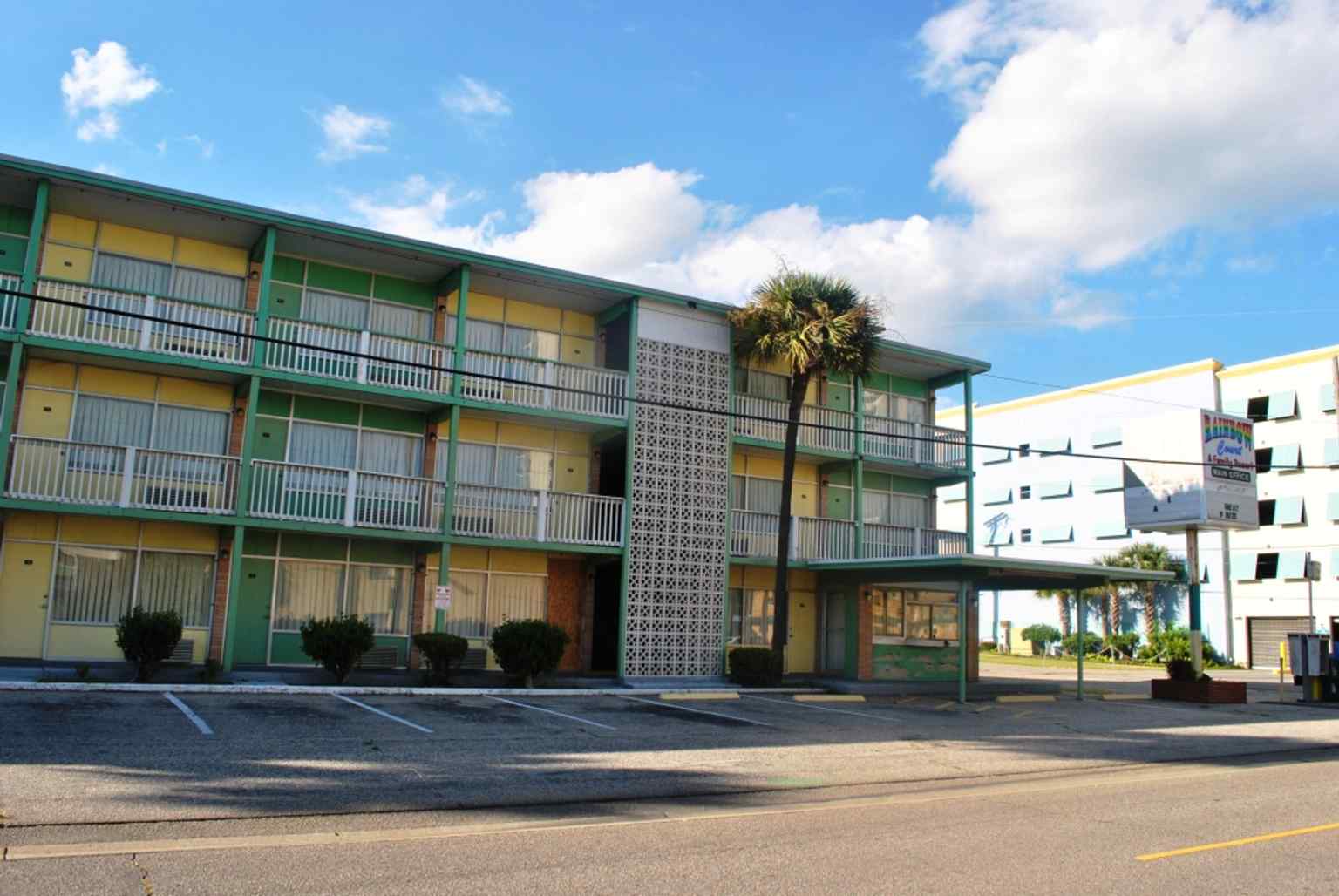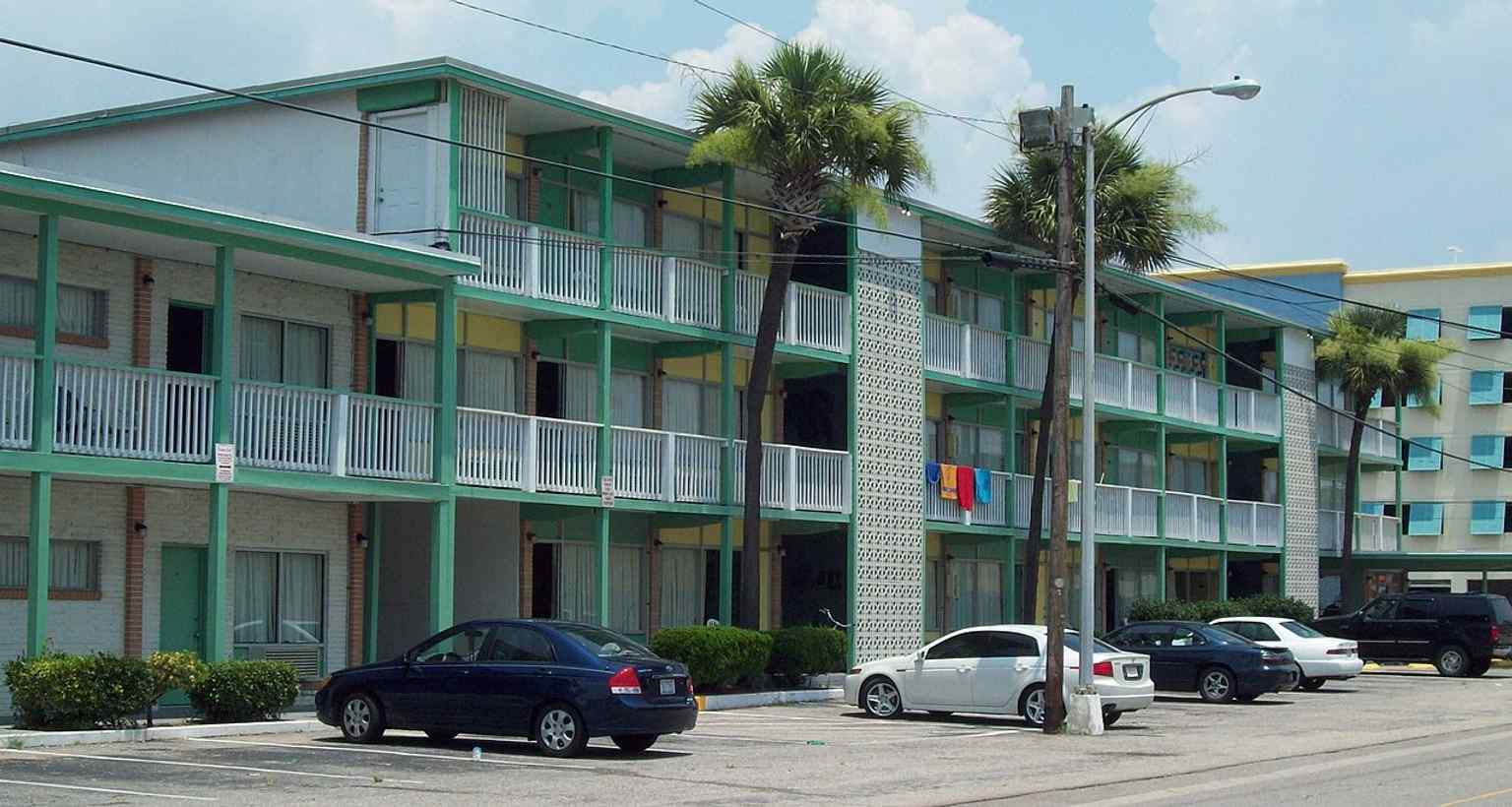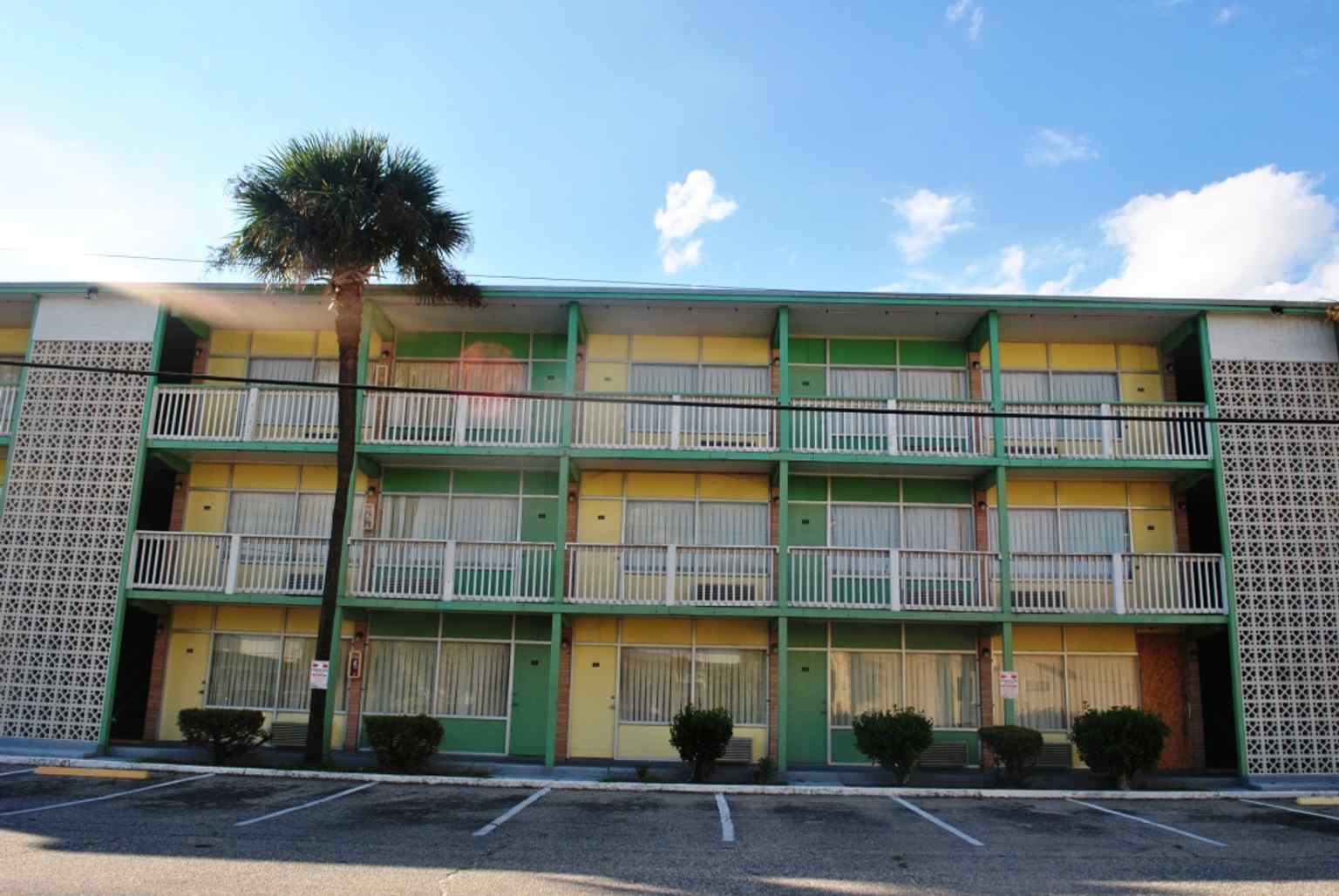
On your right, look for a low stucco and wood motel complex arranged around an open court, with straight exterior walkways and a swimming pool as its signature marker.
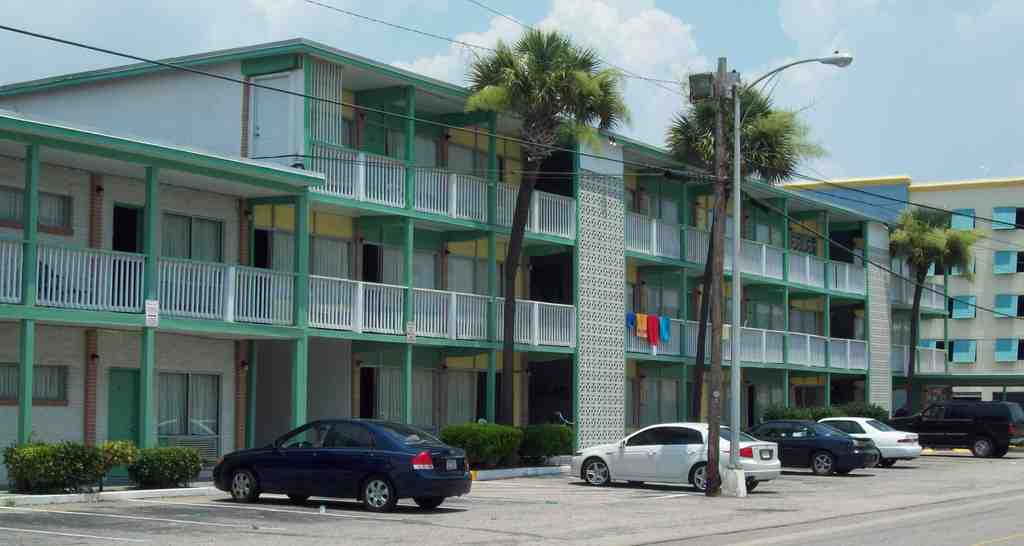
Rainbow Court told the story of Myrtle Beach before towers muscled in. Between nineteen thirty-five and nineteen fifty-nine, builders added two motel style buildings, five beach cottages or boarding houses, and a small house around this shared court. It was not grand... which, honestly, was the point. Check the app image for the full layout: low rise, practical, and built for people who wanted the ocean, not a chandelier. The National Register of Historic Places, the federal list of recognized historic places, added Rainbow Court in nineteen ninety-six and counted six buildings as historically important. It mattered because it was one of the few surviving small motels from before Hurricane Hazel in nineteen fifty-four. By June twenty sixteen, redevelopment plans aimed to replace this site with a parking garage and police station, backed by ten million dollars, and by twenty twenty it had lost its register status - another sign of how quickly this shoreline keeps rewriting its own memory.