
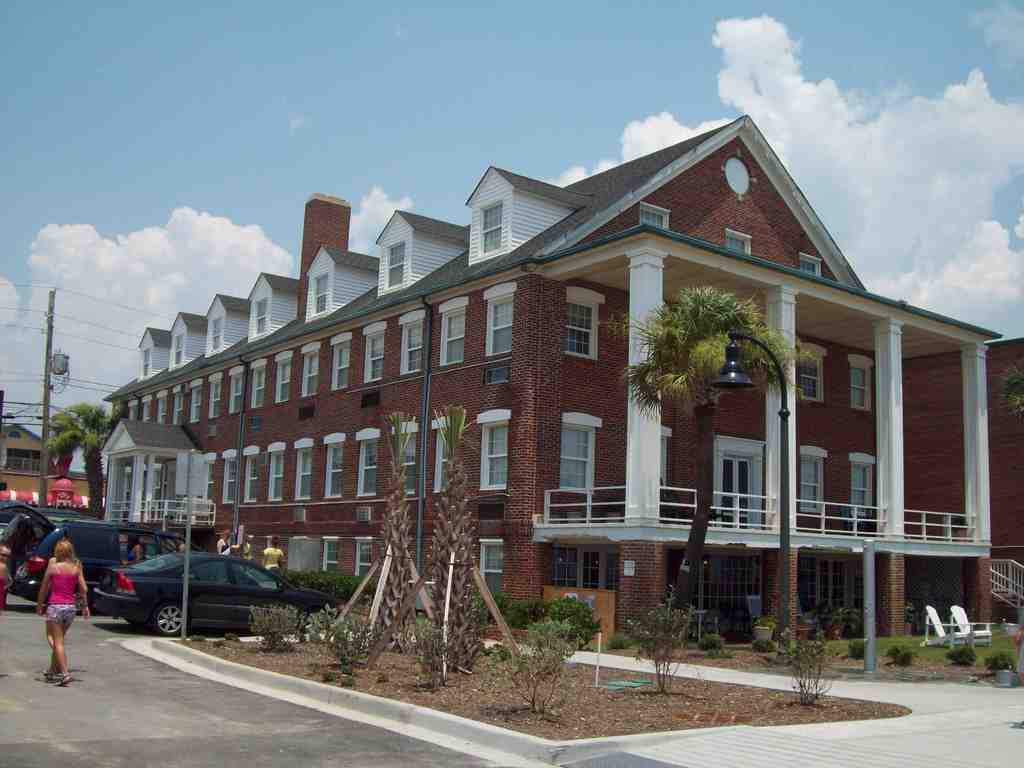
In the historic photo on your screen, the Chesterfield stands out as a three-story brick-faced rectangle with a front gable roof and that unmistakable green-and-white Chesterfield sign. You’re standing at the former site of one of Myrtle Beach’s more unusual old hotels... unusual because it dressed like a Colonial Revival inn, not a carefree beach motel. That style borrowed the manners of older American houses, with brick, symmetry, and proper gables... a little formal for the Grand Strand, which is probably why people remembered it.
The story started in nineteen thirty-six, when Steven Chapman, from Chesterfield, South Carolina, put up a modest five-room house here. It burned, and in nineteen forty-six his replacement rose with a brick veneer over a wood frame, a raised basement, and a roof that ran from the end wall to the front gable. Later, in nineteen sixty-five, a second three-story rectangular building joined it.
If you glance at the app, you can see the inn before the wrecking crews arrived. Clay Brittain, whose uncle built the brick building, worked here as a teenager, then became an owner in nineteen sixty-five and ran the place until nineteen ninety-one. The Chesterfield earned a spot on the National Register of Historic Places in nineteen ninety-six, which sounds reassuring... until development enters the chat. After foreclosures, resales, and one economic slowdown, demolition finally came on the twenty-second of August, two thousand twelve. Some bricks, the sign, even parts of the basement lived on in the miniature golf course that replaced it.
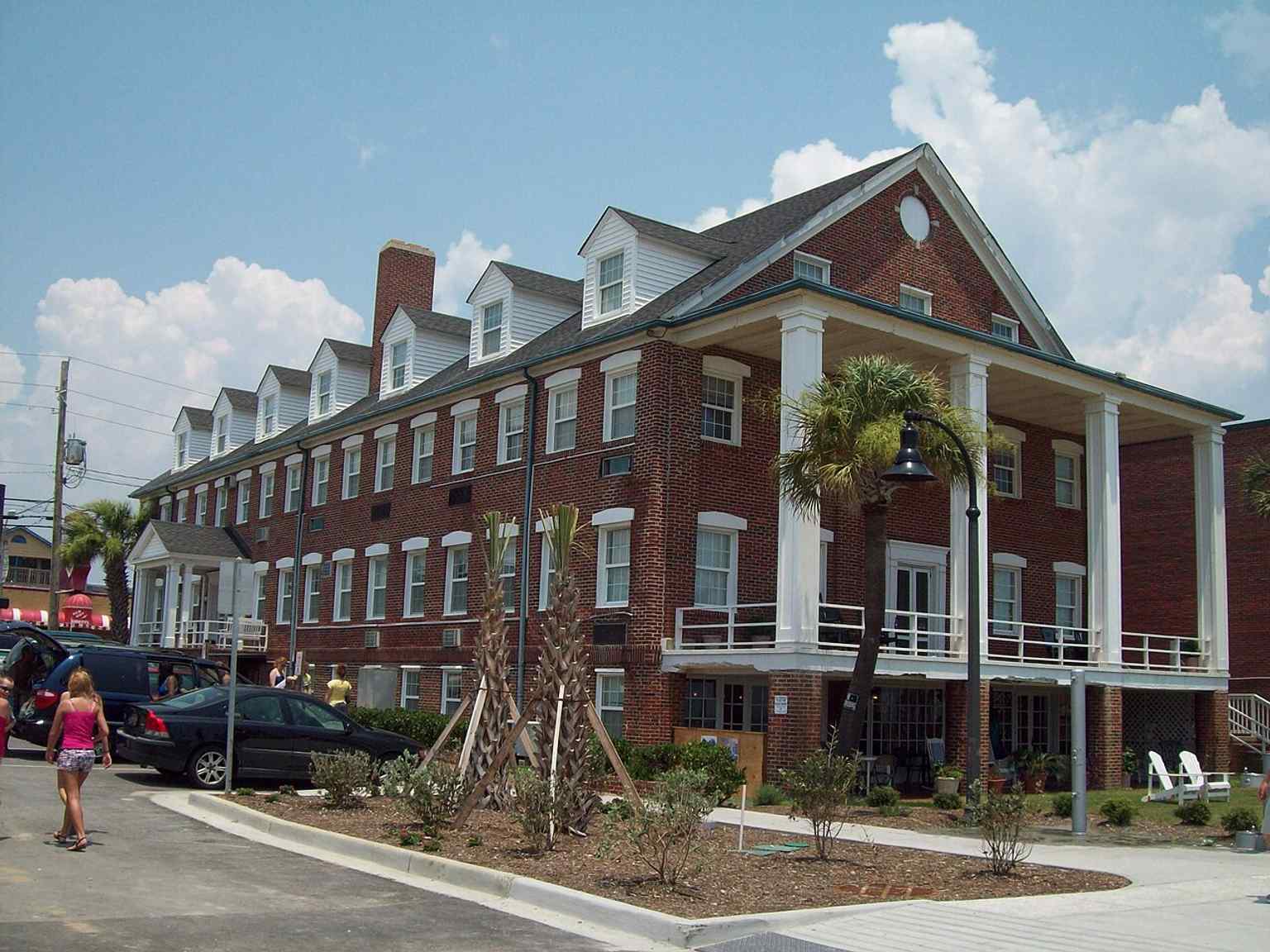
So this stop is a reminder that landmarks can disappear and still leave traces behind.
When you’re ready, keep going toward Rainbow Court for the next chapter.





