
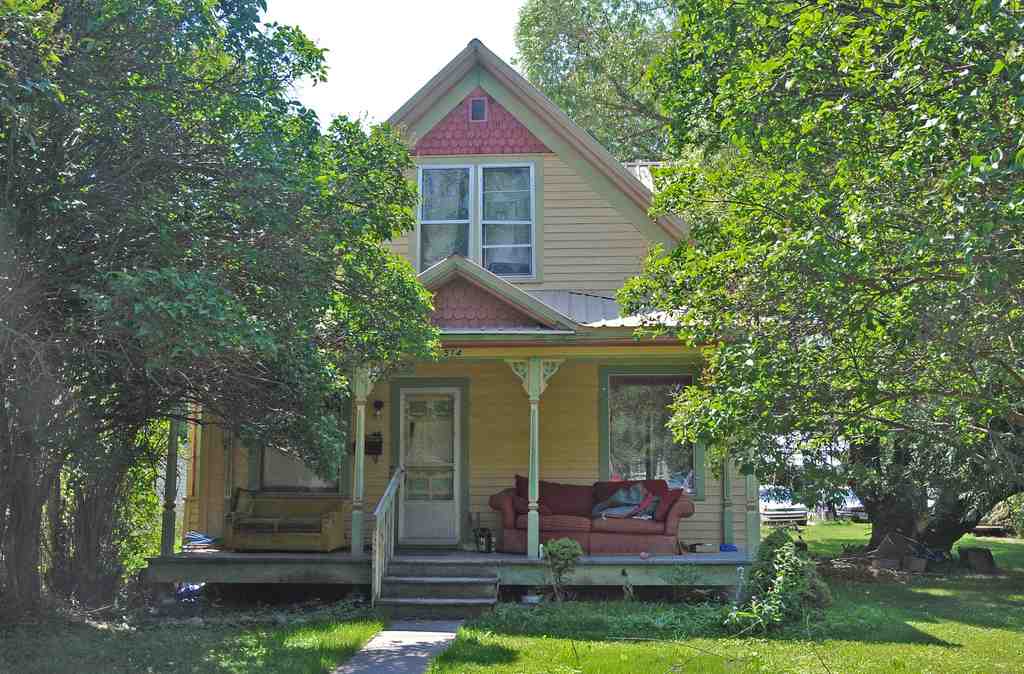
On your right, look for a wood-frame house with a cross-gabled roof, clapboard siding, and a broad front porch marked by turned posts and delicate scrollwork.
This is the Snyder House, though Kalispell has also called it the Howard House and the Welty House, which tells you something at once: this place has never belonged to a single neat story. Earlier, at the Conrad mansion, we met the mystery of the missing guns; here, the missing piece is simpler and somehow lovelier. We are not even entirely certain whether the house Joseph C. Snyder built is precisely the one before you.
Snyder was a stonemason, and he had already entered civic life by eighteen ninety-four, when the town nominated him for constable on the Populist ticket. The records place him on this block between eighteen ninety-nine and nineteen oh-three, but here is the detail locals treasure: in just a few years, he seems to have lived in three different dwellings on the same stretch of Eighth Avenue West, at five fourteen, five eighteen, and five twenty-eight. So the house keeps its secret. In December of nineteen hundred, the Kalispell Bee reported that Snyder built a frame residence costing one thousand eight hundred dollars, roughly sixty-five thousand dollars in today’s money, but no one can prove that notice referred to this exact address.
If you glance at the image on your screen, you can see the blend that makes the house so distinctive. Its overall shape belongs to Colonial Revival, a style that looked back to earlier American forms, but the decorative shingle work, stained-glass transoms, bay window, and those porch details still flirt with the more playful Queen Anne fashion of the late nineteenth century.
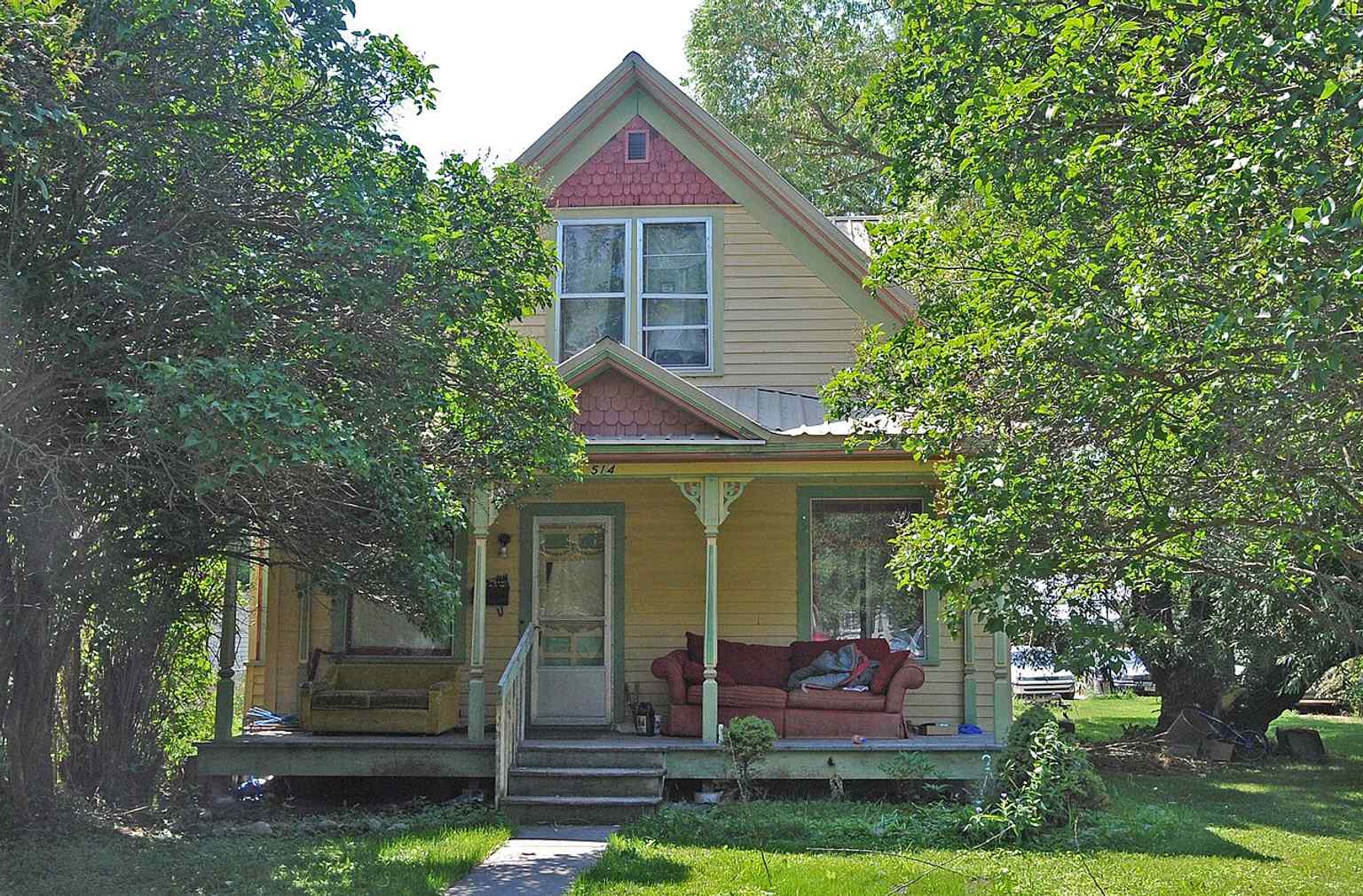
James Conlon, the department store owner who first held the property, never lived here. By nineteen ten, three families rented rooms inside. Janitors, drivers, millers, loggers, odd-job men: ordinary lives kept the place alive until Lloyd and Gladys Welty bought it in nineteen forty-eight, and their family gave it the long continuity the earlier decades never could.
That, I think, is Kalispell’s real grace. Not flawless memory, but faithful attention: a town choosing to keep houses even when the facts blur, trusting that beauty survives in what buildings still remember.





