
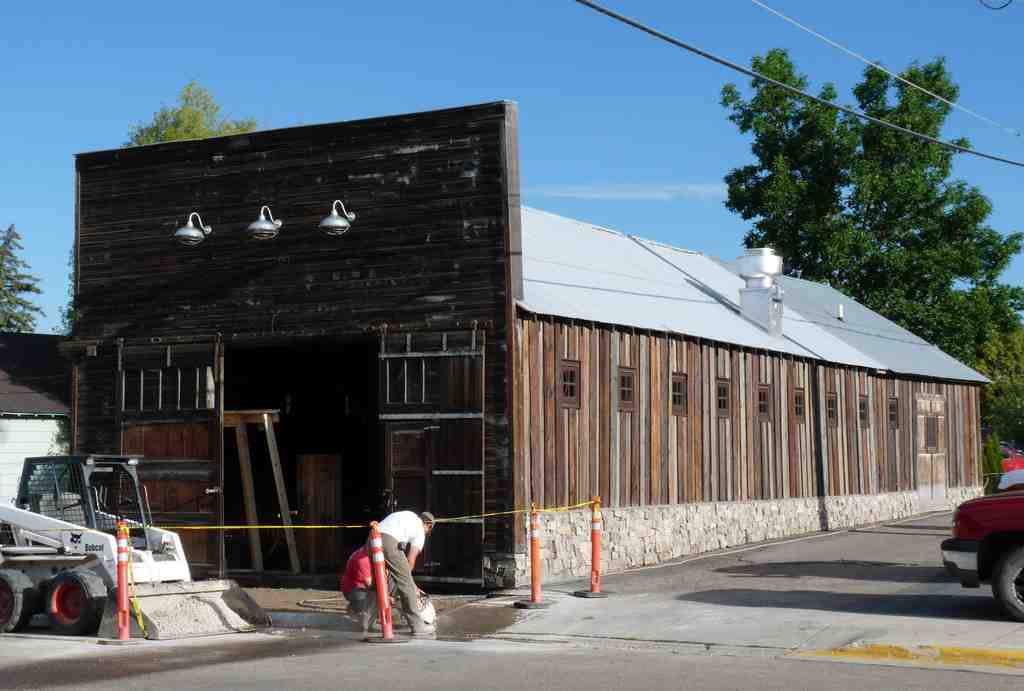
On your left stands a weathered wooden shop with a tall flat false front, a low roof tucked behind it, and faint painted ghost signs still clinging to the facade.
Boyd’s Shop took shape between nineteen ten and nineteen fifteen, just as Kalispell was changing its habits. That false front - the tall, flat street face meant to make a small one-story shop look bigger and prouder - belonged to the old commercial West. Inside, the work began with blacksmithing and later shifted to welding. In nineteen oh nine, Kalispell had seven blacksmiths and only two automobile repair businesses; by nineteen fifteen, the balance had nearly flipped. The ghost signs tell that story beautifully: horseshoeing on one hand, welding and repair on the other. If you glance at the image in the app, you can see how stubbornly this little building still holds its ground. The people here were ordinary, which is precisely why they matter. Mort Fuller and Harry Jones worked here by nineteen fifteen. Fuller died the following year at just thirty-three. Jones died in Billings in nineteen thirty-four, another reminder of how precarious life could be. Later Paris Logan Boyd, who had carried family burdens since boyhood, kept the shop alive, and his son Glen carried it on.
And here is the part most visitors miss: this stood on part of Kalispell’s forgotten Chinatown. In the eighteen nineties, this lot held a steam laundry, a Chinese laundry, and dwellings. Fire, demolition, and time erased that layer before this shop appeared. Even the nineteen ninety-four historic plaque honours what survived more than what vanished. As you continue to Fisher House, about a four-minute walk away, remember that sometimes the most important thing a building tells us is what stood here before it. If it is open, the shop usually keeps late-morning to early-evening hours and closes on Sundays.




