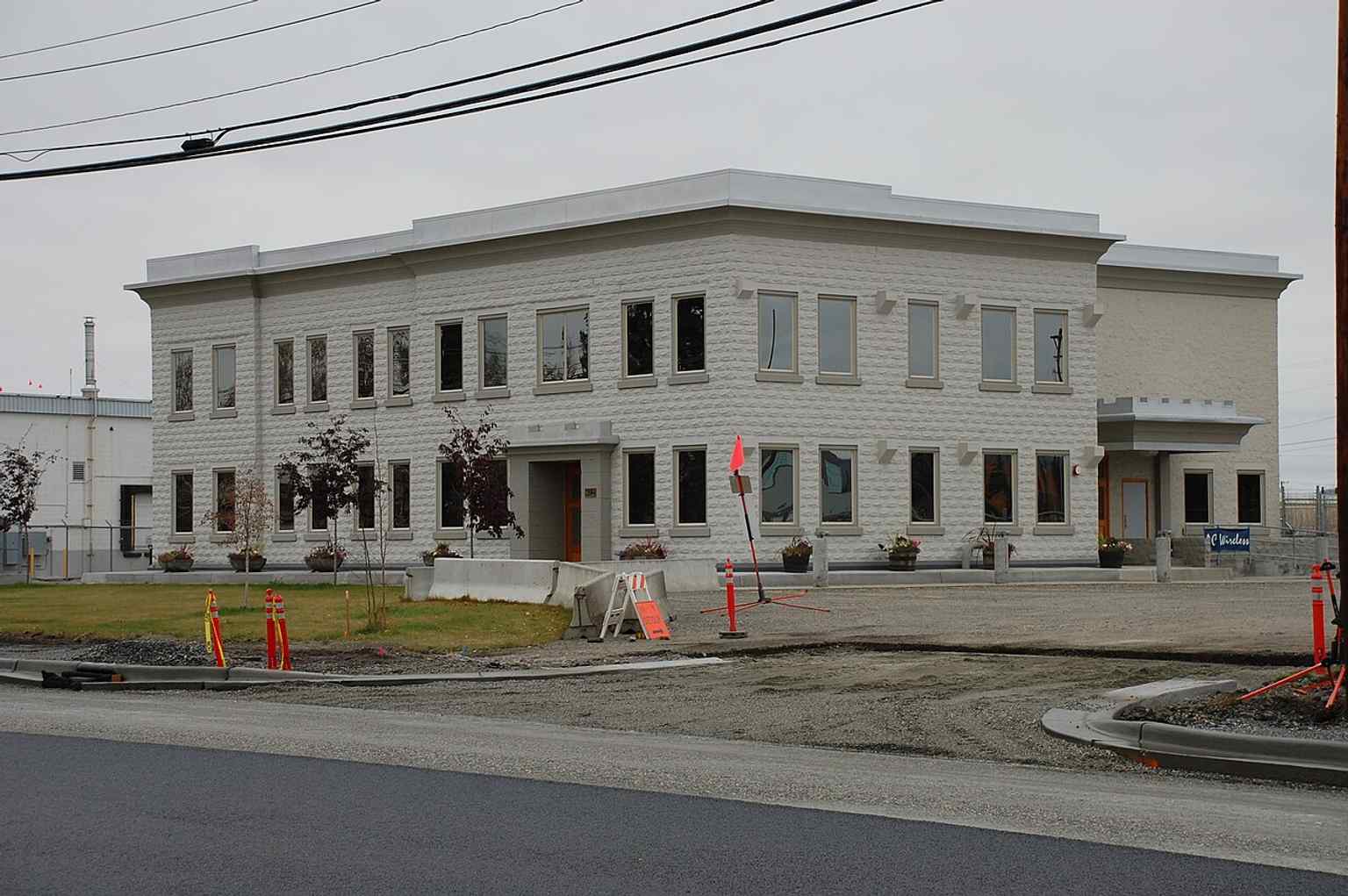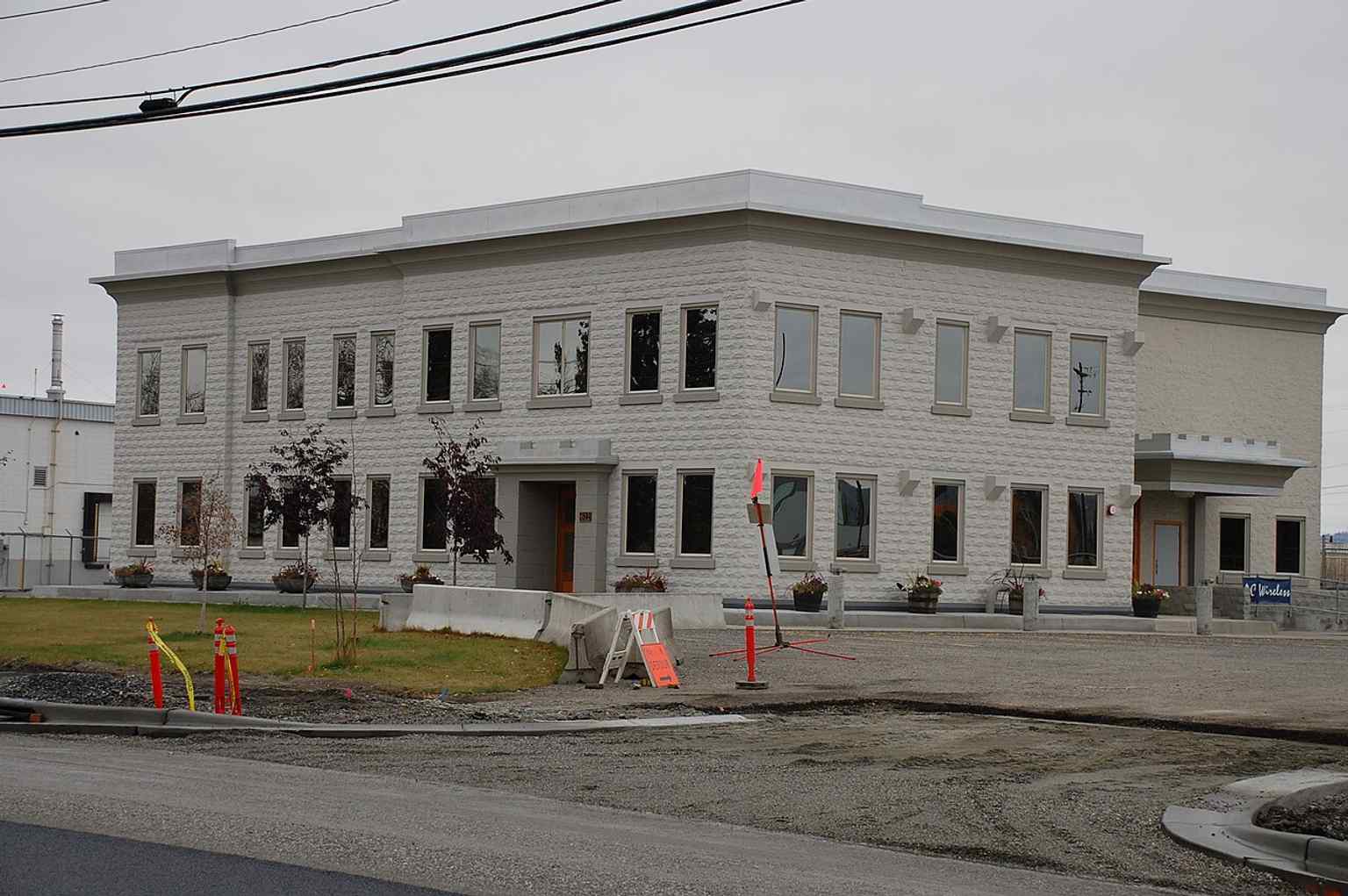
Look for a line of wood-frame houses with simple gabled roofs along Illinois Street, with the sturdy rectangular Fairbanks Exploration Company office still anchoring the west side of the corridor.
This stretch of road is not simply a historic district; it is the map of how raw gold fever matured into organised power. Illinois Street mattered because geography handed it an advantage. The route followed an older trail toward the northern goldfields, an Alaska Railroad spur already reached a sawmill near Noyes Slough - locals say “slew” - and Fred Noyes’s old Tanana Mill Company property gave the company a broad seventy-four-acre site to work with.
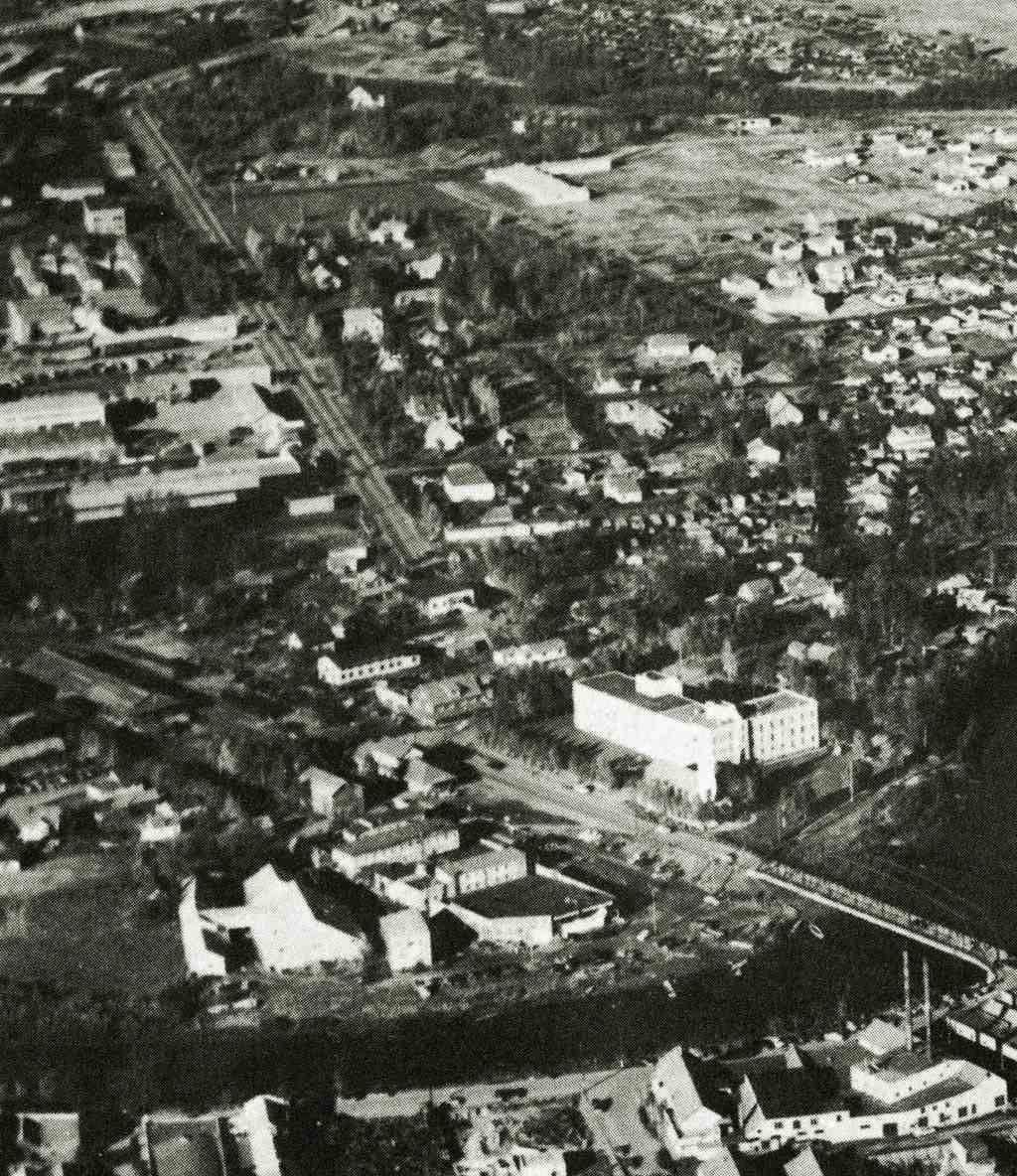
The Fairbanks Exploration Company, soon known all over town as the F-E Company, did far more than run dredges. It organised transport, payroll, housing, supervision, and status. At its height, almost a third of Fairbanks worked for it in some way. Here, on one street, the company arranged daily life into neat layers: surviving office and industrial buildings on the west side, employee housing and more privileged homes on the east.
If you glance at the aerial view on your screen, you can see that arrangement clearly: not just a work yard, but a whole company neighbourhood stitched together along one corridor.
The human stories make the street far more interesting than the plan. Fred Noyes built his own showpiece house here around nineteen eleven and called it Essinoye - his surname reversed. It was likely the first three-story house in Fairbanks, a rather confident gesture in a young town. After the F-E Company bought it in nineteen twenty-five, the house changed character entirely. First it hosted visiting employees from United States Smelting, Refining and Mining Company. Then, in nineteen twenty-eight, the company cut it into two practical apartments for workers. A private landmark became corporate housing.
And that was not the end of its strange career. In the nineteen thirties, Leonhard Seppala - the famed dog musher from the nineteen twenty-five serum run to Nome - lived there as an F-E Company employee. Then, during the Second World War, after the War Production Board shut down gold mining as nonessential in October nineteen forty-two, the Army absorbed parts of this whole district. The machine shop, offices, housing, heavy equipment, even power supply all fed the war effort. One local detail most visitors miss: that old Noyes showpiece later sheltered Russian pilots ferrying lend-lease aircraft to the Soviet Union. Imagine that - a grand Fairbanks residence turned wartime stop on a global air route, and, by one Army account, a lively party house as well.
In about seven minutes, continue to the Rose Building, a structure whose very move across town shows how quickly fortune could shift here.