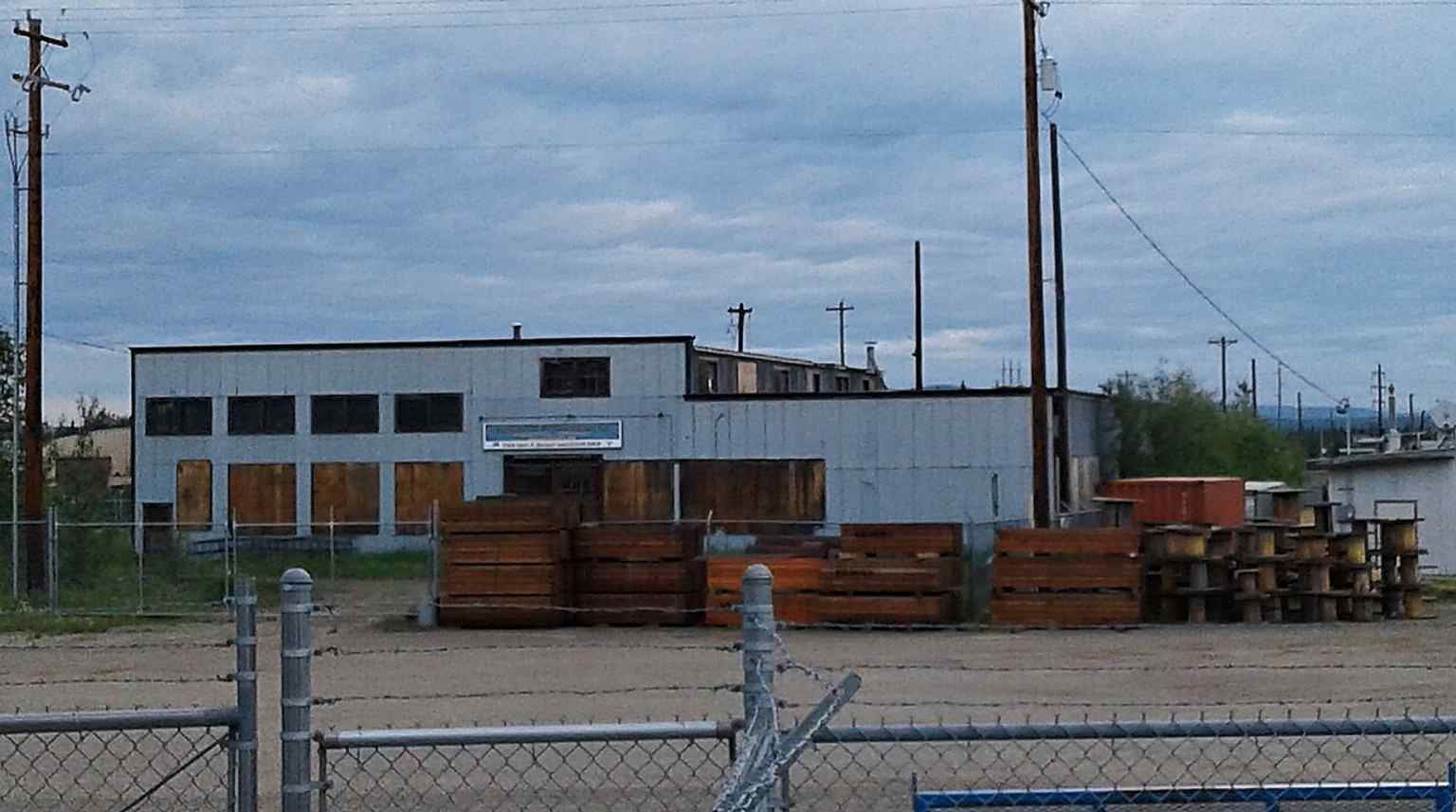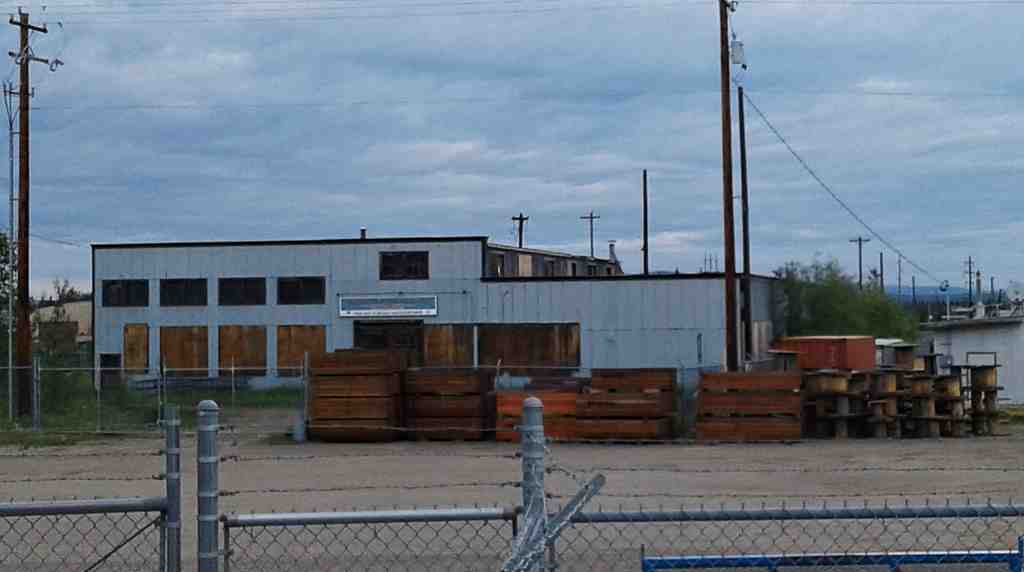
This is a broad, steel-framed, single-story industrial building, clad in plain metal, with a stepped roofline and a tall double door centered on the front wall.
No architect lost sleep over prettiness here. In nineteen twenty-seven, the company put up this machine shop as the working heart behind its gold mines. The front section held big belt-driven lathes - a Sidney, a LeBlond, an American Electric, and two Drive-All machines - all powered from an overhead system suspended above the floor. In the middle came the harder, noisier business: welding, drill presses, a milling machine, a power hacksaw, and a horizontal press heavy enough to crush the daylights out of most problems.
Take a moment and look at the building’s plain scale and uneven height. One end rises higher because the shop needed room for cranes and the belts that carried power to the machines. Even from outside, you can read the layout: this place was arranged for motion, repair, and constant interruption, not display. From the outside, the building still makes that arrangement easy to read.
The gold story often celebrates what came out of the ground. This building tells you what kept that story alive. Machinists, electricians, carpenters, mechanics, and blacksmiths worked here making parts, fixing breakdowns, and improvising answers for a mining system that could not afford to stop. Showers, lockers, lavatories, even a tar-soaked fir floor were built into the daily rhythm of hard use.
And here is the detail locals tend to treasure: at the back, where the blacksmiths worked with a Buffalo Forge and an Erie Foundry air hammer, the floor stayed dirt. So inside one electric-age machine shop, an older frontier craft kept breathing.
Then, in nineteen forty-one, the company added a south wing for an automotive shop and an electrical shop. Even a blunt, practical building had to adapt as mining turned more motorized and more wired. This shop served not just one room, but a whole company town of offices, power generation, coal storage, warehouses, and barracks. When you’re ready, we’ll walk about five minutes to the Illinois Street Historic District, where that industrial world presented its tidier public face.