
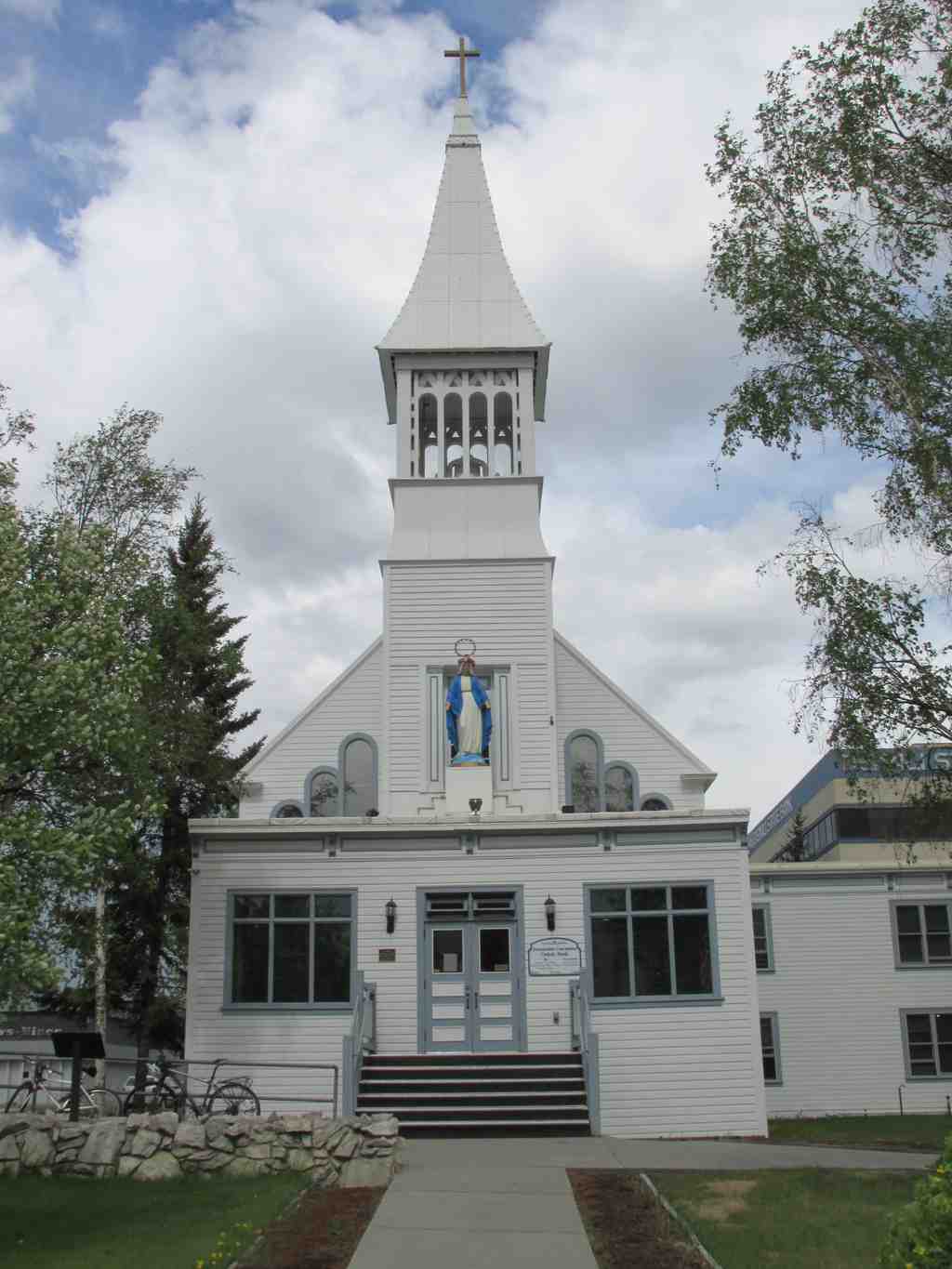
On your right is a white-painted wooden church with a steep gabled roof, a square front steeple, and a cross marking the peak.
This is Immaculate Conception Church, and in Fairbanks even a church did not necessarily stay put. Priests and parishioners first raised it in nineteen oh four on Dunkel Street, making it the first Roman Catholic church in Alaska’s interior. Then, in the winter of nineteen eleven to nineteen twelve, they hauled the entire building across the frozen Chena River to this site, closer to Saint Joseph’s Hospital. In this town, movement often meant survival. Settlements shifted, trade routes changed, and here, even sacred ground learned to travel.
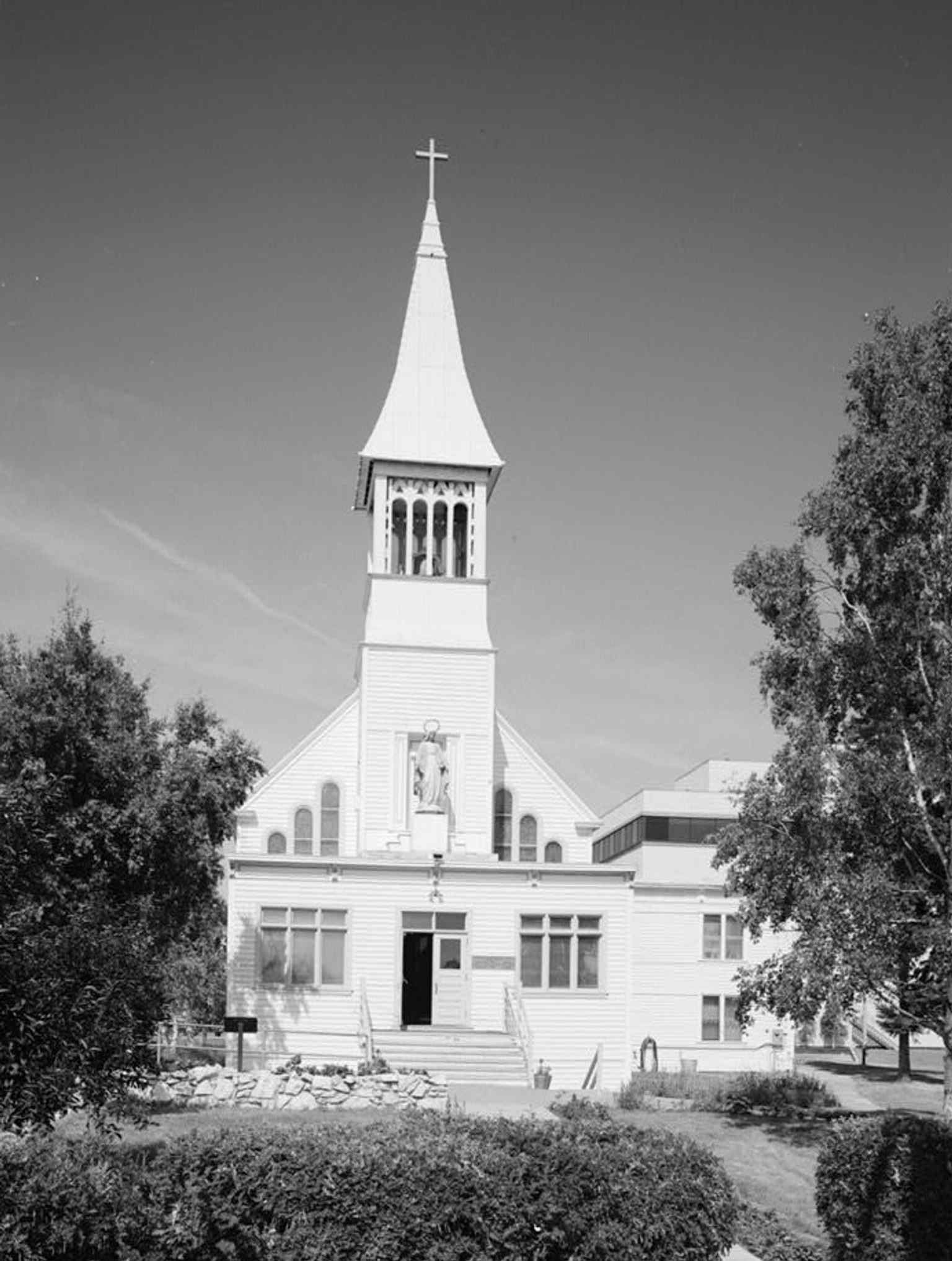
If you glance at the historic view in the app, you can see the church after that remarkable relocation, still recognizably modest, still determined. It sounds almost legendary, but the deeper story is wonderfully practical. This was not only a place for Mass. It served the Catholic nursing community tied to the hospital nearby. On the twenty-first of June, nineteen eleven, Father Francis Monroe led daily Mass here while Sister Agipit took her final vows and received her silver ring, a moment the hospital remembered as a celebration for both the sisters and the parish.
Then came Father Joseph Cote, a Jesuit priest with the soul of a mechanic. He wired the church for electricity, worked on the water plant, added a residence, and finished the downstairs parish hall. He did not separate spiritual care from physical repair; he treated both as necessary for a growing community.
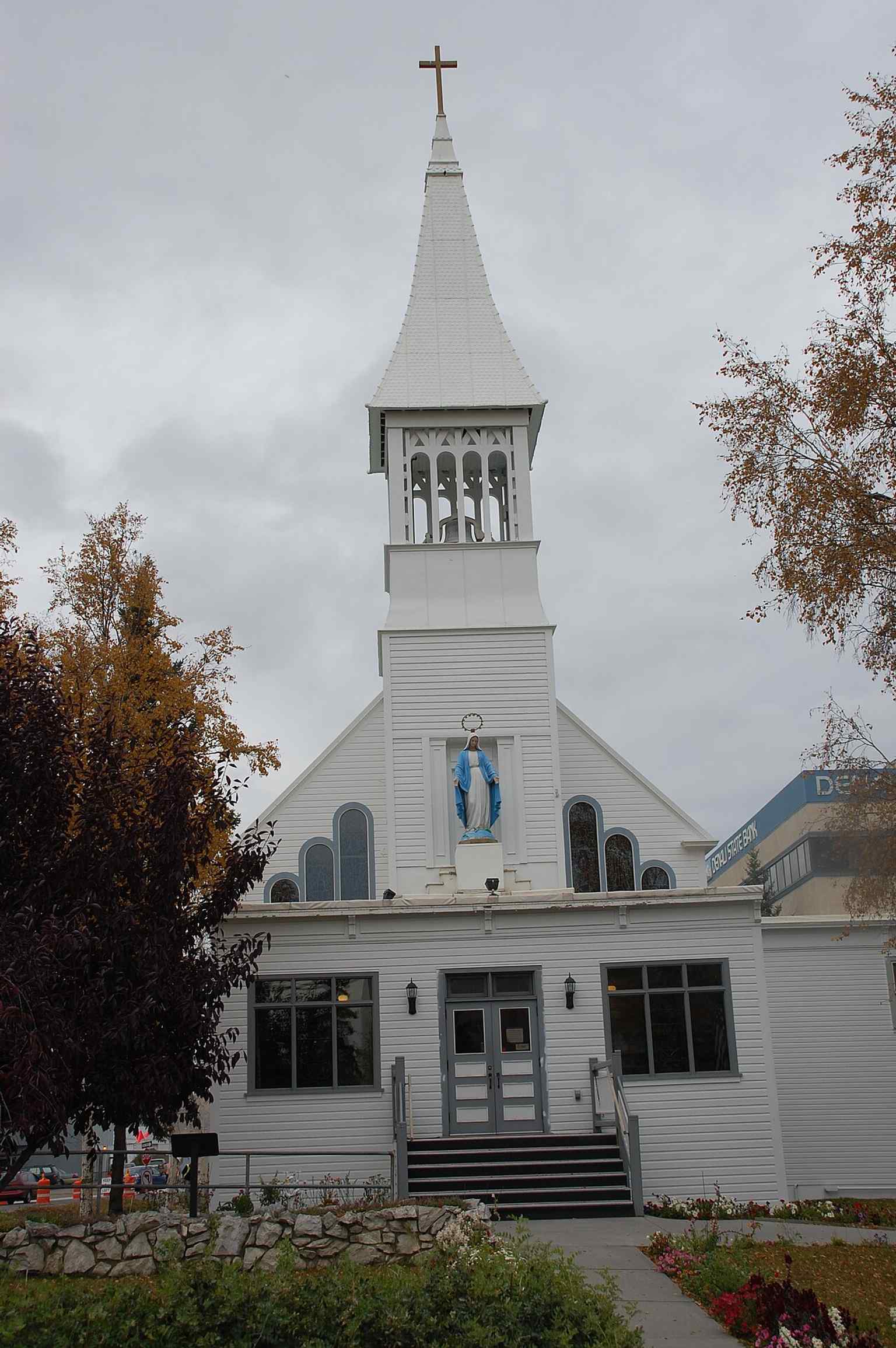
The building itself kept changing. In nineteen fourteen, workers raised the roof, lifted the ceiling by five feet, added a choir loft, and built the belfry, that bell tower at the front, giving the church a stronger public face. The façade you see in the app reflects those changes. In the late nineteen twenties, Father Patrick O’Reilly added stained glass windows, said to be unusual in Alaska, and landscaped the grounds. When a rectory stovepipe caught fire in nineteen twenty-seven, he fought the blaze alone for about half an hour, then rebuilt more sensibly with a tall brick chimney, a concrete porch, and broad cement walks.
Later, the basement became a school. In nineteen forty-six, fifty-five children began classes there. In nineteen sixty-two, when Pope John the Twenty-Third created the Diocese of Fairbanks, this church briefly became the “Cathedral of the North” until Sacred Heart took over in nineteen sixty-six.
One cannot help wondering: if a town is willing to drag its church across a frozen river, where exactly does faith end and sheer resolve begin? That question lingers here. Ahead, at the Polaris Building, you’ll see Fairbanks begin to express that same confidence on a larger, more modern scale, about a one-minute walk away. If you hope to step inside another time, the church generally opens Tuesday through Friday from nine in the morning until three in the afternoon.





.jpg)

