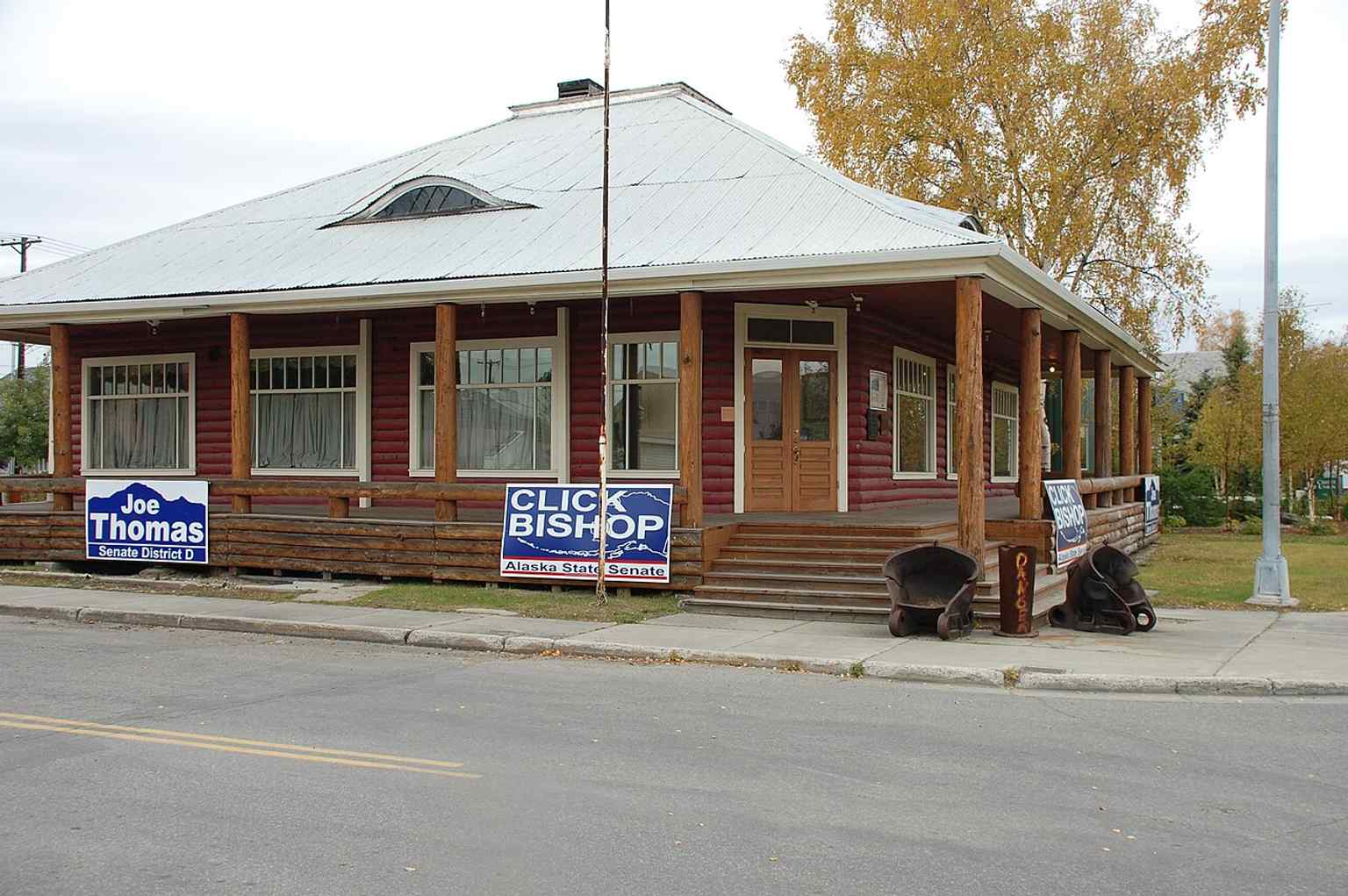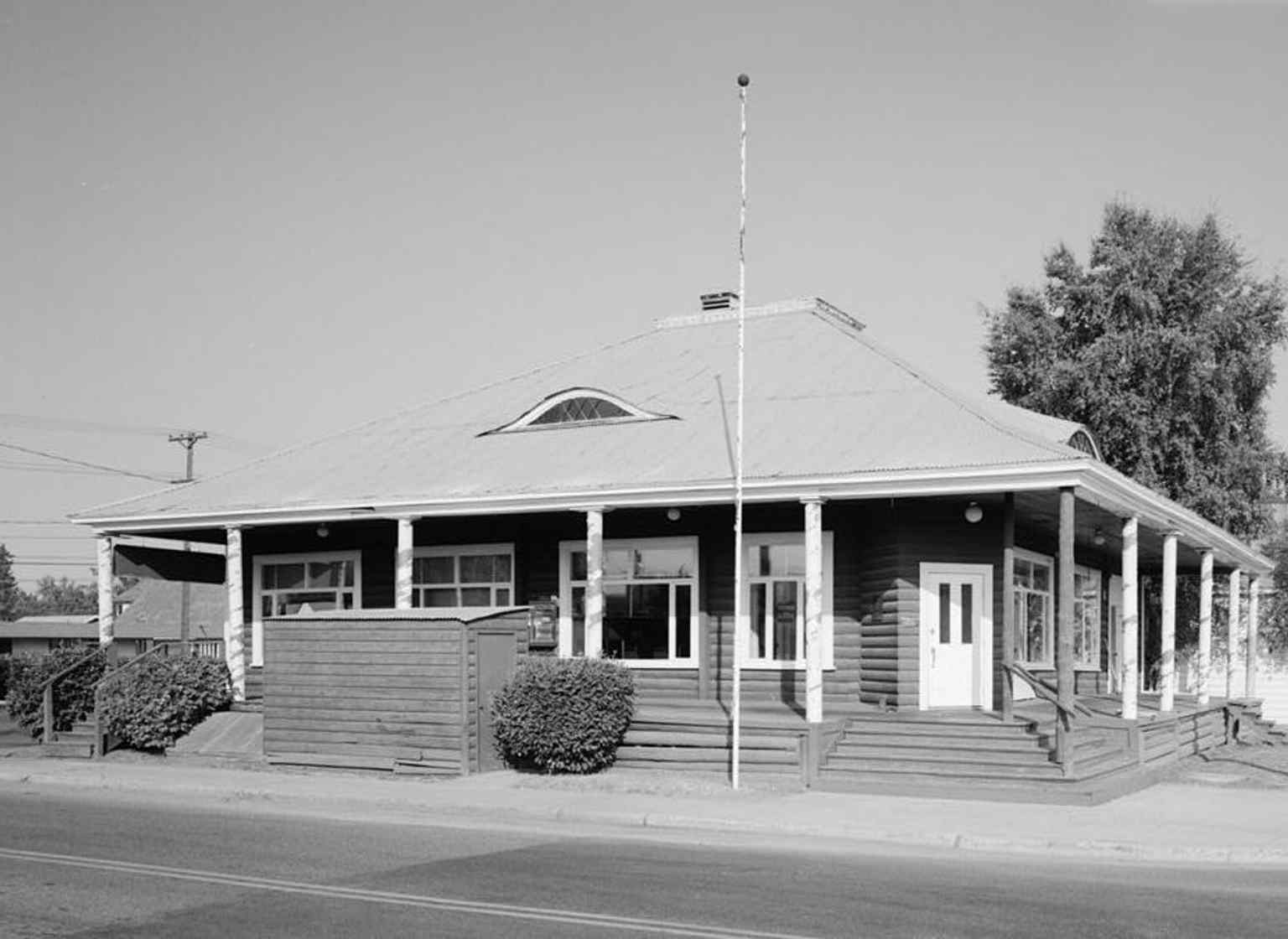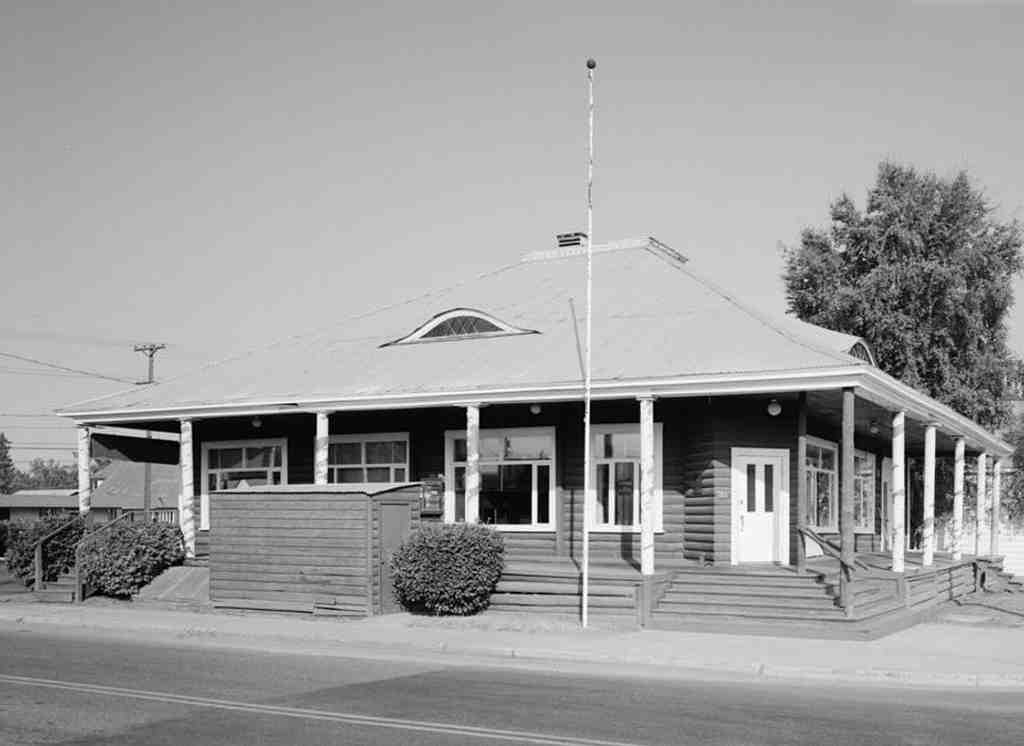
On your left stands a square log building with a broad hipped roof, a porch wrapping around two sides on thick log columns, and a main entrance tucked neatly into the corner.
A city reveals what it chooses to remember by the names it fixes to its buildings. George C. Thomas never even visited Alaska, yet his name survives here because one distant gift met a very local need.
Before this library took shape in nineteen hundred and nine, St. Matthew’s Mission kept a reading room open around the clock. Miners came in, sourdoughs came in, and even inmates from the log jail borrowed newspapers and magazines. Archdeacon Stuck had donated about one thousand of the room’s fifteen hundred items himself. Local tradition says Thomas, a Philadelphia philanthropist, saw a photograph of that crowded room and remarked that it would be splendid if far-north prospectors had a place for their “books and tobacco together.” He paid for this building, then died before it was finished, so the trustees gave it his name almost as an act of gratitude and mourning at once.
You can see how recognisable the old form remains: the porch, the logs, the corner entrance that welcomed readers for generations.
Its opening on the fifth of August, nineteen hundred and nine, became a civic occasion. Archdeacon Stuck spoke. So did James Wickersham, the territorial delegate. And that is the point, really: this was never only a quiet room for books. It sat where reading, argument, politics, and everyday survival met.
What changes in a frontier town when a library becomes a place not merely to borrow a book, but to make a claim on the future?
In July of nineteen fifteen, that question turned urgent here. Six Tanana chiefs, several village headmen, an interpreter, and the missionary Reverend Guy H. Madara came to represent roughly twelve hundred to fifteen hundred Athabascan people. Across from them sat Wickersham, men from the Alaska Engineering Commission, and federal land officials. They discussed work, schooling, and above all land claims. Most striking of all, the Native delegation reportedly rejected the government’s offer of reservations. They insisted their rights be argued on their own terms. That long struggle would not reach settlement until the Alaska Native Claims Settlement Act in nineteen seventy-one.
The town kept relying on this place for decades. In nineteen forty, the owners sold it to Fairbanks for one dollar on the condition that it always house a library. After a fire in nineteen forty-nine destroyed about one-third of the collection, local clubs and donors from across the Lower Forty-Eight helped refill the shelves. By nineteen seventy-two, the library held about six thousand five hundred books, including geology and mining, and even mailed books to isolated readers far beyond town.
When the collection moved in nineteen seventy-seven, the building began another life. Fairbanks has a habit of doing that: keeping the shell, and finding new uses for memory. At the next stop, the story narrows from a public institution to a private house, where memory grows trickier and origins come with more than one version.