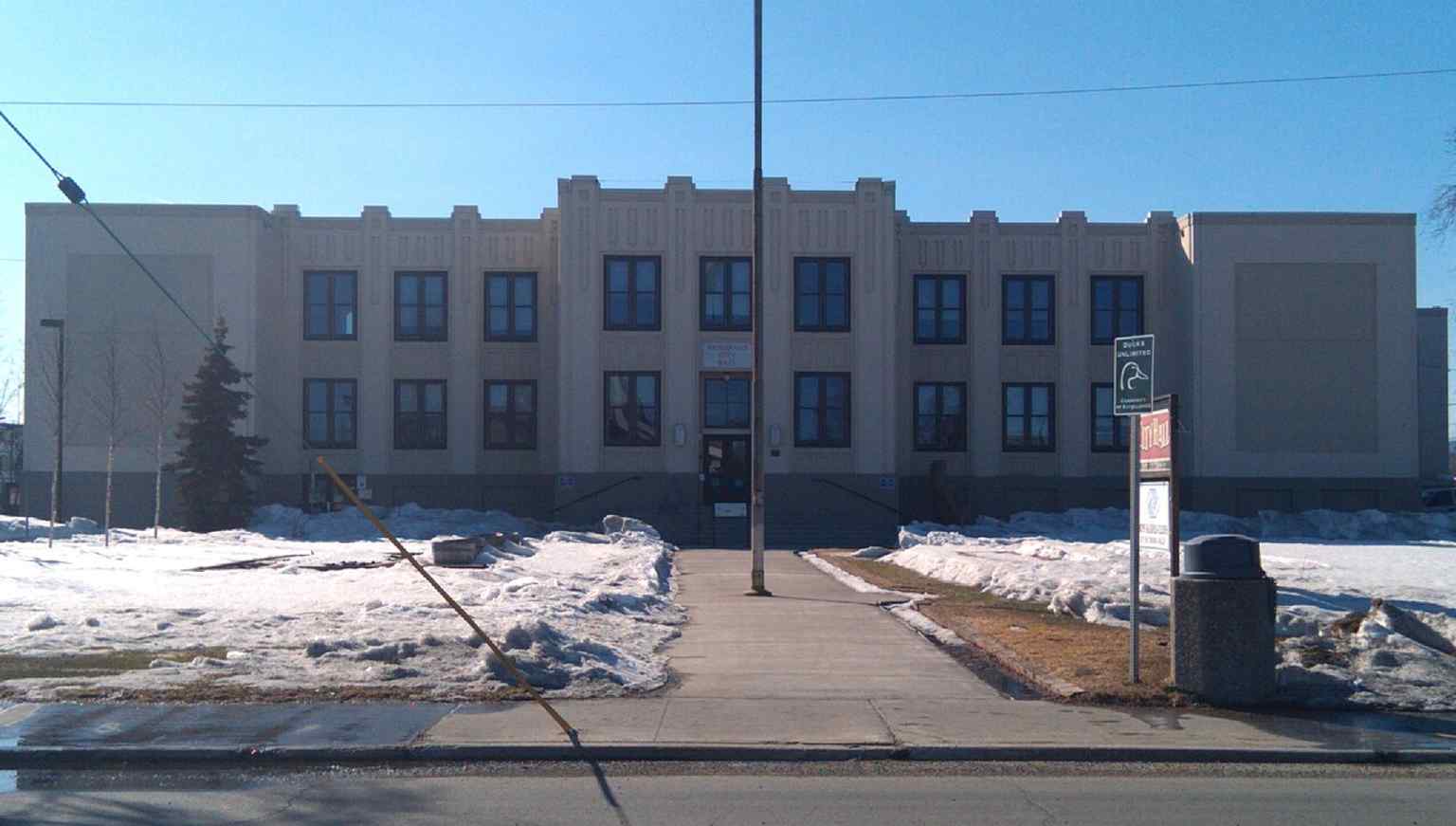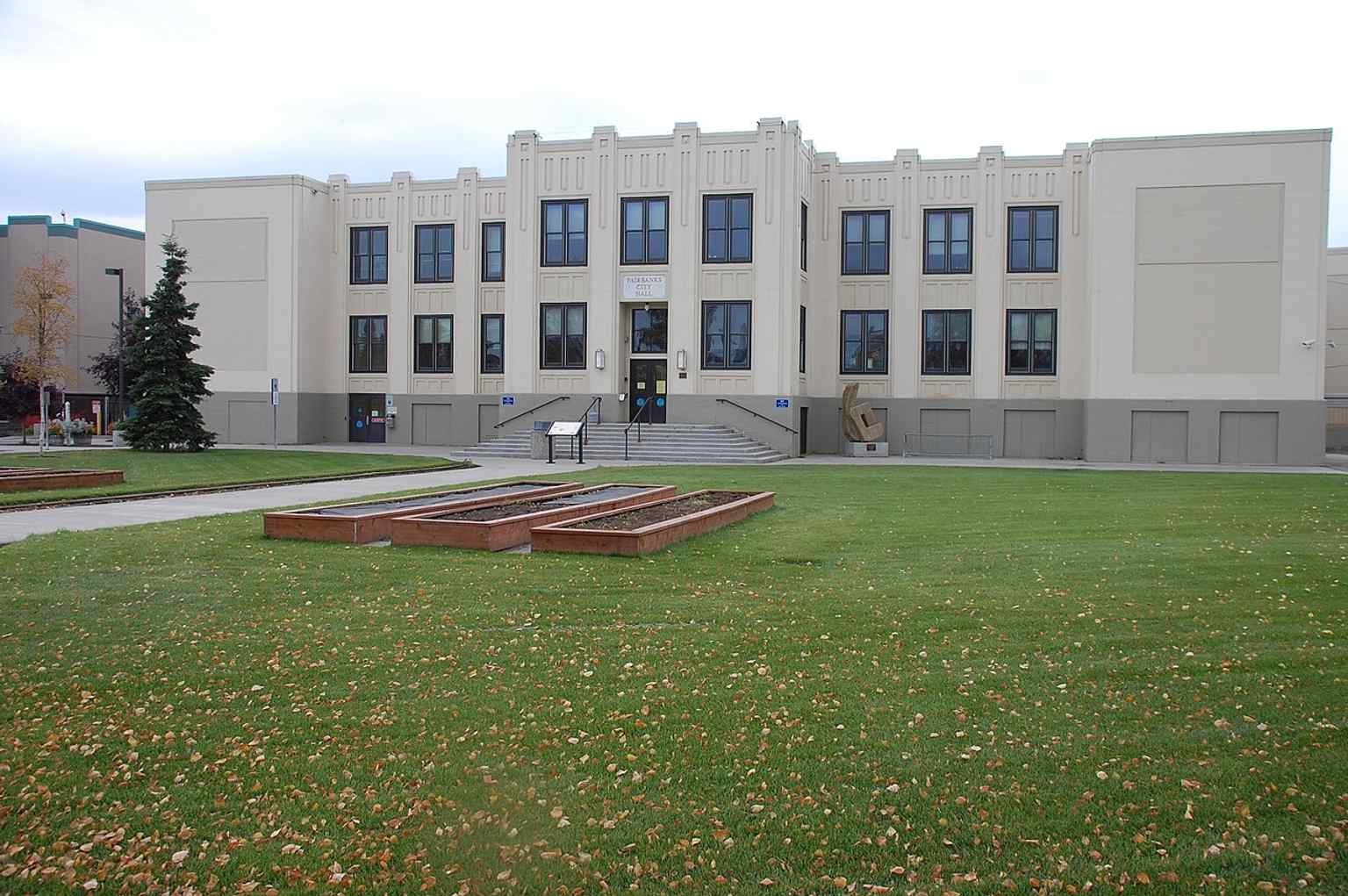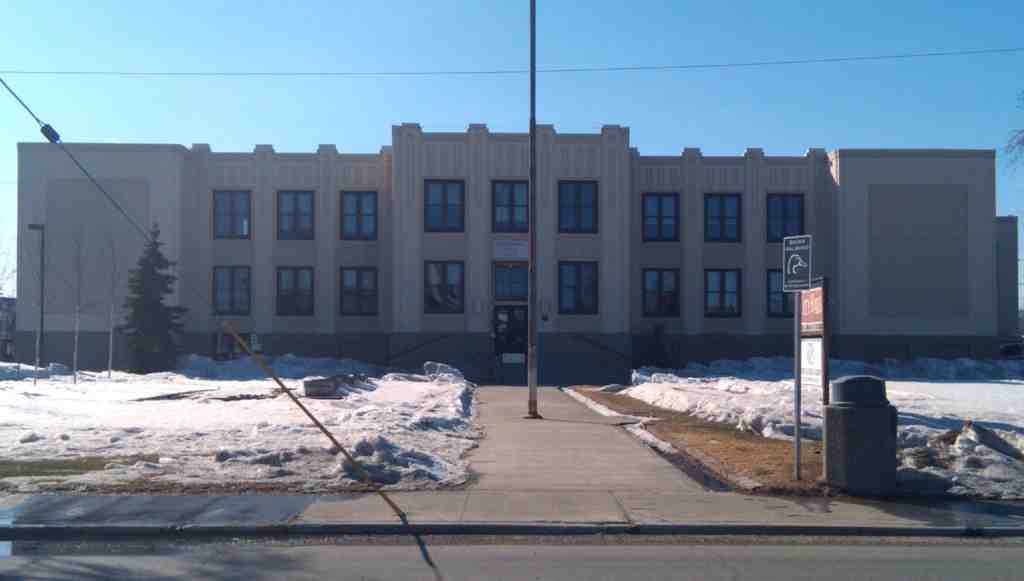
On your right stands a broad pale concrete building with a long rectangular front and crisp Art Deco lines gathered around its central entrance.
This is Patrick B. Cole Fairbanks City Hall, though for generations people called it Main School, or simply Old Main. Its story begins more modestly than this solid façade suggests. In the fall of nineteen oh-three, Fairbanks tried to run a public school in a small cabin at Wendell and Noble. There were thirteen students, one teacher, and not quite enough money; the school closed before Christmas. Four years later, a new school rose here on Cushman Street. Some school board members grumbled that the site sat too far from the centre of town, but once the building stood up among Fairbanks’s mostly one-story log cabins, a local pastor said it looked like an English cathedral.
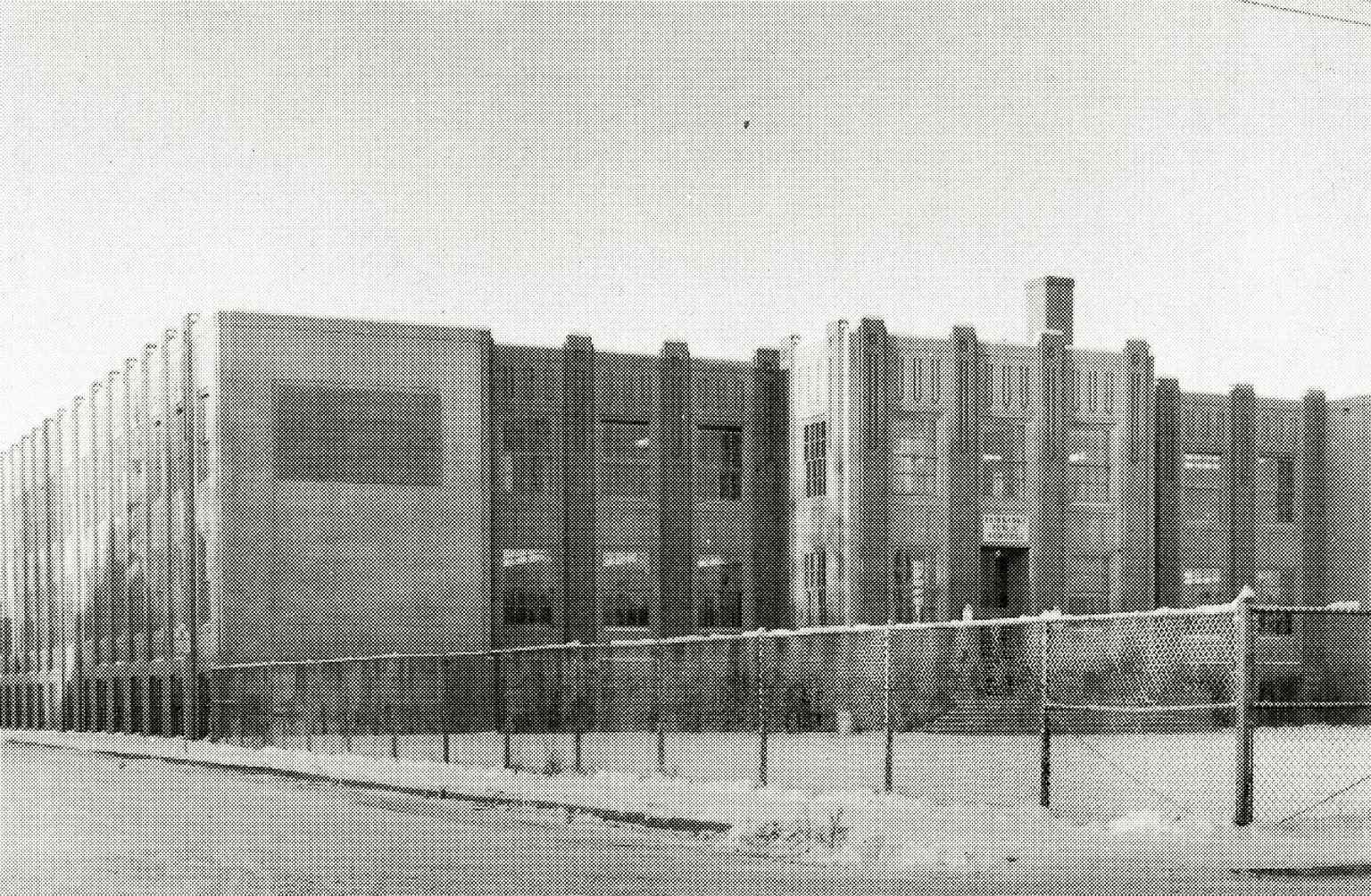
Then came the fire of late nineteen thirty-two. The wooden school burned, and children scattered into churches and civic buildings for classes until this reinforced-concrete replacement opened on the twenty-second of January, nineteen thirty-four. That choice of concrete mattered. Fairbanks had learned, painfully, that wood could disappear in a night. As military growth swelled the town during the Second World War and the Cold War, crews added onto the building in nineteen thirty-nine and again in nineteen forty-eight. The additions made room for more students, and also made the interior so confusing that Chris Allen repeated an old joke: if a senior could find a way from the middle of the building to the outside, the staff ought to hand over a diploma immediately.
For years this was the city’s only school, then a junior and senior high school, then Main Junior High. Later it held alternative programs and school district offices. By nineteen ninety-three, after the district left, the ground-floor windows were boarded, the heat was off, and the place sat dark. Former mayor Jerry Cleworth, who had gone to school here himself, helped push the rescue: roof repairs, restored windows, refinished gym floor and bleachers, hallways opened again. You can see how a schoolhouse became the city’s civic heart.
Since nineteen ninety-four, city offices have worked here, and the old gym has served the Fairbanks Boys and Girls Club. In two thousand fourteen, the building took the name of Patrick B. Cole, a forty-year public servant who served eight mayors in the unglamorous work of keeping government running. That feels right. Fairbanks has always depended on people who repaired, taught, filed, argued, rebuilt, and carried on. This building matters for the same reason the whole city does: it did not stay the same, but it stayed useful, and in doing so it kept memory alive. If you want to go inside, city hall is generally open on weekdays from eight in the morning to five in the afternoon, and closed on weekends.