
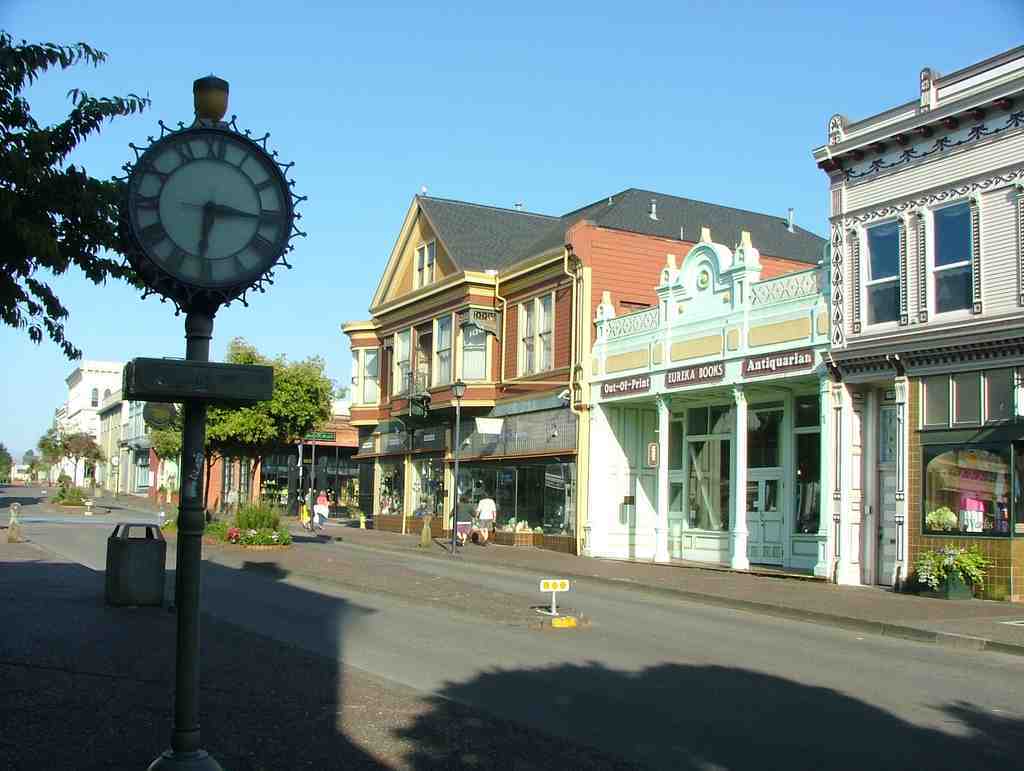
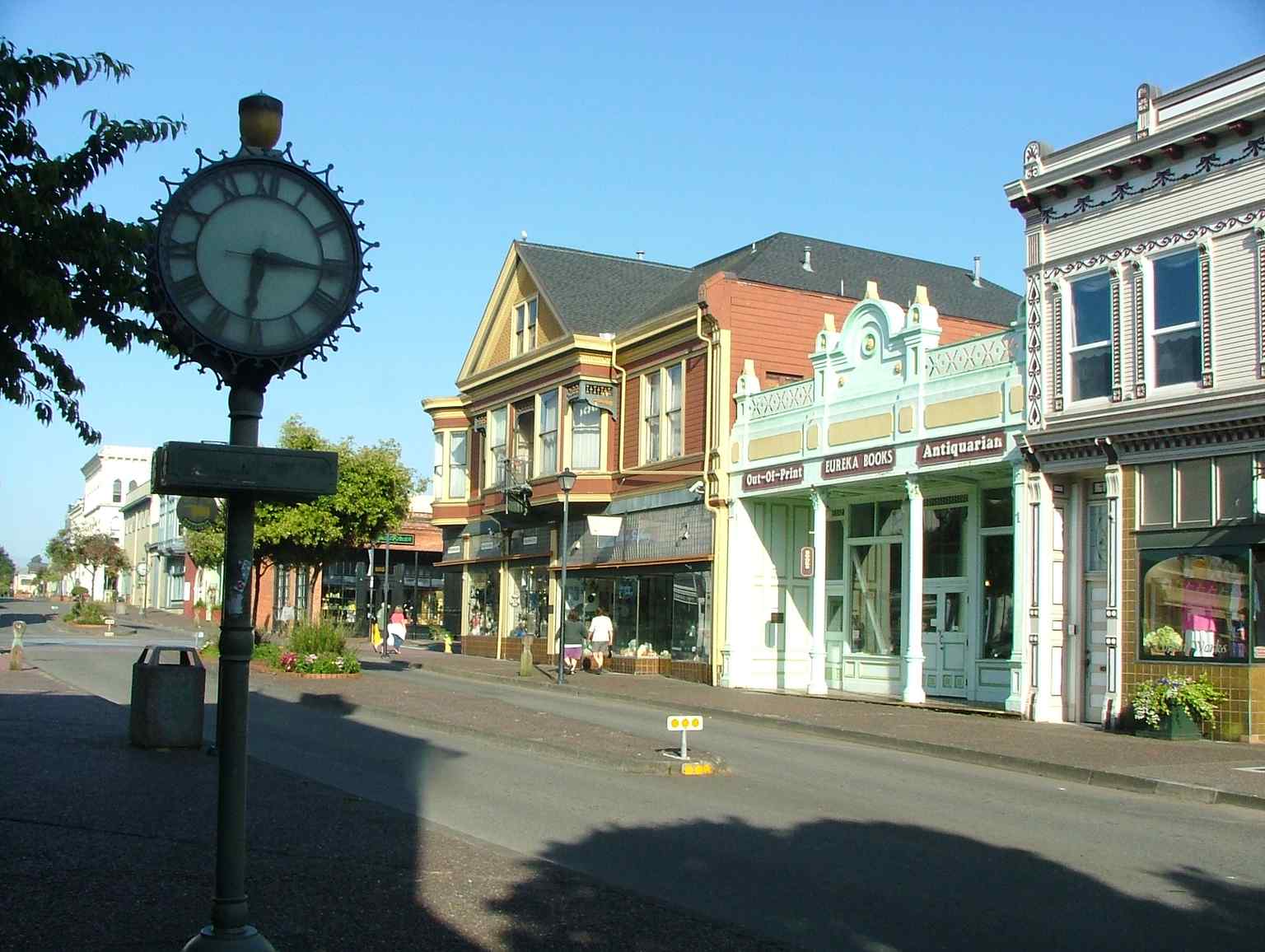
Look to your right and spot that ornate dark metal street clock standing sentry in front of a row of painted wooden Victorian storefronts, especially that distinctive pale mint-green building with the elegant curved roofline. Welcome to the heart of Old Town Eureka. Long before European settlers sketched out these streets, this coastal homeland was known as Jaroujiji, inhabited by the indigenous Wiyot people for thousands of years. The eighteen fifties brought a wave of settlers hoping to supply inland gold miners. When the gold ran dry, they found a different kind of treasure standing right in front of them... the towering redwood forests. Let me introduce you to William Carson. He was a Canadian immigrant who arrived seeking Gold Rush glory, but after his mining efforts completely failed, he pivoted to the timber industry and felled what is considered the first commercial redwood tree on Humboldt Bay. That pivot worked out. By nineteen twelve, Carson had amassed a twenty million dollar fortune, equivalent to over five hundred and fifty million dollars today.
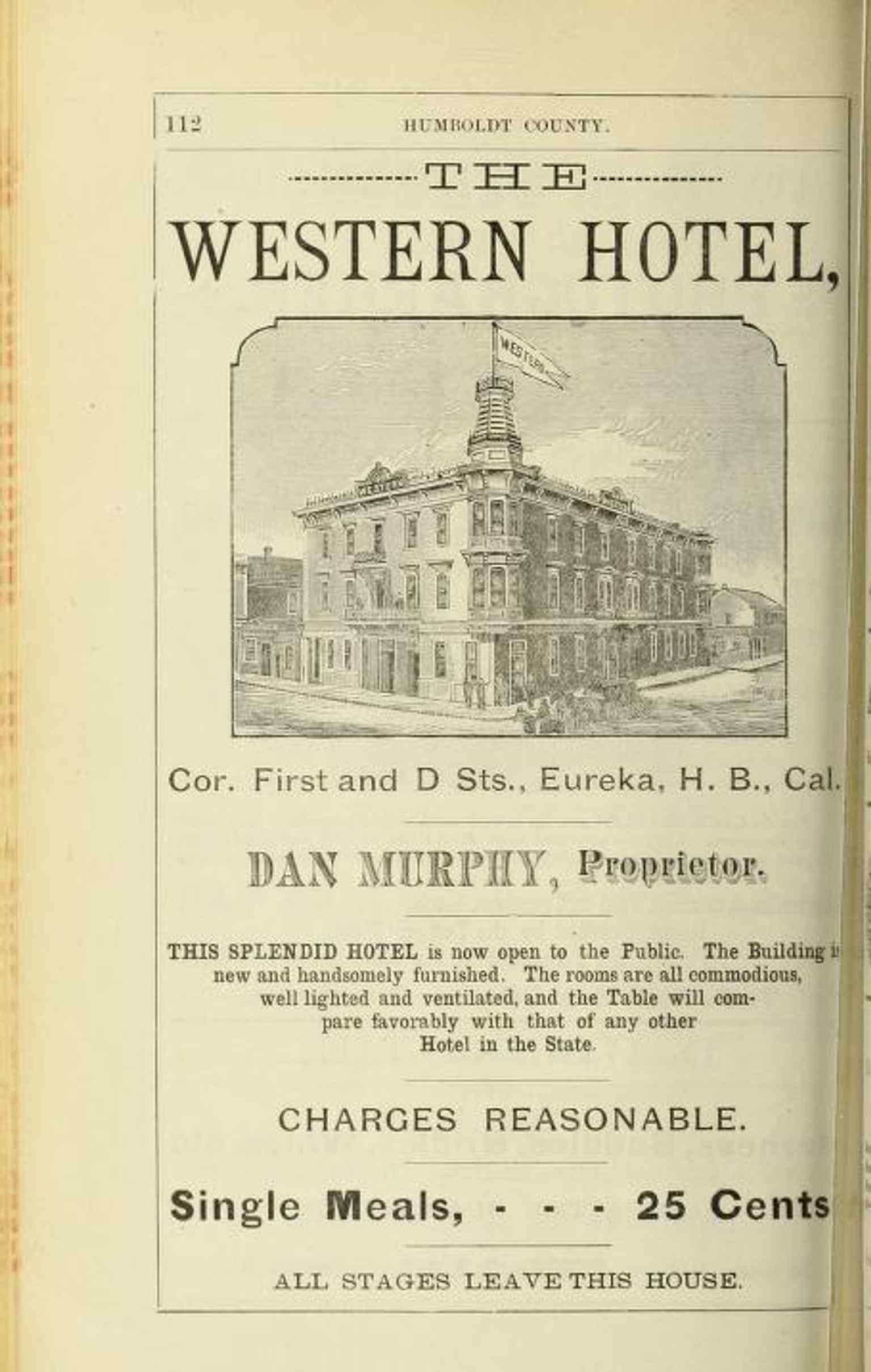
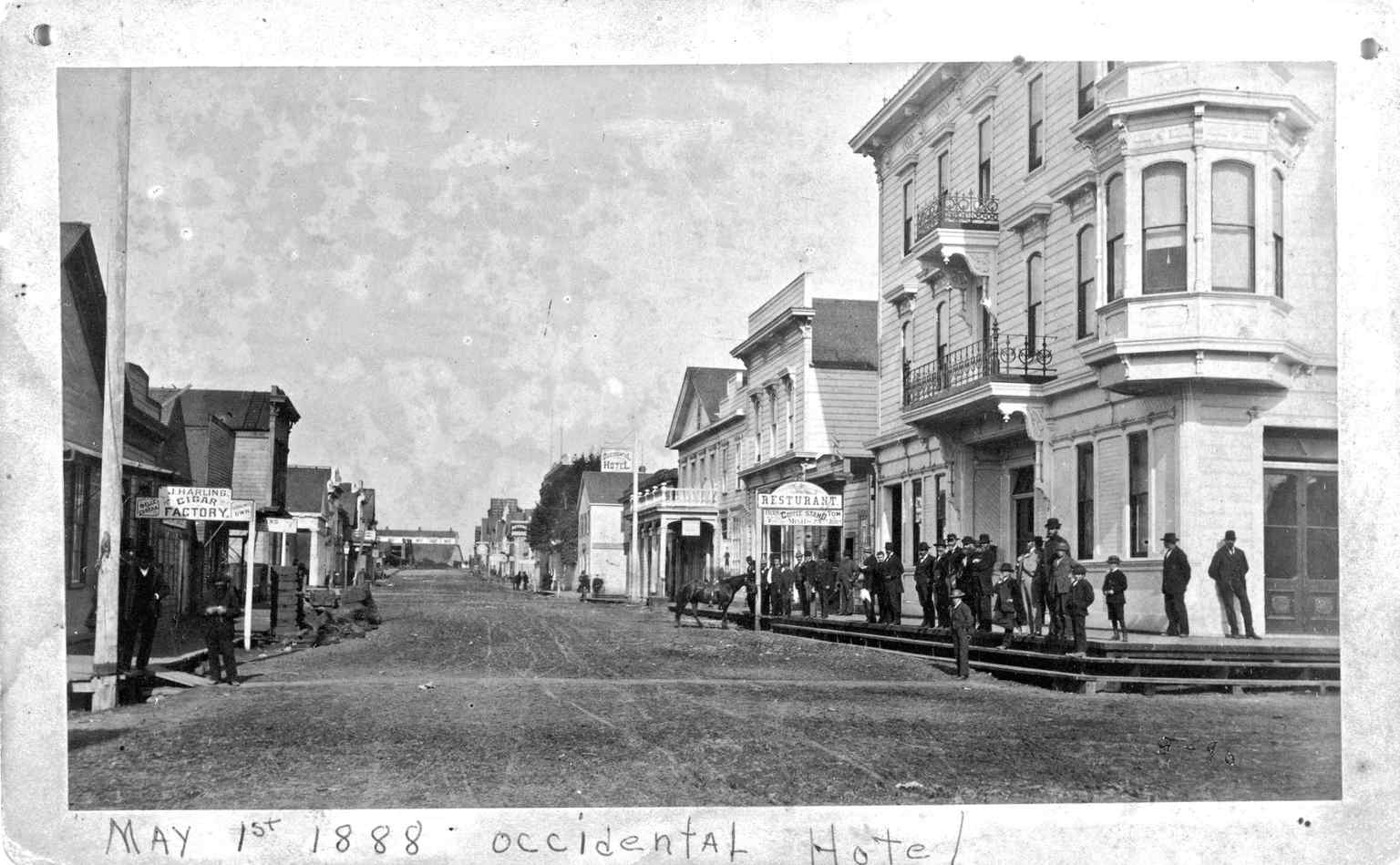
That massive influx of lumber money funded the incredible architecture you see up and down these streets. We are talking over one hundred and fifty buildings in styles like Queen Anne and Eastlake, which basically means they are covered in elaborate decorative wood trims, bay windows, and steep roofs. The app has a neat side-by-side showing what this place looked like back in eighteen eighty-five. You can see how quickly the muddy, stump-filled roads and horse-drawn stagecoaches transformed into modern paved streets.
But building a grand city from raw wilderness brought intense, volatile growing pains. The booming seaport attracted diverse workers, but it also bred severe racial prejudice. In February eighteen eighty-five, a tragic accident occurred when a stray bullet from a shootout between rival Chinese gangs killed a city councilman. Local leaders seized on this tragedy. An angry mob of six hundred white vigilantes erected gallows and gave all four hundred and eighty Chinese residents just forty-eight hours to leave. They were forced onto steamships bound for San Francisco, completely erasing Eureka's Chinatown. This brutal, coordinated expulsion became known as the Eureka Method. But the expelled residents did not just accept this quietly. Fifty-six of them partnered with the Chinese consul in San Francisco to file the Wing Hing Suit. This was California's first reparation lawsuit, which is a formal legal demand for financial compensation for a suffered wrong. Though it failed because the plaintiffs were denied citizenship rights, local groups today are finally memorializing this erased community with monuments right here in Old Town.
The pursuit of wealth built these gorgeous wooden facades, but wood has one major enemy. Our next stop, the E. Janssen Building, is just a four minute walk away, and it was designed specifically to survive the most terrifying threat of the nineteenth century... fire.


