
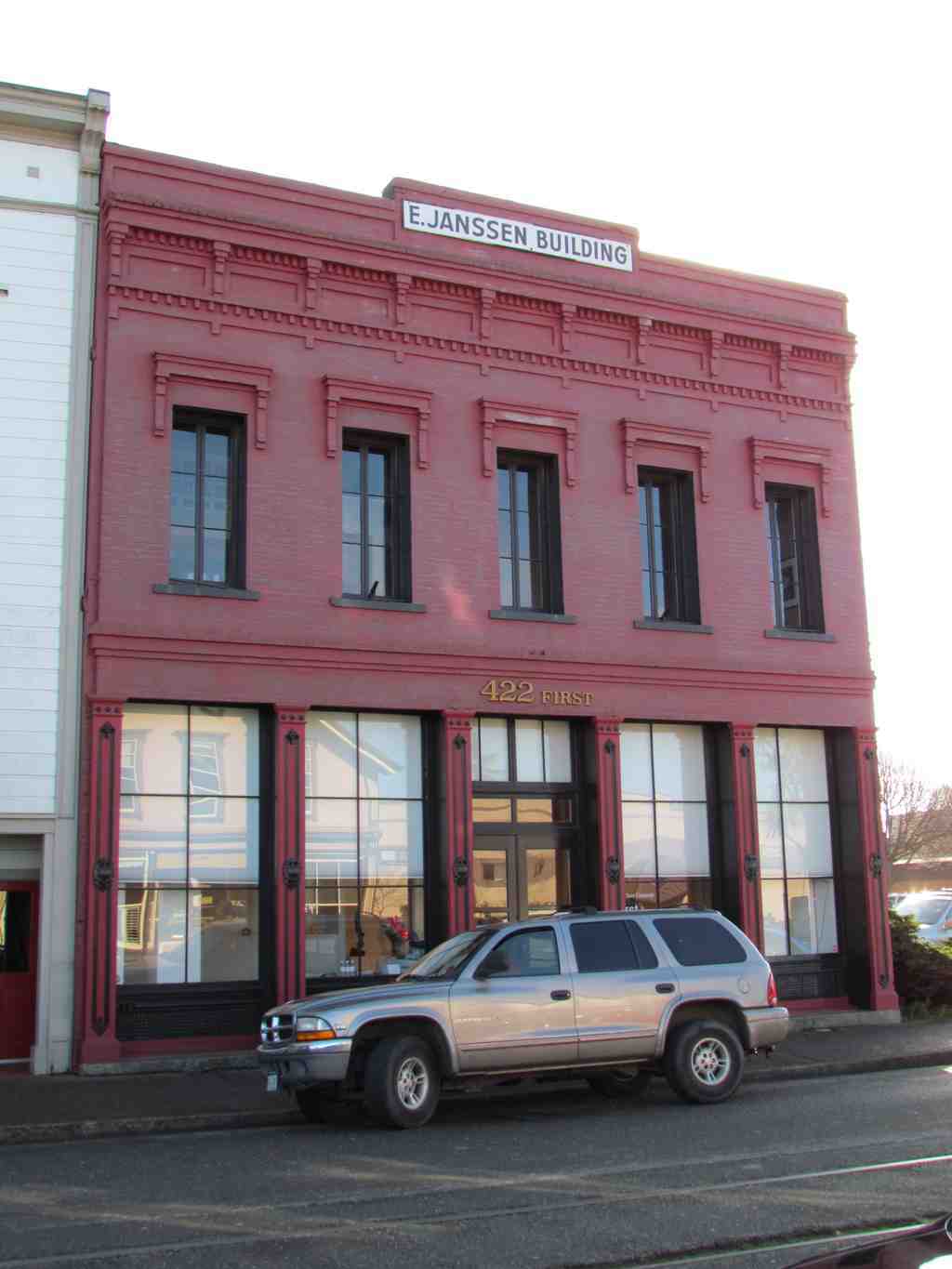
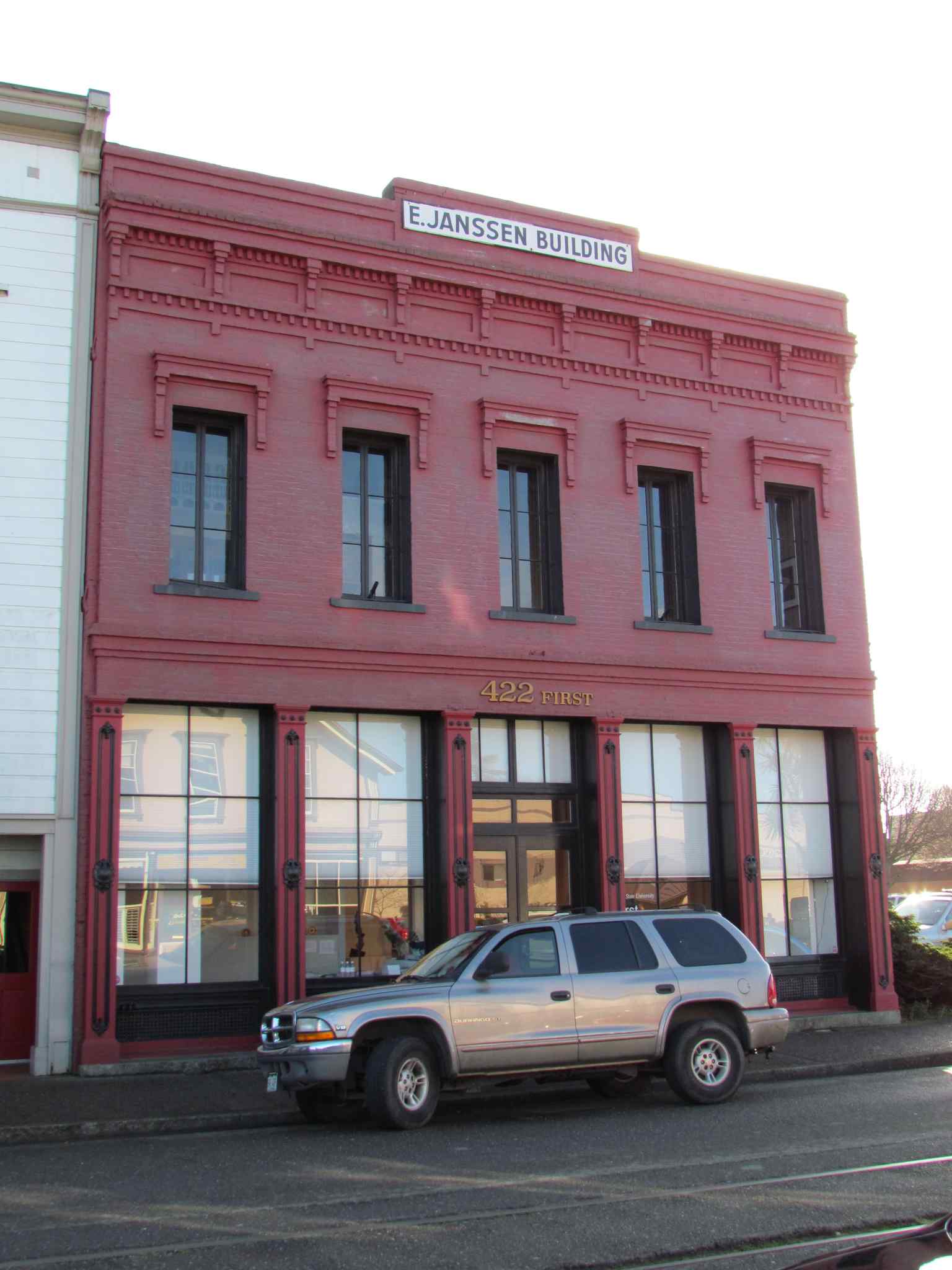
Look for the two-story brick building across the street with the tall ground-floor windows separated by dark iron columns and that crisp white signboard at the top reading E. Janssen Building.
Imagine early Eureka as a wooden tinderbox. Devastating fires routinely roared through early Western boomtowns, turning entire blocks of businesses to ash in mere minutes, which meant true survival required serious engineering. Built in 1875, this hardware and general merchandise store was a fortress, using heavy brick construction and thick metal shutters to become what was considered the very first fireproof commercial building in Eureka.
When flames advanced through the streets, shopkeepers could quickly slam those heavy metal shutters closed, instantly blocking the fire from reaching the valuable merchandise stored inside. It was a brilliant combination of industrial strength and high style. Look closely at those dark, decorative pillars separating the large glass windows. Those are cast-iron pilasters, which are essentially flattened columns built into a wall to provide support, and these were forged far to the south by the San Francisco Iron Works. They gave the storefront a sophisticated look while acting as impenetrable armor. Check your screen for a historical photo of the building in 1912.
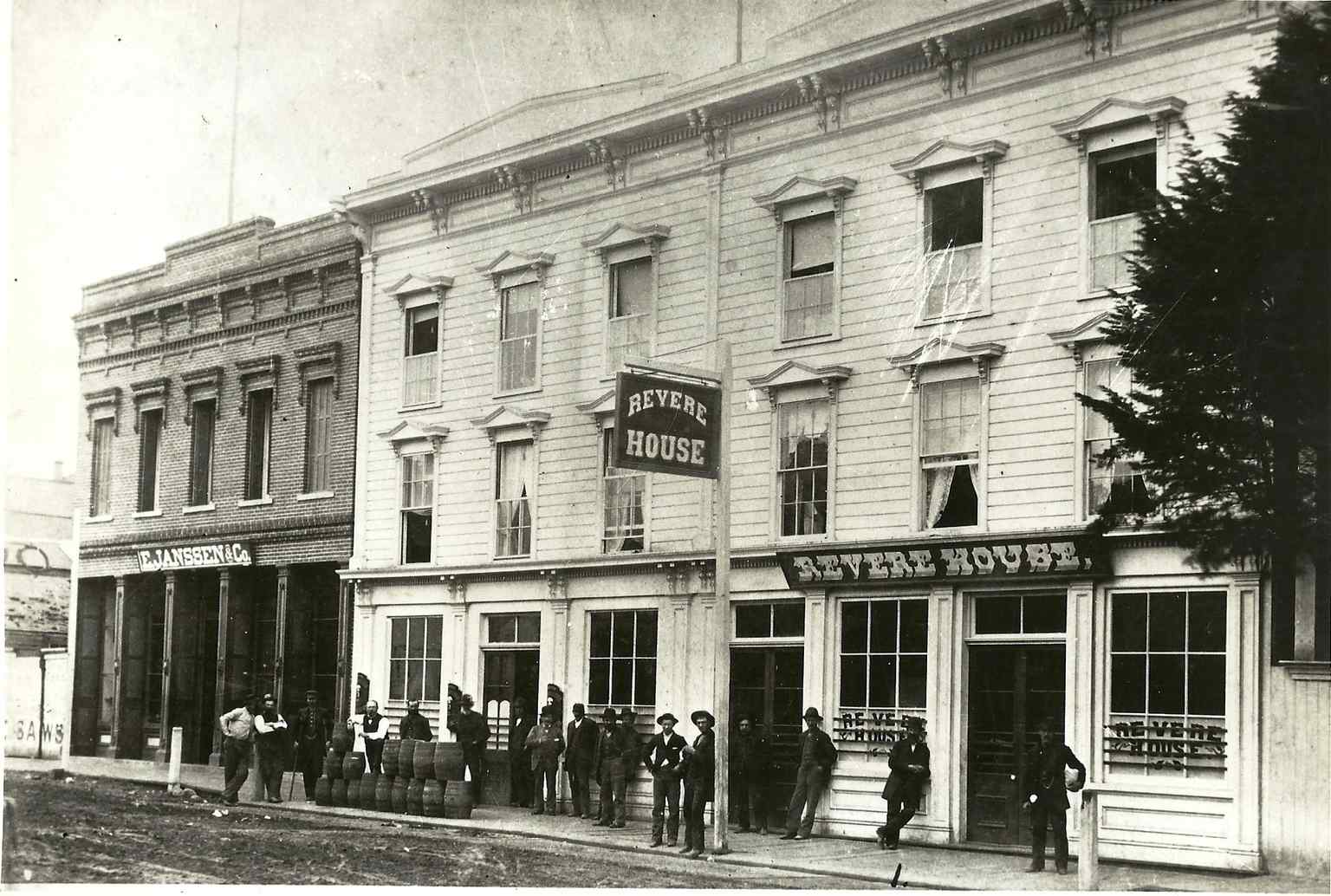
The innovations inside were just as impressive. To move massive crates of hardware up to the second-floor storage loft, this place utilized a water-operated hydraulic elevator. That was actually the very first elevator ever installed in Northern California! In 1889, a famous sea captain named Hans Henry Buhne bought the building to sell maritime supplies. His connection to the space was so strong that neighboring shopkeepers swear he never left, reporting the distinct sound of heavy, unseen footsteps echoing through the empty halls long after hours.
But while those thick brick walls could protect this magnificent structure from catastrophic fires, they could not shield it from modern financial realities. For nearly two decades, this building enjoyed a spectacular second act as Humboldt State University's First Street Gallery. It was a vibrant, hands-on laboratory where college students learned to curate professional art exhibitions, drawing thousands of visitors to Old Town. Sadly, severe university budget cuts struck in recent years, and the university was forced to vacate the historic space. The struggle to keep these grand historic buildings alive is constantly shifting from physical survival to economic survival.
But the artistic spirit of this neighborhood is incredibly resilient. We are going to follow that creative trail next, with just a short four-minute walk to our next stop, the HSU First Street Gallery.


