
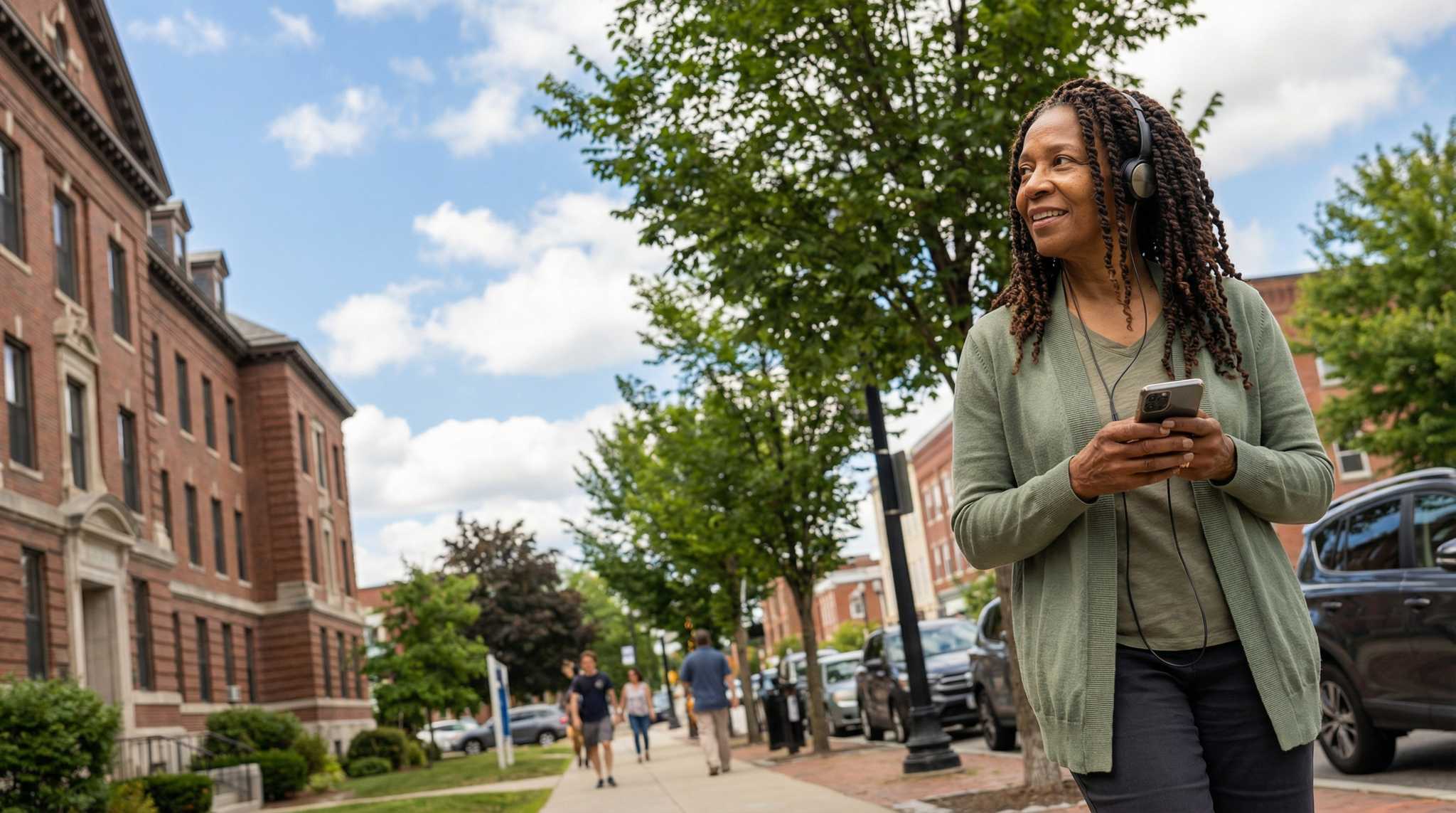
Manchester Audio Tour: Echoes of Innovation and Faith
Beneath Manchester’s brisk streets and storied facades, echoes of revolution and reinvention shape every stone. Peer deeper and the city reveals secret chapters left out of guidebooks. This self-guided audio tour unlocks Manchester’s overlooked corners, inviting discovery beyond the obvious. Roam at your own pace while hidden tales and local drama unfold step by step. Why did a single heated speech in the Manchester City Library spark protests that spilled onto Elm Street? What cryptic patterns guard the ancient altar at the Cathedral of St. Joseph? And how did one hospital ward at Catholic Medical Center become central to a scandal that rocked the city’s corridors of power? Trace shifting skylines, cross threshold and time. Feel Manchester’s pulse in clandestine meetings, whispered legends and battles for change. Ordinary alleys and grand halls come brilliantly alive with every turn. Begin now and unlock the city’s untold depths, where each answer leads to more extraordinary secrets.
Tour preview
About this tour
- scheduleDuration 80–100 minsGo at your own pace
- straighten3.4 km walking routeFollow the guided path
- location_onLocationManchester, United States
- wifi_offWorks offlineDownload once, use anywhere
- all_inclusiveLifetime accessReplay anytime, forever
- location_onStarts at Palace Theatre
Stops on this tour
lock_open 3 free previews · 7 unlock with purchase
In front of you is a two-story brick-and-stone facade with a pressed-metal front, a row of storefront openings, and the Palace name marking the theater’s lobby at the western…Read moreShow less
Open dedicated page →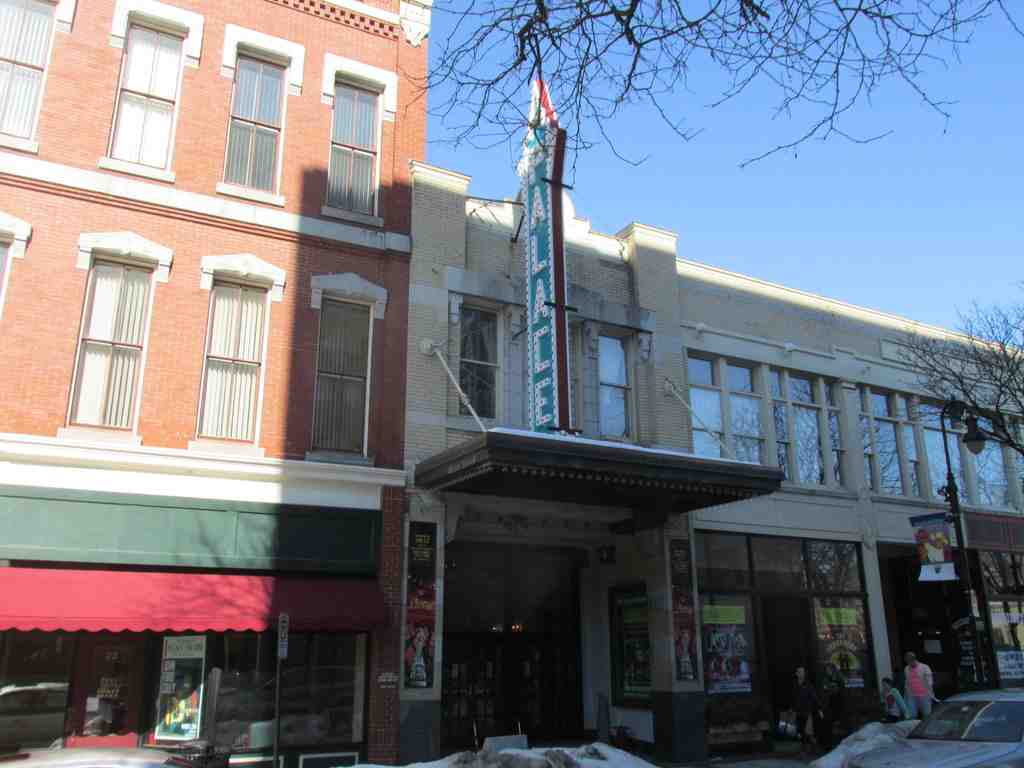
Palace TheatrePhoto: John Phelan, Wikimedia Commons, CC BY-SA 3.0. Cropped & resized. In front of you is a two-story brick-and-stone facade with a pressed-metal front, a row of storefront openings, and the Palace name marking the theater’s lobby at the western end.
The Palace began with ambition and very little interest in thinking small. In June of nineteen fourteen, a Greek immigrant named Victor Charas launched this theater with general contractor Henry Macropol and the architects Leon Lempert and Son. Charas modeled it on the Palace Theatre in New York City, and he moved fast; construction wrapped up in less than a year. For Manchester, that was a statement. This place advertised itself as the state’s only first-class theater that was both fireproof and air-conditioned... which sounds routine now, but the cooling system was gloriously improvised. Fans blew air across huge blocks of ice stored under the stage. Air-conditioning, before machinery got all full of itself.
The Palace opened on the ninth of April, nineteen fifteen. Local newspapers called it the grandest social occasion of the century, and the musical comedy Modern Eve played to a full house. Along Hanover Street, the bright theater marquees earned downtown the nickname the Great White Way. If you want a look at that exterior character, check the image on your screen... it gives you a good sense of how this facade anchored the block.
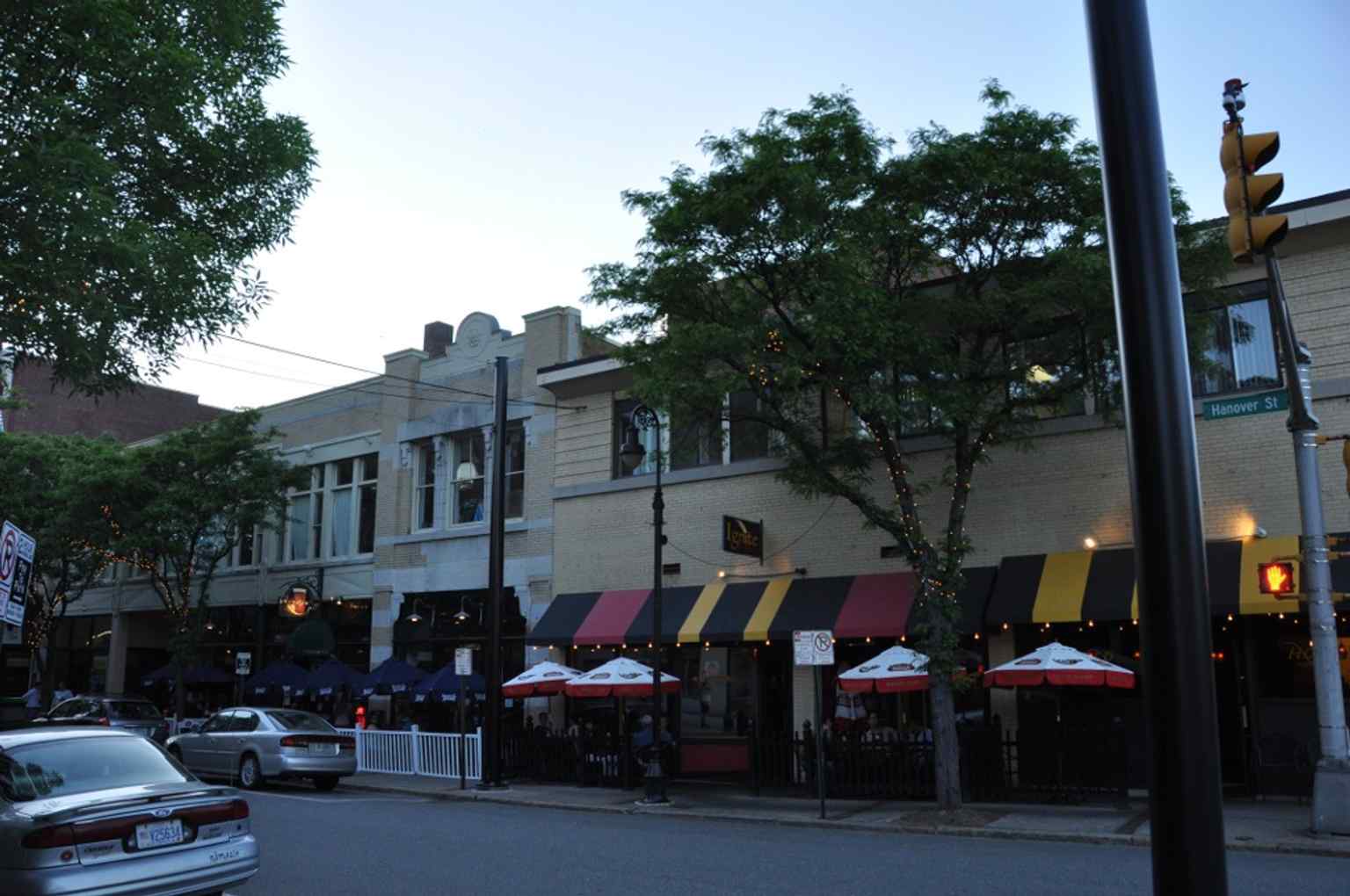
The Palace Theatre’s Hanover Street facade in Manchester, built in 1914 and listed on the National Register as the Athens Building.Photo: User:Magicpiano, Wikimedia Commons, CC BY-SA 4.0. Cropped & resized. Up through about nineteen thirty, the Palace hosted touring vaudeville companies, which means variety shows: comics, singers, novelty acts, magicians, all sharing one bill. Big names came through here, including Jimmy Durante, Bob Hope, Harry Houdini, the Marx Brothers, and Red Skelton. At one point, stock companies such as the Palace Players staged as many as a dozen performances a week. That is not so much a schedule as a controlled theatrical stampede.
Then audiences drifted toward silent films and talkies, movies with synchronized sound, and the Palace adapted. From nineteen thirty into the early nineteen sixties, it worked mainly as a movie house. Later, New Hampshire College, now Southern New Hampshire University, used it as classroom space. After the college moved out, the building sat vacant, the seats disappeared, stage equipment was abandoned, and the theater became a warehouse... a dreary fate for a room built for applause.
Its rescue came in nineteen seventy-three, when Jon Ogden and Rebecca Gould joined Manchester lawyer John McLane and the Bean Foundation to save it from demolition. The foundation put up five hundred thousand dollars for renovation, roughly three and a half million today. The Palace reopened on the second of November, nineteen seventy-four, and workers were still installing the last seats half an hour before opening night. Theater people do enjoy a dramatic entrance. It survived a frozen sprinkler disaster in nineteen eighty and even a major Hanover Street fire in nineteen eighty-four, thanks to its original firewall.
So this theater has done the rare thing: it kept its nerve, and it kept its stage.
When you’re ready, continue on toward City Hall Plaza.
On your right, City Hall Plaza is a tall brick-and-limestone tower with a narrow rectangular shape and a green roof broken into four peaked gables. Manchester does not do…Read moreShow less
Open dedicated page →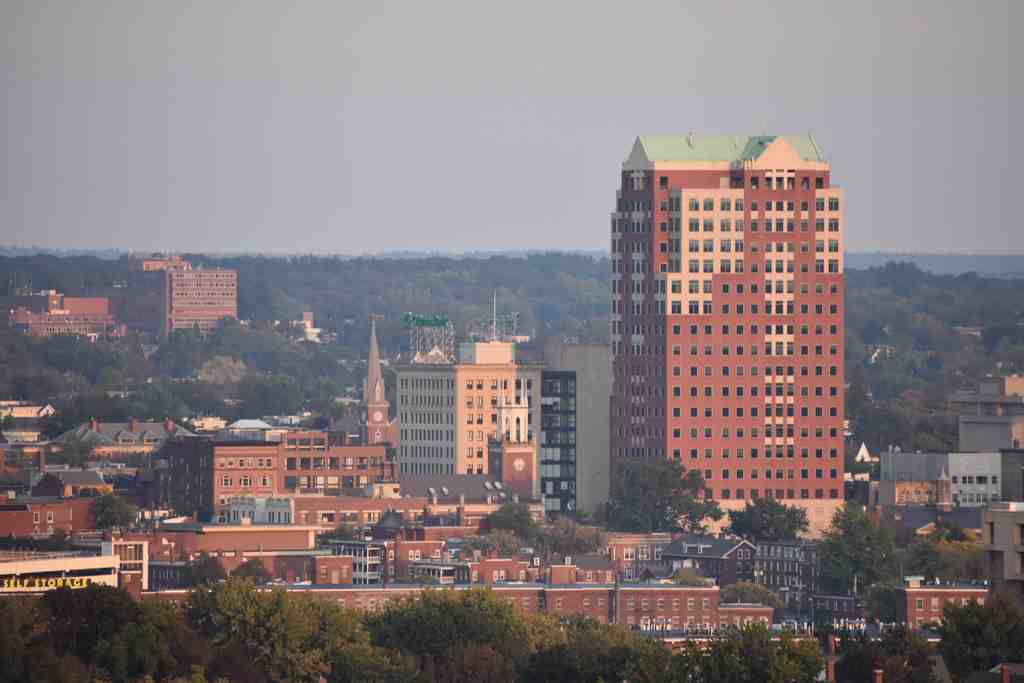
City Hall PlazaPhoto: Kenneth C. Zirkel, Wikimedia Commons, CC BY-SA 4.0. Cropped & resized. On your right, City Hall Plaza is a tall brick-and-limestone tower with a narrow rectangular shape and a green roof broken into four peaked gables.
Manchester does not do skyscrapers in bulk, so this one makes its point with confidence. Since Nynex Properties finished it in nineteen ninety-two, this two hundred seventy-four-foot tower has held the title of tallest building in Manchester, in New Hampshire, and in all of northern New England. Not bad for a city that prefers practical shoes to big-city swagger. Its offices serve both private businesses and Manchester’s own government, so the building doubles as a skyline landmark and a place where paperwork quietly rules lives. If you glance at your screen, you can see how it anchors downtown from a distance. Developers spent twenty-two million dollars on it, and after a few ownership changes, Brady Sullivan Properties took over in September twenty fourteen.
So this tower is part office block, part civic flagpole, and city offices here generally keep Monday-through-Friday, eight-to-five hours.
When you’re ready, keep going and let’s trade vertical ambition for books at the library.
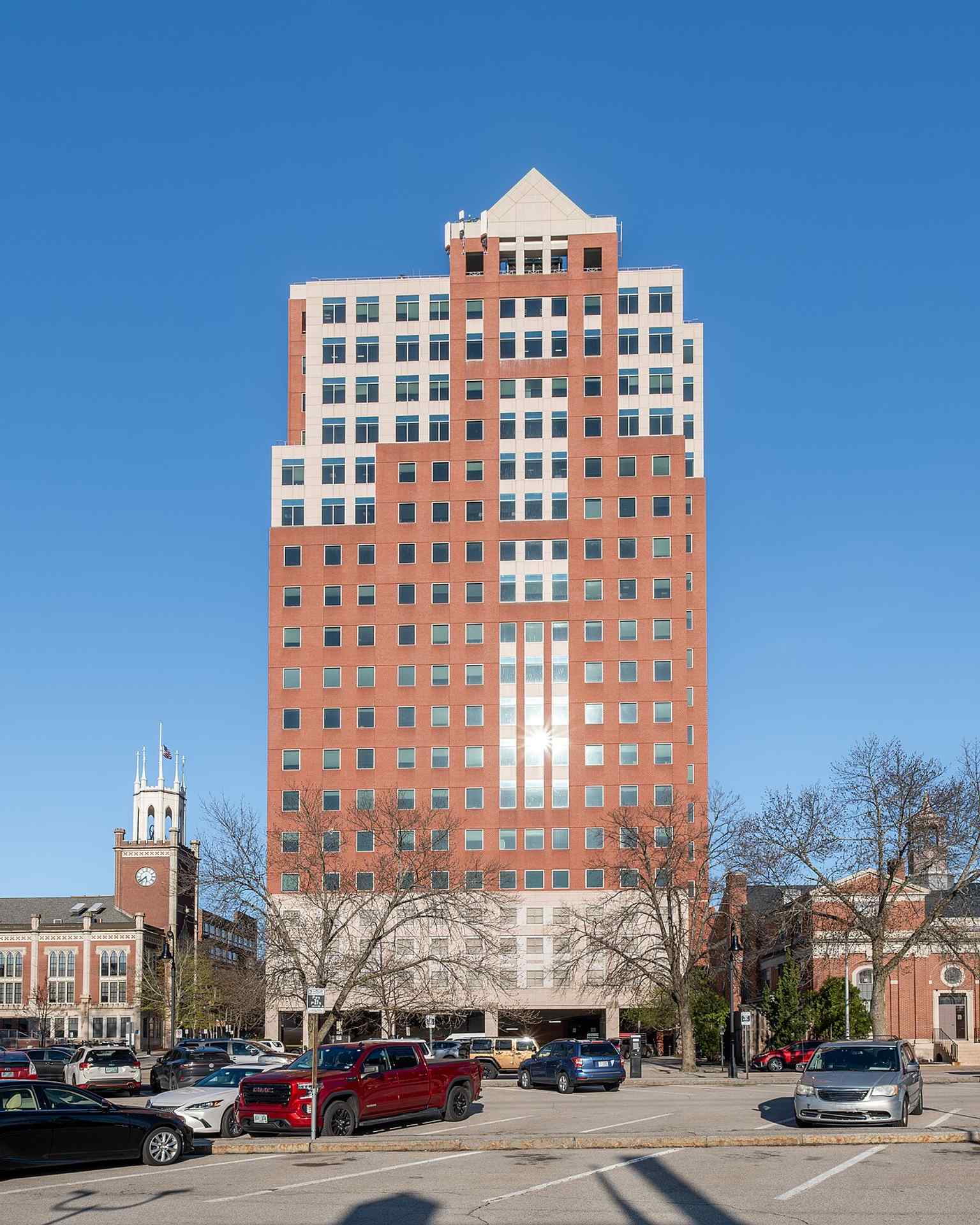
City Hall Plaza rises above downtown Manchester — since 1992 it has been the tallest building in New Hampshire.Photo: Tim Kiser, Wikimedia Commons, CC BY-SA 4.0. Cropped & resized. 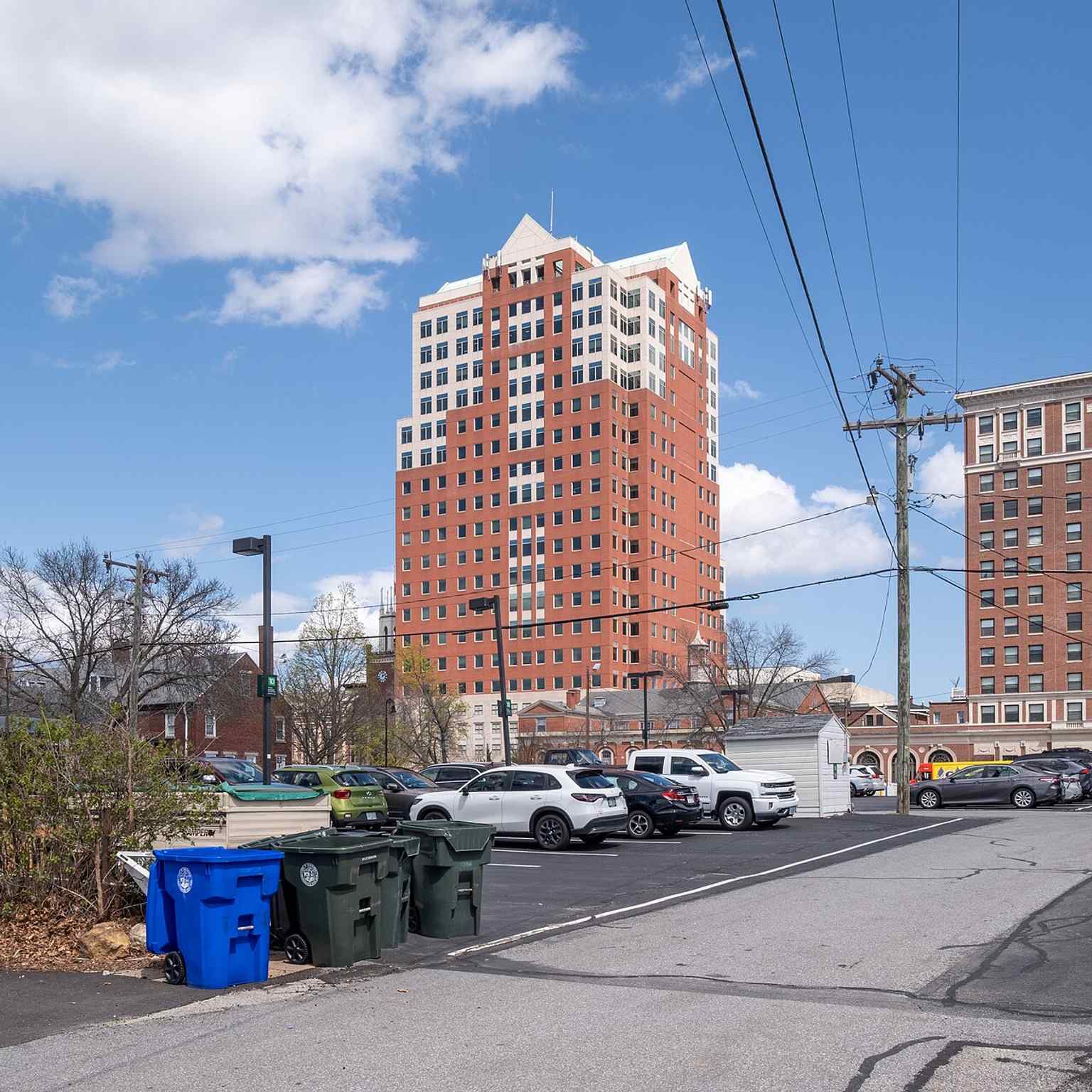
A second downtown view of the tower, the 274-foot City Hall Plaza that anchors the Manchester skyline.Photo: Tim Kiser, Wikimedia Commons, CC BY-SA 4.0. Cropped & resized. On your right is a long granite and brick library with a red tile roof, broad stone steps, and a deep arched entrance trimmed in pale marble. Manchester started dreaming about a…Read moreShow less
Open dedicated page →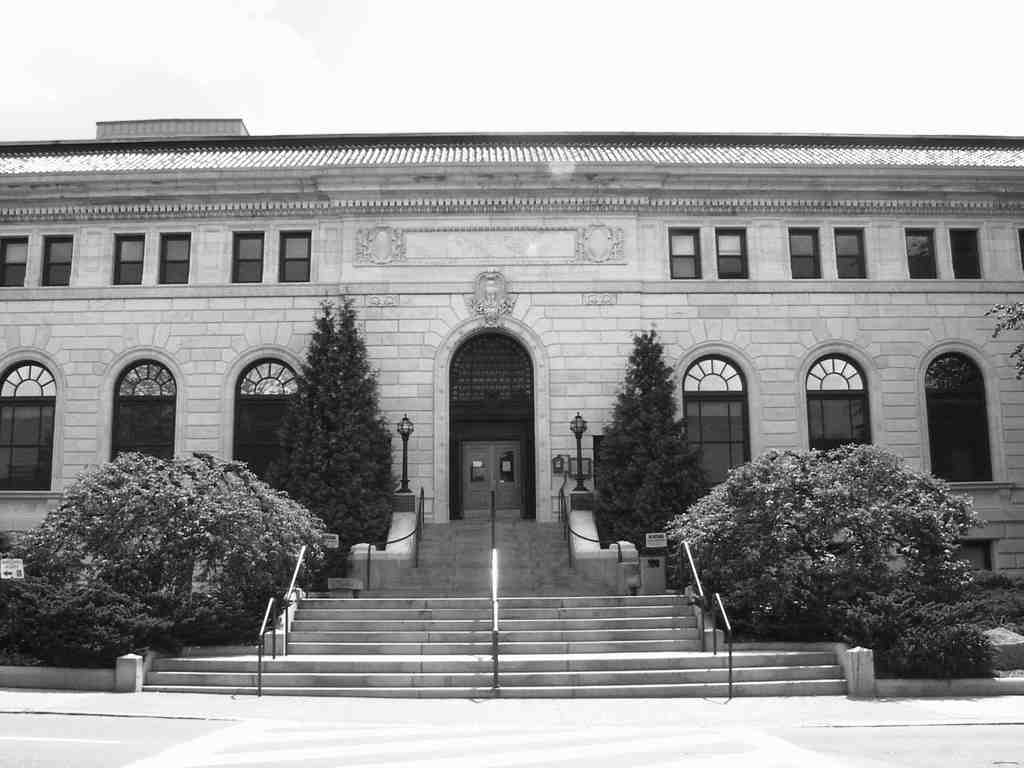
Manchester City LibraryPhoto: Loomis, Y., Wikimedia Commons, CC BY-SA 3.0. Cropped & resized. On your right is a long granite and brick library with a red tile roof, broad stone steps, and a deep arched entrance trimmed in pale marble.
Manchester started dreaming about a real public library in the eighteen fifties, but the story begins a little earlier with the Manchester Atheneum in eighteen forty-four. That was part library, part reading room, part museum, and definitely not free. For three dollars a year, roughly a hundred dollars today, you could get access. Democracy, apparently, came with a membership fee.
In eighteen fifty-four, Mayor-elect Frederick Smyth pushed for a free public library, and the Atheneum’s collection moved into city hands. The new public library opened with fewer than two hundred books. Two years later, a fire in Patten Block tore through the place and destroyed almost everything except about six hundred items, including books that happened to be checked out. For a library, that is one brutal plot twist.
The library recovered, outgrew one home, then another, and by eighteen seventy-one it moved to Franklin Street. That building solved some problems and created others. Patrons complained about the dark, church-like interior, the high wire fence between them and the shelves, and the fact that only ministers and teachers could browse with any freedom. Everyone else had to ask a librarian to fetch a book, sometimes waiting an hour. If you glance at the image in the app, you can see that setup for yourself: readers on one side, books on the other, trust issues in architectural form.
This building finally fixed that. In nineteen ten, after Elenora Blood Carpenter died, Frank P. Carpenter offered Manchester a new library in her memory. He funded a grand Italian Renaissance building in Concord granite, Botticino and Lastavena marble, oak, brick, concrete, and steel, at a cost of about three hundred fifty-five thousand dollars, roughly eleven million today. Workers laid a five-ton cornerstone from the same quarry that supplied the Library of Congress, and tucked a copper time capsule inside with newspapers, coins, city records, and even Manchester-made clothing.
When the Carpenter Memorial Building opened in nineteen fourteen, more than five thousand people turned up. Staff then moved seventy-four thousand books here in just fifteen working days. If you check the rotunda photo on your screen, you’ll see one of the building’s showpieces: the skylight dome, a fine reminder that a public library can be practical and a little theatrical at the same time.
And it still works hard: roughly two hundred twenty-five thousand items, internet access, literacy programs, workshops, and a New Hampshire Room packed with genealogy, military records, city directories, and old newspapers.
So this place remains one of Manchester’s most useful monuments, and if you want to come back inside later, it’s generally open Monday through Friday, with shorter hours on Saturday and closed Sunday.
When you’re ready, continue toward the Cathedral of Saint Joseph, where the city trades marble calm for something more celestial.

Show 7 more stopsShow fewer stopsexpand_moreexpand_less
On your right, look for a gray-stone Gothic church with a pointed facade and a cross-topped central tower. St. Joseph's began in eighteen sixty-nine to serve Irish immigrants,…Read moreShow less
Open dedicated page →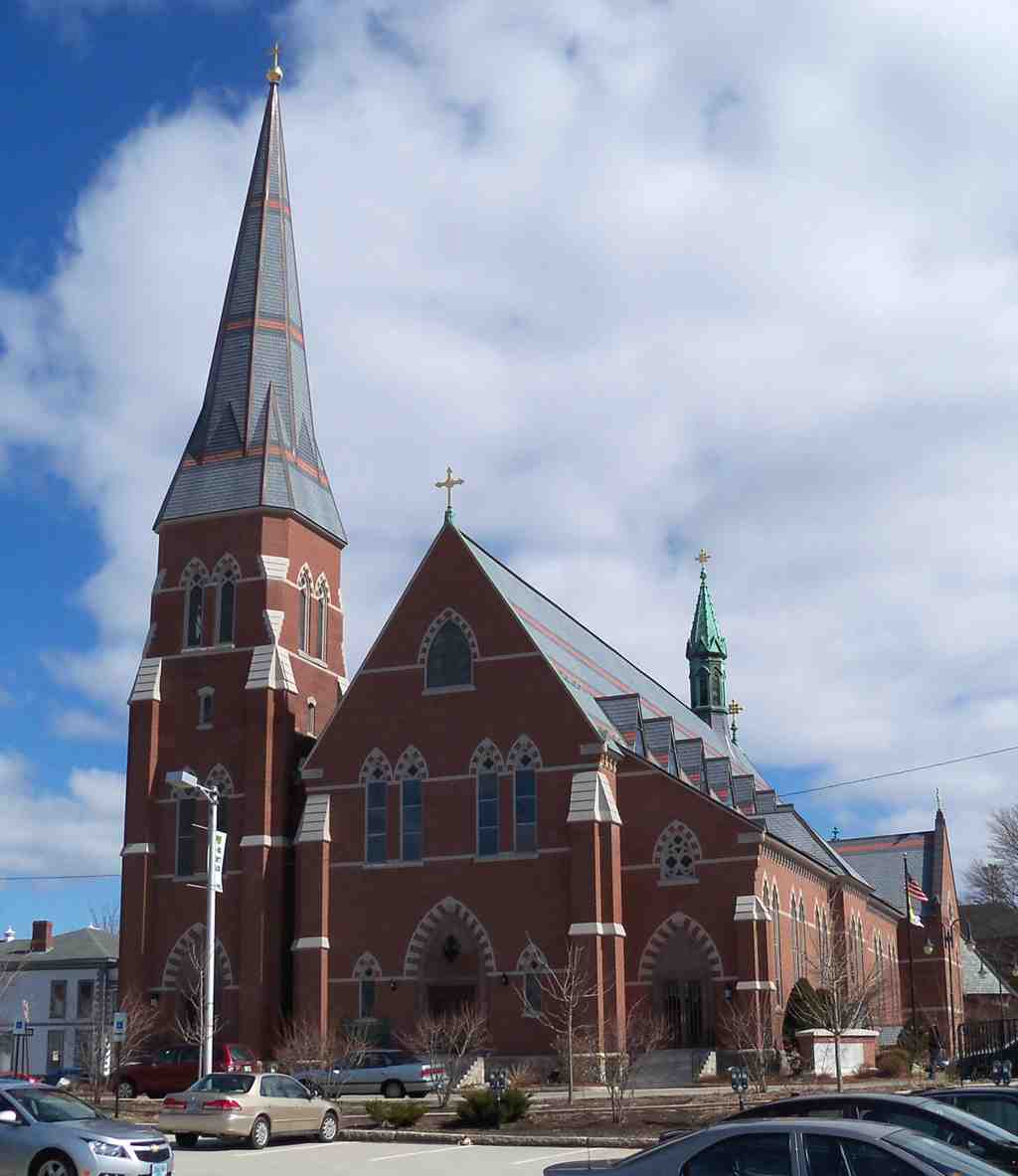
Cathedral of St. JosephPhoto: Jon Platek, Wikimedia Commons, CC BY-SA 3.0. Cropped & resized. On your right, look for a gray-stone Gothic church with a pointed facade and a cross-topped central tower.
St. Joseph's began in eighteen sixty-nine to serve Irish immigrants, then became the cathedral in eighteen eighty-four when Pope Leo the Thirteenth created the Diocese of Manchester. A cathedral is the bishop's home church, and this one still serves that role under Bishop Peter Libasci, with Father Jason Jalbert as rector. If you want a quick time jump, check the before-and-after image... the Gothic front barely flinches, even as the world around it changes completely. In nineteen sixty-eight, post-Vatican Two reforms, a major reset in Catholic worship, removed the high altar, the Stations of the Cross, and much of the decoration. Then, in two thousand fourteen, the diocese began restoring that richer look with similar pieces from Boston's closed Holy Trinity Church. For a glimpse inside, take a look at the sanctuary photo in the app.
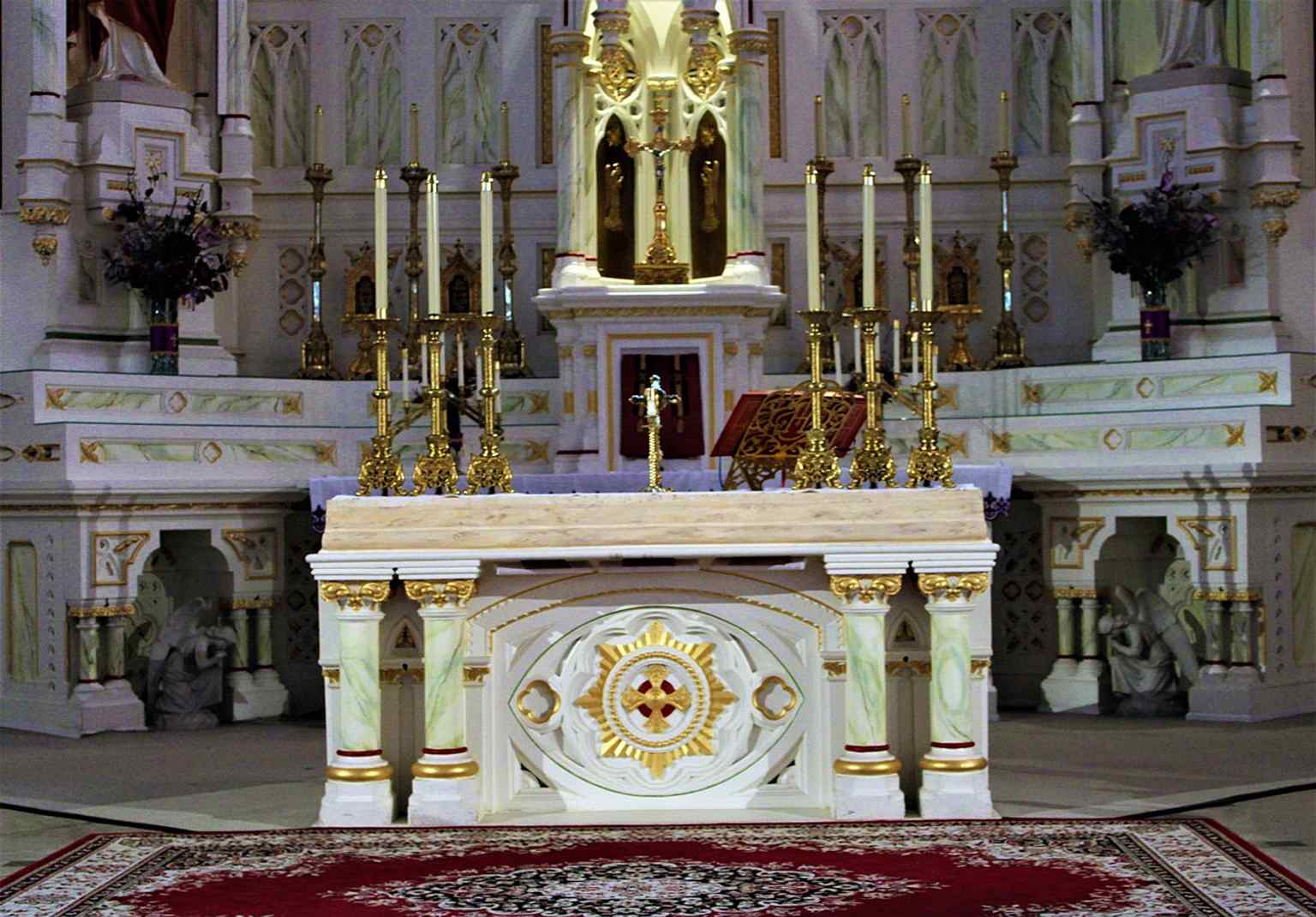
A richly detailed interior view that highlights the cathedral’s architecture and ceremonial setting for diocesan worship.Photo: Farragutful, Wikimedia Commons, CC BY-SA 4.0. Cropped & resized. If you want to return, it's generally open from early morning to late afternoon, with longer hours on Sunday. This place tells Manchester's Catholic story without much fuss. When you're ready, continue on to the Red Arrow Diner.
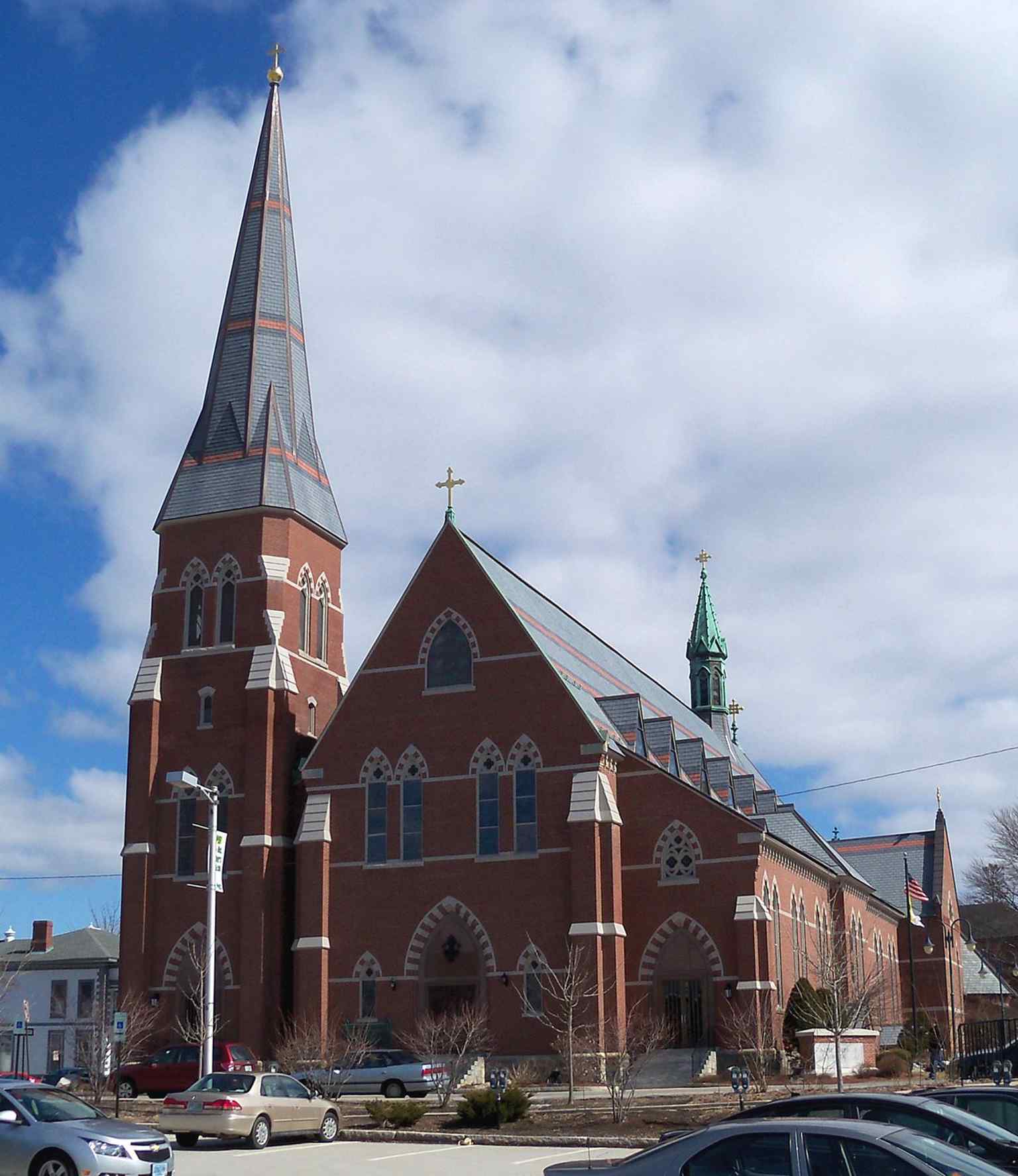
Front view of the cathedral’s Gothic facade in downtown Manchester, where St. Joseph’s parish became the diocese’s cathedral in 1884.Photo: Jon Platek, Wikimedia Commons, CC BY-SA 3.0. Cropped & resized. 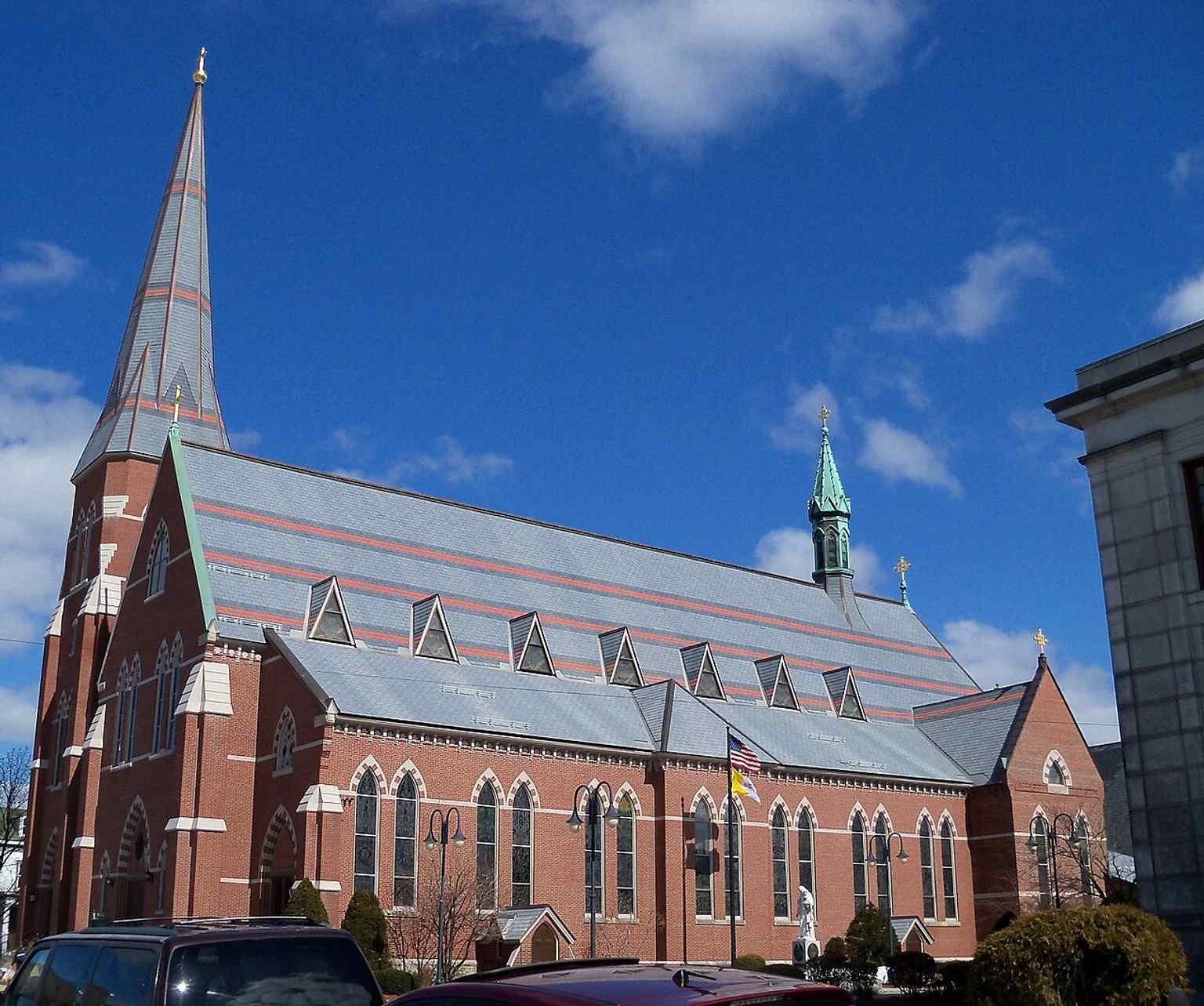
A clear exterior view showing the cathedral as it stands today on Lowell Street, serving the Roman Catholic Diocese of Manchester.Photo: AlexiusHoratius, Wikimedia Commons, CC BY-SA 3.0. Cropped & resized. 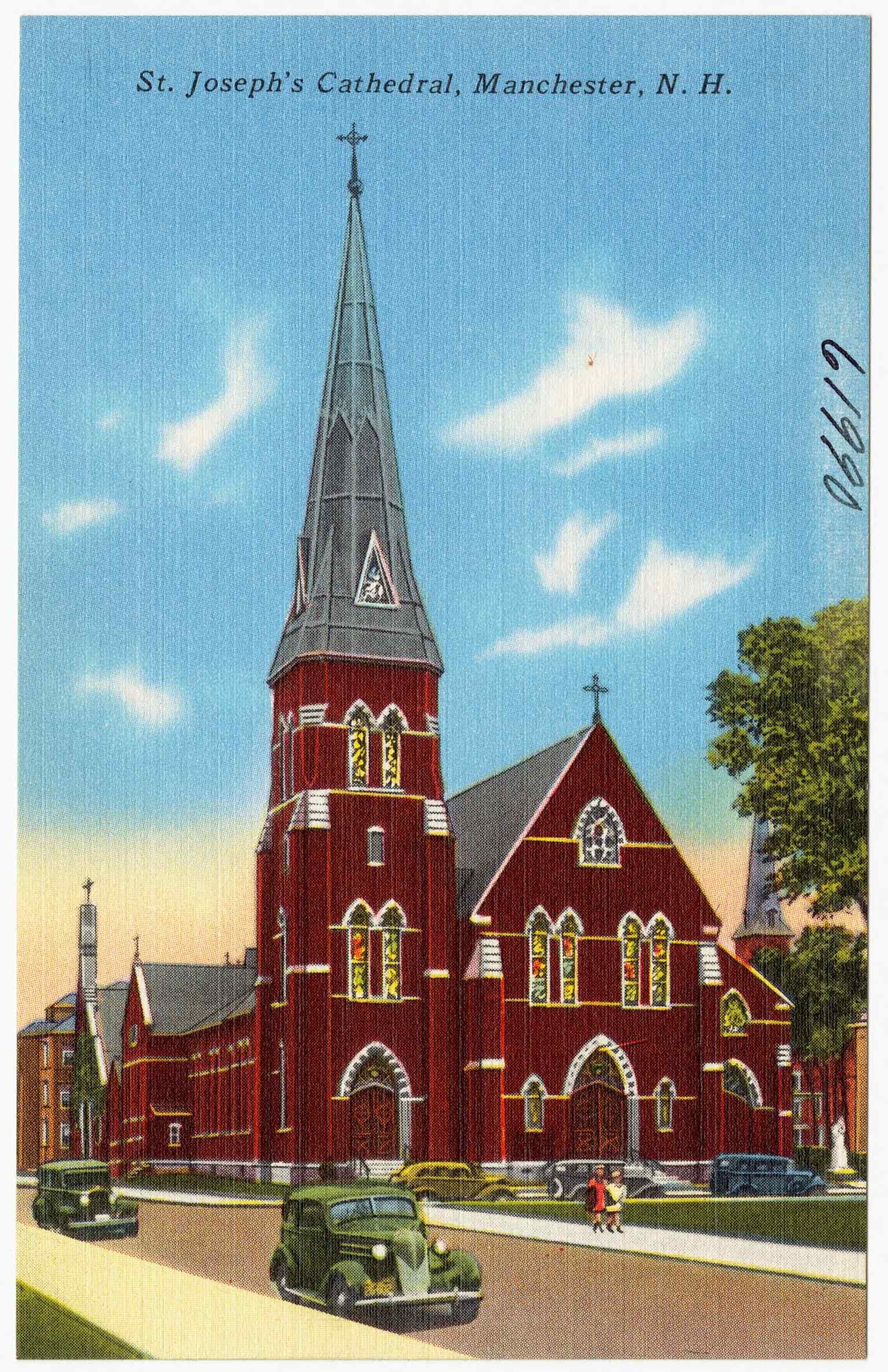
A vintage postcard view of St. Joseph’s Cathedral, offering a glimpse of the church before later renovations and expansions.Photo: Tichnor Brothers, Publisher, Wikimedia Commons, Public domain. Cropped & resized. 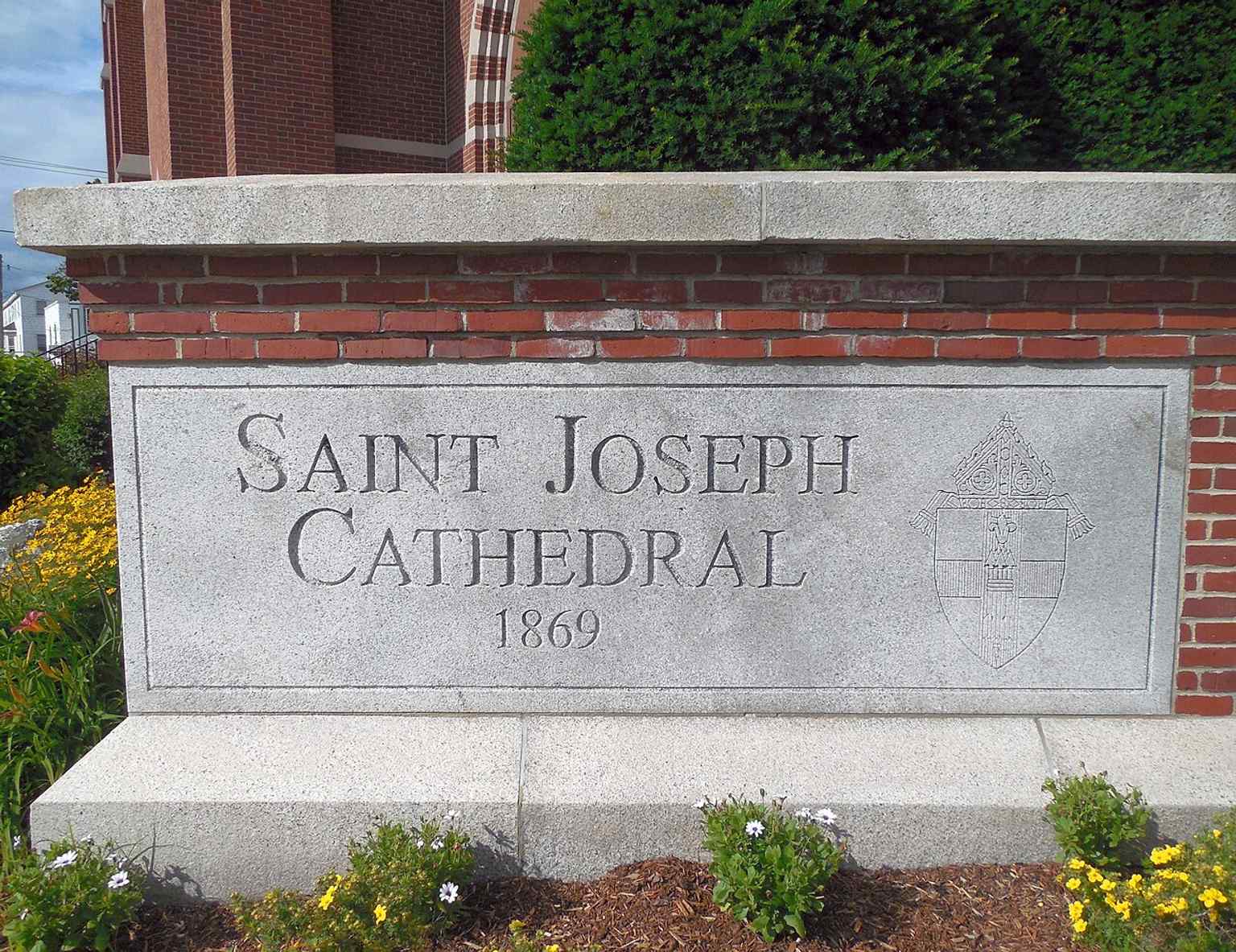
The cornerstone of the cathedral, a small but important reminder of the church’s long history since its founding in 1869.Photo: Niranjan Arminius, Wikimedia Commons, CC BY-SA 4.0. Cropped & resized. 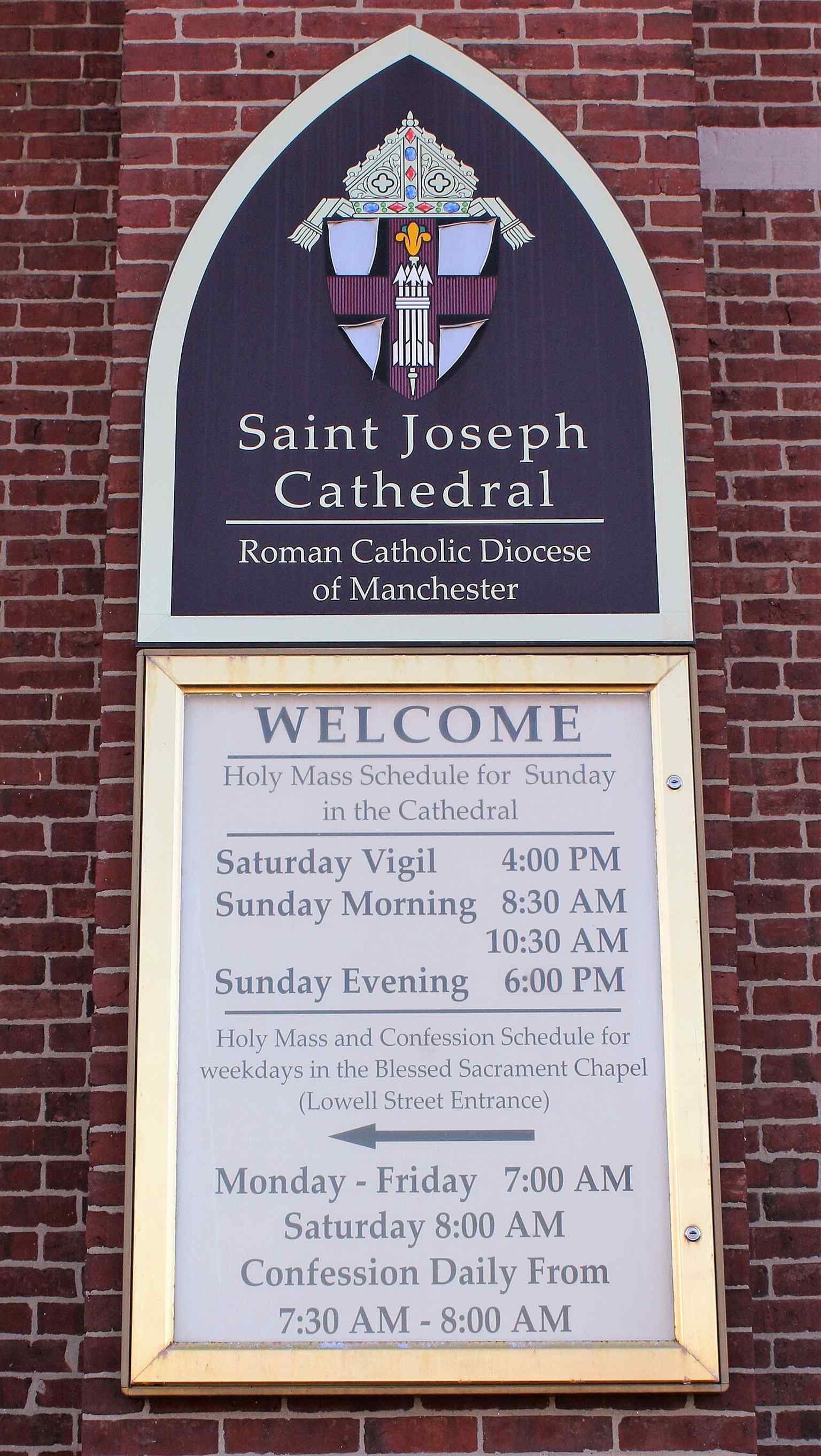
The cathedral sign on Pine Street helps place the church in the heart of Manchester’s downtown district.Photo: Farragutful, Wikimedia Commons, CC BY-SA 4.0. Cropped & resized. 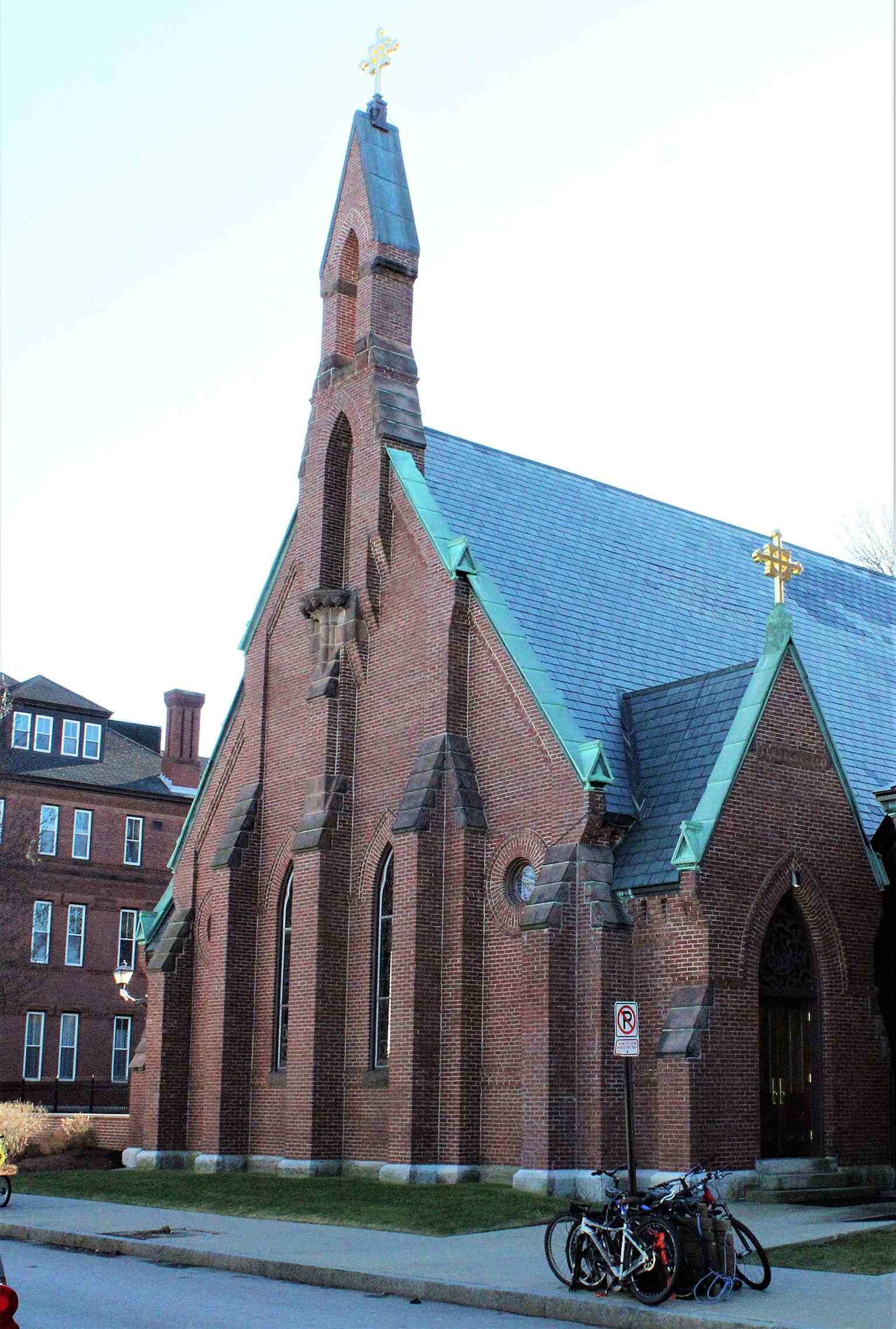
Blessed Sacrament Chapel behind the cathedral, part of the wider church complex that grew around the original parish.Photo: Farragutful, Wikimedia Commons, CC BY-SA 4.0. Cropped & resized. 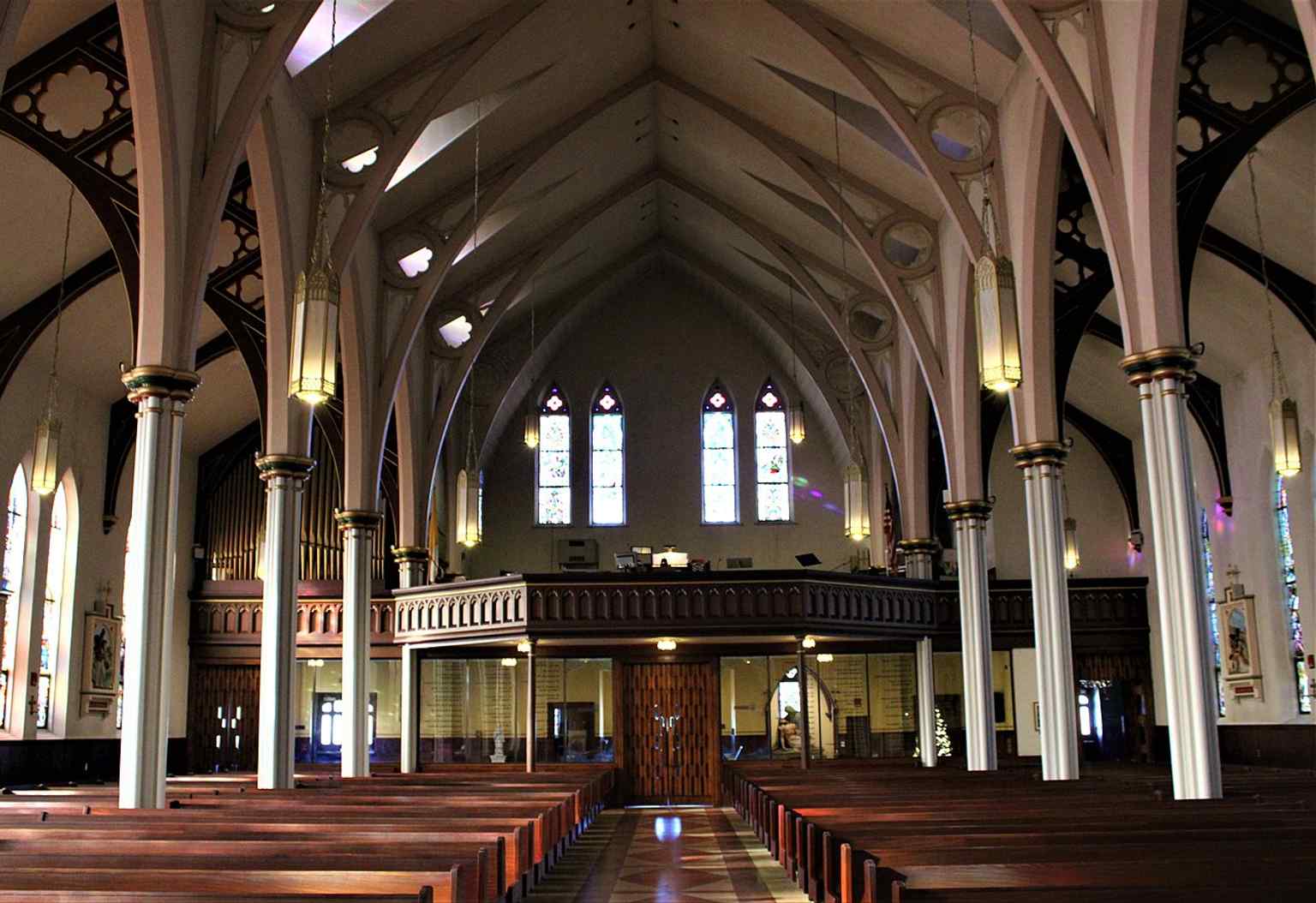
A sweeping interior view of the cathedral, useful for showing the scale of the worship space after later renovations.Photo: Farragutful, Wikimedia Commons, CC BY-SA 4.0. Cropped & resized. 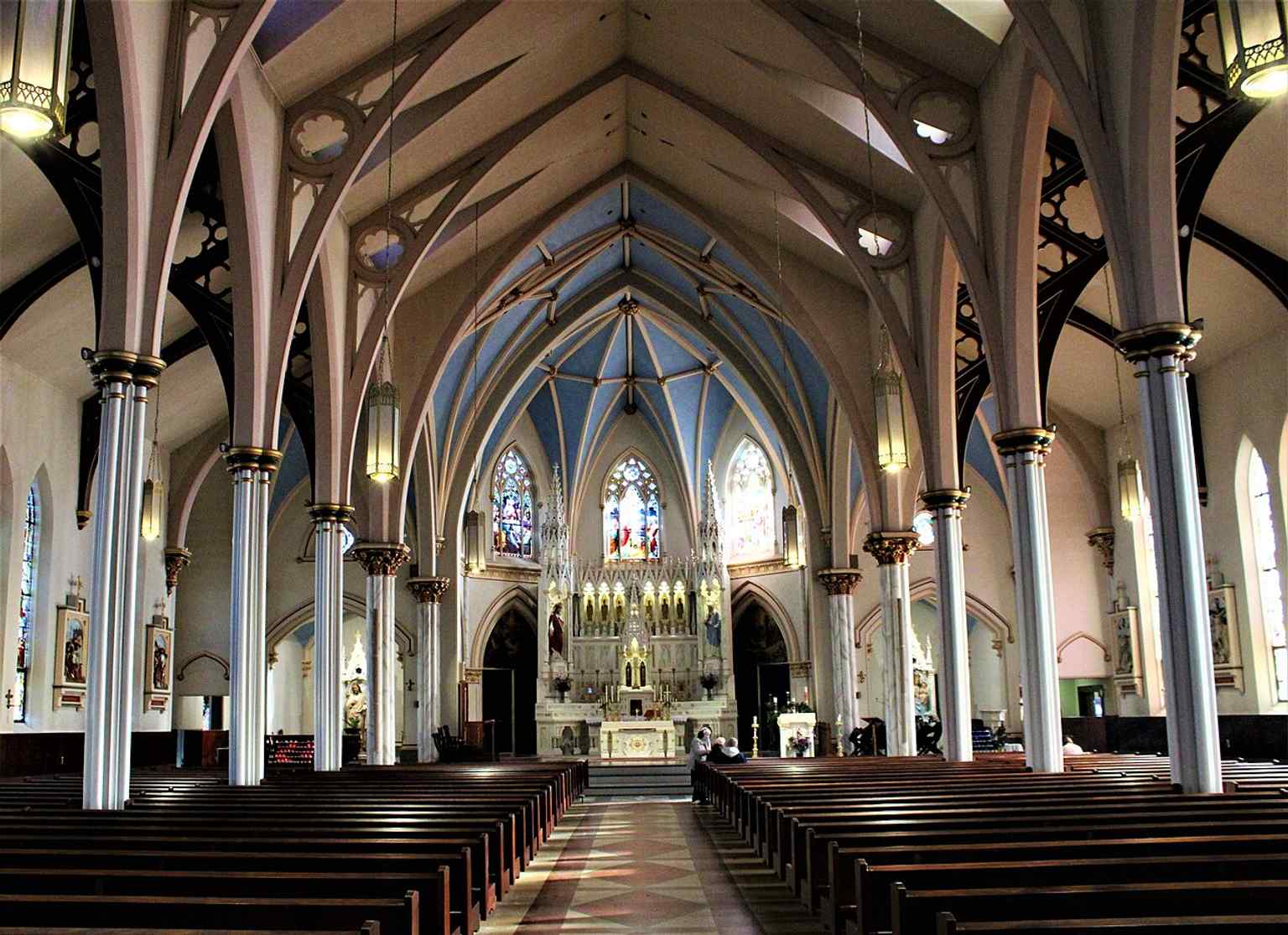
Another broad interior view that helps tell the story of the cathedral’s changing liturgical space after Vatican II-era changes.Photo: Farragutful, Wikimedia Commons, CC BY-SA 4.0. Cropped & resized. 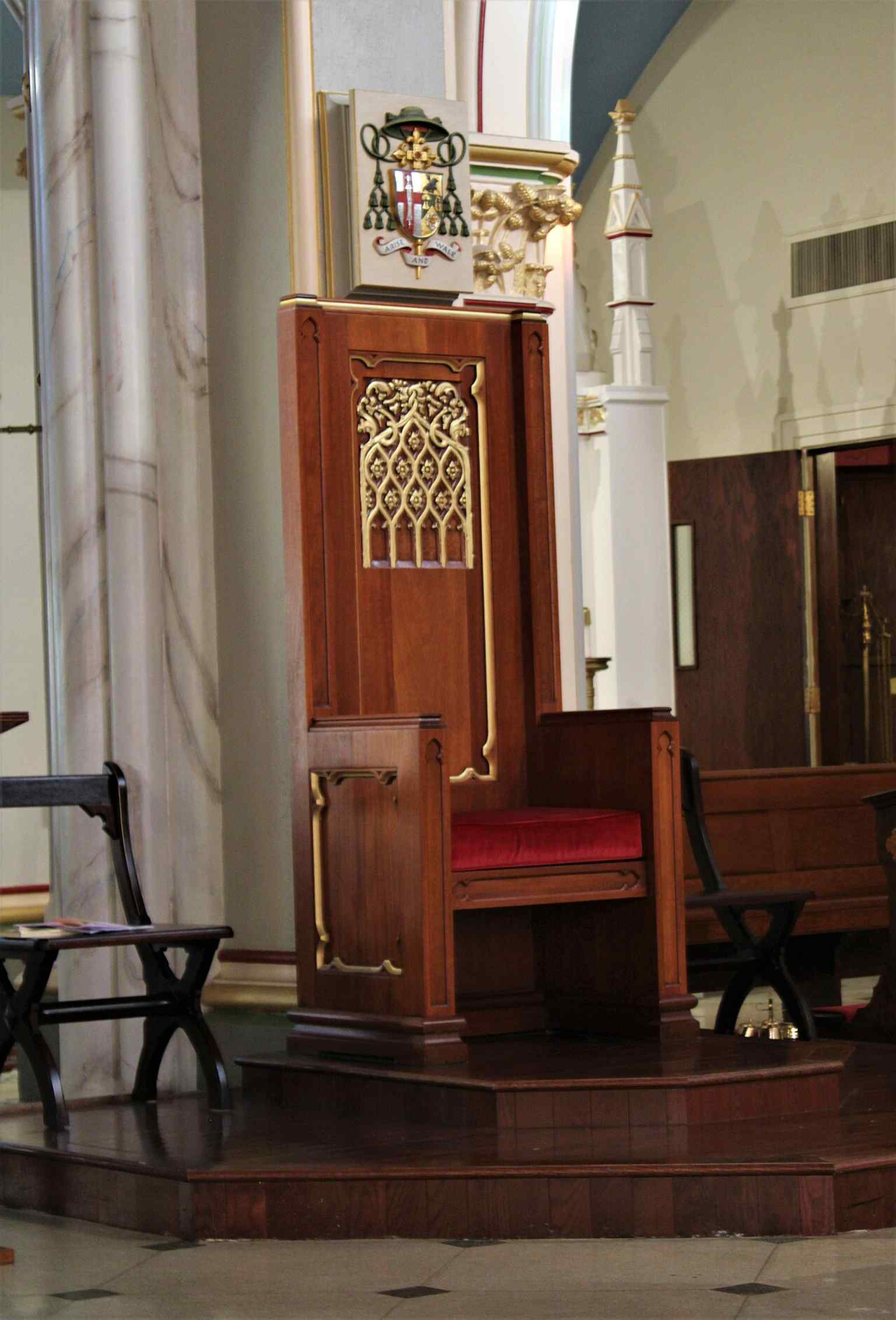
Interior detail with the cathedral’s devotional atmosphere, reflecting the restoration work begun in 2014.Photo: Farragutful, Wikimedia Commons, CC BY-SA 4.0. Cropped & resized. 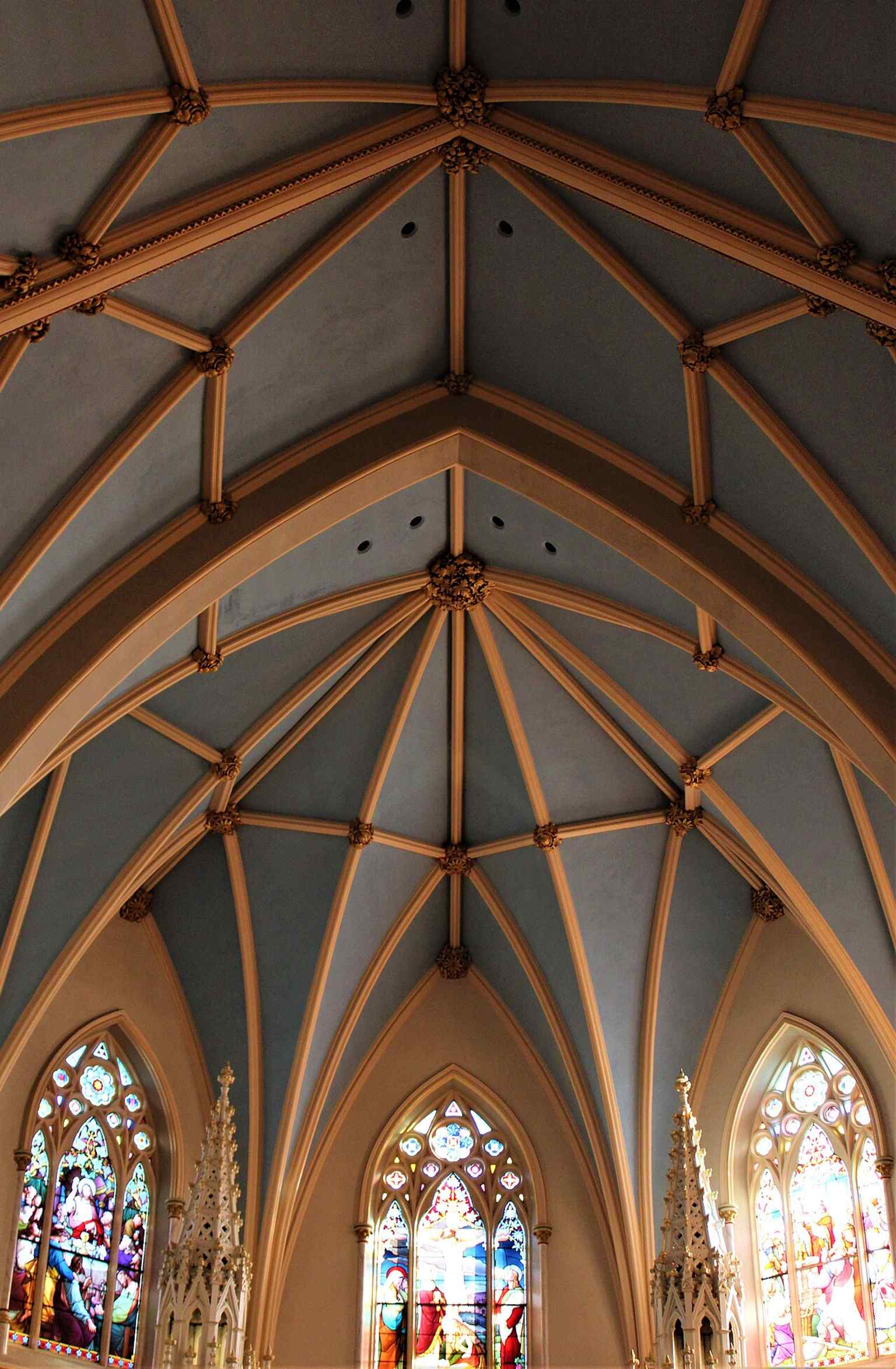
Stained glass in the cathedral interior, one of the decorative features that gives the church its historic character.Photo: Farragutful, Wikimedia Commons, CC BY-SA 4.0. Cropped & resized. 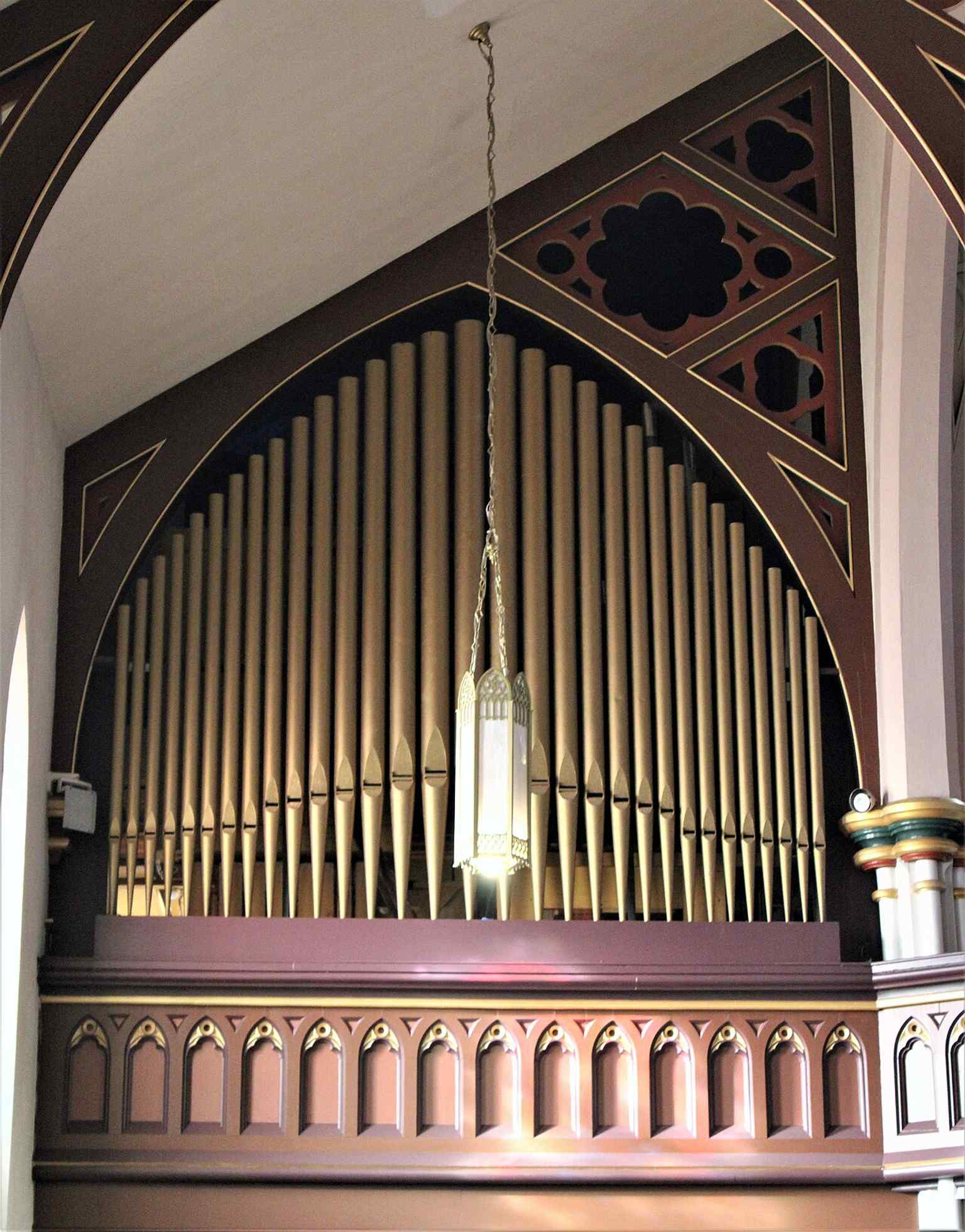
The pipe organ inside the cathedral adds to the music and ceremony of the mother church of the Diocese of Manchester.Photo: Farragutful, Wikimedia Commons, CC BY-SA 4.0. Cropped & resized. 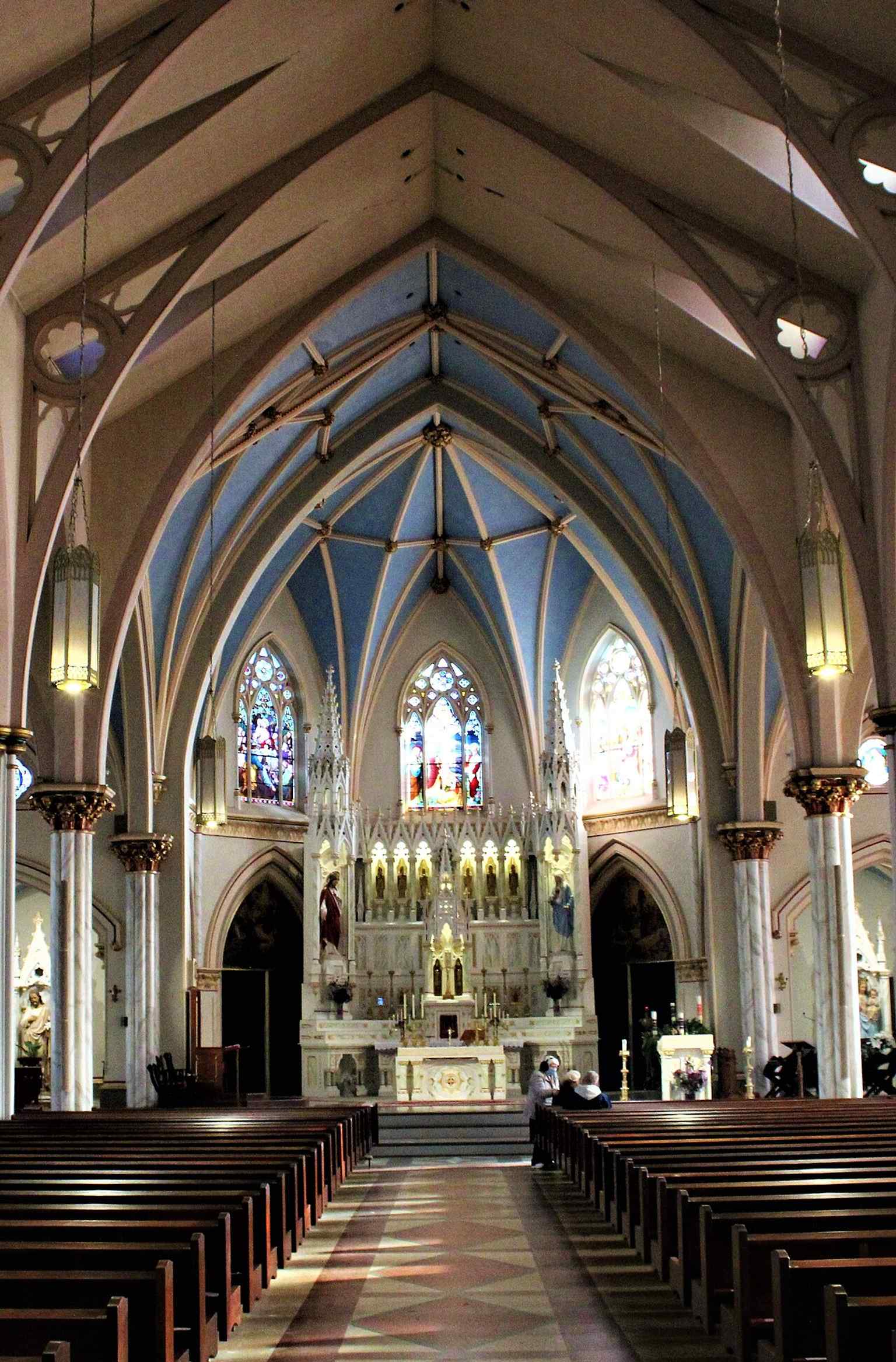
A closer interior crop that can help focus on the sanctuary’s details and the cathedral’s restored sacred art.Photo: Farragutful, Wikimedia Commons, CC BY-SA 4.0. Cropped & resized. Look for a long brick rowhouse, two and a half stories tall, capped by a dormered hip roof and marked by paired doorways tucked under angular wooden hoods. District C tells a…Read moreShow less
Open dedicated page →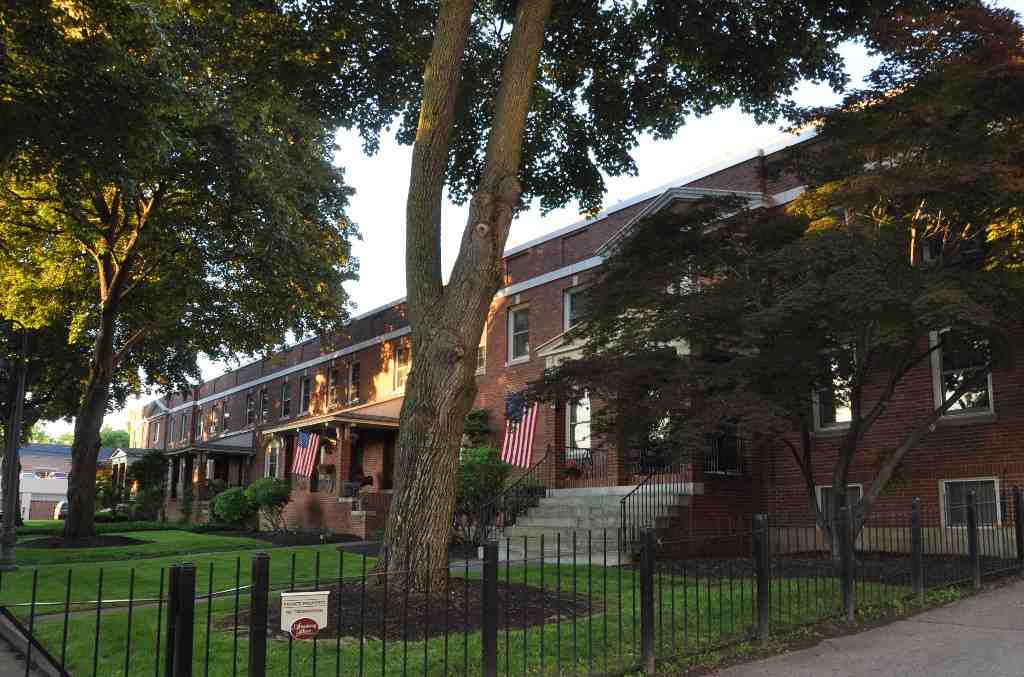
District CPhoto: User:Magicpiano, Wikimedia Commons, CC BY-SA 4.0. Cropped & resized. Look for a long brick rowhouse, two and a half stories tall, capped by a dormered hip roof and marked by paired doorways tucked under angular wooden hoods.
District C tells a very Manchester story... practical, orderly, and not especially interested in showing off. Across roughly five acres near the Amoskeag millyard, the Amoskeag Manufacturing Company laid out this worker housing district so mill employees and supervisors could live close to the machinery that set the city’s pace. Each rowhouse runs north to south and holds four units. Those paired entrances sit under Stick style hoods - little wooden canopies with sharp, decorative trim - and the dormers, the small windows poking out of the roof, steal a bit more light and space from the top floor.
Amoskeag put some of these blocks up in eighteen eighty-one from plans by its civil engineer, George W. Stevens, then added more in nineteen sixteen for overseers, the supervisors who kept the mills running. That later group became the last housing the company ever added. If you glance at your screen, the rear view shows the two-story back projection and porch that helped turn each unit into a family home, not just a place to sleep near work. Another image pulls back to show how tightly this neighborhood fit against the industrial millyard.
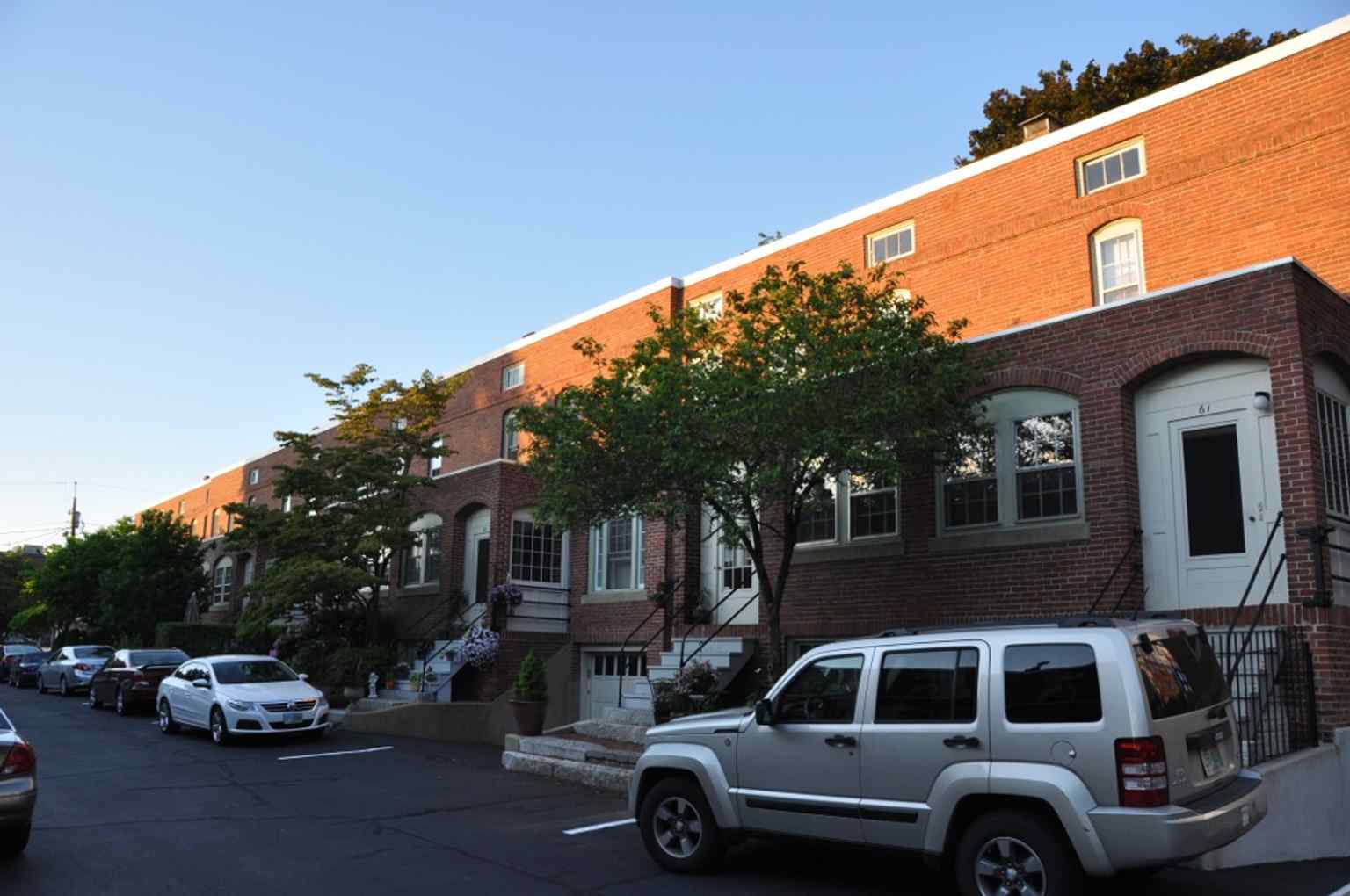
Rear side of a District C rowhouse, where the two-story back projection and porch helped make each unit a full family home.Photo: User:Magicpiano, Wikimedia Commons, CC BY-SA 4.0. Cropped & resized. Six rowhouses survive now; three others disappeared and an apartment complex took their place. Progress does enjoy revision. The district joined the National Register of Historic Places on the twelfth of November, nineteen eighty-two, after these buildings had already begun a new life as condominiums in the nineteen seventies.
These brick rows preserve the everyday architecture of Manchester’s working city. When you’re ready, head on toward St. Mary’s Bank.
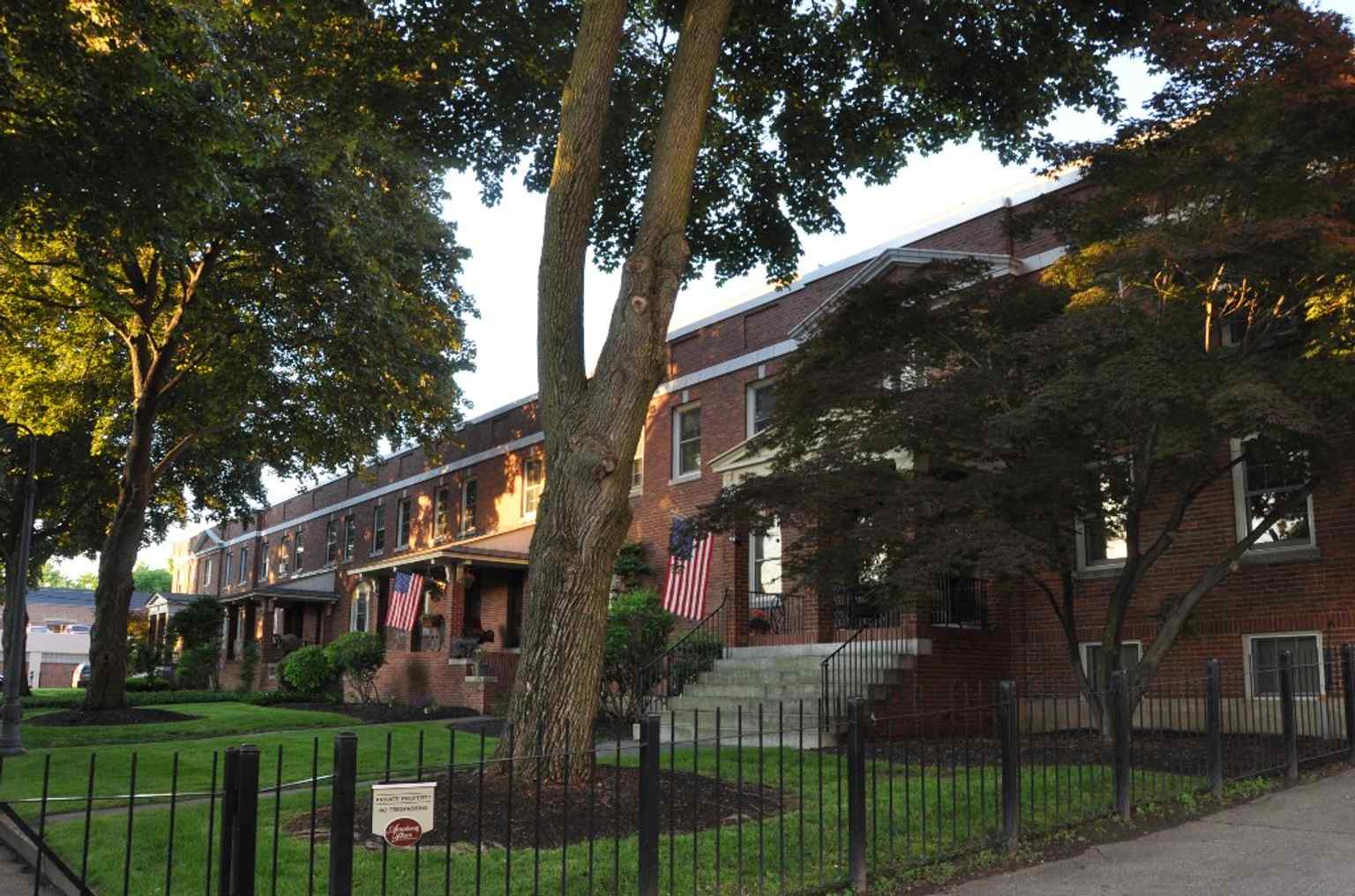
Front view of a District C rowhouse, showing the brick worker housing built for Amoskeag employees and later converted to condominiums.Photo: User:Magicpiano, Wikimedia Commons, CC BY-SA 4.0. Cropped & resized. 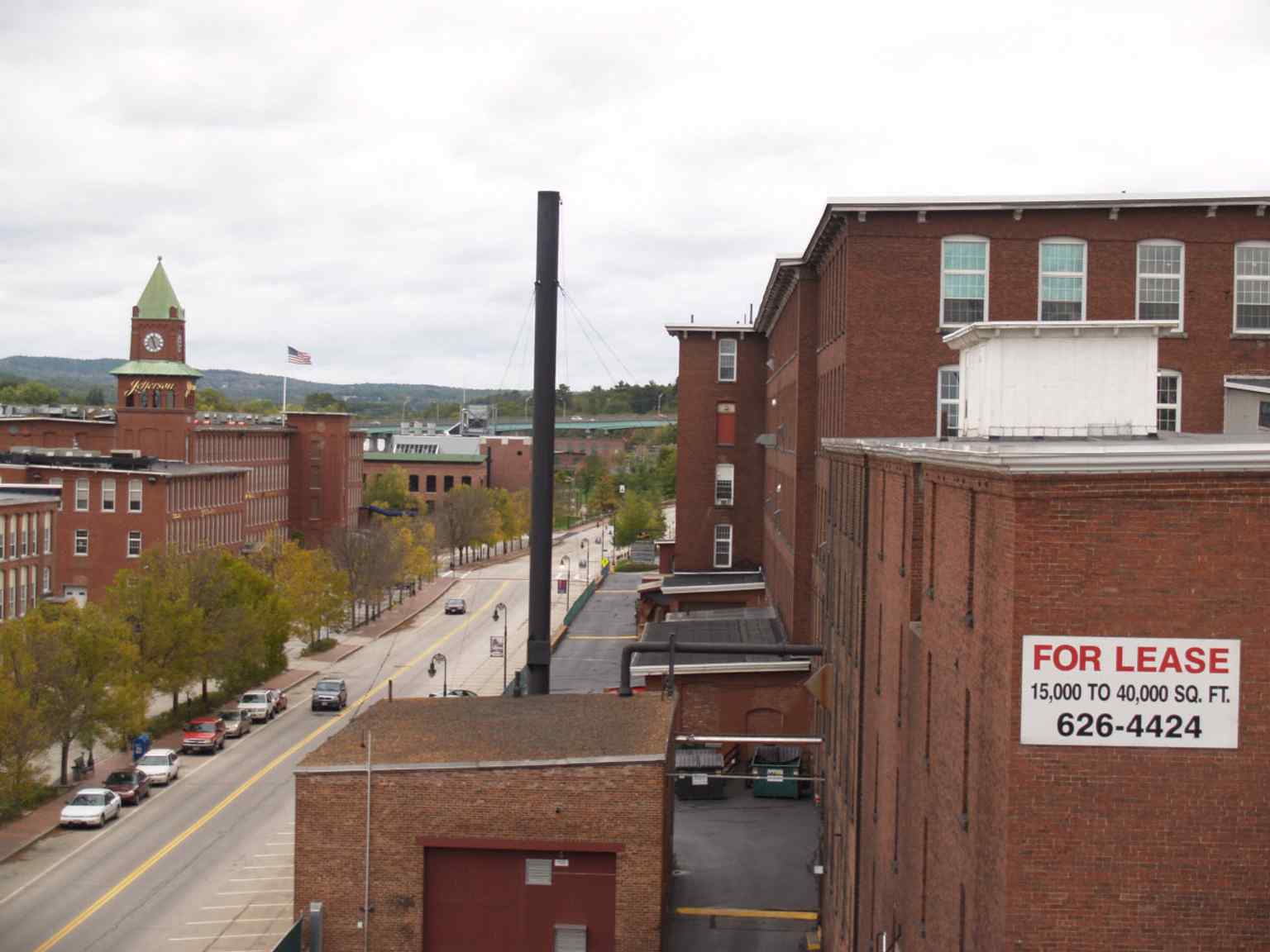
Looking north over the Amoskeag millyard near District C, the industrial setting that shaped this historic housing district for mill workers.Photo: Marcbela (Marc N. Belanger), Wikimedia Commons, Public domain. Cropped & resized. On your left is a pale clapboard, three-story house with a boxy roofline, stacked rectangular windows, and a historic plaque by the entrance. Modest, isn’t it? And yet this is…Read moreShow less
Open dedicated page →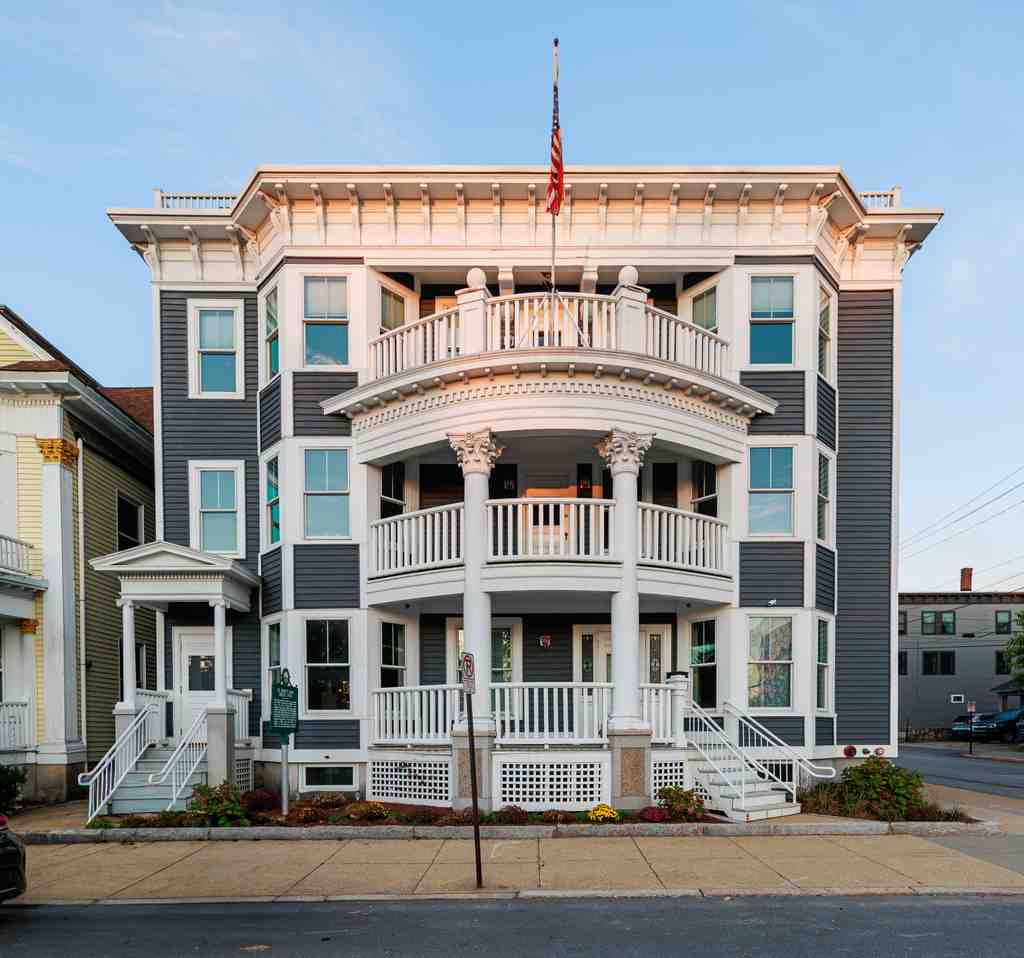
America's Credit Union MuseumPhoto: Kenneth C. Zirkel, Wikimedia Commons, CC BY-SA 4.0. Cropped & resized. On your left is a pale clapboard, three-story house with a boxy roofline, stacked rectangular windows, and a historic plaque by the entrance.
Modest, isn’t it? And yet this is where that movement took root. Back then, this was Joseph Boivin’s three-family home, now preserved as the museum’s original setting. Today, the museum focuses less on the paperwork and more on the people and the place that started it all. If you glance at the old house photo in the app, you can see how little of its plainspoken character it has lost. In nineteen ninety-six, the building entered the National Register of Historic Places. Inside, the first two floors trace credit union history from nineteen oh eight through the nineteen thirty-four Federal Credit Union Act; the third floor now serves as a meeting room for eighty-five. If you want to step inside, it’s usually open Monday through Thursday from nine to three.
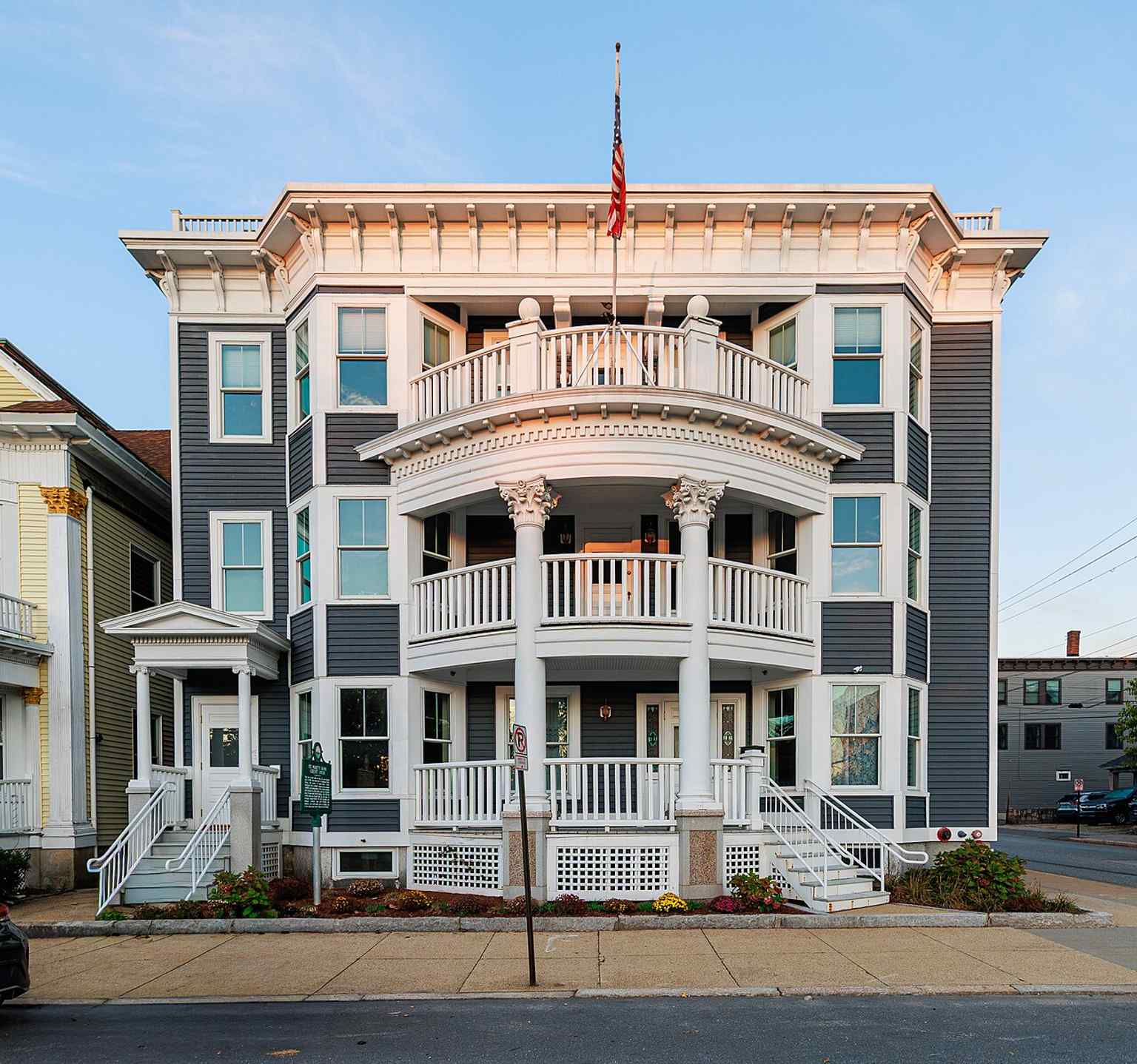
A clear view of the former three-family house turned museum, now preserving the story of credit unions in America.Photo: Kenneth C. Zirkel, Wikimedia Commons, CC BY-SA 4.0. Cropped & resized. A quiet house, then... but a loud idea.
When you’re ready, continue toward Ste. Marie Church.
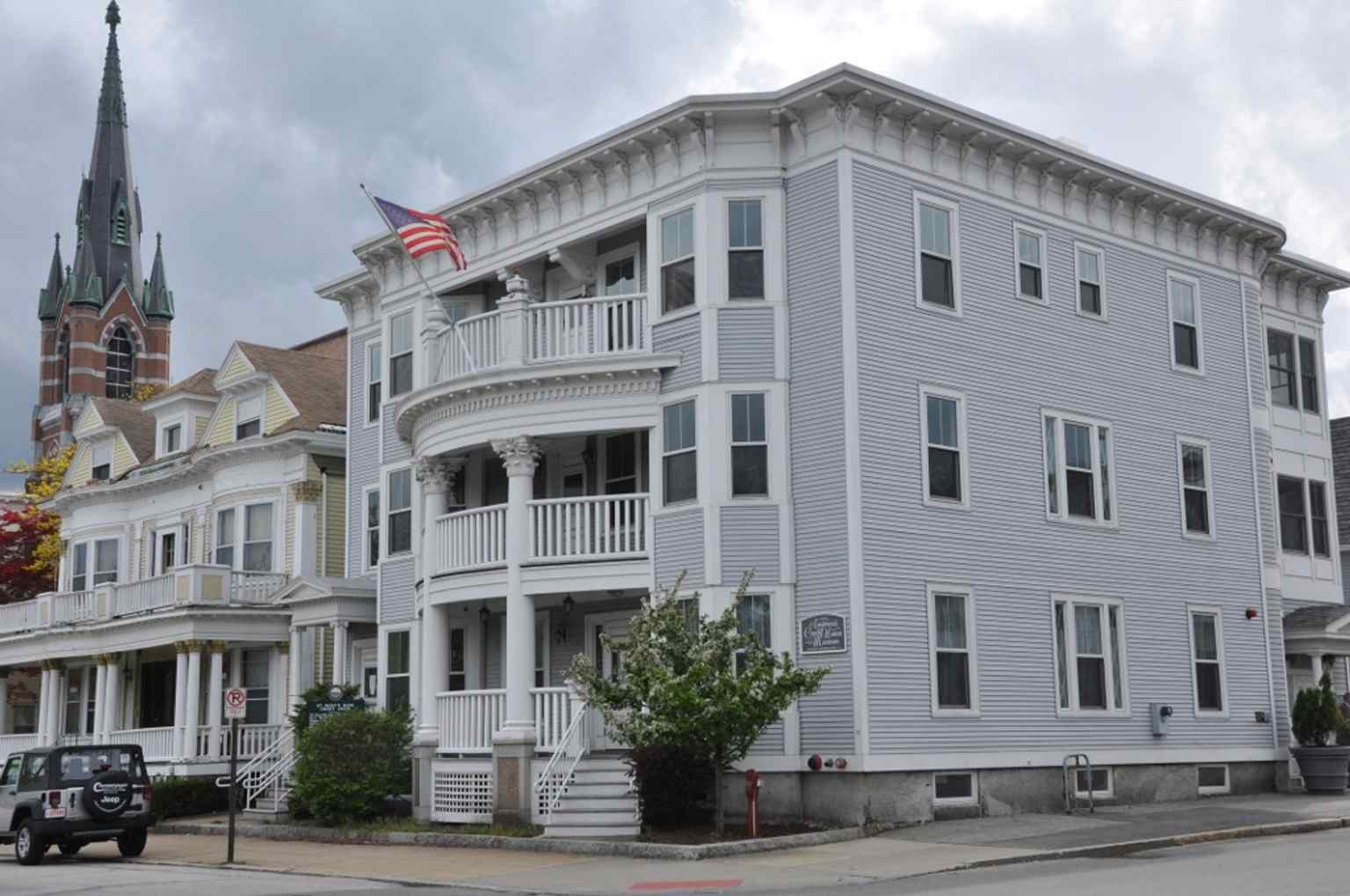
The museum building on Notre Dame Avenue, where the first U.S. credit union began in 1908.Photo: User:Magicpiano, Wikimedia Commons, CC BY-SA 4.0. Cropped & resized. 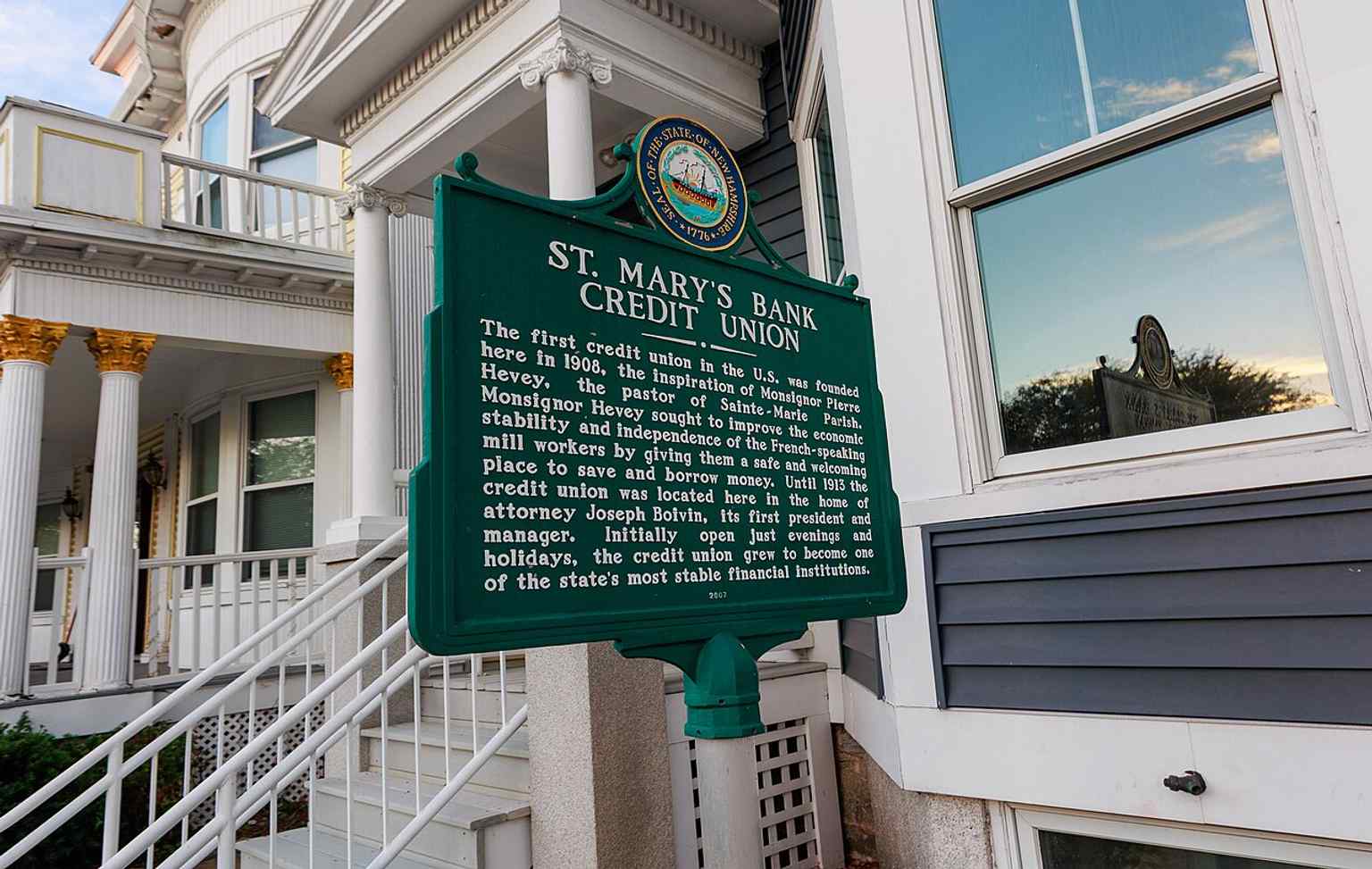
A historic plaque marking America's Credit Union Museum and its National Register-listed origin as the old St. Mary’s credit union site.Photo: Kenneth C. Zirkel, Wikimedia Commons, CC BY-SA 4.0. Cropped & resized. Look for the large masonry church with steep Gothic lines, pointed-arch windows, and a tall tower that crowns the hill on your right. Ste. Marie rose here to serve…Read moreShow less
Open dedicated page →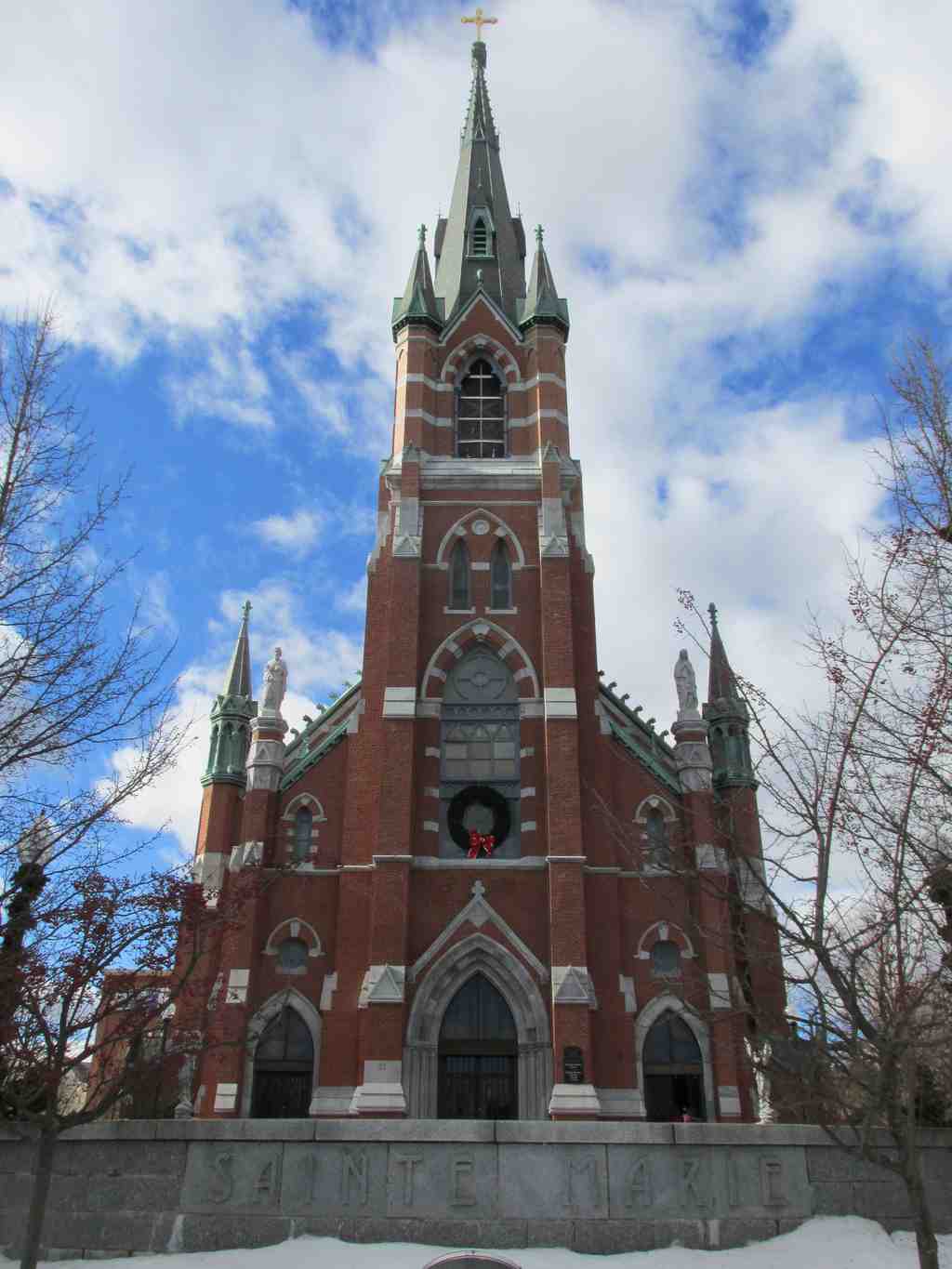
Ste. Marie ChurchPhoto: John Phelan, Wikimedia Commons, CC BY-SA 3.0. Cropped & resized. Look for the large masonry church with steep Gothic lines, pointed-arch windows, and a tall tower that crowns the hill on your right.
Ste. Marie rose here to serve French-Canadian Catholic immigrants, and it did more than hold Mass... it helped anchor a whole community. Gothic Revival means architects borrowed the drama of medieval churches: height, pointed openings, and that strong upward pull, as if stone itself were trying to pray. From this plateau in Rimmon Heights, the church dominates the West Side skyline and helps define the Notre Dame neighborhood, with Lafayette Park set across the street like a front yard.
There’s a practical twist here too. In nineteen oh eight, Monsignor Pierre Hevey, while leading this parish, organized St. Mary’s Bank down at the foot of the hill. Not every church founds a financial institution, but this one clearly believed in saving souls and savings accounts. In twenty nineteen, the church campus joined the National Register of Historic Places.
Ste. Marie still feels like a landmark with a heartbeat.
When you’re ready, continue on toward Catholic Medical Center.
On your right, Catholic Medical Center appears as a broad light-brick and concrete hospital complex with long horizontal wings, a taller central tower, and a prominent blue…Read moreShow less
Open dedicated page →
Catholic Medical CenterPhoto: Kenneth C. Zirkel, Wikimedia Commons, CC BY-SA 4.0. Cropped & resized. On your right, Catholic Medical Center appears as a broad light-brick and concrete hospital complex with long horizontal wings, a taller central tower, and a prominent blue Catholic Medical Center sign.
Hospitals rarely get described as storytellers, but this one has been collecting Manchester’s dramas for well over a century... births, recoveries, heartbreak, and the kind of waiting that makes every clock feel rude. Catholic Medical Center, or C-M-C, is now a major not-for-profit acute care hospital - meaning it handles serious, immediate medical needs, not just routine visits - with three hundred thirty licensed beds, two hundred fifty-eight of them staffed, more than twenty-six subspecialties, diagnostic imaging, and a thirty-bed emergency department that runs around the clock.
Its roots go back to a woman with a very clear sense of purpose. Mother Mary Gonzaga, one of the original Sisters of Mercy who came from Dublin in eighteen fifty-eight, imagined a large Catholic hospital for Manchester. She opened Sacred Heart Hospital downtown in eighteen ninety-two. Then, two years later, she found an ally in Monsignor Peter Hevey of St. Mary’s Parish and the Sisters of Charity of St. Hyacinthe. Together, they opened Notre Dame Hospital here on the West Side in eighteen ninety-four, on this very site.
If you glance at the image in the app, you can see the present-day scale of that vision... a campus rather than a single modest hospital building.
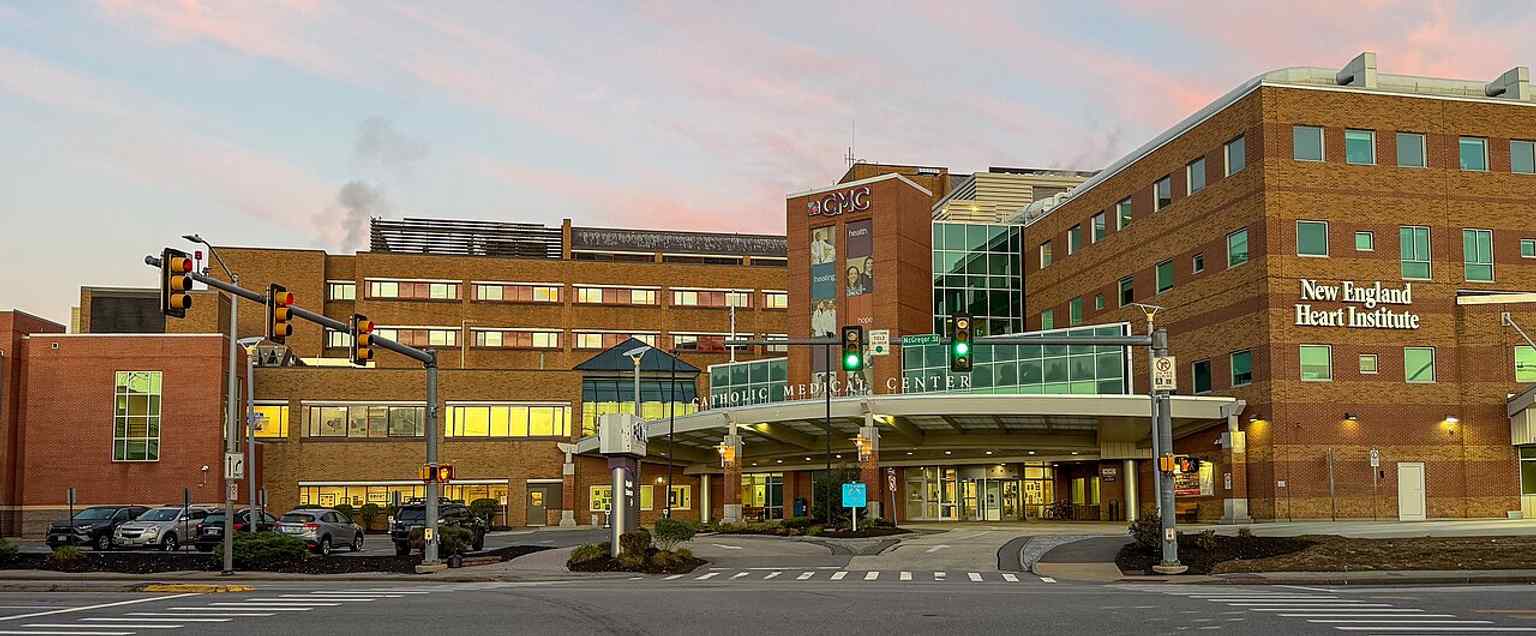
A wide view of Catholic Medical Center in Manchester, the West Side hospital that grew from the old Notre Dame Hospital site and now serves as a major acute-care center.Photo: Kenneth C. Zirkel, Wikimedia Commons, CC BY-SA 4.0. Cropped & resized. For decades, Sacred Heart and Notre Dame worked separately. In nineteen seventy-four, they merged to form Catholic Medical Center, and in nineteen seventy-eight leaders dedicated a new building here to combine staff, services, and resources. Since then, C-M-C has grown into one of New Hampshire’s biggest medical centers, especially in heart care. Its New England Heart and Vascular Institute has performed more than seventy thousand invasive cardiac procedures - procedures that go inside the body with tools or catheters rather than staying on the surface - and it averages about four hundred open-heart surgeries each year. U-S News Health ranks C-M-C second in New Hampshire and first in southern New Hampshire, and in twenty twenty-three it rated the hospital high performing in seven procedures and conditions.
There’s tenderness here too. The Mom’s Place maternity center opened in May of two thousand two, and about one thousand two hundred mothers give birth here each year.
But this institution also carries controversy. In twenty twenty-two, The Boston Globe’s Spotlight team reported allegations that hospital leaders concealed a cardiac surgeon’s malpractice history and suppressed internal dissent. Earlier that year, C-M-C agreed to pay three point eight million dollars to resolve federal allegations of an illegal kickback scheme involving cardiac referrals. Hospital officials denied wrongdoing. Which is a reminder that big institutions can heal, fail, and defend themselves... sometimes all at once.
In January of twenty twenty-five, leaders announced that C-M-C would be sold to Tennessee-based H-C-A Healthcare. So this building stands at an interesting threshold: part nineteenth-century mission, part modern medical machine, and still, stubbornly, a place where Manchester brings its most fragile hopes.


Frequently asked questions
How do I start the tour?
After purchase, download the AudaTours app and enter your redemption code. The tour will be ready to start immediately - just tap play and follow the GPS-guided route.
Do I need internet during the tour?
No! Download the tour before you start and enjoy it fully offline. Only the chat feature requires internet. We recommend downloading on WiFi to save mobile data.
Is this a guided group tour?
No - this is a self-guided audio tour. You explore independently at your own pace, with audio narration playing through your phone. No tour guide, no group, no schedule.
How long does the tour take?
Most tours take 60–90 minutes to complete, but you control the pace entirely. Pause, skip stops, or take breaks whenever you want.
What if I can't finish the tour today?
No problem! Tours have lifetime access. Pause and resume whenever you like - tomorrow, next week, or next year. Your progress is saved.
What languages are available?
All tours are available in 50+ languages. Select your preferred language when redeeming your code. Note: language cannot be changed after tour generation.
Where do I access the tour after purchase?
Download the free AudaTours app from the App Store or Google Play. Enter your redemption code (sent via email) and the tour will appear in your library, ready to download and start.
If you don't enjoy the tour, we'll refund your purchase. Contact us at [email protected]
Checkout securely with 






.jpg)


.jpg)


%2C%20Manchester%2C%20New%20Hampshire.jpg)