
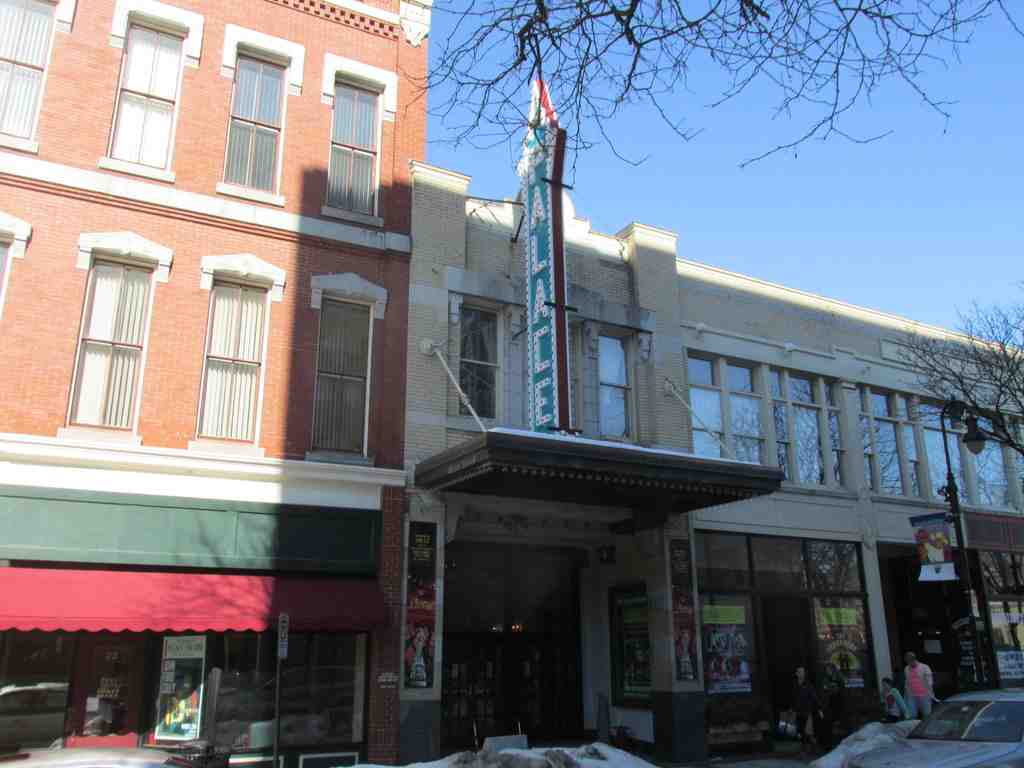
In front of you is a two-story brick-and-stone facade with a pressed-metal front, a row of storefront openings, and the Palace name marking the theater’s lobby at the western end.
The Palace began with ambition and very little interest in thinking small. In June of nineteen fourteen, a Greek immigrant named Victor Charas launched this theater with general contractor Henry Macropol and the architects Leon Lempert and Son. Charas modeled it on the Palace Theatre in New York City, and he moved fast; construction wrapped up in less than a year. For Manchester, that was a statement. This place advertised itself as the state’s only first-class theater that was both fireproof and air-conditioned... which sounds routine now, but the cooling system was gloriously improvised. Fans blew air across huge blocks of ice stored under the stage. Air-conditioning, before machinery got all full of itself.
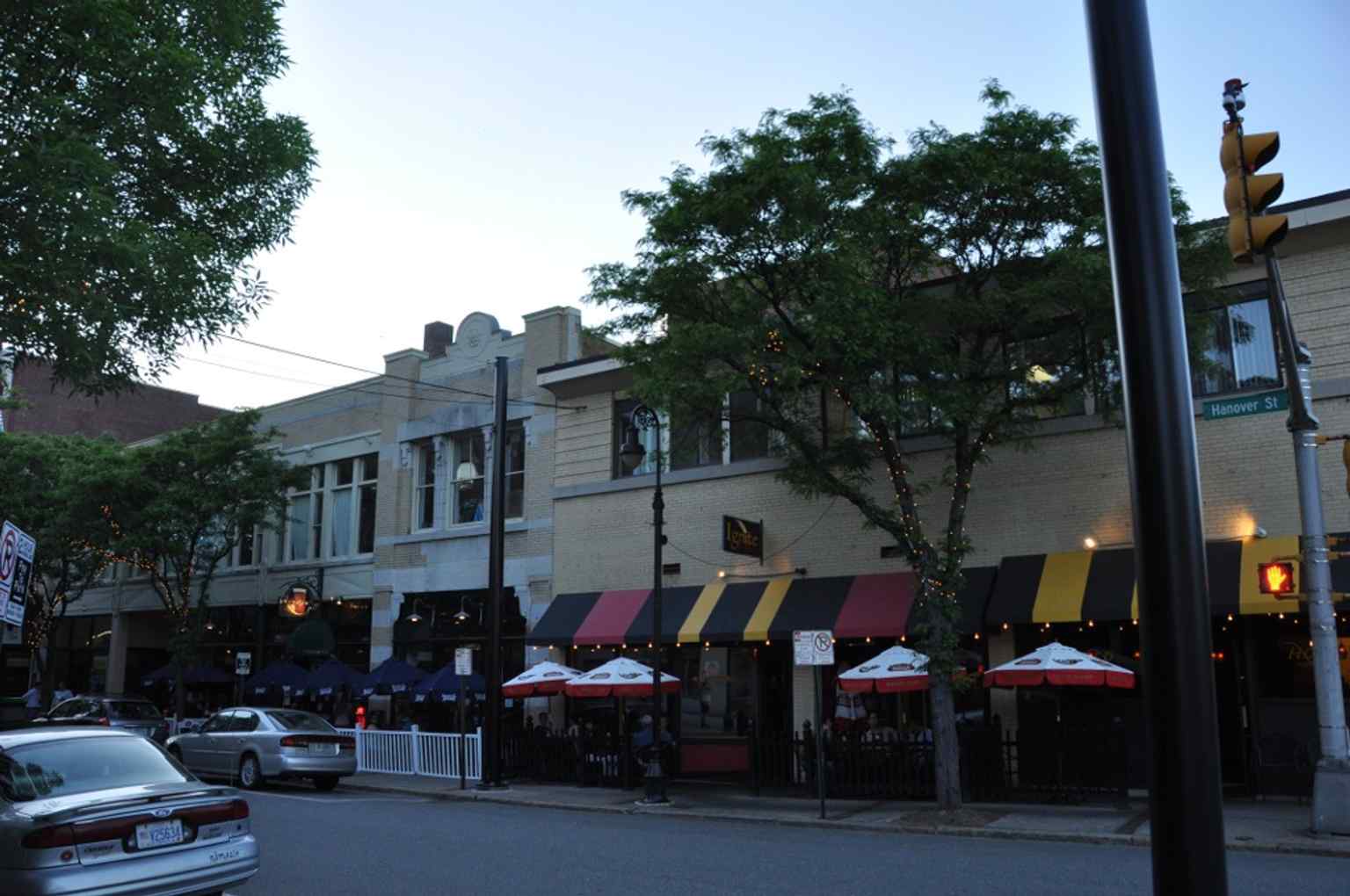
The Palace opened on the ninth of April, nineteen fifteen. Local newspapers called it the grandest social occasion of the century, and the musical comedy Modern Eve played to a full house. Along Hanover Street, the bright theater marquees earned downtown the nickname the Great White Way. If you want a look at that exterior character, check the image on your screen... it gives you a good sense of how this facade anchored the block.
Up through about nineteen thirty, the Palace hosted touring vaudeville companies, which means variety shows: comics, singers, novelty acts, magicians, all sharing one bill. Big names came through here, including Jimmy Durante, Bob Hope, Harry Houdini, the Marx Brothers, and Red Skelton. At one point, stock companies such as the Palace Players staged as many as a dozen performances a week. That is not so much a schedule as a controlled theatrical stampede.
Then audiences drifted toward silent films and talkies, movies with synchronized sound, and the Palace adapted. From nineteen thirty into the early nineteen sixties, it worked mainly as a movie house. Later, New Hampshire College, now Southern New Hampshire University, used it as classroom space. After the college moved out, the building sat vacant, the seats disappeared, stage equipment was abandoned, and the theater became a warehouse... a dreary fate for a room built for applause.
Its rescue came in nineteen seventy-three, when Jon Ogden and Rebecca Gould joined Manchester lawyer John McLane and the Bean Foundation to save it from demolition. The foundation put up five hundred thousand dollars for renovation, roughly three and a half million today. The Palace reopened on the second of November, nineteen seventy-four, and workers were still installing the last seats half an hour before opening night. Theater people do enjoy a dramatic entrance. It survived a frozen sprinkler disaster in nineteen eighty and even a major Hanover Street fire in nineteen eighty-four, thanks to its original firewall.
So this theater has done the rare thing: it kept its nerve, and it kept its stage.
When you’re ready, continue on toward City Hall Plaza.





