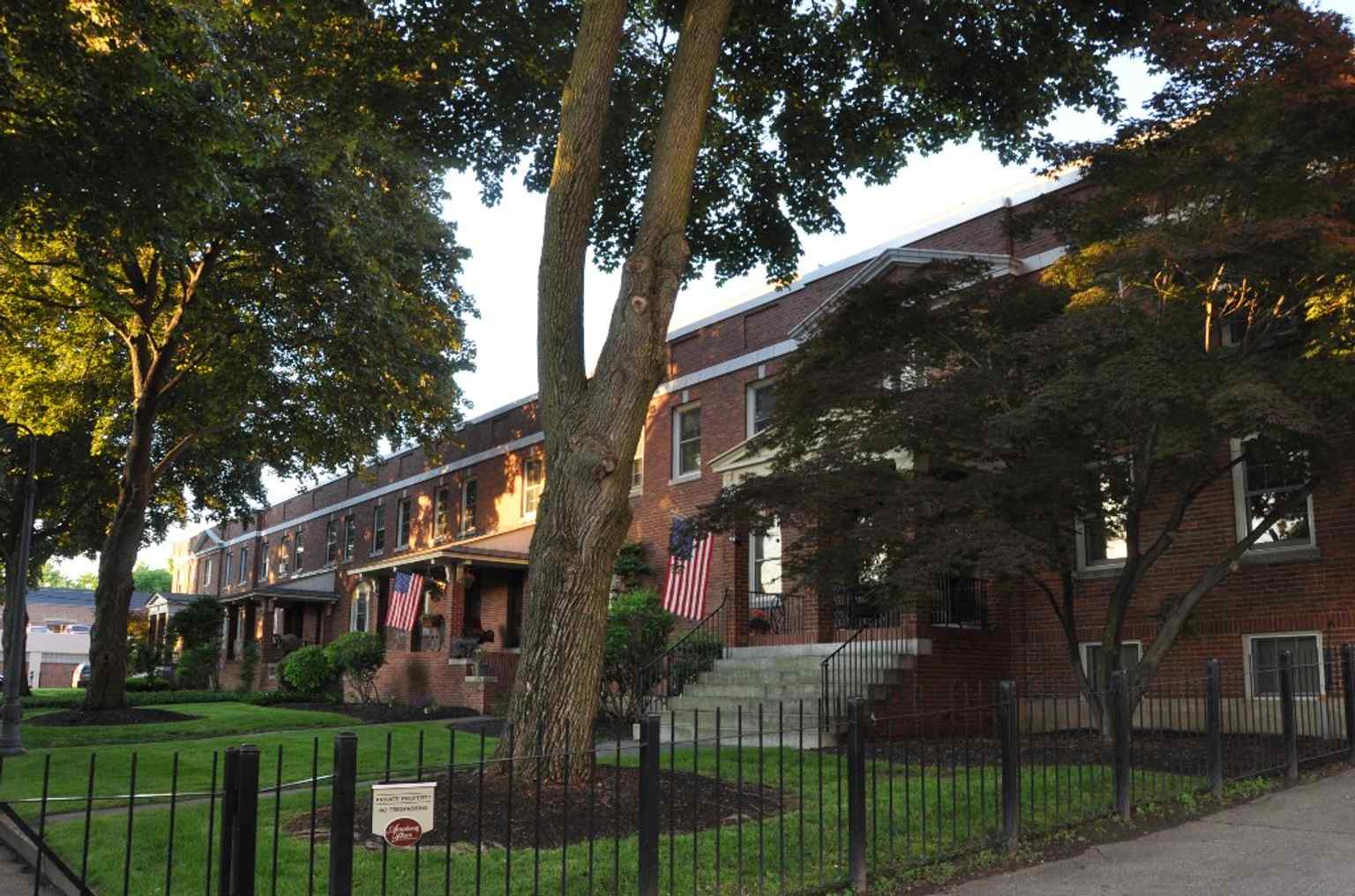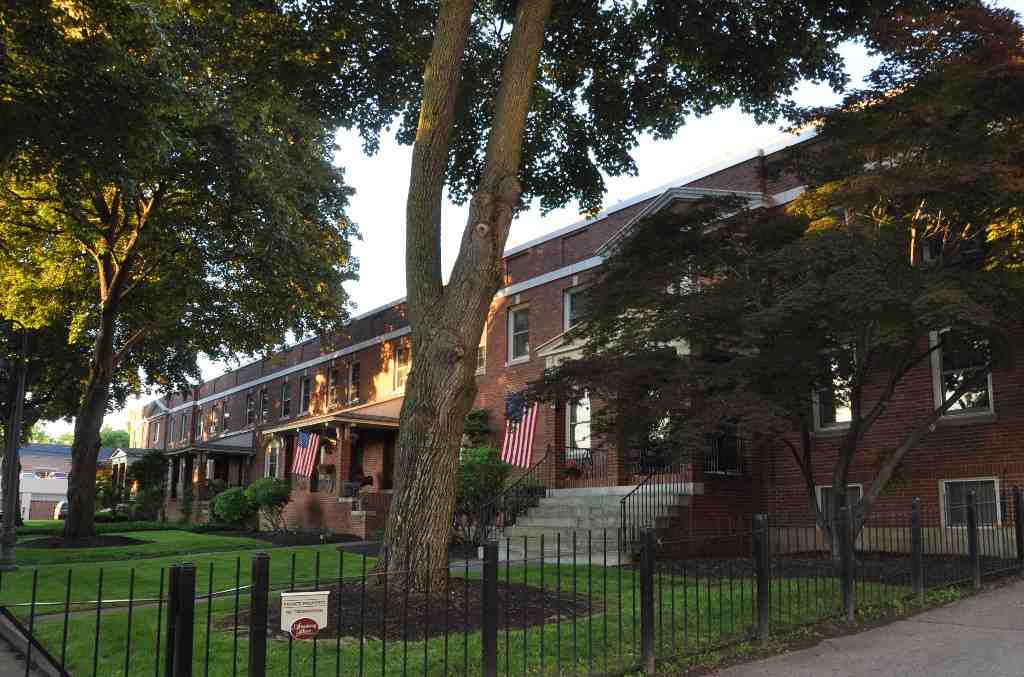
Look for a long brick rowhouse, two and a half stories tall, capped by a dormered hip roof and marked by paired doorways tucked under angular wooden hoods.
District C tells a very Manchester story... practical, orderly, and not especially interested in showing off. Across roughly five acres near the Amoskeag millyard, the Amoskeag Manufacturing Company laid out this worker housing district so mill employees and supervisors could live close to the machinery that set the city’s pace. Each rowhouse runs north to south and holds four units. Those paired entrances sit under Stick style hoods - little wooden canopies with sharp, decorative trim - and the dormers, the small windows poking out of the roof, steal a bit more light and space from the top floor.
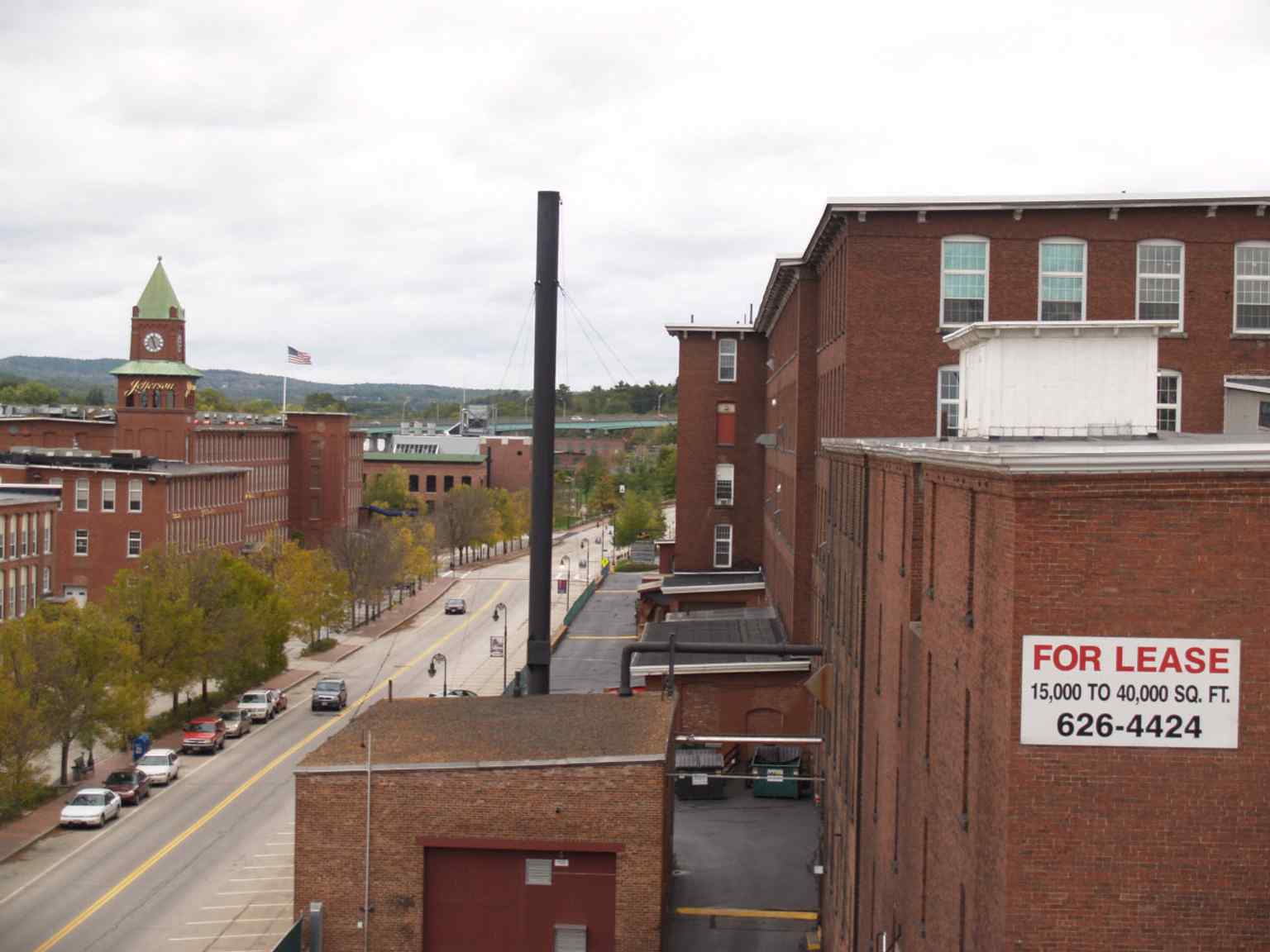
Amoskeag put some of these blocks up in eighteen eighty-one from plans by its civil engineer, George W. Stevens, then added more in nineteen sixteen for overseers, the supervisors who kept the mills running. That later group became the last housing the company ever added. If you glance at your screen, the rear view shows the two-story back projection and porch that helped turn each unit into a family home, not just a place to sleep near work. Another image pulls back to show how tightly this neighborhood fit against the industrial millyard.
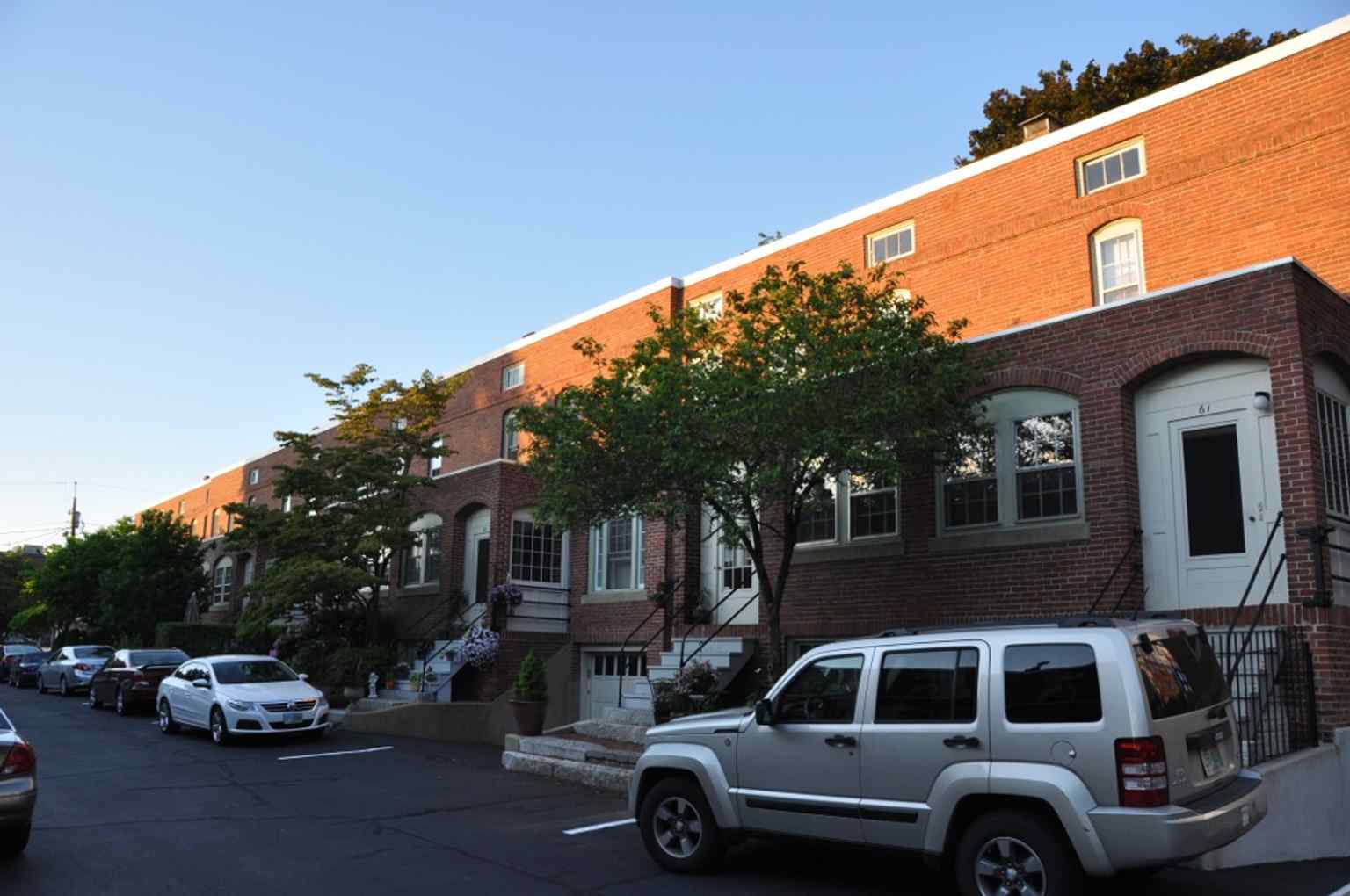
Six rowhouses survive now; three others disappeared and an apartment complex took their place. Progress does enjoy revision. The district joined the National Register of Historic Places on the twelfth of November, nineteen eighty-two, after these buildings had already begun a new life as condominiums in the nineteen seventies.
These brick rows preserve the everyday architecture of Manchester’s working city. When you’re ready, head on toward St. Mary’s Bank.