
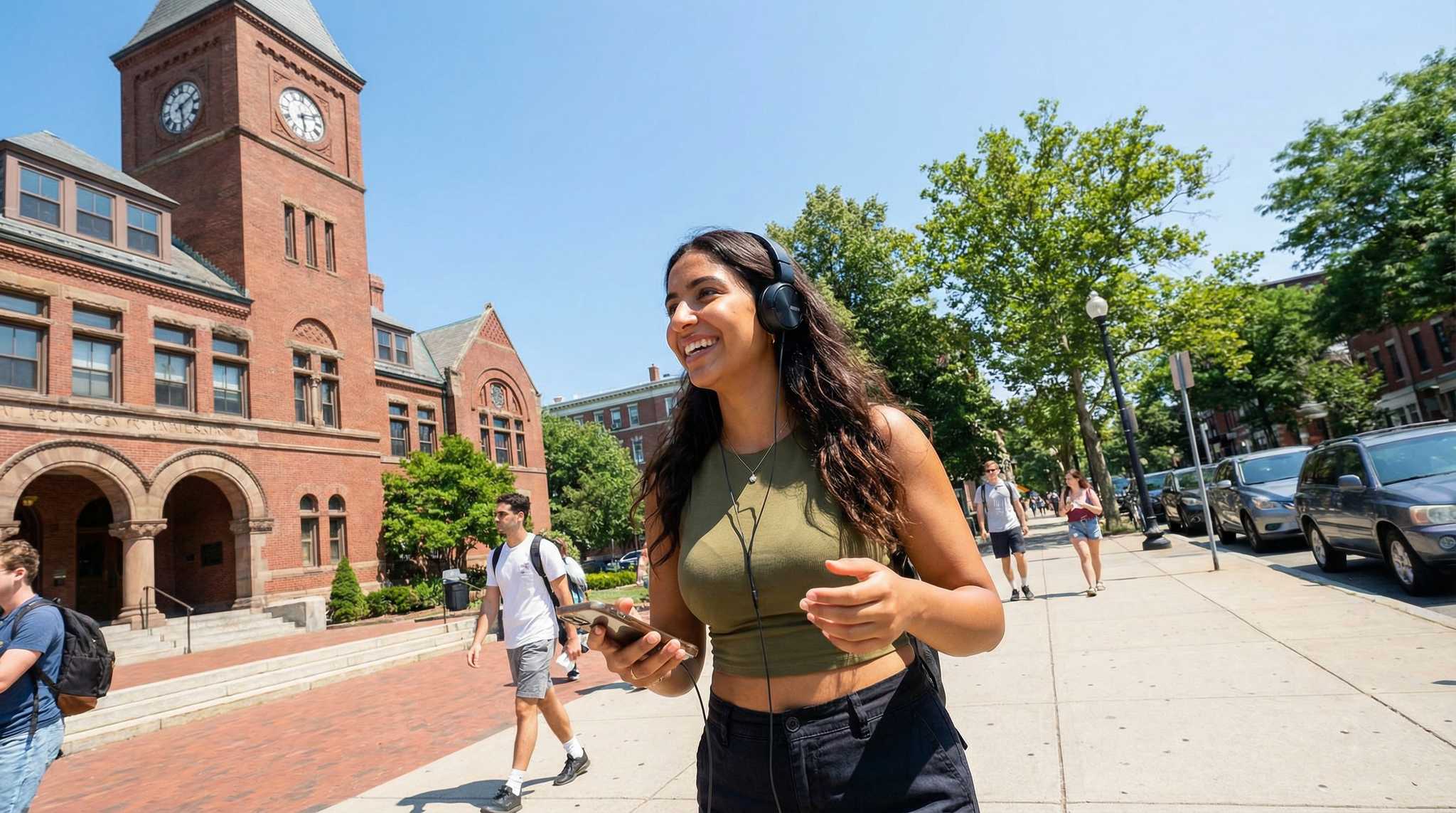
Cambridge Audio Tour: Ivy League Legends and City Stories
A secret society once ruled campus nights just steps from where revolutionaries whispered plans in the shadows of ancient brick. Cambridge holds treasures within its winding streets — layers of rebellion, rivalry, and intrigue resting beneath everyday scenes. Venture on this self-guided audio tour to uncover tales hidden behind ivy walls and bustling coffee shops. Track silent footsteps through storied halls and find out what truly shaped this legendary city beyond the classroom. Who risked everything on a snow-covered Harvard Square, forcing a clash that would echo across generations? What cryptic initiation rites have kept the Porcellian Club shrouded in myth for centuries? And which scandal left Leverett House in turmoil, dividing students late into the night? Move from secretive courtyards to lively meeting spots as the real Cambridge comes alive. Each stop delivers new perspective and electric drama. Begin now and unlock the city's oldest secrets — step beyond the surface and enter the legend.
Tour preview
About this tour
- scheduleDuration 90–110 minsGo at your own pace
- straighten3.9 km walking routeFollow the guided path
- location_onLocationSomerville, United States
- wifi_offWorks offlineDownload once, use anywhere
- all_inclusiveLifetime accessReplay anytime, forever
- location_onStarts at American Repertory Theater
Stops on this tour
lock_open 3 free previews · 11 unlock with purchase
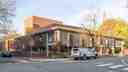
To spot the American Repertory Theater, look for a modern, low-rise building with large glass windows, a flat overhanging roof, and a distinctive pattern of hanging brick screens;…Read moreShow less
To spot the American Repertory Theater, look for a modern, low-rise building with large glass windows, a flat overhanging roof, and a distinctive pattern of hanging brick screens; it sits right at the corner under the banner that shouts “Experience A.R.T.” Welcome to the American Repertory Theater, or A.R.T. if you want to sound like an insider. Right now, you’re standing at the crossroads of Cambridge culture-where brick meets glass, and where wild imagination has been taking center stage since disco was king. Picture this: it’s 1979, Harvard’s campus is buzzing, and Robert Brustein, a theater visionary, decides he’s going to shake up the drama scene for good. This place isn’t just any old playhouse. No, it’s a launchpad for playwrights, actors, and directors to dream big, break rules, and sometimes even drum on a few tables-literally. Imagine yourself stepping back to the early days: Harvard students and professional actors, side by side, breathing life into the classics while also daring to create something new. The scent of sawdust, the sharp snap of stage lights, and the nervous energy-the kind you can almost taste when opening night is a gamble. Here’s where the ghost of Hamlet shares the hallway with a robot from Death and the Powers: The Robots’ Opera. That’s right-a robot! The A.R.T. has always been on the edge, premiering over 250 new plays and making sure at least half the time, nobody in the audience knows exactly what’s about to happen. Look around: this glassy, modern Loeb Drama Center houses not just the A.R.T., but also students of the Harvard-Radcliffe Dramatic Club. Over the years, major American and international theater artists have brushed elbows in these very wings. They’ve staged musicals, operas, classics, and even wild reimaginings-if the theater were a kitchen, this would be the chef’s counter where all the unpredictably spicy dishes get served up first. The story doesn’t stop at bold productions. In 1987, the A.R.T. founded the Institute for Advanced Theater Training-a five-semester, high-octane MFA program. Here, young actors still head off to study at the Moscow Art Theatre School. Imagine traveling from wintery Cambridge straight to a Russian snowstorm-all in pursuit of the arts. Imagine the drama students with frozen eyelashes, learning Stanislavski by day and sampling borscht by night. Harvard students even take undergraduate classes from working professionals, meaning you could be taking Dramatic Literature from someone who was just on Broadway. A.R.T. has always taken risks-sometimes they pay off in a big way. The theater’s trophy shelf is running out of space: a Pulitzer Prize in 1982, a Tony Award in ’86, the Jujamcyn Award in ’85, and 18 Tonys in total! And just to keep things spicy, Time Magazine even called them one of the top three theaters in the U.S. in 2003. Robert Brustein handed over the director’s baton to Robert Woodruff in 2002, who brought a taste of the Bay Area’s bold playwrights. Then, in 2008, enter Diane Paulus, a Harvard grad herself, with a magical bag of ideas. Her mission? She wanted the audience to feel as much part of the story as the actors-suddenly, the fourth wall wasn’t just broken, it was thrown out entirely! Shows like Sleep No More and The Donkey Show-imagine Shakespearean disco-turned theatergoers into dancers, detectives, and even unwitting stagehands. If you see someone in bell-bottoms wandering out, it might just be opening night for a new immersive hit. Push your ear closer to the brick and glass: you might hear echoes of famous names-Alanis Morissette’s Jagged Little Pill started here before heading to Broadway, as did the Tony-winning Once, Pippin, and All the Way. And the creators behind the curtain? Legendary directors, writers, poets, and visionaries-from Zadie Smith to Dave Malloy. Maybe you’ll meet a future star today that you’ll recognize on your next Netflix binge. This is more than just a theater. It’s living, evolving proof that the performing arts can connect campus and city, youth and sage, tradition and innovation. So, next time you pass this corner, look for the laughter on the sidewalk, the hush before curtains rise, and listen for the applause echoing around the Loeb-it’s always showtime at the A.R.T. Fascinated by the productions, notable collaborators or the educational institution? Let's chat about it
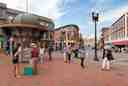
Open dedicated page →Look just ahead for the large round information kiosk with its domed top and the lively brick plaza around it-this is the heart of Harvard Square, where several roads meet and the…Read moreShow less
Look just ahead for the large round information kiosk with its domed top and the lively brick plaza around it-this is the heart of Harvard Square, where several roads meet and the action never stops! Alright, take a deep breath and feel the energy of where you’re standing-Harvard Square, a spot so iconic in Cambridge that even lost tourists feel right at home here. Picture the crossroads of Massachusetts Avenue, Brattle Street, and JFK Street merging in a sea of footsteps, bike bells, honking car horns, and the hum of voices from just about every language on the planet. You’re at the center of a triangular plaza, surrounded by the kind of shops, cafes, and bookstores that make students and locals drift in like moths to a warm, academic flame. And if you squint a bit, you might just spot a Harvard undergrad, three famous professors, and at least five street performers all vying for attention! In fact, the square’s been serving as the heartbeat of the community since before any of today’s businesses even existed-imagine colonial poet Anne Bradstreet strolling across the same bricks back in the early days, jotting lines as horse carts clattered where buses now roll. Speaking of which, did you know that underneath your feet there’s a whole world of subway tunnels and bus routes? The Harvard MBTA Red Line station is a crossroads for travelers, students, and local legends-and back in the day, it was the very end of the line for the Red Line trains! Buses glide through their own special tunnel here, which saves people above a lot of honking and stop-and-go. That quirky, domed kiosk at the center of the square-it’s more than just an information booth. Up until 2020 it was home to the Out of Town News stand, the kind of spot where you could get newspapers from Paris, Peru, or Peoria, all before your morning coffee. Just outside is “The Pit,” a legendary sunken performance nook that’s launched local musicians and living statues into storybooks. Tracy Chapman strummed her guitar as a student here, and Amanda Palmer, dressed as a statue, once got more tips for standing still than I ever did for bad jokes! And watch your step-there’s a tiny, bronze puppet statue called “Doo Doo” perched nearby. It’s there for local street performers, especially Igor Fokin, who once wowed the crowds after moving here from Russia. It’s a subtle reminder that this square doesn’t just feed brains, but souls, too. But oh, how the square has changed! Once upon a time, Harvard Square had grocery stores like Sages, a Woolworth’s five-and-dime, and wild little diners like The Tasty and Leo’s Place, which stayed open for 64 years and survived more Harvard exams than any one person. Today, chain stores are creeping in, but if you sniff around the block, you’ll find stubborn, old-school gems: Leavitt & Peirce for tobacco, Laflamme Barber Shop, Mr. Bartley’s Burger Cottage, and Cardullo’s Gourmet Shoppe where you can buy snacks from nearly every country (even if you can’t pronounce them). This place pops up in movies too! In Goodbye, Columbus and Love Story, lovesick students moon around these corners, and if you ever play Fallout 4, you’ll recognize the visitor’s kiosk-even video games know Harvard Square is unforgettable. And if you’re wondering what’s up with “Car Talk Plaza,” that’s a joke made famous by the Magliozzi brothers, who broadcast their hilarious radio show Car Talk from a third-floor window right here. Their pretend company name, “Dewey Cheetham & Howe,” still stares out from the very window! And if you start to get overwhelmed by all the history and hubbub, stroll a couple blocks north to Cambridge Common for a quiet break among baseball diamonds, playground swings, and Revolutionary War monuments. Harvard Square is more than a junction-it’s the place where past, present, and future meet, shake hands, and then break into spontaneous applause for the next street performance. So take a look around: these bricks have held up centuries of dreams, debates, coffee spills, and dramatic exits. Who knows? Maybe in another hundred years, someone will be telling a story about you, right here at the intersection of life, learning, and a really good cup of coffee.
Open dedicated page →
Show 11 more stopsShow fewer stopsexpand_moreexpand_less
Look straight ahead for an enormous building with grand, towering stone columns across its front-like something out of ancient Rome-crowned with elegant, classical details and…Read moreShow less
Look straight ahead for an enormous building with grand, towering stone columns across its front-like something out of ancient Rome-crowned with elegant, classical details and standing at the top of a wide staircase, framed by leafy trees. Now, take a moment and picture yourself back in the early 1900s at Harvard. Students, books in hand, hustle across the Yard while the centerpiece of Harvard’s intellectual universe rises before you: the mighty Widener Library. Its grand façade, stretching nearly the length of a city block, wasn’t always there. In fact, before Widener, Harvard’s library life was… well, let’s say a little cramped and chaotic. Gore Hall, with its leaky ceilings, sweltering summers, and stacks so overcrowded that books sometimes had to nap on the floor, did not exactly scream "center of world-class scholarship." The staff got the occasional electric shock just turning on the lights-now that’s what I call an electrifying read! But a single, tragic event changed everything. Harry Elkins Widener, a book lover and Harvard grad from 1907, tragically lost his life when the Titanic sank in 1912. His mother, Eleanor, heartbroken but incredibly determined, vowed to honor her son’s love of books on a scale that would be impossible to forget. As you stand here, you’re looking at her gift to Harvard-a building described as a “perpetual memorial.” But the outside was all Mrs. Widener’s choice, right down to every last classical detail. She wanted something impressive enough to house not just Harry’s rare book collection, but the minds and ambitions of the whole university. Imagine that dedication day in 1915-the place buzzing after Commencement, the doors finally swinging open to reveal, not just any library, but a cathedral of knowledge: rows and rows and miles-yes, 57 miles!-of book-filled shelves, enough for 3.5 million volumes from all continents and written in over 100 languages. There’s a rumor that students venturing into the labyrinth of stacks were advised to bring along a compass, a sandwich, and a whistle, just in case they got lost. I’m not saying there are Minotaurs in there, but if you hear a distant moo, let me know! Inside, the centerpiece is the Widener Memorial Rooms. Step inside, and you’ll see the treasures Harry collected-Shakespeare’s First Folio, original Dickens manuscripts, and even one of the world’s precious few perfect copies of the Gutenberg Bible. That Bible, by the way, once sparked a crime straight out of a Hollywood movie. In 1969, a bungling burglar tried to steal the Gutenberg, only to get stuck when its 70 pounds proved a bit much. He wound up falling so hard he needed rescuing. Turns out some stories really do have a heavy ending. Harvard’s library system grew at lightning speed after Widener opened-collecting books faster than most people can read emails, and quickly outgrowing the space. They had to add tunnels and even more libraries, so today, this place connects like some sort of underground book subway. Yet, despite all this bigness, Widener keeps one quirky Harvard tradition alive: unlike most “megalibraries,” you can still wander the stacks yourself. Just don’t blame me if you lose your way and emerge years later with a beard! Of course, being Harvard, there are legends and mysteries swirling through these halls. Despite the famous myth, Eleanor did not require all Harvard men to learn to swim to graduate-though after the Titanic, you can see how the story might have started. And another old student legend claims Harry Widener’s mom donated a special fund to guarantee ice cream forever in Harvard dining halls-sadly for sweet-toothed scholars, that one’s as fictional as the Cthulhu lurking in Lovecraft’s Widener stacks. Despite occasional scandals and heartbreaks-a notorious book thief here, a series of vandalized volumes there-the library endures as the beating heart of Harvard’s academic quest. Its vaulted marble rooms echo with footsteps and with history, its smell a blend of ancient leather and eager curiosity. If the books could speak, oh, what tales they’d tell! And if you’re lucky, you might catch a glimpse, through the long marble vista, of young Harry’s portrait, keeping watch over his dream-a library big enough to never run out of stories. So, ready to dive into the next chapter of our adventure? Just be sure to mark your spot-sometimes, even I lose my page in here! Ready to delve deeper into the background, conception and gift, building or the collections and stacks? Join me in the chat section for an enriching discussion.
Open dedicated page →To spot the Harvard Art Museums, just look for the grand brick building with elegant white-trimmed windows and a stately entrance up a set of wide steps-right where that leafy…Read moreShow less
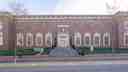
To spot the Harvard Art Museums, just look for the grand brick building with elegant white-trimmed windows and a stately entrance up a set of wide steps-right where that leafy tree towers over the lawn, you'll see the words “Fogg Museum of Art” etched above the main door. Get ready to dive into a world where time, talent, and a big dose of academic ambition all merge under one historic roof! Standing here, you’re not just outside one museum-but three: the Fogg, Busch-Reisinger, and Sackler Museums, all cozied up together by Harvard. If these bricks could talk, they’d probably drop names like Cézanne, Van Gogh, and even the occasional Picasso-imagine the museum’s echoing hallways whispering with dramatic tales from art history. It all began with the Fogg Museum in 1895, nestled originally in an Italian Renaissance-style building that was more classroom than gallery. Students back in the day learned with magic lanterns, lantern slides, and a dream to one day curate a masterpiece or two. That building got a makeover in 1925, traded for the handsome Georgian Revival structure you see now. Every brick and every flourish on the doorway radiates old-school Harvard pride-quite literally, as the architects wanted it to stand out as a temple of knowledge. The Fogg became famous for its showstopping collection: sweeping from medieval Italian paintings-ever heard of Simone Martini or the Master of Offida?-to Dutch Masters like Rembrandt, and American legends including Winslow Homer and John Singer Sargent. Some of the world’s most prized paintings and sculptures ended up here, from wild Van Gogh brushstrokes to dreamy Impressionist scenes. You’ll even spot the Grenville Winthrop Collection, over 4,000 works strong, and the Maurice Wertheim Collection packed with dazzling Impressionist and Post-Impressionist treasures. But the Harvard Art Museums were never content with just one shining star. Enter the Busch-Reisinger, founded in 1903 and once known as the Germanic Museum. Walking its halls is like stepping into Austria, Germany, and Switzerland, with everything from medieval stone sculptures to modern Bauhaus wonders. And yes, Harvard actually owns one of the world’s best collections of Bauhaus pieces! These galleries once rang with speeches from great minds, and you might catch a faint, ghostly echo of William James at its dedication-or just the low hum of students discussing German Expressionism. The Busch-Reisinger was the first North American museum dedicated only to the art of German-speaking countries, so it fills a unique place on the continent. Then there’s the Arthur M. Sackler Museum, opening its doors in 1985. Its facade on Broadway looked modern and daring-a British architect’s answer to an “architectural zoo.” Inside were treasures from Asia and the ancient Mediterranean world: Chinese jades, Japanese prints, Greek and Roman relics. Giant bronze pillars still out front were supposed to support a sky bridge between buildings-a sort of Indiana Jones rope bridge for art lovers-but local opposition turned it into, well, an unused conversation starter. All these threads finally wove together in 2014 with a massive, top-to-bottom renovation led by architect Renzo Piano. He added a glass roof (cleverly hidden from the street), six levels of shining new galleries and labs, and so much space you could probably lose a library cart or two. Today, the museums house some 250,000 art objects, from ancient times to cutting-edge contemporary, from Asia to Africa to the Americas-covering nearly every corner of human imagination. In recent years, the museums launched the “ReFrame” initiative, transforming their exhibitions to spotlight new voices, dust off hidden masterpieces, and tell the untold stories of marginalized artists-because sometimes, the real treasure isn’t just the famous names, but the voices who’d been left in the shadows. So as you stand here, imagine the secrets and stories soaking into this brickwork. Generations of visitors-professors, students, art lovers, and the just-plain curious-have gazed at these masterpieces, pondering the same questions and marveling at the same colors that stunned audiences centuries ago. Maybe take a deep breath-you’re about to step into one of Harvard’s most inspiring crossroads of history and imagination. And remember: if you brush up against Cézanne, don’t worry. He probably won’t mind. Yearning to grasp further insights on the renovation and expansions, fogg museum or the busch-reisinger museum? Dive into the chat section below and ask away.
Open dedicated page →You’re looking for a large, modern stone building with rows of tall windows and a wide entrance topped by a sign reading “Cambridge Rindge and Latin School”-just ahead of you,…Read moreShow less
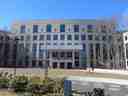
You’re looking for a large, modern stone building with rows of tall windows and a wide entrance topped by a sign reading “Cambridge Rindge and Latin School”-just ahead of you, through the trees and across a broad, open lawn. Alright, take a deep breath and really look at this place-because you’re standing on the front lawn of a school that’s more than just a collection of classrooms! Imagine, for a second, this area way back in the 1600s. Instead of a busy modern city, picture dusty roads, horse-drawn carts, and a handful of houses surrounded by wild fields. Here, the people of Cambridge-fresh from the big adventures of settling a new land-decided their kids needed a little more than tree-climbing and cow-chasing. In 1648, not long after Harvard’s very first students graduated, Cambridge set up Master Elijah Corlett’s “lattin schoole”-where kids, only boys at first, learned things like Latin, Greek, and how to behave around slightly grumpy professors. Fast forward through the centuries, and you can almost hear the thrum of chalk on slate boards and the chorus of students groaning at Latin verbs. Girls finally joined the fun in 1832, and-no surprise-probably made the school a lot more interesting. By the mid-1800s, education was almost the city’s favorite sport. Neighborhoods competed over who could build the best high school-one for Cambridgeport, one for Old Cambridge, and one for East Cambridge. Eventually, the walls came down (not literally, but close-imagine a tug-of-war with school books), and Cambridge High School opened to everyone, instantly filled to the rafters with eager students. Now, here’s where things start to get wild. By 1886, the school split into “Cambridge Latin School,” the fancy-pants spot for future college students, and “Cambridge English High School,” for just about everyone else. The Latin School moved into a church-imagine taking a math test in a pew!-and the English High got its own building. Kids with big dreams could choose their schooling flavor, but just when everyone was finally getting along, the city decided to shake things up again. Jump to 1977, and two rival schools-Rindge Technical School and Cambridge High and Latin-merged to create the super-school you see here: Cambridge Rindge and Latin. Suddenly, over 2,000 students poured in. The building practically vibrated with energy (to say nothing of the cafeteria lines!). But it’s not just a history of chalk dust and detentions. The school has been a test kitchen for education-at one time, it offered a special program called The Pilot School, with small classes and learning adventures all over Cambridge. It was basically “choose your own adventure,” but with homework. And the newspaper? It’s older than your average grandparent! It started way back in 1891, morphed and merged through the years, and finally became the Register Forum. This paper has covered everything from city events to school sports-and yes, they used to print it at Harvard before going out-of-state when things got pricey. There have been bumps in the road, too. Like any dramatic teen movie, CRLS has had controversies-student walkouts protesting injustice, fierce debates when the school shifted from the Warriors to Falcons as a mascot (goodbye, gold and brown, hello, fierce bird energy). There have been protests for safety and equality, a beloved Media Arts Program that launched future sports broadcasters, and even a “firestorm” when a headmaster’s attempt at reform led her to start a brand-new charter school. And did I mention sports? You can almost hear the echo of sneakers on gym floors and the roar of crowds in November cheering the football team at their big Thanksgiving game-plus spring and winter sports galore. If you visit in the afternoon, listen for the thump of basketballs or the chatter of track teams warming up. If these walls could talk, they’d have stories about legendary teachers, first crushes, epic pranks (don’t ask about the time someone put a goat in the office), heartfelt speeches at graduation, and quiet moments of student bravery or kindness. From its quirky origins-combining Latin grammar school and English High, fierce house rivalries, and all-to its place today as a hub of diversity and energy, Cambridge Rindge and Latin is more than a school. It’s a living, breathing piece of Cambridge history-and you, lucky visitor, are standing right outside its doors. So, what do you think-ready to sign up for a pop quiz? Just kidding! Or am I?
Open dedicated page →To spot the Cambridge Public Library, look for a grand, castle-like stone building with arched entryways and a dramatic red conical tower to your left-the park and open green lawn…Read moreShow less
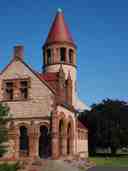
To spot the Cambridge Public Library, look for a grand, castle-like stone building with arched entryways and a dramatic red conical tower to your left-the park and open green lawn just beside it are a big clue you’re in the right place. Welcome to the Cambridge Public Library! Your timing is perfect, because you’re standing right in front of what is-no exaggeration-one of the most distinctive libraries in the country. If buildings could talk, this one would probably be humming with excitement, just waiting to spill its secrets. Imagine stepping back to 1888 as builders, in a flurry of dust and stone, begin crafting this Romanesque beauty, funded entirely by Frederick H. Rindge, a Cambridge native with pockets deep enough to say, “You know what’s better than an ordinary library? A library that looks like it was designed for a wizard.” Take in those curved stone arches, sturdy columns, and the turret that’s just begging you to look up. But this place didn’t just pop up overnight. It grew from the Cambridge Athenaeum of 1849-a kind of club where you could read and borrow books for a dollar a year. Picture a group of old-timey Cambridge folks, all stiff collars and serious faces, happily borrowing books in a cozy room on Massachusetts Avenue. The city stepped in during 1858, transforming it into the Dana Library, a place that even handled city hall business among its stacks. Fast-forward to 1874 and, thanks to a surge of civic spirit, the library became free for all-a huge deal in the days when books unlocked whole new worlds. Rindge’s generosity saw the main library moved here to Broadway, where it’s been welcoming book lovers ever since. The building had a reputation for being beautiful and practical, and even got its moment of fame when it was added to the National Register of Historic Places in ‘82. But even old stone needs an update now and then! In 2009, the library burst out of its old skin with a stunning modern addition, tripling its size. Architects threw in some fancy new tricks-like European Double-Skin Curtainwall technology, a U.S. first at the time-making it not just bigger, but greener; in 2010, the library earned a LEED Silver certification. Now, the collection holds over 314,000 items, and the lineup has gone way beyond books: e-books, audiobooks, movies, music, and even tax help if your math gets fuzzy come April. You know you’re somewhere special when even the planet Saturn used to hang out here. (Okay, a model-but still!) It was part of a citywide solar system, but after renovations, Saturn blasted off and headed back to the Museum of Science. Today, the library’s more than just books-it’s the heart of the neighborhood. Walk outside and you’ll see Joan Lorentz Park, alive with soccer games, families picnicking, slackliners wobbling on their ropes, and book clubs deep in literary debate. From the start, the library has made knowledge free for everyone, with board meetings open to the public, citywide home delivery for folks stuck at home, and memberships in the Minuteman Library Network. All this, and the park sits right atop a hidden 70-car underground garage-because even in Cambridge, there’s always a little magic waiting beneath the surface. If you're keen on discovering more about the city branches, governance & funding or the collection(s), head down to the chat section and engage with me.
Open dedicated page →To spot Memorial Hall, just look ahead for the giant red-brick building with its dramatic pointed tower, castle-like rooflines, striped slate tiles, and rows of tall,…Read moreShow less
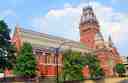
To spot Memorial Hall, just look ahead for the giant red-brick building with its dramatic pointed tower, castle-like rooflines, striped slate tiles, and rows of tall, stained-glass Gothic windows rising above the treetops-trust me, you can’t miss it! Now, while you’re taking in this towering masterpiece, let’s step back in time and set the scene: imagine the dust of a former ball field-the Delta-settling as a crowd of townsfolk, artists, and scholars gather in the shadow of what would soon be one of the grandest buildings Harvard had ever seen. Memorial Hall feels as if it leapt out of a fairy tale, boldly declaring Harvard’s devotion to the heroes of the American Civil War. If Hogwarts and a heroic cathedral had a baby, this would be it. Back in 1865, grief and pride swirled through the country, and here in Cambridge, a group called the “Committee of Fifty” got busy raising what amounted to one-twelfth of all Harvard’s money at the time-nearly $370,000. Their goal was to create something magnificent in memory of the 136 Harvard men who gave their lives to defend the Union and fight against slavery. That’s why, if you listen closely, this place almost hums with history and hope. They didn’t just want a solemn hall-they cooked up a vision that would inspire every student, graduate, and honored guest who wandered its corridors. The design competition was fierce, but two Harvard grads, William Robert Ware and Henry Van Brunt, took home the blue ribbon with their wild High Victorian Gothic dream. With turrets, arches, and a roofline that reaches for the sky, they wanted the building to look imposing: a steadfast memorial to bravery and sacrifice, a symbol of Boston and Harvard’s fiery abolitionist heart. And what a building! Henry James, the novelist, once described it as “one of the finest buildings in America,” divided into three enchanted realms. First, there’s Sanders Theatre-a glorious space inspired by Sir Christopher Wren’s Sheldonian Theatre over in Oxford, England. Imagine rows and rows of wooden seats, golden light pouring through John La Farge’s stained-glass “Athena Tying a Mourning Fillet.” If you sat in the audience, you just might have heard the mighty voices of Winston Churchill, Theodore Roosevelt, Martin Luther King Jr., or even Mikhail Gorbachev. The theater is also famous for its perfect acoustics. Harvard’s very own Wallace Sabine would even haul hundreds of red seat cushions out of Sanders Theatre each night-in the dead of winter!-for science experiments. He’d sneak them into lecture halls to absorb sound, so the scientific unit of sound absorption, the “sabin,” is practically named after a Sanders cushion. Next, there’s Annenberg Hall, which once echoed with formal dinners and, eventually, the rhythmic clatter of cutlery as thousands of hungry undergrads stampeded in right at one o’clock for lunch. Students in the 1880s would literally race across the yard to snag a seat-perhaps the original fast food. The immense wooden trusses overhead, walnut paneling, and blue-stenciled ceiling give it a sense of banqueting like old Oxford. During World War II, you might catch the strange smell of army boots and oatmeal as Divinity School chaplains marched in pre-dawn calisthenics, or hear mysterious noises from the secretive basement science lab. Harvard even installed a rifle range for a while. The hall’s since been transformed and is now where freshmen get their first taste of Harvard dining in true Hogwarts style. Between them is the Memorial Transept: a soaring hallway glowing with stained glass and stone, where the names of those 136 fallen sons are etched in white marble. As you walk there, imagine solemn footsteps on the black walnut floor, and let your eyes climb up the 60-foot-high arched ceiling, as light from enormous stained-glass windows colors the air. With every step, your feet trace the path of memory-past names like Peabody, Revere, Bowditch-their legacy lasting longer than even the thickest granite. Now, look up at that massive tower! It used to have a clock so loud it could wake the dead-or at least, keep the students from sleeping in. In 1932, someone mysteriously lowered the 155-pound bell clapper over 100 feet to the ground without being seen-legend says Yale students were getting payback for a missing bulldog. The second clapper disappeared the same way, so the rivalry is as old as the bricks here. Later, in 1956, the tower’s upper half burned, but was gloriously restored in 1996 to its original look. All around, don’t miss the window art by Louis Comfort Tiffany and John La Farge, and the statues of great orators keeping silent watch. But really, Memorial Hall is more than just grand architecture-it’s a living monument, a place where hope, history, and a bit of college mischief all come together. So, take your time, and let yourself be swept up in its unique magic-just don’t try sneaking out with any clock clappers, or Yale might come looking!
Open dedicated page →
Frequently asked questions
How do I start the tour?
After purchase, download the AudaTours app and enter your redemption code. The tour will be ready to start immediately - just tap play and follow the GPS-guided route.
Do I need internet during the tour?
No! Download the tour before you start and enjoy it fully offline. Only the chat feature requires internet. We recommend downloading on WiFi to save mobile data.
Is this a guided group tour?
No - this is a self-guided audio tour. You explore independently at your own pace, with audio narration playing through your phone. No tour guide, no group, no schedule.
How long does the tour take?
Most tours take 60–90 minutes to complete, but you control the pace entirely. Pause, skip stops, or take breaks whenever you want.
What if I can't finish the tour today?
No problem! Tours have lifetime access. Pause and resume whenever you like - tomorrow, next week, or next year. Your progress is saved.
What languages are available?
All tours are available in 50+ languages. Select your preferred language when redeeming your code. Note: language cannot be changed after tour generation.
Where do I access the tour after purchase?
Download the free AudaTours app from the App Store or Google Play. Enter your redemption code (sent via email) and the tour will appear in your library, ready to download and start.
If you don't enjoy the tour, we'll refund your purchase. Contact us at [email protected]
Checkout securely with 




