
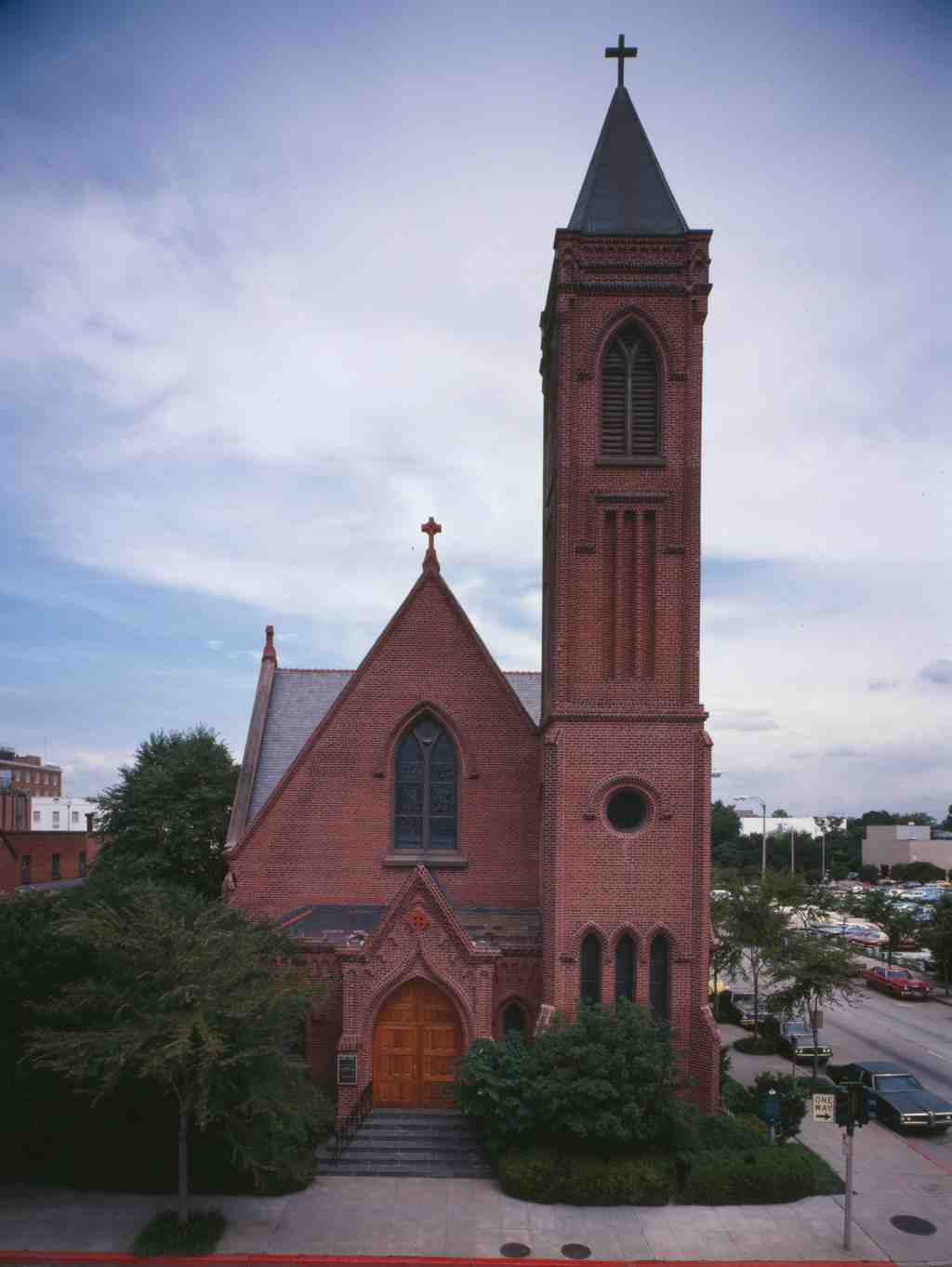
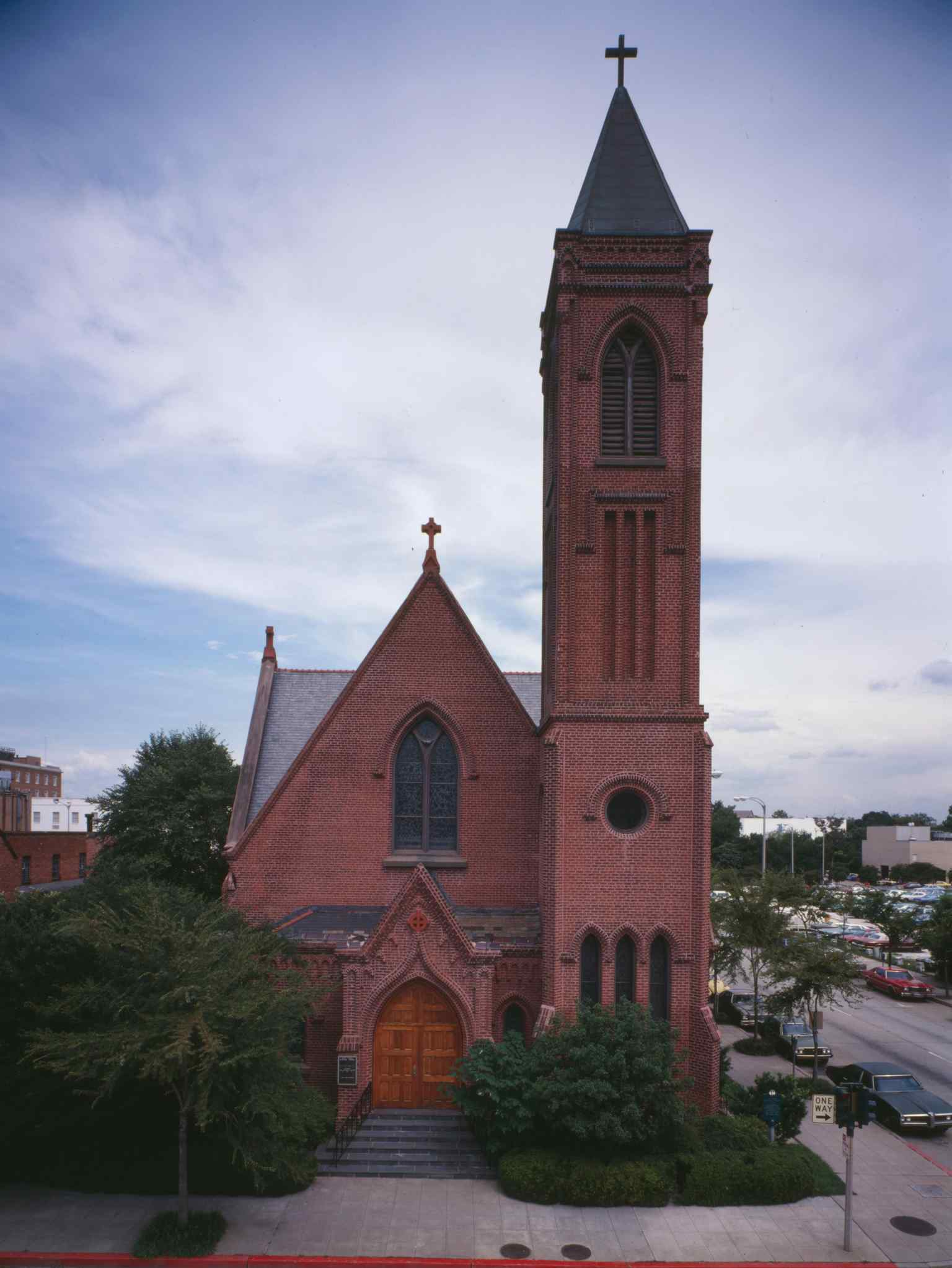
Notice St. James Episcopal Church here on your left, a classic cruciform building shaped like a cross, constructed of locally made soft pink brick and anchored by a towering square side steeple topped with a copper cross.
It is a stunning sight, but the grand architecture you see today rests on a foundation of profound heartbreak and incredible survival. In 1820, Margaret Peggy Taylor, the wife of future United States President Zachary Taylor, lost two of her young daughters to a devastating illness known as bilious fever. Desperate for spiritual comfort and a sense of community, she petitioned her husband for space at the local military barracks to gather a small group of wives for prayer, a quiet gathering that eventually led to the formal chartering of this congregation in 1844.
That original 1844 wooden church went on to demonstrate profound resilience. It stood firm while a severe tornado ripped through the city, survived relentless outbreaks of yellow fever, and weathered a massive fire that wiped out twenty percent of the buildings in Baton Rouge. Even during the bloody Civil War in 1862, the peaceful sanctuary was transformed into a chaotic triage hospital, its wooden pews holding wounded soldiers while the congregation navigated the bitter divides of a torn nation.
But this city is always writing new chapters over its scars, turning the ashes of history into soaring new monuments. By 1895, the congregation financed a massive grassroots campaign to replace the battered wooden frame with the magnificent Gothic Revival structure standing before you today. Gothic Revival is an architectural style known for its dramatic pointed arches and upward reaching lines, designed to draw the eye toward the heavens. If you look at your screen, you can see how architect Colonel W. L. Stevens used that pink brick and brownstone to create those substantial, sweeping proportions.
Inside, the legacy of former adversaries finding common ground is quite literally carved in stone. There is a solid Italian granite baptismal font donated by the son of a Union General who died fighting in the Battle of Baton Rouge. That General had regularly attended services here during the occupation, writing letters home to marvel at how the locals warmly welcomed him despite being on opposite sides of a bloody war. Later, a rector, which is the Episcopal term for a head priest of a self supporting parish, named Joseph Tucker began hand carving thirty six intricate cypress wood panels for the altar. When he died before finishing, his son Louis took over as the new rector and completed the work, cementing a deeply personal family legacy into the very walls.
It is a place of quiet endurance that remains highly active today, and you can step inside during their regular weekday hours from eight to five, or on Sunday mornings. For now, let us keep moving toward the commercial heart of the city on 3rd Street, as we transition to our next stop at the Downtown Baton Rouge Historic District, just a short two minute walk away.


