
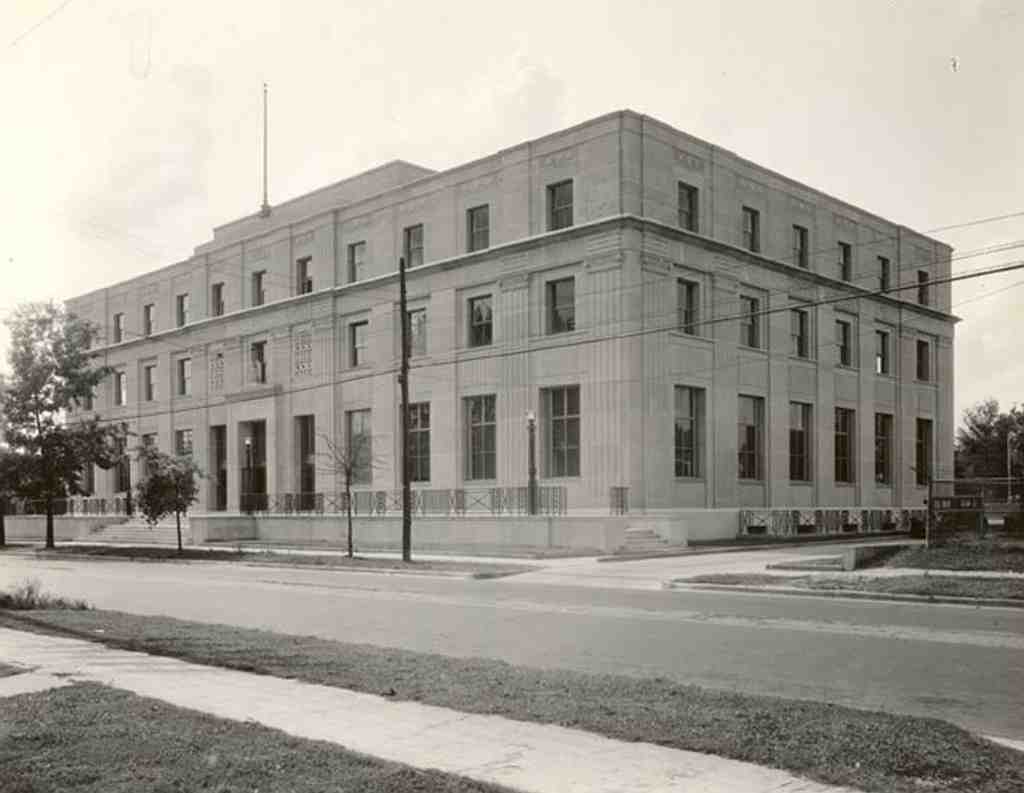
Here on your left is a three-story rectangular fortress clad in smooth pale limestone, featuring a slightly projecting center section framed by four tall grooved column-like structures called pilasters. It is a stunning example of Art Deco design, that sleek geometric architectural style popular in the nineteen twenties and thirties. But beneath its solid granite foundation lies a much heavier story. Before this beautiful monument to federal justice was built, this exact ground was the site of the Louisiana State Penitentiary, a grim nineteenth-century prison that was severely damaged during the Civil War before finally being demolished in nineteen seventeen. For decades, the shadows of that old prison soaked right into the soil.
Then came a massive transformation. During the darkest days of the Great Depression, the government wanted to project absolute stability, completely paving over the past to construct this grand building in nineteen thirty-two. Take a glance at your app to see a historical view of the structure shortly after its completion, looking incredibly crisp and modern against the Baton Rouge skyline. Local architect Moise H. Goldstein designed it, utilizing local talent because the economic crash had completely wiped out over half of the country's construction firms.
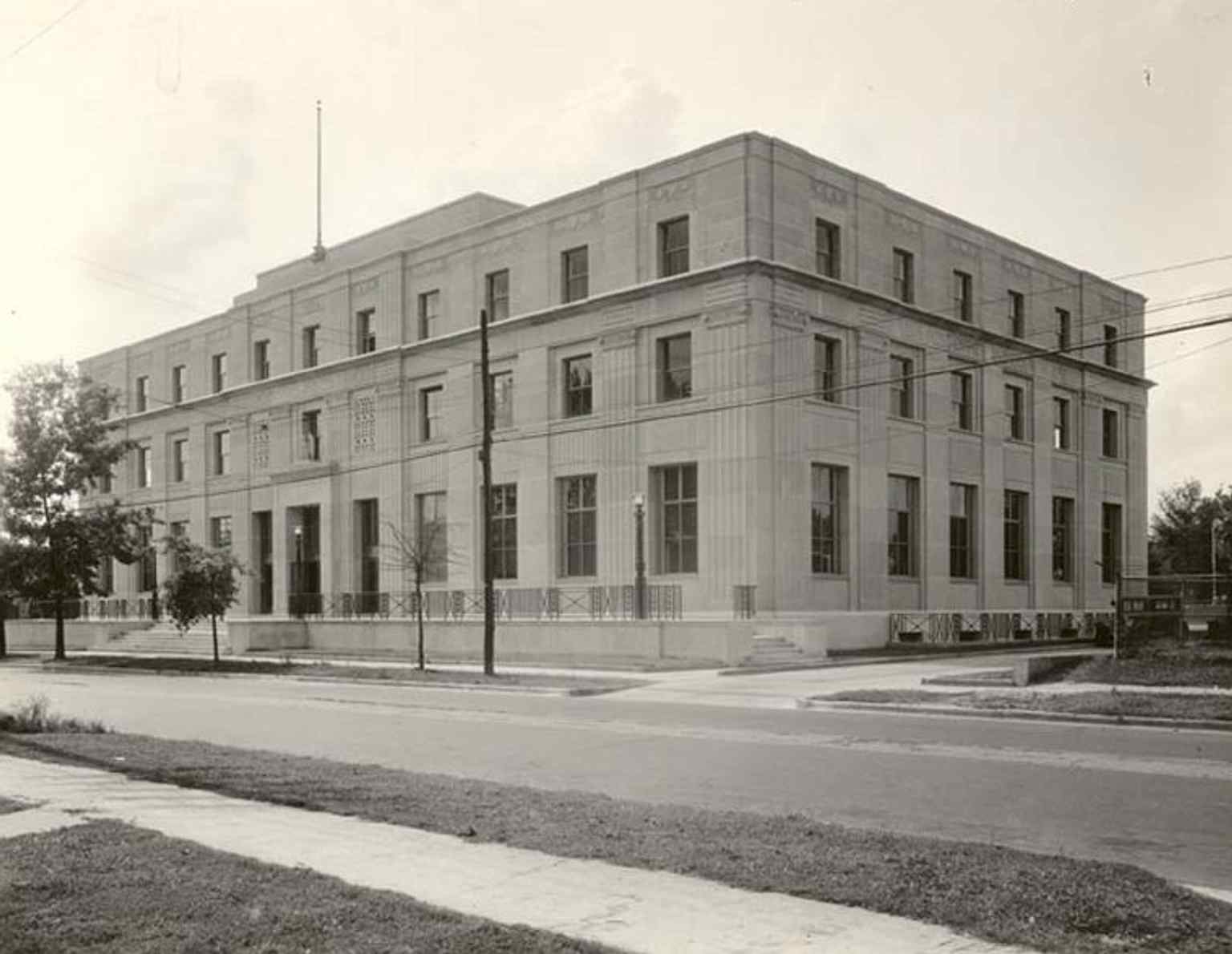
While the nation was crippled by severe poverty outside, stepping inside this building felt like stepping into an opulent new world. The interior was lavishly appointed with green Vermont Olive marble walls, gleaming terrazzo floors, and trabeated plaster ceilings, which simply means the ceilings were supported by straight horizontal beams rather than arches. It was a palace of repurposed spaces, originally housing a massive post office on the first floor with over fourteen hundred postal boxes, while federal courts operated above.
In a fascinating twist of fate, the justice handed down inside these walls eventually had to confront the echoes of the land it sits on. In recent years, this federal courthouse has been ground zero for monumental civil rights litigation. Judges here shut down the Baton Rouge police department's scandalous Brave Cave, a secret off-the-books warehouse where citizens were illegally strip-searched and abused. Even more incredibly, this courthouse has hosted landmark hearings mandating life-saving heat protections for inmates at the infamous Angola prison farm line, which is the direct successor to the very penitentiary that once stood on this exact plot of land. History really does have a strange way of rising up through the concrete.
If you want to peek inside, the courthouse is open Monday through Friday from eight thirty in the morning to four in the afternoon. Now, let us take a six minute walk over to St. James Episcopal Church, a breathtaking sanctuary that has quietly survived all of the city's most turbulent eras.


.jpg)