
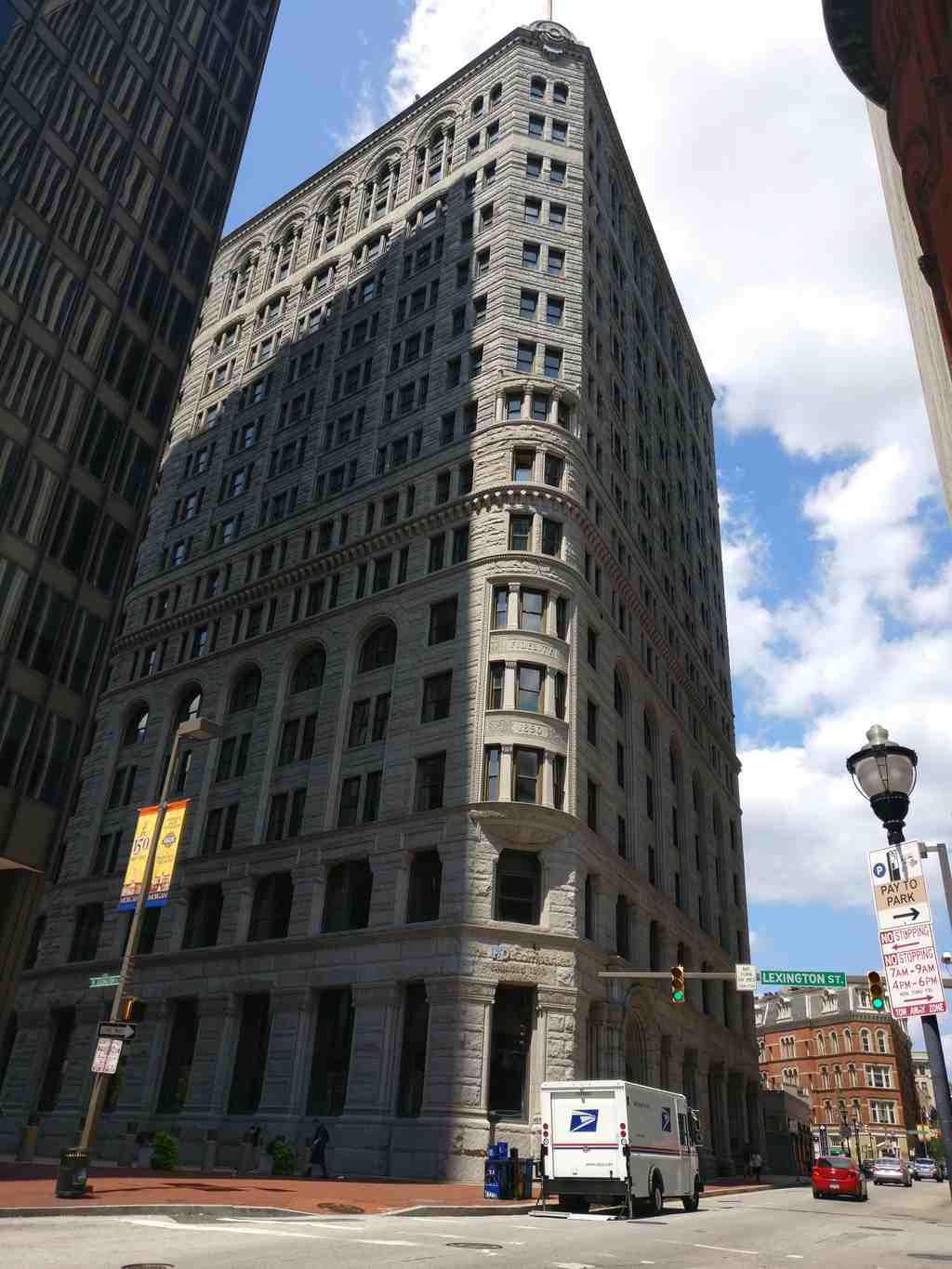
To spot the Fidelity Building, just look up at the grand grey stone high-rise towering above the corner of North Charles and West Lexington Streets-a fortress of arched windows and bold, Romanesque Revival style, impossible to miss on the city skyline.
Now, plant your feet and take a moment-let’s rewind the city streets over a century. Imagine this corner back in 1894: Baltimore’s business district buzzing with horse-drawn carriages, shopkeepers, and just-built theatres. Here stands the Fidelity Building, its rough-cut granite façade gleaming under the Maryland sun, topped with a fancy mansard roof and a proud cupola at the corner, a new symbol of the city’s growing ambition. This was once the home base of the Fidelity and Deposit Company, a Baltimore original founded just two years earlier. Imagine bustling clerks, dark suits, and the faint scent of ink and paper wafting from the grand entrance.
Now, here's where things get a little smoky-1904 arrives, and right across the street, the infamous Great Baltimore Fire tears through downtown. Picture chaos: flames licking the sky, sirens wailing, and buildings turned to scorched skeletons. But the Fidelity Building, perhaps with just a bit of luck or some real grit, stands strong on the edge of the burn line, spared from destruction but feeling the heat-literally!
After the ashes settled, Baltimore’s cityscape changed, but the Fidelity didn't just survive-it grew. In 1912, under the leadership of Edwin Warfield, once Maryland’s 45th governor, the company looked up-way up. Seven new floors were stacked atop the original eight, the new levels clad in creamy terra-cotta that matched the dignified stone below. Imagine construction crews atop steel cages, the city swirling below, as the building stretched to fifteen impressive stories. It became a stone sentry at the edge of Cathedral Hill, gazing north toward the posh Mount Vernon mansions, with the Washington Monument peeking in the distance.
Fast forward to today-if you see fences or hear the echoes of hammers and drills, it’s not ghosts of the past, but Baltimore’s next chapter. The old offices are shedding suits and pencils, trading them for kitchens and couches as the Fidelity transforms into a modern apartment hub with shops and even a restaurant on the ground floor, possibly perfect for people-watching with a pastry in hand.
So, as you stand here, you’re not just looking at a building-you’re standing at the crossroads of drama, resilience, and good old Baltimore reinvention. Not bad for a pile of granite, right?




