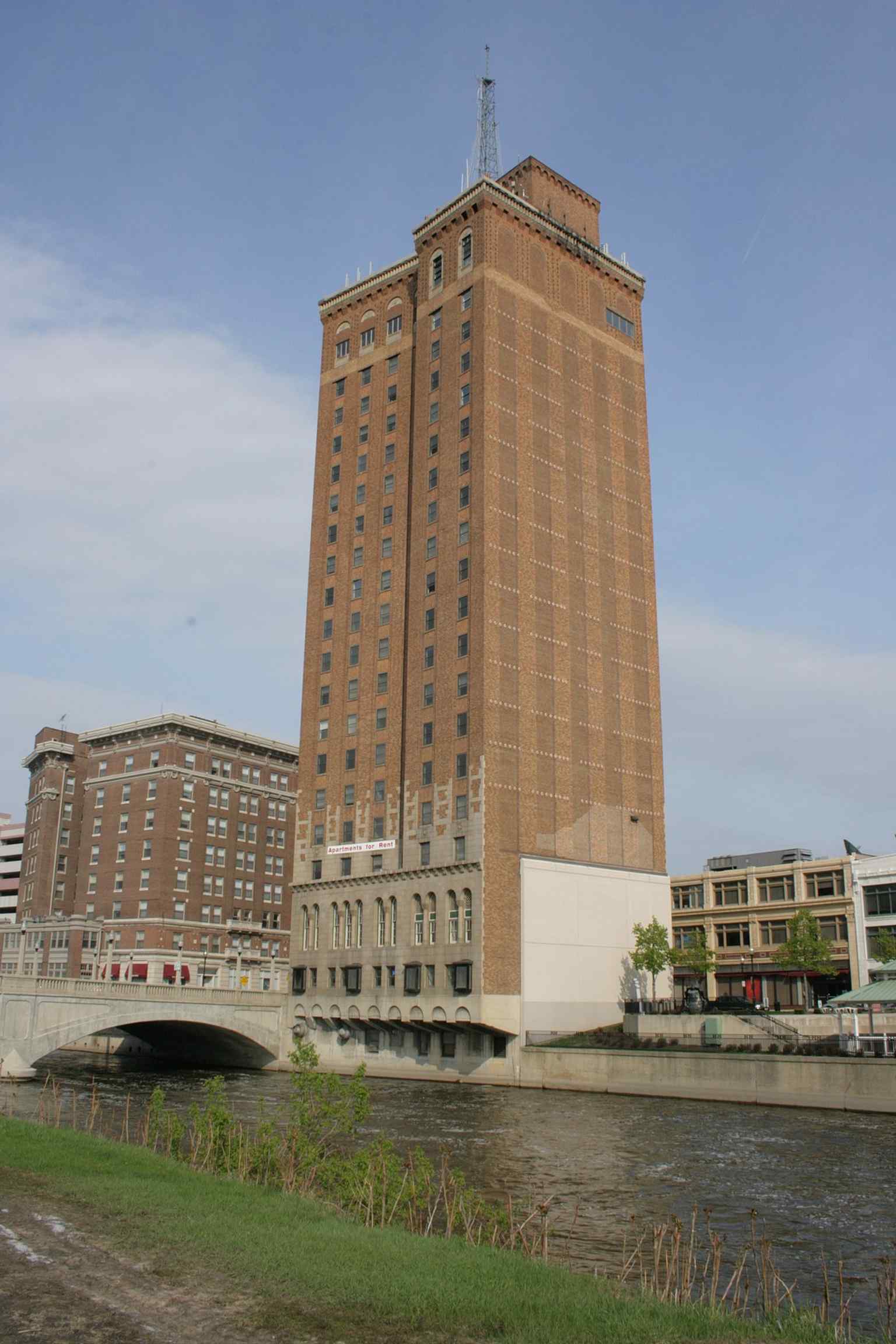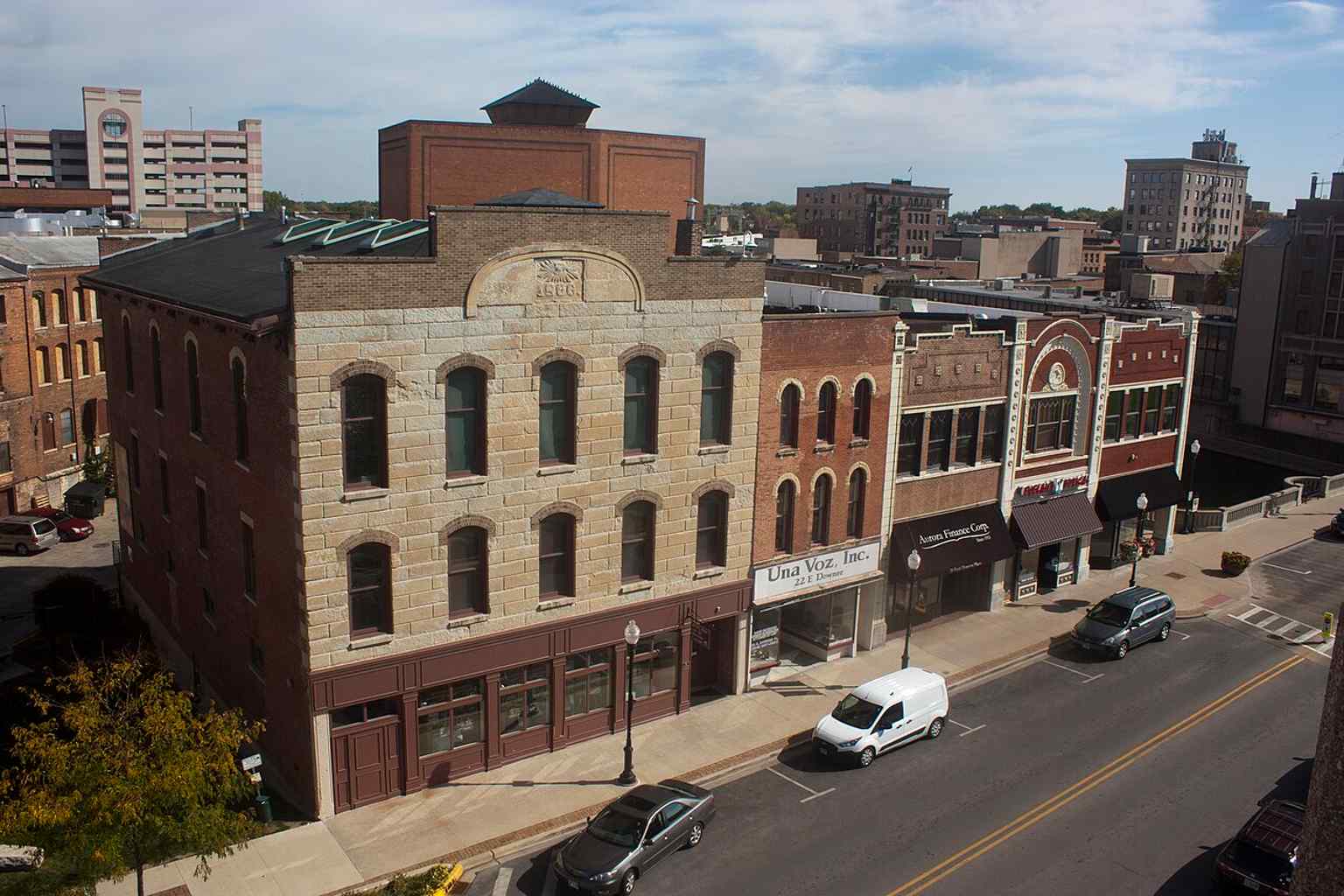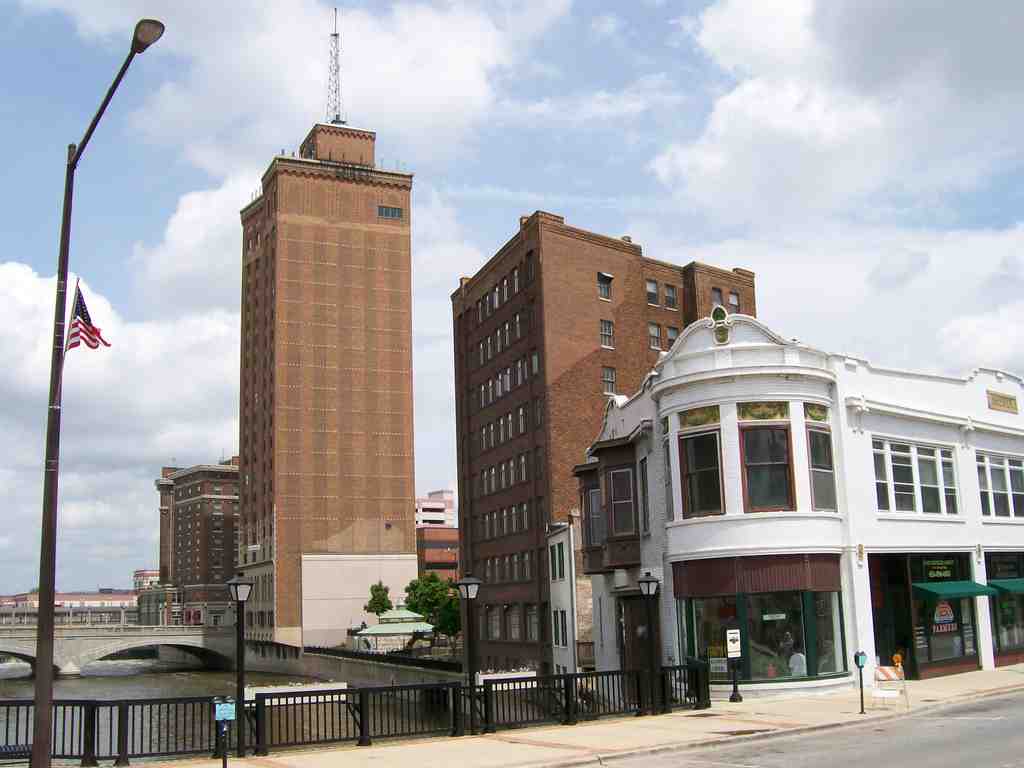
On your left, Stolp Island shows up as a slim strip of brick and stone buildings packed into a narrow shape between two branches of the Fox River, with Leland Tower rising as the island’s unmistakable vertical marker.
For something so small, this place carried a huge job. Stolp Island covers only about zero point zero three square miles, but Aurora kept loading it with the things that were supposed to belong to everyone.
That started with Joseph Stolp. He spent twenty-one days traveling to Chicago, then walked to Aurora and first saw the village on the twelfth of June, eighteen thirty-seven. Within days, he was living on this island, on land his uncle had secured for him, and he was already cutting timber for a mill that went into operation that same year. In eighteen forty-eight, he formally bought the island for twelve dollars and seventy-two cents, roughly five hundred dollars today, and he turned that modest foothold into one of Aurora’s first engines of growth.
A dam finished in eighteen thirty-five had already given the river a purpose here. Stolp, working with partners including Zaphna Lake and the McCarty brothers, used that force to run a mill. Then, in eighteen forty-nine, he raised a serious brick woolen factory and kept expanding it until as many as one hundred fifty workers were making wool cloth and woolen goods here. The river gave the island power... and reminded everyone who was boss. In February of eighteen eighty-seven, a flood destroyed the original McCarty Mill.
But Stolp did more than make things. He gave land for Aurora’s original city hall, for the Grand Army of the Republic Memorial Hall, and for the first Young Men’s Christian Association, or Y-M-C-A. He also helped launch the Aurora Silver Plate Manufacturing Company and the First National Bank of Aurora. If you want a face for the name, take a glance at the portrait in the app. He looks like a practical man, and that fits. His real monument is not one statue. It’s this whole island.
The Fox River split Aurora into east and west, and that divide created real rivalry. East Aurora incorporated in eighteen forty-five. West Aurora followed in eighteen fifty-four. When the two cities joined in eighteen fifty-seven, the charter came with a condition: the new city hall had to stand here, right between them. So in eighteen sixty-five, city leaders planted city hall on Stolp Island, with a post office on the first floor. Smart move. Nobody could claim the center if the center sat in the middle of the river.
If you check the aerial view on your screen, you can see the trick. The Fox River and Stolp Island corridor formed a hinge, a narrow civic seam stitching both halves of Aurora together. That’s why veterans’ halls, libraries, stores, theaters, clubs, and hotels kept gathering here. In the nineteen twenties, the city even filled and reinforced the flood-prone north end, literally reshaping the island for bigger ambitions.
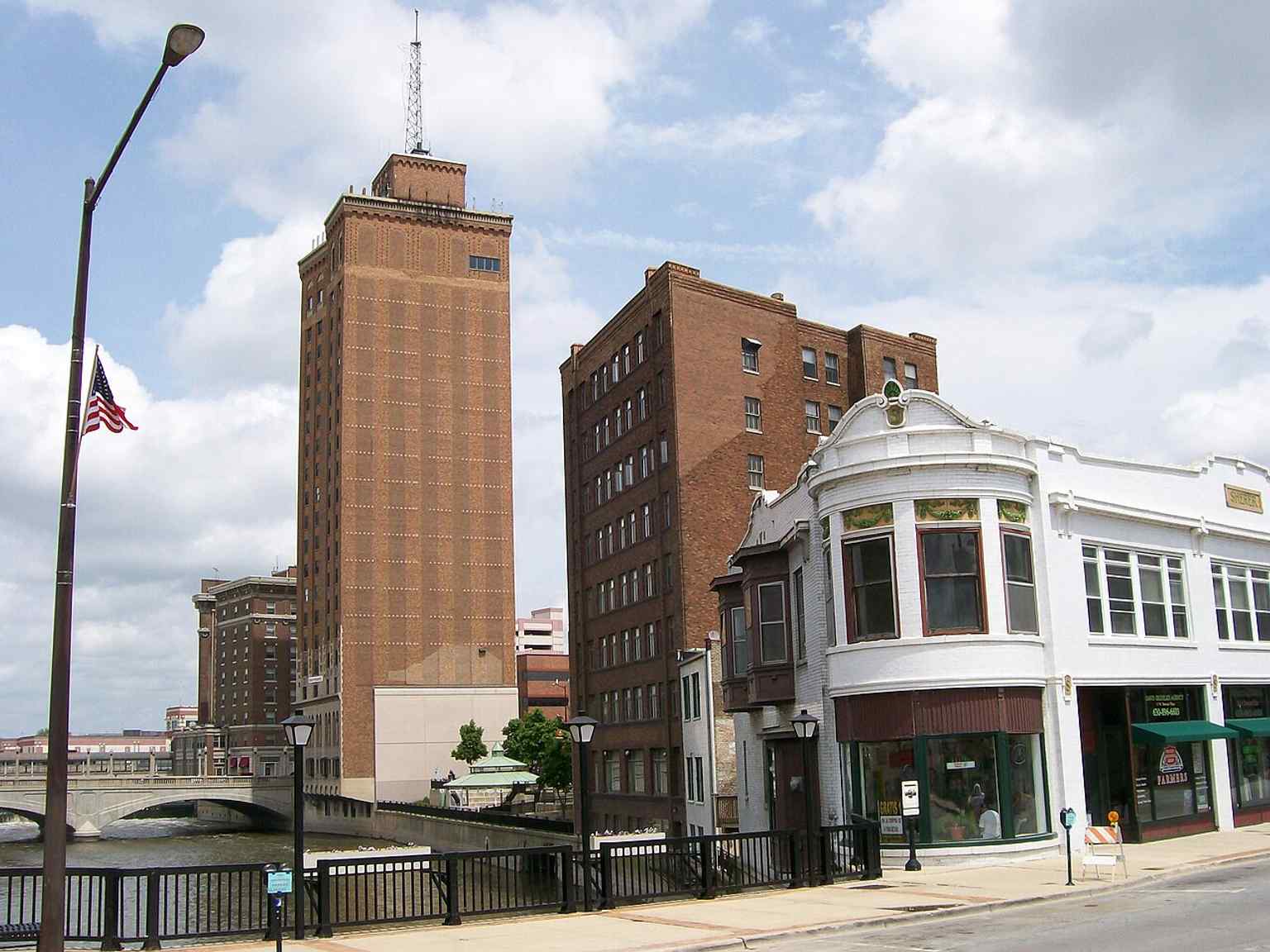
So this little island became Aurora’s shared stage: industry first, then public life, then culture, commerce, and memory layered right on top.
In about a minute, we’ll meet one of the clearest examples of that idea at Grand Army of the Republic Hall.