
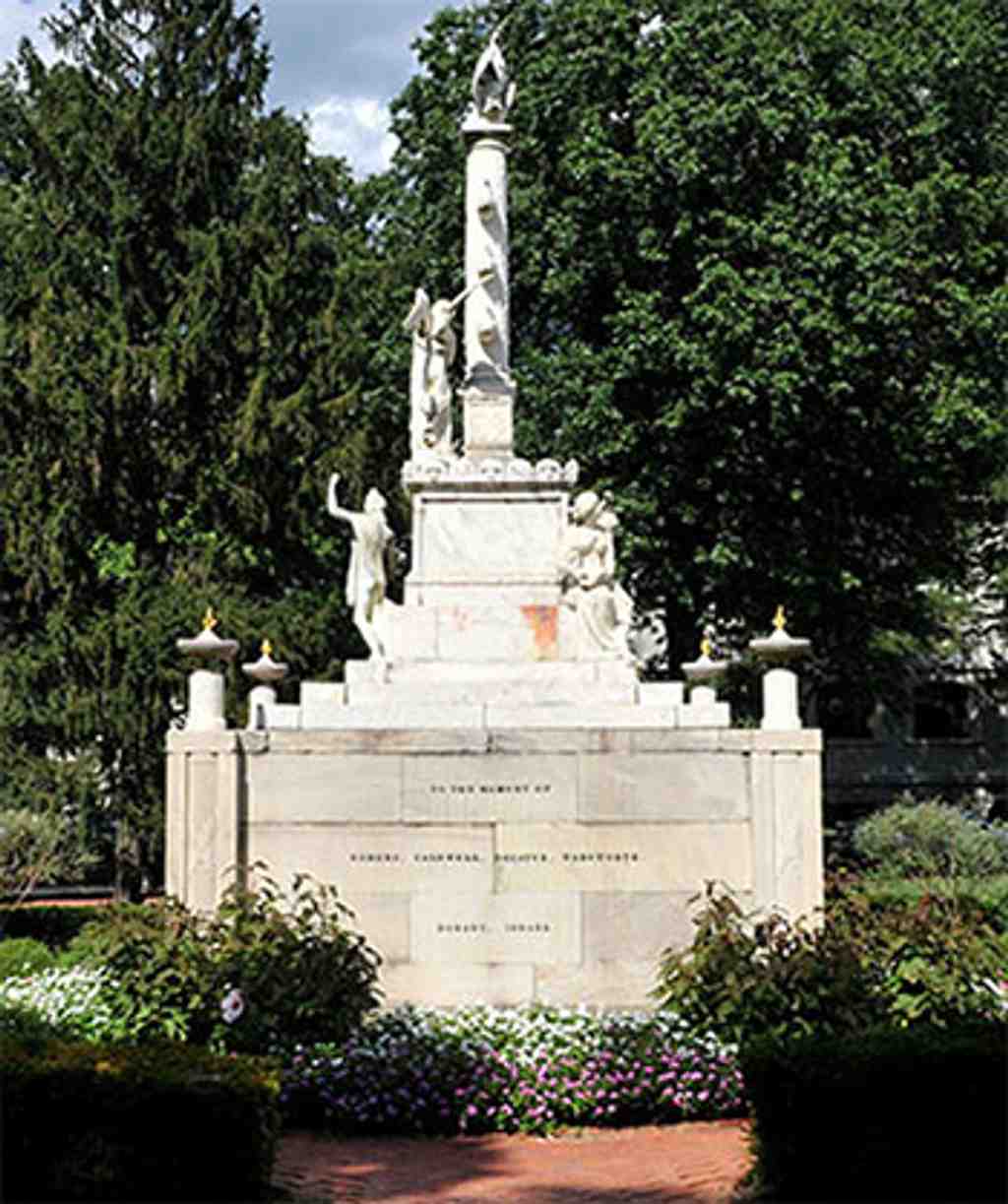
Look to your left for the Tripoli Monument, easily spotted by its tall white marble column rising from a blocky sandstone base and completely surrounded by intricately carved stone figures.
Naval service has always carried a devastatingly heavy toll, demanding an absolute willingness to lay down one's life in the vast, unforgiving ocean. Nations often try to soften that brutal reality by transforming it into an idealized standard of ultimate sacrifice, immortalizing fallen sailors in pristine white stone and glorious bronze. But the truth of war is rarely so clean.
Take Master Commandant Richard Somers, a hero of the First Barbary War whose vessel prematurely exploded in 1804 while acting as a floating mine against the enemy fleet. He and his men perished in the blast, and their remains never made it home to American soil, resting instead in unmarked graves overseas, some of which reportedly lie beneath a modern parking lot in Libya.
This memorial, the oldest military monument in the United States, was spearheaded by Captain David Porter, a fellow officer who felt a profound duty to honor his fallen comrades. Because the government offered no public funds, Porter created a strict private fundraiser among his men, collecting up to a quarter of their monthly pay. He commissioned an Italian sculptor in 1806 for three thousand dollars, which is roughly seventy five thousand dollars today. It was carved from fine Carrara marble and originally adorned with gleaming gilded bronze accents.
The monument features allegorical figures, which are statues designed to represent abstract human concepts. A figure representing History holds a book to record naval victories, while Commerce mourns the loss of the protectors of trade. It is a stunning, polished myth of heroism. Yet, the chaos of war followed this monument home. When British forces captured Washington in 1814, they deliberately vandalized the structure. They snapped the marble fingers off the figures and stripped away the bronze accents.
In 1831, Congress attempted to elevate the monument by moving it to the Capitol grounds. Their grand idea was to place this towering structure inside a small fountain filled with live goldfish to simulate the Mediterranean Sea. A truly masterful tribute. Captain Porter was utterly disgusted, writing that capping the monument in a dirty puddle of fresh water was an evil omen for his departed friends.
The monument eventually found a proper home here at the Naval Academy in 1860. During a major restoration in the year 2000, conservators faced a choice about its missing pieces. They decided not to replace the stolen bronze or fix the carved hands. Consequently, the figure of History remains without her pen, and Fame still lacks her gilded palm branch. The monument stands beautiful and towering, but those broken fingers and missing branches are a quiet reminder that the true cost of war is never fully restored.
Make your way over to the Macedonian Monument, just a one minute walk away, to hear about a hero who survived the battlefield only to be undone by his own pride.


