
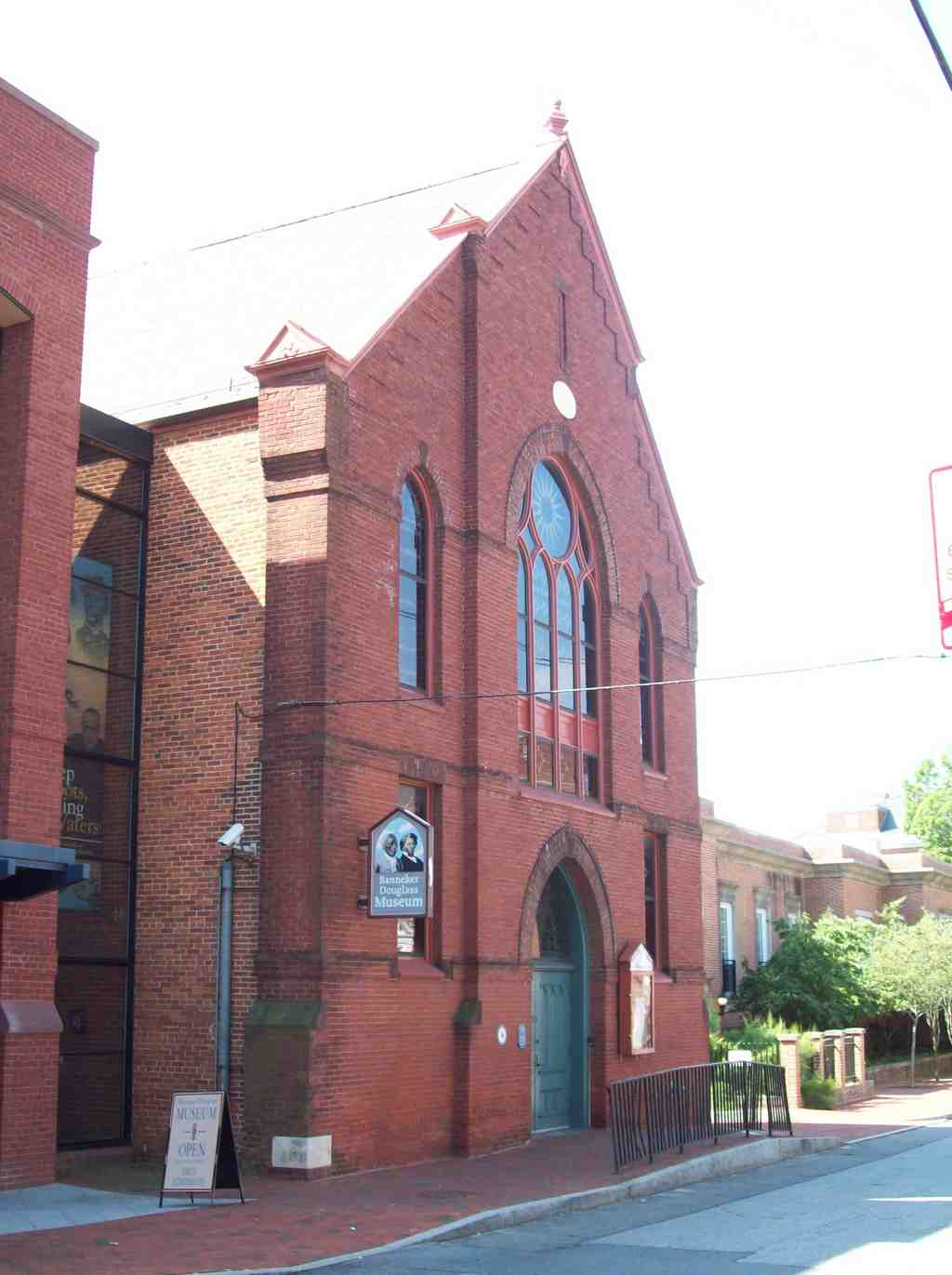
To your left is a gable-front red brick building distinguished by its steep roofline and towering, sharply pointed arched windows characteristic of Gothic Revival architecture. If you pull up the app, you can see a great shot of the structure's original 1875 facade.
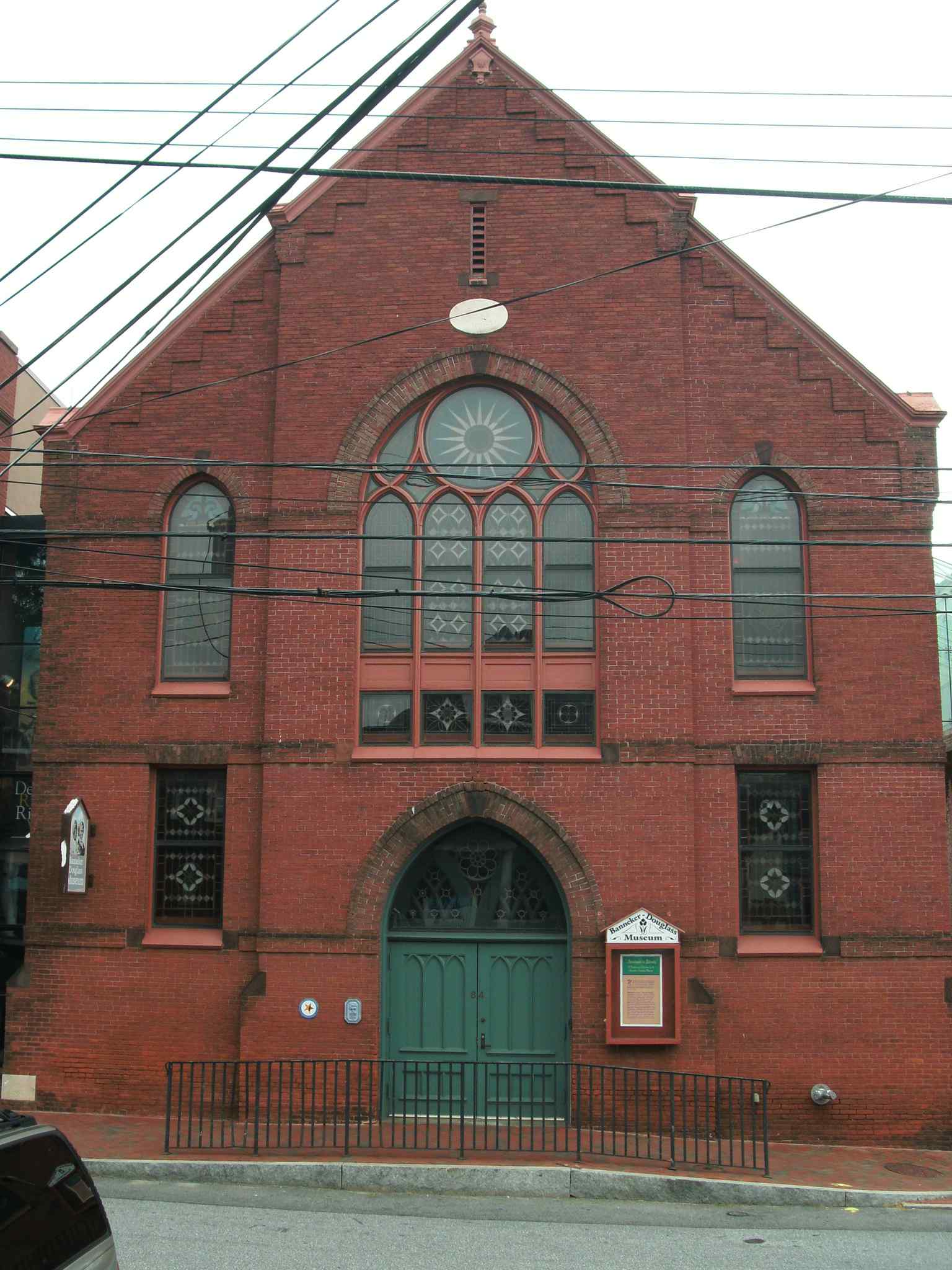
We have spent a lot of time today admiring the grand mansions of the colonial elite, wealth generated almost entirely by enslaved individuals. This building offers the necessary counter-narrative. It is the Banneker-Douglass-Tubman Museum, Maryland's official repository for African American history and culture.
The museum is housed in the former Mount Moriah African Methodist Episcopal Church. In the 1970s, the county decided this historic structure was standing in the way of progress and slated it for demolition to build a courthouse parking lot. Truly an inspired piece of urban planning. Fortunately, the community mobilized, picketed county offices, and won a landmark 1974 court ruling that saved the building from the wrecking ball.
The collections inside do not just display history... they wrestle with it. They strip away the safe, sanitized myths of historical figures to reveal the harsh realities they actually lived through. For example, the exhibits include an original reward poster for the capture of Harriet Tubman. It is a chilling piece of paper that grounds her legendary heroism in the very real, lethal danger she faced every day. You can also listen to a rare audio recording of Frederick Douglass, allowing you to hear the actual thundering voice of the man who once walked these very streets.
In 2024, Harriet Tubman's name was officially added to the museum's title. The grounds also feature a striking ten-foot mixed-media sculpture of Tubman by artist Joyce J. Scott. It depicts her wielding a beaded rifle, challenging any passive depictions of the abolitionist and presenting her instead as a fierce warrior-protector.
The museum is not merely a display space. A Fulbright scholar named Sylvia Gaither Garrison championed the creation of an extensive library here, insisting the museum serve as a rigorous research hub to preserve the deep roots of Maryland's Black communities.
Today, the museum faces entirely new battles. Because of its proximity to the Annapolis waterfront, the subterranean, or underground, archives are at risk from rising sea levels, forcing the museum to engineer complex climate resilience plans. And the defense of this institution continues in other arenas. In early 2025, a federal department abruptly attempted to cancel a critical grant. The museum's executive director immediately partnered with the state's attorney to file a legal challenge. They won, successfully recovering the funds and proving that the building's legacy of resistance is still very much alive.
If you want to step inside and explore these archives yourself, the doors are open Tuesday through Saturday from ten in the morning until four in the afternoon. Now, let us walk four minutes down the road to our final stop, where we will examine the grand design that tied all of the Colonial Annapolis Historic District together.


