
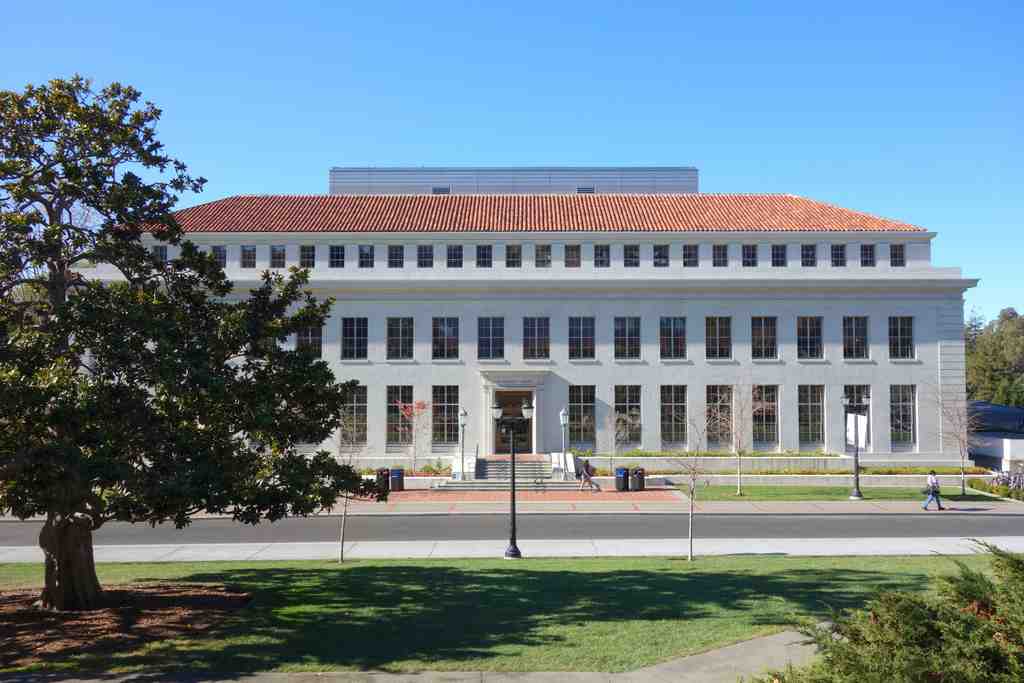
On your left is a pale stone rectangle with a flat, dignified facade and a recessed entrance marked by the carved Bancroft Library name.
This is Berkeley’s vault of memory... and it began with a man who could not stop gathering. In eighteen fifty-nine, Hubert Howe Bancroft asked his employee, William H. Knight, to clear the shelves around his desk and pull every book in the store that had anything to do with this part of the world. Knight found only about fifty or seventy-five volumes. That tiny cluster should have been enough for a sensible person. Bancroft was not a sensible collector.
What grew here started as appetite and turned into obsession. When I say archives, I mean the raw materials of history: letters, maps, diaries, government papers, photographs, oral histories, the paper trail people leave behind without knowing posterity may someday lean over it. And this collection did not drift together gently. Bancroft hunted it. He searched bookshops and stalls in San Francisco, Sacramento, Portland, and Victoria, then secondhand stores in New York, Boston, and Philadelphia. When he reached London and Paris, he later admitted his “eyes began to open.” One thousand volumes became five thousand, then far more, until agents were buying for him across Europe and the Americas, and whole libraries were swallowed into the collection.
There is a slightly feverish quality to that story, isn’t there? Bancroft wanted nothing lost because it was expensive, distant, or inconvenient. By eighteen sixty-nine, he had about sixteen thousand volumes and pamphlets. Later estimates placed the collection at forty to sixty thousand items. Most tourists never hear the detail that really drove him: fear of fire. He worried constantly that one blaze could erase everything. That fear pushed him to move the collection in eighteen eighty-one into a fireproof building on Valencia Street in San Francisco. If you look at the old photograph on your phone, you can see the place that soothed his nerves for a while: sturdy, practical, built less for beauty than survival.
That fear turned out to be tragically justified. After the nineteen oh six earthquake and fires, many Spanish and Mexican government records for California disappeared. Some survive only because Bancroft and his researchers had copied them word for word, or at least captured notes before the originals vanished. So this library does more than preserve history. Sometimes it becomes the only reason history still exists.
The University of California bought the collection in nineteen oh five for two hundred fifty thousand dollars, roughly eight million dollars today, and Bancroft himself donated one hundred thousand of that price. Berkeley was still shaping its own stature then, and this purchase helped declare that scholarship here would not be decorative. It would be deep, primary, hard won.
That spirit never really left. Herbert E. Bolton, the founding director, turned Bancroft into a major research center. Decades later, Charles Reichmann found an eighteen seventy-seven speech here that helped force Berkeley to confront the racist legacy behind the Boalt name. This place keeps pulling forgotten things back into the light.
If you glance at the bookplate image in the app, that Tibetan label hints at how the collections later widened far beyond the old western obsession. Still, the heart of Bancroft remains the same: Berkeley does not simply store the past here. It goes after it.
When you’re ready, continue toward Sather Tower, about a two-minute walk away. If you want to come back inside later, the library is generally open Monday through Friday from ten thirty in the morning to four thirty in the afternoon.




