
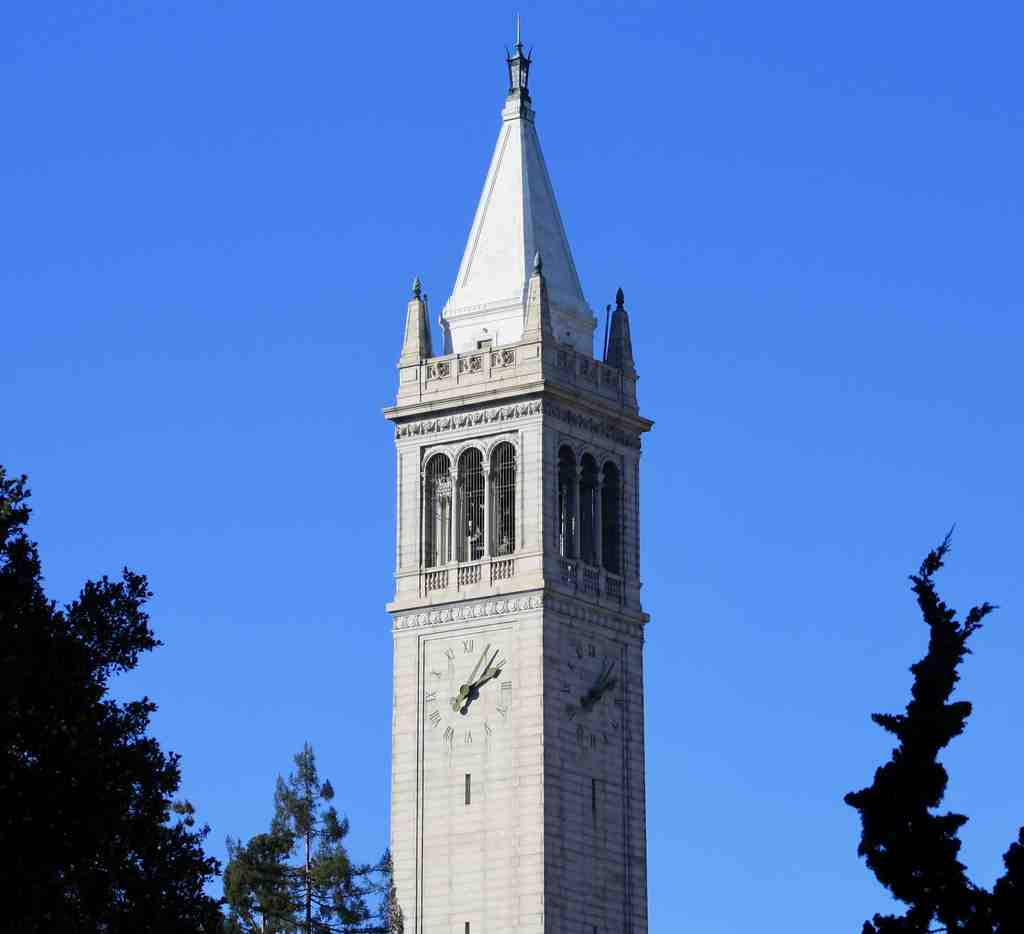
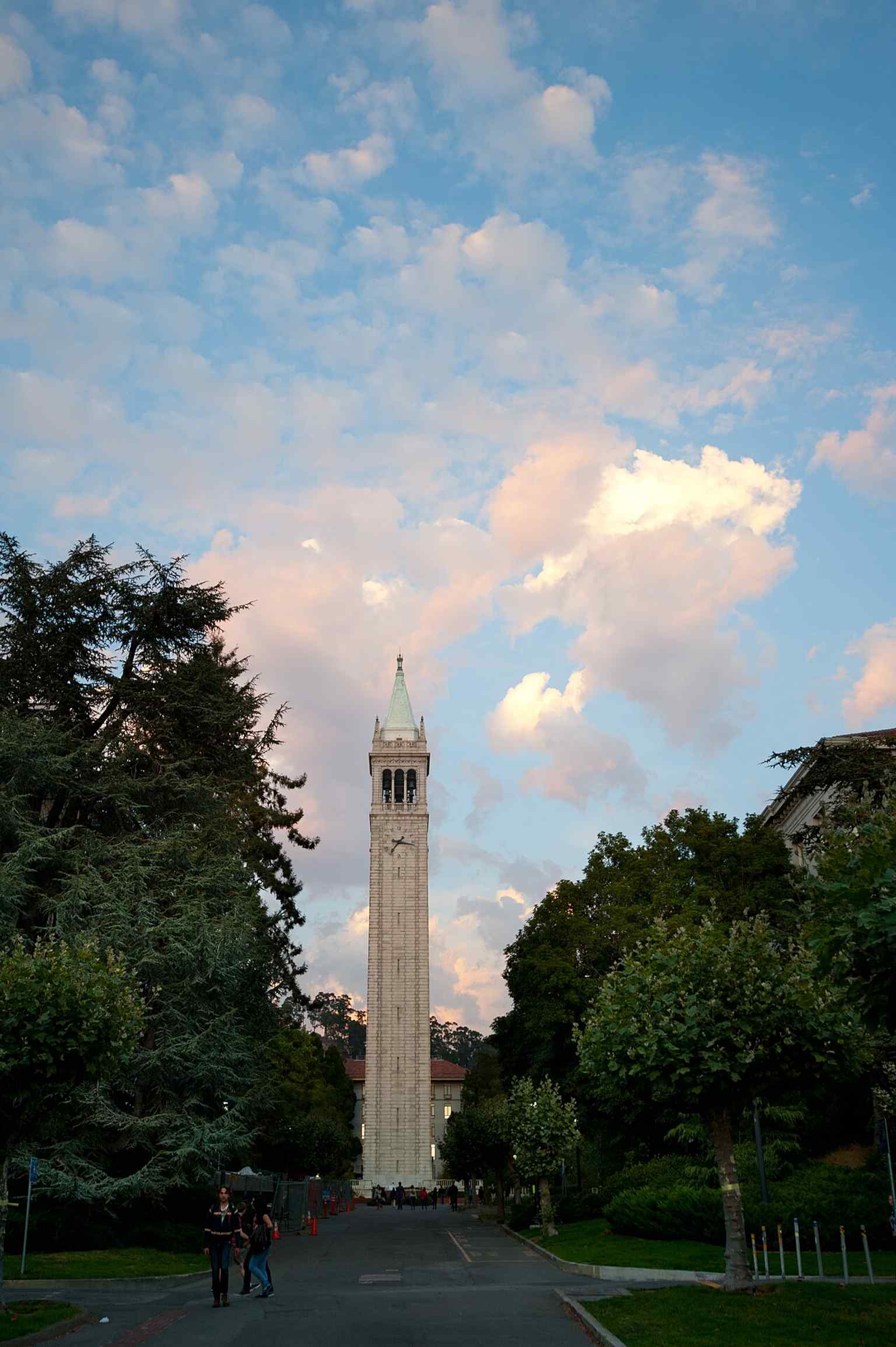
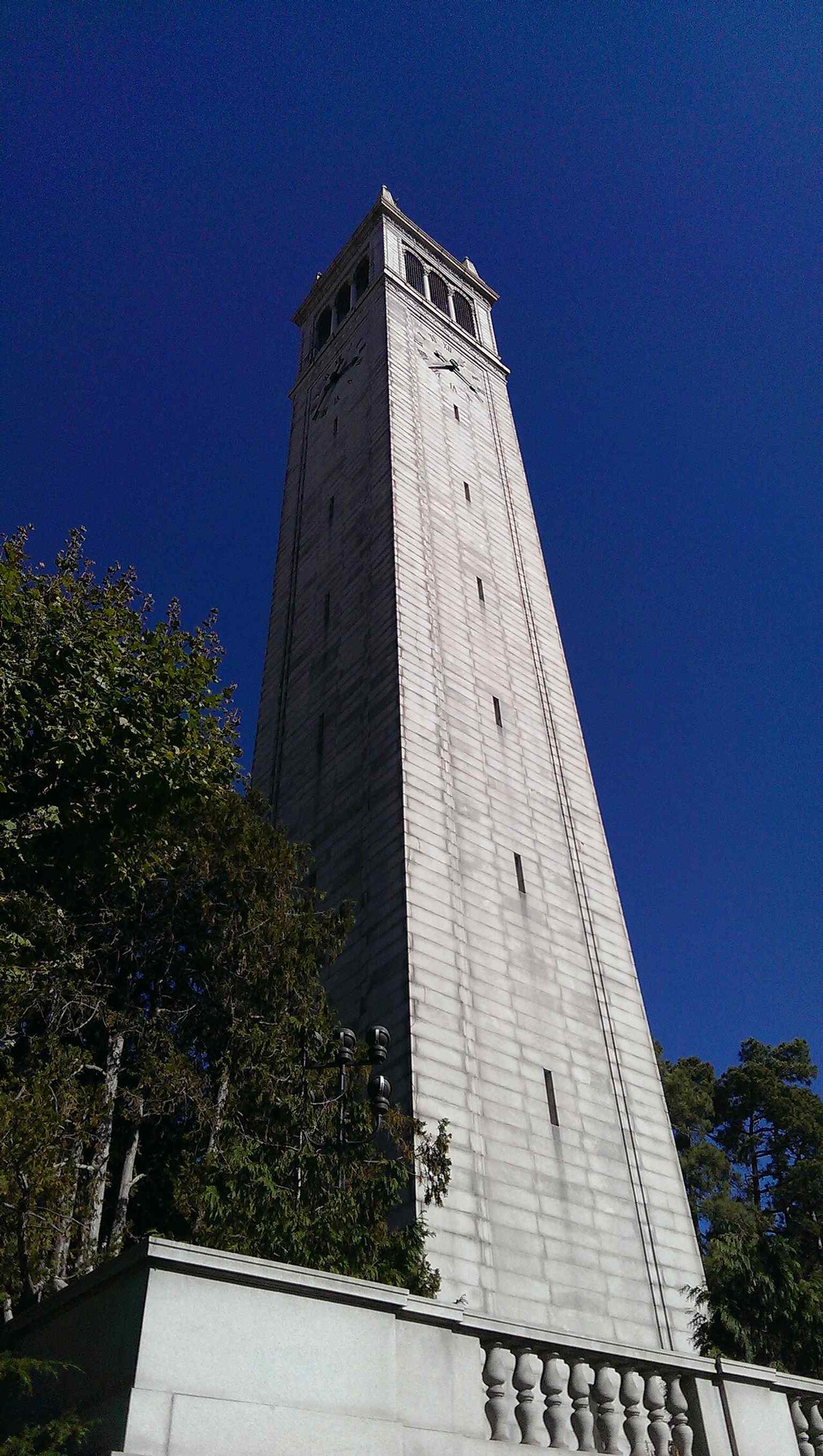
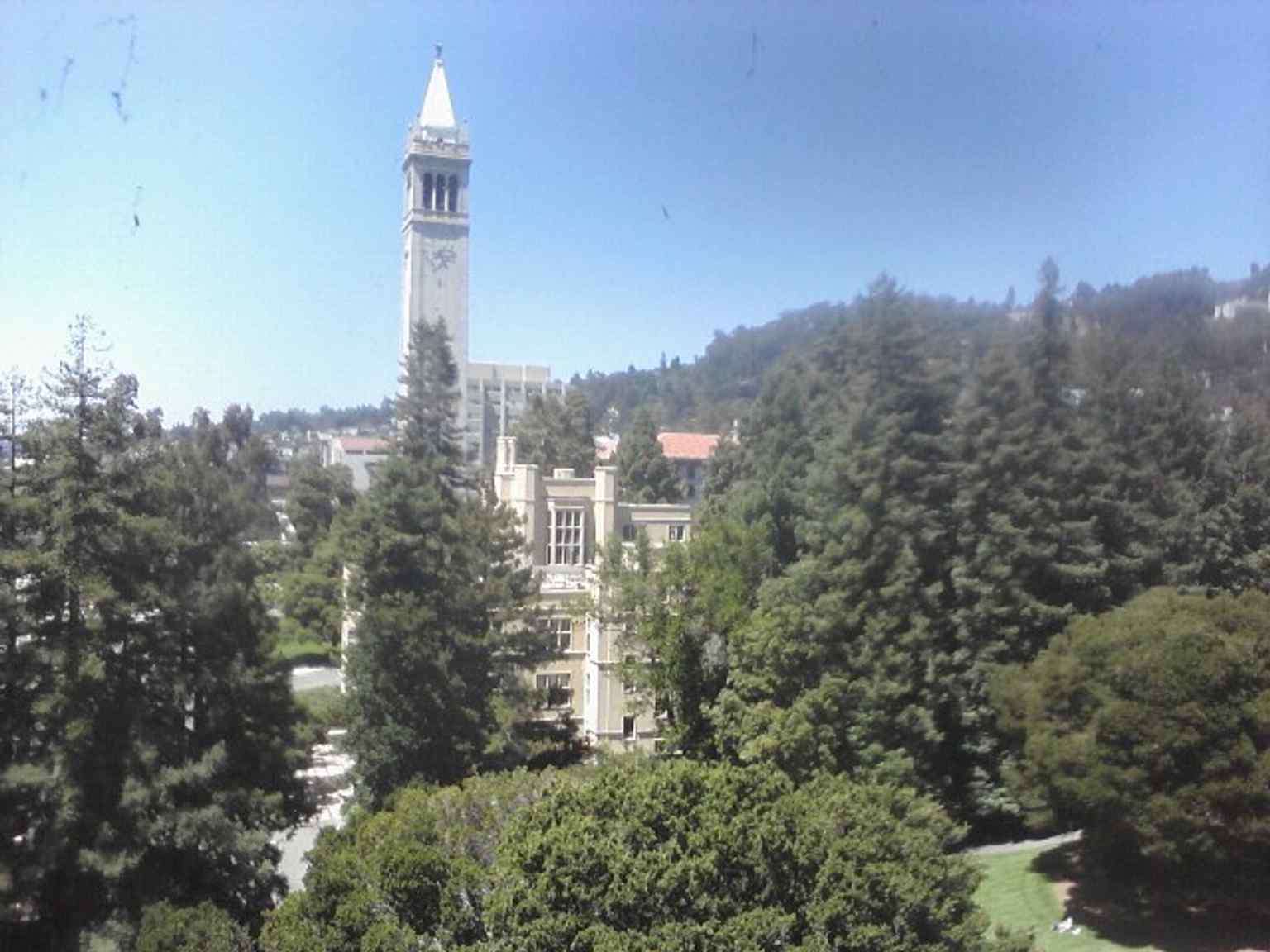
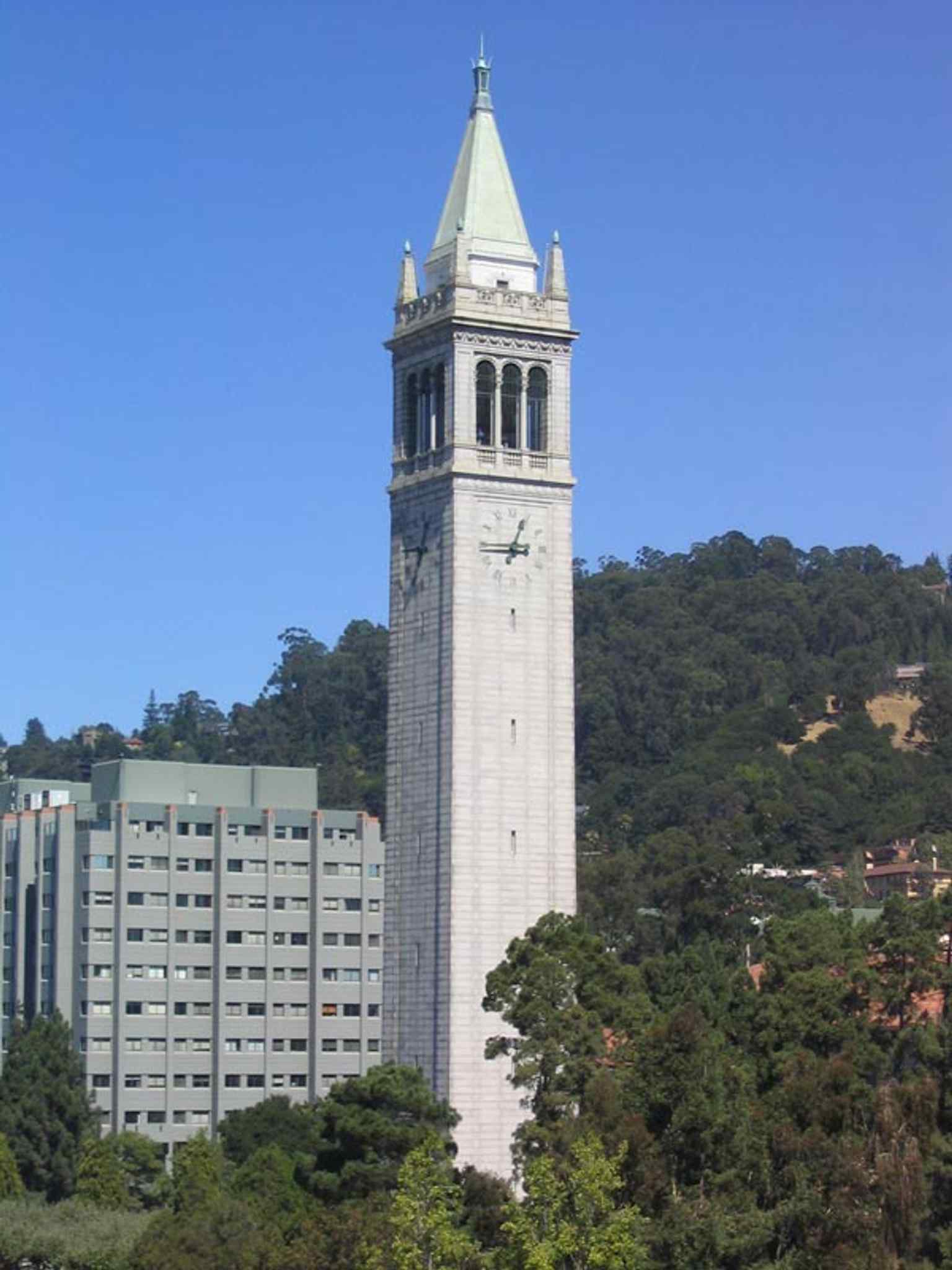
On your left, look for a tall pale granite shaft rising to a square belfry, with clock faces on all four sides near the top.
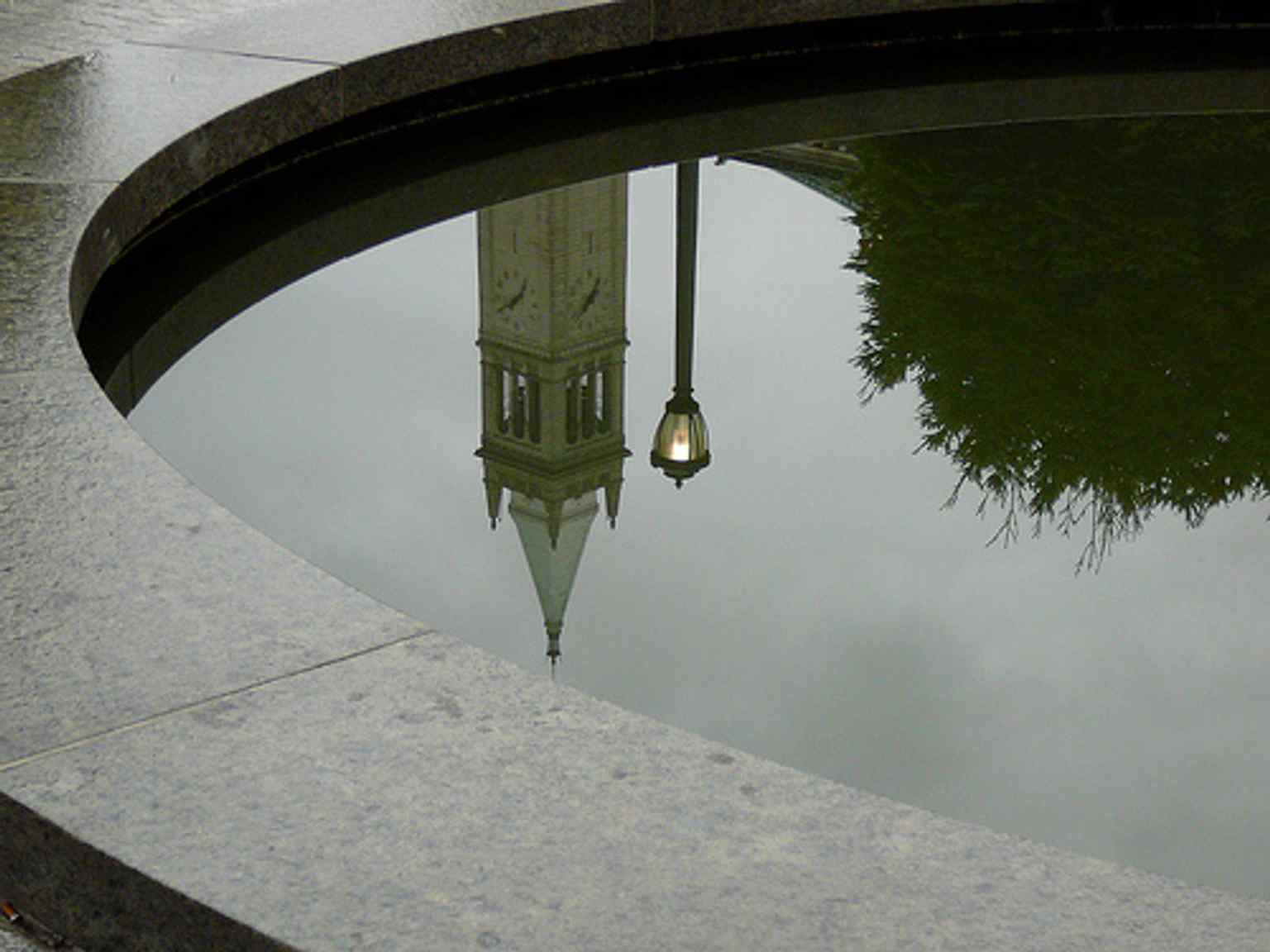
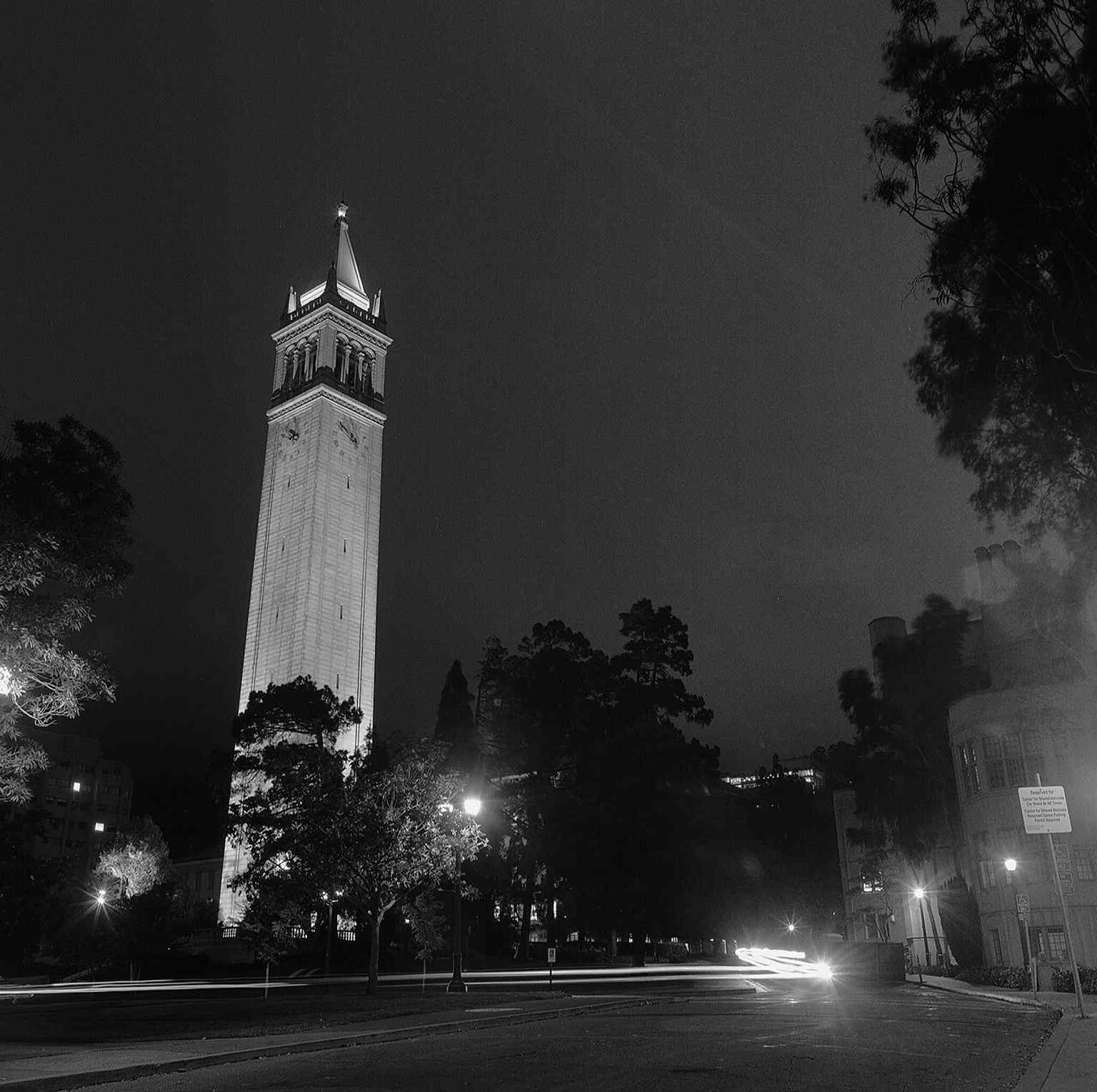
This is Sather Tower, though almost everyone calls it the Campanile... Berkeley’s own version of a Venetian bell tower. Jane K. Sather gave it to the university in memory of her husband, Peder Sather, and she gave the first bells too, turning private grief into a public landmark. John Galen Howard designed it after the famous campanile in Venice collapsed in nineteen oh-two. He loved its beauty, but he did not trust romance alone, so he chose a granite skin over a steel frame, something that could look graceful and still stand firm.
At three hundred seven feet, it became one of the university’s great claims to stature, and one of the tallest freestanding bell-and-clock towers in the world. Howard placed it so it could organize the campus almost like a compass point. If you glance at the image in the app, you can see how early he imagined that role in his planning sketch. Even before it fully opened in nineteen sixteen, the tower already carried a sense of ceremony. In January of nineteen fourteen, when the steel frame reached the future observation deck, President Benjamin Ide Wheeler celebrated with an open-air banquet up in the air... a construction milestone turned into campus theater.
But here is Berkeley’s sly little secret. This grand symbol of prestige also became a storage vault.
Berkeley has a habit of hiding astonishing collections inside ordinary-looking places. The libraries gather manuscripts and letters; this tower gathered bones. Tilt your gaze up the height of it for a moment and imagine its layers... clocks, bells, views, and inside, sealed away, the remains of vanished animals.
In nineteen thirteen, paleontologist John C. Merriam moved about twenty tons of La Brea fossil material into the unfinished Campanile from a basement in California Hall. He chose the tower for a practical reason: it stood closer to Bacon Hall, where paleontology worked. The cool, dry interior protected the specimens, so inside this ceremonial shaft sat saber-toothed cats, horses, camels, ground sloths, and birds pulled from the tar pits. That hidden scientific cargo still gives the tower one of the strangest jobs on campus.
And above those fossils, the bells kept building a different kind of memory. Jane Sather’s original twelve bells finally arrived after delays from World War One and U-S customs in San Francisco, and they first rang out on the third of November, nineteen seventeen, for the Big Game against Washington. Over time, Berkeley enlarged the instrument into the sixty-one-bell carillon you know now. If you look at the bell chamber image on your screen, you can glimpse that upper world where sound lives. One of the people who gave that sound its human heart was Margaret Murdock, who began playing in nineteen twenty-three and stayed with the bells for six decades, doing the kind of devoted, often unseen work universities depend on.
So from out here, the Campanile looks simple: stone, height, authority. But Berkeley’s monuments rarely stay that simple for long. In about five minutes, we’ll head toward the oak grove, where living landscape-not just buildings-became the center of a fierce argument about what a university should protect.






.jpg)

