Maidstone Audio Tour: Echoes Through Time
Behind Maidstone’s bustling streets lies a secret world shaped by centuries of power struggles, hidden sanctuaries, and high-stakes drama. This self-guided audio tour invites you to peel back the town’s elegant layers, uncovering cryptic tales and forgotten battles in places even locals overlook. Which case at Maidstone Law Courts sent shockwaves through the nation? Who vanished behind the silent stones of St Peter’s Church—never to be seen again? What ancient rebellion once echoed in the candle-lit halls of Archbishop's Palace and changed English history? Wander beside the River Medway as past and present collide at every corner. Move from solemn courtyards to mysterious chapels, following whispers of scandal, courage, and lost dreams. See Maidstone’s storied landmarks not as museum pieces but as stages where real destinies shifted. Begin now—let the city reveal its deeper secrets beneath your feet.
Tour preview
About this tour
- scheduleDuration 40–60 minsGo at your own pace
- straighten3.5 km walking routeFollow the guided path
- location_onLocationMaidstone, United Kingdom
- wifi_offWorks offlineDownload once, use anywhere
- all_inclusiveLifetime accessReplay anytime, forever
- location_onStarts at Maidstone Law Courts
Stops on this tour
To spot the Maidstone Law Courts, just look for a big, modern concrete building with lots of windows and a dramatic, angular silver roof, right along Barker Road-it's hard to miss…Read moreShow less
To spot the Maidstone Law Courts, just look for a big, modern concrete building with lots of windows and a dramatic, angular silver roof, right along Barker Road-it's hard to miss with its mix of red brick at the base and a set of five tall stories. Now, while you’re standing here, take a moment to imagine the old days of Maidstone’s justice system. Before these striking modern walls rose up, courtroom drama played out in the grand County Hall. But as Maidstone grew busier and the cases started piling up, even the best courtroom dramatist would have said: “We need more space!” So in the early 1980s, on this very spot that once held a noisy timber yard and a busy river wharf, something new began to take shape. Picture the dust and clatter of construction: steel and concrete transforming the riverside into a building that was pure 1980s swagger. Designed by Austin-Smith:Lord, this courthouse stands with an asymmetric, five-storey front that looks like it’s jutting out to make a statement-a little bit serious, a little bit fortress. When Queen Elizabeth II herself came to open it in 1984, you can bet there was plenty of pomp and maybe a nervous judge or two! Inside, there are ten courtrooms where stories unfold that would put any TV crime drama to shame. There’s been tension, heartbreak, even moments of grim resolve, with some of Kent’s most notorious cases tried right inside. And while the cases could get dark, outside, the river sparkles and life bustles past, reminding us that justice in Maidstone is always on the move. So go ahead-take it all in. Who knows, maybe one day there’ll be a mystery solved right where you’re standing. Or at least, you might be able to say you saw a modern legal landmark where history is made every day-without having to serve jury duty, of course!
Open dedicated page →Take a look just beside the road and you’ll see a long, sturdy stone building with tall, pointed windows and a reddish roof-yep, that’s St Peter’s Church right in front of…Read moreShow less
Take a look just beside the road and you’ll see a long, sturdy stone building with tall, pointed windows and a reddish roof-yep, that’s St Peter’s Church right in front of you. Imagine, for a moment, standing here in the 1200s. The smell of river mist drifts over from the Medway, horses clop along muddy tracks, and weary pilgrims shuffle past, eager for a hot meal and a dry bed-because right here was once a lifeline for travelers! St Peter’s began its life not as a regular church, but as the chapel of a hospital called the Newark of Maidstone, run by monks for pilgrims making the epic trek across the river to reach holy Canterbury. Picture bonfires flickering at dusk, travelers swapping stories in hushed tones, maybe sneaking a bite of food before heading out again. Boniface, the grand Archbishop of Canterbury in 1260, kicked it all off-nobody say he didn’t like a good project! Now, fast forward to the year 1395. The hospital merges with the new All Saints foundation across town, and suddenly our humble chapel is left a bit forlorn, without its bustling parade of pilgrims. The Reformation shakes England, and the chapel finds itself, well, out of a job-sold to Lord Cobham, it begins a new life, hosting who-knows-what behind those stone walls (rumor has it, maybe even a party or two). Time isn’t always kind, but St Peter’s proves stubborn. John Whichcord Sr. swoops in to restore and enlarge it in the 1830s, and soon after, the church starts fresh: its own parish, more souls, another round of singing echoing through its arches! But Maidstone keeps growing, spreading out, and little St Peter’s finds itself too small again, as folks head to new suburbs and bigger churches. With a couple more restorations, and a dramatic twist of fate, this ancient holy spot became-wait for it-a nursery in the 21st century! So, if you hear giggles echoing out from the ancient stones, don’t worry, it’s just the sound of history welcoming the next generation. Not every church gets a retirement this lively, right?
Open dedicated page →Right in front of you, you’ll see a grand, E-shaped stone mansion with sturdy timber-framed wings on each side, a handsome clay-tiled roof, and striking stone dormer windows-just…Read moreShow less
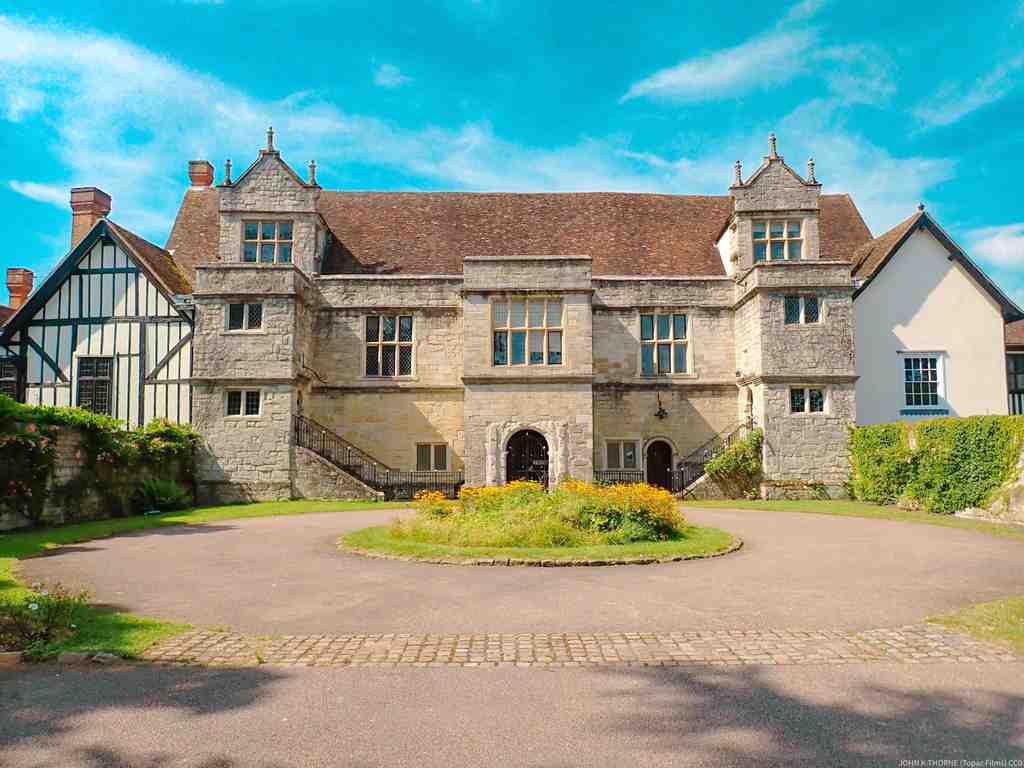
Right in front of you, you’ll see a grand, E-shaped stone mansion with sturdy timber-framed wings on each side, a handsome clay-tiled roof, and striking stone dormer windows-just look for the impressive old building rising proudly by the River Medway and you can't miss it. Welcome to the Archbishop’s Palace! Take a deep breath and picture yourself stepping back through centuries of swirling cloaks and clattering hooves right where you stand-because this place is practically echoing with history. The year is 1348, and the swirling river just beside you is a carter’s busy highway, flowing with gossip and riverboats. Suddenly, the peace is broken by the arrival of an archbishop’s grand retinue, horses snorting and armor jangling. They’ve arrived at their “home away from home”-a pit stop on the journey between energetic London and holy Canterbury. This was no ordinary pad-think of it as a medieval VIP lounge. But, truth be told, the site itself is even older. The Manor of Maidstone was probably gifted to the Archbishops of Canterbury as far back as the 7th or 8th century. In 1207, a thoughtful priest named William de Cornhill donated a cosy house to Archbishop Langton, but don’t get too attached: Archbishop Ufford, perhaps not a fan of Cornhill’s tastes, decided to knock it down and build a stony residence with a bit more pizzazz. He kicked off construction in the mid-14th century, soon followed by Archbishop Islip, who ordered up a few stones from another palace at Wrotham-why waste good stone, after all? Now, as you look up at the main entrance and those bold towers flanking either side, imagine the bustle of chancellors, pages, and cooks crossing the threshold, a ring of bells occasionally piercing the air. During the last years of the 1300s, Archbishop Courtenay made the site even busier by founding the neighbouring College and All Saints Church next door. The Archbishop’s Palace became a maze of flickering candlelight and velvet-lined chambers, the sort of place you’d expect to meet a mysterious stranger by a crackling fireplace. Skip forward to the 16th century, and life at the palace takes a wild turn-Tudor style! Henry VIII, the king known for his love of both banquets and beheadings, got his hands on this stone gem after Archbishop Cranmer swapped it for other lands. Henry gave the estate to Sir Thomas Wyatt, but just when Sir Thomas’s son tried to rebel against Queen Mary, the palace was whisked away back to the Crown-palace drama, right? The 17th century saw the dazzling Astley family move in, adding a few touches and extending the building into the E-shape you see now. Can’t you just imagine grand parties in the glow of candlelight, with guests peering out those gorgeous stone-framed windows? But like any epic story, owners came and went-the Astleys, the Marshams, and even the Territorial Army set up a medical school here in the 20th century, all leaving behind echoes of their lives within these storied walls. You might notice a charming gatehouse just around the corner-it's as old as the palace itself-and if you peek near the southern flank, there’s a dark, small-windowed dungeon dating back to the 14th century. Now that’s a place I wouldn’t want to get locked in after dark! Still, the palace walls have stood strong for nearly 700 years, earning a Grade I protected status, while the dungeon shivers on the Historic England Heritage at Risk Register. These days, the Archbishop’s Palace does a roaring trade as a wedding venue-imagine saying “I do” where archbishops once traded secrets. Kent Garden’s Trust lovingly tends the Apothecary’s Garden out back, open for peaceful strolls on sunny summer Wednesdays. While the palace itself only opens on special Heritage Days, its stonework and stories are always here for you, weathering the centuries. Just mind the ghost of an archbishop or two as you continue your journey!
Open dedicated page →
Show 9 more stopsShow fewer stopsexpand_moreexpand_less
4All Saints Church
Buy tour to unlock all 16 tracksTo spot All Saints Church, just look ahead for a large, grey stone building with tall gothic windows and a square tower on the left side topped with a bright blue clock-its…Read moreShow less
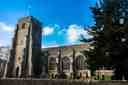
To spot All Saints Church, just look ahead for a large, grey stone building with tall gothic windows and a square tower on the left side topped with a bright blue clock-its medieval walls and old gravestones make it hard to miss! Now, let’s step back in time-imagine the year is 1395 and a determined Archbishop named William Courtenay is pacing about, hat askew, planning something grand. Right where you’re standing, he decided to build a church so majestic, it’s been called the “grandest Perpendicular style church in Kent.” That’s not just a fancy title-it means you’re looking at a building designed to wow, with towering windows, sturdy buttresses, and even a crenellated top, just like a castle! Courtenay had set up this church as the heart of his College of All Saints, replacing an older, smaller place of worship dedicated to St Mary. They say he was so determined that even after he passed away the very next year, his dream pressed on-another Archbishop named Thomas Arundel took the plans and finished the work by 1398, all with the help of support from King Richard II (not a bad friend to have, right?). Richard wasn’t shy either; he donated land and income from local parishes and even the Hospital of St Peter and St Paul here in Maidstone. But get this-building this all wasn’t cheap. Courtenay actually got special permission from the Pope to charge all the churches in his territory fourpence in the pound to fund it. Imagine the church collection plate after that announcement! After the college closed in the 1500s during England’s wild religious shakeups, the church became Maidstone’s parish church, holding itself together even as its lands went bouncing from noble family to noble family-including George Brooke, who later lost it all when accused of high treason in a plot against King James I! You can almost hear the tension in the air when you remember that. This church isn’t just stone and glass-it’s full of memory. Inside, there’s a chapel once used by the Fraternity of Corpus Christi, choir stalls with ancient, hand-carved misericords, and the resting places of people who shaped Maidstone’s history. Monuments celebrate everyone from the first master of the college, John Wotton, to the Astley family and even William Shipley, who founded the Royal Society of Arts. Outside, old gravestones rest under the green hush of trees, and the medieval churchyard wall whispers secrets of centuries past. If you look up at the tower (which used to have a spire until lightning zapped it in 1730), picture a set of ten bells hanging inside. They’re still rung today by local bell-ringers, filling the town with music. Around you, the River Medway flows by, and just to the north-west sits the grand Archbishop’s Palace. The clock you see was made in 1899, but don’t worry if you see it ticking along-when it strikes, it plays the famous Westminster chimes! So, the next time those bells ring, imagine the centuries of villagers, monks, and noblemen who heard the same chimes and stood just where you’re standing, marveling at Maidstone’s grand heart-All Saints Church.
Open dedicated page →- location_on5
Battle of Maidstone
Buy tour to unlock all 16 tracksSo, let’s rewind-back to the Second English Civil War, a time when England was tearing itself apart over who should rule: King or Parliament? By late May, a major Royalist…Read moreShow less
So, let’s rewind-back to the Second English Civil War, a time when England was tearing itself apart over who should rule: King or Parliament? By late May, a major Royalist uprising swelled in Kent and Essex with more than 10,000 men lining up outside Maidstone at Penenden Heath, just nearby. The Earl of Norwich led the charge, setting out to claim towns for King Charles-Gravesend, Rochester, Dover, and of course, Maidstone. These Kentish Royalists were fighting against the Parliamentarian ‘Roundheads’ and their highly trained New Model Army. Think of it as the original “Game of Thrones,” but with more mud and fewer dragons. The Parliamentarians, led by the sharp and determined Sir Thomas Fairfax, were stretched thin-only about 6,000 of them, with half already off quelling another rebellion in Wales. That left Fairfax with just 4,000 seasoned warriors to retake Maidstone from a force of around 2,000 Royalists inside the town. But here’s the catch: most of those Royalists weren’t soldiers at all, but a hodgepodge of cavaliers, locals, sailors, and even watermen. Not exactly the world’s greatest army, unless you needed someone to row you out of trouble. Fairfax got strategic: early on, he faked an attack at Aylesford to draw away some Royalists and then quietly crossed the Medway at East Farleigh Bridge, nearly unopposed. That old bridge-still standing today-witnessed hundreds of boots and hooves splashing across the river. Soon, the real action began on Penenden Heath, as Fairfax split the Royalist defenses. By late afternoon, the Earl of Norwich realized too late that trouble was brewing; right about then, the sky opened up, rain poured down, and the battle for Maidstone began in earnest. Picture it: the cobbled streets you see now turned into a muddy, rain-soaked battlefield, lit by flashes of lightning and the orange glow of musket fire. At first, skirmishes broke out on Penenden Heath, but soon Fairfax’s troops were storming straight into town from the south. The fighting here was so fierce and so close-street by street, inch by desperate inch. Neighbors became enemies, and every doorstep was a potential stronghold. You’d hear the clatter of blade on blade, shouts for help, and the relentless drumming rain on rooftops. The Royalists held out bravely, falling back toward Gabriel’s Hill, then Week Street, before finally making their last stand here at St Faith’s Churchyard. Imagine the tension: thunder rumbling overhead, the night sky split by lightning, as Fairfax’s men closed in. Just after midnight, soaked to the bone and weary from hours of fighting, Fairfax finally broke their defenses. And then, in a moment almost comical for its surprise, about a thousand Royalists stumbled out of St Faith’s Chapel, offering their swords to surrender. I bet Fairfax was as astonished as if they’d offered him a nice warm cup of tea. Those Royalists were then kept prisoner in All Saints Church, but in a show of respect for their effort, Fairfax allowed most of them-over 1,300 defeated men-to go home. That’s probably one of history’s earliest “Get Out of Jail Free” cards. Meanwhile, the rest of the Royalist army up on Burham Heath melted away, some heading north to try their luck at taking London, only to find the gates slammed shut. They then retreated to Colchester, fighting on for another ten weeks in a brutal siege-phew, some people just don’t know when to call it a day! As you wander these streets, remember that several buildings from that drama-filled night are still standing, like No. 78 Bank Street, dated 1611. All Saints Church is almost unchanged since 1648. The doublet Fairfax wore is displayed at Leeds Castle-not that you’d want to borrow it, unless you enjoy historic sweat stains. In modern times, Maidstone still remembers. Anniversaries of the battle have stirred into life with rousing re-enactments-sometimes so lifelike it’s hard to tell who’s a modern visitor and who’s a wandering ghost. Two plaques in town, one on Bank Street and another in Brenchley Gardens, remember those chaotic hours when Maidstone’s fate hung in the balance. Quite a tale, eh? And you don’t even need a sword to take part-just a good pair of walking shoes and plenty of imagination. Intrigued by the background, battle or the aftermath? Explore further by joining me in the chat section below.
Open dedicated page → - location_on6
Tithe Barn, Maidstone
Buy tour to unlock all 16 tracksDirectly ahead, you’ll see a sturdy two-storey stone building with rough stone walls, bold buttresses, and a striking wooden porch that sticks out above a few arched doorways-if…Read moreShow less
Directly ahead, you’ll see a sturdy two-storey stone building with rough stone walls, bold buttresses, and a striking wooden porch that sticks out above a few arched doorways-if you spot the small windows set high up and a roof that hips down at each end, you’ve found the Tithe Barn. Now, imagine you’re standing here in the middle of the 14th century. The air smells of hay, horses, and maybe even a hint of wet stone after the rain. In those days, this incredible barn was the main storehouse for the Archbishop’s Palace just a stone’s throw away. Built by Archbishop Courtenay, whose fingers-you might say-were in a lot of medieval pies, the barn was the place where local farmers would bring a tenth of their crops; this wasn’t a voluntary donation, mind you, but a tax to keep the palace well-stocked and the church’s belly full. But it wasn’t just used for storing goods. As the centuries rolled by, the building became the palace stables. Picture the thunder of hooves echoing off these old rag-stone walls, and stable boys ducking under the heavy wooden beams, trying to avoid the-let’s call them ‘gifts’-left behind by the Archbishop’s horses. Those buttresses you see weren’t just for show; they helped hold up the barn’s great hipped roof, built with enormous crown posts-basically, medieval engineering flexing its muscles. The real twist in the tale comes much later. In the 20th century, a carriage-loving mayor named Garrard Tyrwhitt-Drake saw horse-drawn vehicles heading for the scrapyard as cars took over Britain’s roads. With a heart as grand as this barn, he saved dozens of carriages, from Queen Victoria’s own state landau to humble village carts, and opened the country’s first carriage museum right here in 1946. So, as you stand outside this medieval time capsule, listen for a faint clatter of hooves or the creak of wooden wheels-history’s echo, keeping the past very much alive.
Open dedicated page → - location_on7
Borough of Maidstone
Buy tour to unlock all 16 tracksTo spot the Borough of Maidstone, look straight ahead for a grand red-brick building with a white clock tower just beyond a striking stone monument and a cluster of half-timbered…Read moreShow less
To spot the Borough of Maidstone, look straight ahead for a grand red-brick building with a white clock tower just beyond a striking stone monument and a cluster of half-timbered houses-right at the heart of the bustling street. Welcome to the civic pulse of Maidstone-the Borough itself! Imagine yourself at the centre of a community whose story stretches back through layers of shifting parishes, bustling markets, and even a little government drama. Here, surrounded by historic buildings and a hint of festive sparkle, you’re standing in the middle of an area that’s been a hub for local decision-making, right since it was officially born in the spring of 1974. Picture it: council officials sweeping in, merging everything from the busy town centre to the peaceful rural fringes of Maidstone and Hollingbourne, all in the name of modern local government. Maidstone has always been a place where decisions get made. The mighty River Medway flows nearby, once the main way goods travelled in and out, with boats gliding up to Tonbridge and traders shouting across the docks. For centuries, if you wanted your fortunes to rise, you came here: Roman roads met right around here; two great motorways cross north and east, and even the train lines finally conceded, bending their metal will to give Maidstone a real place on the map. There’s always been movement-goods, people, maybe even a political squabble or two. And what a patchwork the borough is! It runs from busy Maidstone town, with its dazzling Christmas lights and cheeky market stalls (I bet you can almost smell the candied nuts), out to tranquil villages where time meanders along with the rivers-the Medway, the Beult, and the Teise all joining forces at Yalding. The land itself tells a story: to the south, that honey-colored Greensand Ridge held the fine sand for glass-making; later, clay and chalk fueled paper and cement factories. It’s been an industrious borough, one way or another-just imagine the clang of tools from days gone by, and the whir of modern traffic linking past and present together. But let’s not skip the drama in council chambers! Politically, Maidstone Borough is a lively place. Since 2023, no single party has had complete control-so you could say it’s as changeable as the British weather. Councillors meet nearby in Maidstone Town Hall, in heated debates and friendly coalitions. (Don’t worry, the biggest risk here is a spilled cup of tea, not a sword fight.) The latest team running things is a coalition of Greens, Liberal Democrats and a band of spirited independents, led by Green councillor Stuart Jeffery. They’re tackling everything from civil parishes to the next local election-mark your calendar for May 2028 if you’re planning to run for office! But the real test of Maidstone’s spirit is its ability to bring everyone together. There’s a Mayor, of course, but it’s a ceremonial role-think more official ribbon-cutter than policy powerhouse. The real power is with the council leader, steering this diverse borough alongside 49 councillors, each elected from one of the 26 wards. Every four years, the votes are cast and the banners are hung, with each new face bringing a patch of color to Maidstone’s civic quilt. All of this is why the Borough of Maidstone is so much more than bricks, roads, or a clocktower. It’s a curious blend of ancient river trade, electric modern life, steadfast tradition, and the ever-surprising shuffle of local politics-forming the vibrant, ever-evolving heart of Kent you’re exploring right now. Stay alert: in Maidstone, history doesn’t just whisper, it laughs, debates, and calls you in for a cuppa. Interested in a deeper dive into the geography, governance or the transport? Join me in the chat section for an insightful conversation.
Open dedicated page → - location_on8
Hazlitt Theatre
Buy tour to unlock all 16 tracksTo spot the Hazlitt Theatre, just look for a white, two-story building right in front of you with a bright red sign proudly declaring “Hazlitt Theatre” above a glass awning,…Read moreShow less
To spot the Hazlitt Theatre, just look for a white, two-story building right in front of you with a bright red sign proudly declaring “Hazlitt Theatre” above a glass awning, nestled between other shops on Earl Street. Now, as you stand here, imagine turning back the centuries. The air is thick with the chatter and clatter of market traders-yes, right here! In the 1830s, this spot wasn’t ringing with the laughter of panto but with the bartering hum for sacks of corn. The oldest part of what you see was the original Market Buildings, built in 1835 by John Whichcord Sr., and styled in very grand neoclassical fashion. Picture this: a long stretch of 18 arches down the side, with sturdy Tuscan columns, all finished in smooth stucco. Not everyone was impressed though-architectural historian Nikolaus Pevsner called it an “ugly mid-19th century arcading.” Ouch! I guess not everyone’s a fan of the classics. But don’t let that dampen the drama. On the ground floor, those arches once separated the hubbub of grain merchants, their footsteps echoing under the vaulted roof. Upstairs, sash windows-some looking out onto the bustling street, others painted blind-let in the Kentish light for the Exchange Studio above. For years, fortunes were made (and lost) over handfuls of barley and wheat, but it couldn’t last forever. When the Great Depression of British Agriculture struck, the corny business-if you’ll pardon the pun-dried up and this became a home for boutique shops and a small theatre space. Now, roll forward to 1869 and look at the very front of the theatre. Built in the same neoclassical style but with a bit more showbiz flair, this section used to be the concert hall. Three grand windows arch over the entrance, and up at the roof, you can spot a circular panel. Peer close-you’ll see a sheaf of corn there and “The Corn Exchange” inscribed around it, a secret nod to the building’s agricultural roots. By the 1950s, tastes had changed; people wanted spectacle, not seed. The concert hall was reborn as the Maidstone Municipal Theatre, and the County Towners Variety Club filled the house with music, laughter, and thunderous applause. Then, in the 1980s, the theatre took a new name in honor of a true Maidstone hero-William Hazlitt, the essayist and reviewer, born right here in 1778. Suddenly, a place meant for measuring barley was ringing with heartfelt monologues, dramatic sword fights, and slapstick punchlines. The council even sold it on a long lease in 1991, rented it back, and kept it alive for the community. In 2009, the Hazlitt’s walls echoed with pride as a plaque was unveiled for Tony Hart, a beloved children’s TV presenter born in Maidstone. Today, between the Hazlitt Theatre and the Exchange Studio, you’ve got room for over 500 eager theatregoers-whether it’s for a Christmas pantomime, a captivating play, or even a loud, joyful singalong. So next time you see the doors swing open and hear a burst of laughter or applause, remember: this place has seen centuries of drama-and that’s before the actors even get on stage!
Open dedicated page →
9Maidstone Museum
Buy tour to unlock all 16 tracksTo spot the Maidstone Museum, look ahead for a striking mix of old red-brick walls with large, elegant windows and a bold, golden, modern entrance that has “museum” displayed in…Read moreShow less
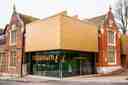
To spot the Maidstone Museum, look ahead for a striking mix of old red-brick walls with large, elegant windows and a bold, golden, modern entrance that has “museum” displayed in huge letters on glass. Right, you’re standing before one of Maidstone’s real treasures! Just imagine stepping back in time-over 450 years ago-when this was a grand Elizabethan manor called Chillington Manor, completed in 1577. Now, its tall chimneys and intricate brickwork stand shoulder-to-shoulder with gleaming modern gold panels: a perfect blend of then and now. But, the real adventure begins with a Victorian doctor named Thomas Charles. He loved collecting everything from art to ancient artefacts-some people hoard cereal boxes; he hoarded history! When Dr Charles passed in 1855, he left his amazing treasures to the people of Maidstone, asking for them to be kept safe forever. The council bought his whole house, did some repairs (imagine the clatter of hammers and the squeak of wheelbarrows ), and opened it as the Charles Museum in 1858-one of Britain’s first ever local authority-run museums! This place soon became the vibrant heart of Maidstone’s thirst for discovery. Over time it grew, stretched, and sprouted wings-literally! Throughout the late 1800s and early 1900s, generous locals helped pay for more rooms and galleries to display the ever-growing collections. The Bentlif brothers and the adventurer Julius Brenchley-who probably saw more of the world than any Victorian explorer with a sturdy umbrella-made big donations that gave us the art and ethnography wings you see today. Inside are over 600,000 artefacts and specimens. Yes, you heard right! If you lined up every piece, you’d need some sturdy shoes. Some collections are world-famous. For example, Maidstone’s Anglo-Saxon treasures are simply legendary-they come from the richest Anglo-Saxon region in Britain. And if you fancy ancient Japanese wonders, there’s a dazzling cache, including over 750 Edo-period woodblock prints, shining swords, and netsuke carvings that look so real, you’ll wonder if they’ll scamper off the shelves. The Brenchley Collection-assembled by the intrepid explorer himself-brings together masks, statues, and art from across the globe. There’s even a piece of “royal” furniture with a built-in story: Napoleon’s chair, which follows the emperor’s exile to St Helena. He apparently sat in that very chair, deep in thought, chatting and absentmindedly whittling away at the arm with his penknife. Not exactly “good as new,” but history buffs would call that a feature! The museum also has the second volume of the Lambeth Bible, a giant illuminated book from the 1100s. You can imagine monks hunched over, quills scratching in flickering candlelight, filling those pages with glowing gold and sweeping letters. Or how about their Egyptian artefacts, including the mummy of Ta-Kush-a woman from Sudan who found her final resting place in Egypt in the 7th century BC? Creepy but incredibly fascinating! Don’t miss the Victoria Gallery, built to celebrate Queen Victoria’s Diamond Jubilee, or the Bentlif Art Gallery, funded to house an art collection so impressive it almost needs its own postcode. You’ll also find incredible ceramics from Europe, China, and England-pottery fans, this is pottery paradise! The museum’s embroidery and costume collections showcase fashion from the 1600s onwards; you might spot lacework so delicate it practically whispers in the glass case. Natural science lovers will feel right at home too, with 450,000 natural history specimens: everything from birds’ eggs-neatly arranged like a breakfast gone wild-to thousands of insects, shimmering shells, and even rare fossils. The air must almost buzz with imaginary bees! In those old wooden cabinets are Pleistocene bones, glittering minerals, and rocks from Kent’s ancient past, waiting for someone like you to appreciate their secrets. Oh, and let's not forget the Queen’s Own Royal West Kent Regiment Museum tucked inside, packed with military medals and daring tales from Maidstone’s bravest. So, step inside if you dare-and prepare to get lost (in a good way!) in hundreds of years of world-class history and wonder. I’ll wait outside-museum guards don’t like me telling dinosaur jokes anyway. Curious about the overview, building or the collections? Don't hesitate to reach out in the chat section for additional details.
Open dedicated page →
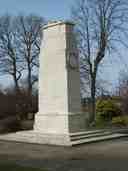
10The Queen's Own Royal West Kent Regiment Museum
Buy tour to unlock all 16 tracksTo spot the Queen's Own Royal West Kent Regiment Cenotaph, look for a tall, pale stone monument with clean, simple lines, three shallow steps leading up, and a circular laurel…Read moreShow less
To spot the Queen's Own Royal West Kent Regiment Cenotaph, look for a tall, pale stone monument with clean, simple lines, three shallow steps leading up, and a circular laurel wreath sculpted on its side, all standing prominently in Brenchley Gardens. Alright, take a moment to stand in front of this elegant monument-no, it’s not a giant vanilla ice cream block! What you see is the Queen's Own Royal West Kent Regiment Cenotaph, a grand but solemn memorial dedicated to the brave souls of the regiment who never came home after the First World War. Let’s dial our minds back to 1918, when the guns finally fell silent and the world was holding its breath. The losses were hard to bear-nearly 6,866 members of this very regiment were gone in the blink of history’s eye. The people of Maidstone, grief-stricken but determined, decided there must be a lasting tribute. A committee formed, plans were made, and then-like asking a celebrity chef to bake your birthday cake-they turned to one of the most famous architects of the era, Sir Edwin Lutyens. Now, Lutyens had quite the reputation. He was the mastermind behind London’s Whitehall Cenotaph, the centerpiece of Britain’s Remembrance Sunday. He was also the genius behind the humbling Thiepval Memorial in France, which is so big you could almost see it from space (or at least after a particularly strong cup of tea). For Maidstone, Lutyens agreed to create a slightly smaller twin of his Whitehall masterpiece-just two-thirds the size, but no less powerful. The cenotaph itself, which means “empty tomb,” is as restrained as it is moving. There are no fussy decorations-just the pure, pale lines of Portland stone rising upwards, topped by a simple chest tomb and a carved laurel wreath. Step closer and you’ll see the dates of both world wars etched carefully into the stone, alongside the haunting words, “THE GLORIOUS DEAD OF THE QUEEN'S OWN ROYAL WEST KENT REGIMENT...” It’s quiet, dignified, and deeply respectful. Imagine the atmosphere at the unveiling ceremony back on July 30, 1921. Crowds hushed in anticipation, the mood heavy with sorrow and pride. Major General Sir Edmund Leach did the honors, while the Archbishop of Canterbury himself spoke of sacrifice and hope. Suddenly, the breeze stirred as regimental colors-flags carried bravely through battle-were laid down, a final act of tribute. But the story doesn’t end there. Over time, the memorial itself became a kind of hero. In 2015, during the centenary of the First World War, Lutyens’ war memorials across England were deemed a “national collection.” The Maidstone cenotaph was upgraded to grade II* listed status-a rare mark of honor for an already honored place. So here it stands, quiet among the trees, holding the memory not just of battles and loss, but of a community’s promise: never to forget. A little mystery remains, though-look for the laurel wreaths carved on each side, the only decorative flourish in Lutyens’ strict design. They’re a silent nod to victory and respect, a detail small enough to miss if you rush by, but powerful when you pause. One last thought-if these stones could talk, they’d whisper a joke about Lutyens secretly loving a perfect rectangle. After all, out of all shapes, it’s the rectangle that’s most likely to have straight answers! So give a respectful nod as you move on, but remember: this cenotaph isn’t just stone, it’s a story carved in memory.
Open dedicated page →- location_on11
Kent Downs line
Buy tour to unlock all 16 tracksYou’re standing beside the Kent Downs line-just look ahead and you’ll spot the tracks stretching straight into the distance, flanked by wild grass and leafy trees, leading your…Read moreShow less
You’re standing beside the Kent Downs line-just look ahead and you’ll spot the tracks stretching straight into the distance, flanked by wild grass and leafy trees, leading your gaze toward a small bridge archway. Now, let your imagination hop aboard for a journey through time! Close your eyes for a moment and picture the 1880s: the smell of steam engines in the cool morning air, the rhythmic chugging of trains echoing across the Kent countryside. The Kent Downs line, as you see it now, was built by the London, Chatham and Dover Railway, finally reaching Ashford on the 1st of July, 1884. It was a day of great excitement-locals gathered near the tracks, hats waving, as the very first train rolled through. But did you know there was a bit of railway rivalry in the mix? For a while, this line ended at Ashford West, and you couldn’t reach the rival South Eastern Railway station directly-imagine the secret glares exchanged over cups of tea! The feud didn’t last forever. In 1899, when the big railway companies joined forces, Ashford West was closed, and all trains were diverted to the old South Eastern Railway station. Life on the railway moved fast after that-almost as fast as a Southeastern train on a good day. In 1939, just before the world was plunged into the chaos of war, the line was electrified as far as Maidstone East. It took until 1961 (with the Modernisation Plan in full swing) to electrify all the way to Ashford. Just imagine the hum of new electric engines buzzing through sleepy villages, the fields vibrating with a sense of change. Fast-forward to recent times: in 2020, the stretch from Ashford to Otford was lovingly adopted by the Kent Rail Partnership and renamed the Kent Downs line, complete with new partnerships and community pride. These double tracks are controlled by the Maidstone East Signal Box, with signals glowing like Christmas lights on a grey winter evening. Today, if you stand still enough, you can almost feel the excitement of London commuters and countryside adventurers as trains run by Southeastern or Thameslink whisk people off to London Victoria, Charing Cross, or Ashford. And, hey, if you’re hoping for a train straight to Cambridge, keep those fingers crossed-there’s still a bit of mystery about when that might actually happen! So while you listen to the distant rumble of trains, remember: every journey here is part of a story that stretches back over a century, right through the very heart of Kent.
Open dedicated page → - location_on12
Centre for Kentish Studies
Buy tour to unlock all 16 tracksHere we are, at what once was the famed Centre for Kentish Studies! Imagine, just a few decades ago, this building was buzzing with the excitement of historians, librarians, and…Read moreShow less
Here we are, at what once was the famed Centre for Kentish Studies! Imagine, just a few decades ago, this building was buzzing with the excitement of historians, librarians, and perhaps a good few nosey detectives keen on uncovering a family scandal or two. You’re standing outside what used to be a real treasure chest-only instead of gold, it was packed to the rafters with Kent’s secrets, stories, and paperwork thicker than my morning porridge. Picture it: it’s 1933, and Kent County Council gathers up dusty ledgers, fading maps, parish records, and makes history by opening one of the earliest local record offices in all of England. At the time, most folks thought archiving was a fancy way of saying “hoarding,” but as the years ticked by, it became clear this place held Maidstone’s memory safe and sound. By 1990, the place had gotten a makeover, joining its archives with the local studies library, creating one big happy family of records-which is sort of like bringing all the best storytellers together at a dinner party. It wasn’t just local folk, though: the powers that be, like the Lord Chancellor himself, recognized this centre for holding official public records. And if you thought it only handled local business, think again! It was also the caretaker for ecclesiastical records, serving the dioceses of Rochester and Canterbury, and even made friends with the legendary Canterbury Cathedral Library. Stories whispered across the halls, from estate papers of the Earls of Guildford (who surely had some juicy tales) to political documents and family dramas straight from the Talbot and Stuart-Wortley archives. It served as the main hub for Maidstone's history, keeping connections with branch offices as far as Dover and Ramsgate. But all good things evolve! In 2011, the centre packed its bags-no doubt with librarians dusting off one last book with a fond sigh-and relocated to a shiny new headquarters on James Whatman Way, joining forces with the county’s Central Library. The new Kent History and Library Centre was born, ready to archive for a whole new generation. So as you stand here, remember: these walls were witnesses to lovers’ secrets, royal intrigues, and the quiet heroics of Kentish folk. Who knows? Maybe some of your own history is tucked away in a box, just waiting to be found.
Open dedicated page →
Frequently asked questions
How do I start the tour?
After purchase, download the AudaTours app and enter your redemption code. The tour will be ready to start immediately - just tap play and follow the GPS-guided route.
Do I need internet during the tour?
No! Download the tour before you start and enjoy it fully offline. Only the chat feature requires internet. We recommend downloading on WiFi to save mobile data.
Is this a guided group tour?
No - this is a self-guided audio tour. You explore independently at your own pace, with audio narration playing through your phone. No tour guide, no group, no schedule.
How long does the tour take?
Most tours take 60–90 minutes to complete, but you control the pace entirely. Pause, skip stops, or take breaks whenever you want.
What if I can't finish the tour today?
No problem! Tours have lifetime access. Pause and resume whenever you like - tomorrow, next week, or next year. Your progress is saved.
What languages are available?
All tours are available in 50+ languages. Select your preferred language when redeeming your code. Note: language cannot be changed after tour generation.
Where do I access the tour after purchase?
Download the free AudaTours app from the App Store or Google Play. Enter your redemption code (sent via email) and the tour will appear in your library, ready to download and start.
If you don't enjoy the tour, we'll refund your purchase. Contact us at [email protected]
Checkout securely with 


