
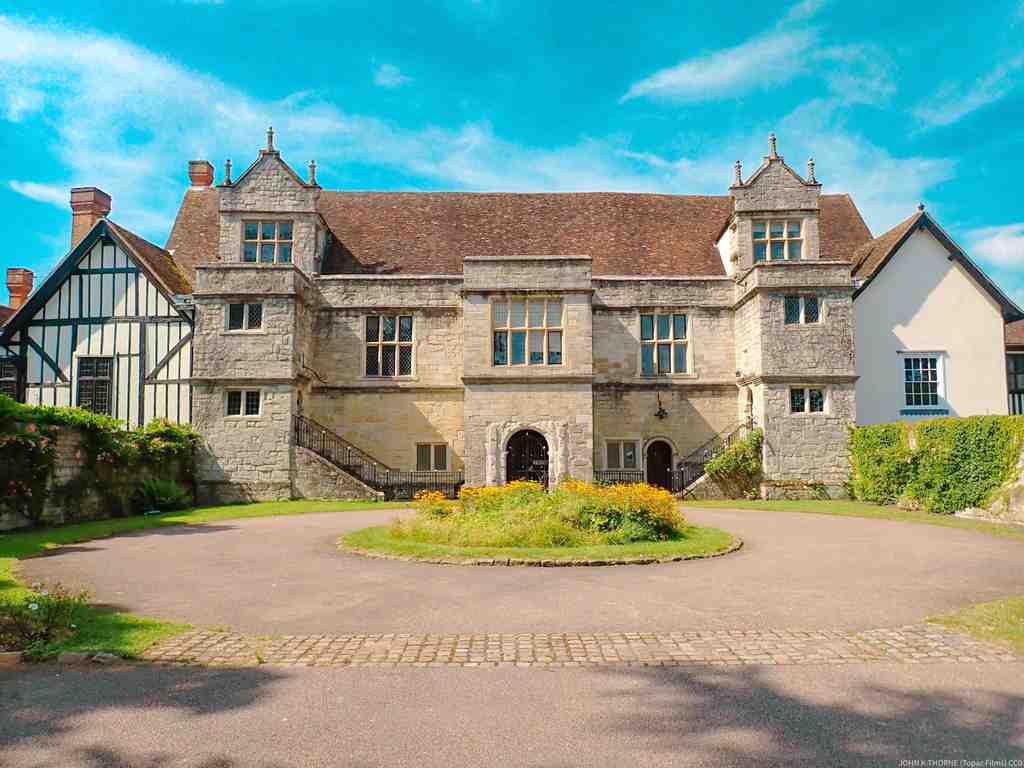
Right in front of you, you’ll see a grand, E-shaped stone mansion with sturdy timber-framed wings on each side, a handsome clay-tiled roof, and striking stone dormer windows-just look for the impressive old building rising proudly by the River Medway and you can't miss it.
Welcome to the Archbishop’s Palace! Take a deep breath and picture yourself stepping back through centuries of swirling cloaks and clattering hooves right where you stand-because this place is practically echoing with history. The year is 1348, and the swirling river just beside you is a carter’s busy highway, flowing with gossip and riverboats. Suddenly, the peace is broken by the arrival of an archbishop’s grand retinue, horses snorting and armor jangling. They’ve arrived at their “home away from home”-a pit stop on the journey between energetic London and holy Canterbury.
This was no ordinary pad-think of it as a medieval VIP lounge. But, truth be told, the site itself is even older. The Manor of Maidstone was probably gifted to the Archbishops of Canterbury as far back as the 7th or 8th century. In 1207, a thoughtful priest named William de Cornhill donated a cosy house to Archbishop Langton, but don’t get too attached: Archbishop Ufford, perhaps not a fan of Cornhill’s tastes, decided to knock it down and build a stony residence with a bit more pizzazz. He kicked off construction in the mid-14th century, soon followed by Archbishop Islip, who ordered up a few stones from another palace at Wrotham-why waste good stone, after all?
Now, as you look up at the main entrance and those bold towers flanking either side, imagine the bustle of chancellors, pages, and cooks crossing the threshold, a ring of bells occasionally piercing the air. During the last years of the 1300s, Archbishop Courtenay made the site even busier by founding the neighbouring College and All Saints Church next door. The Archbishop’s Palace became a maze of flickering candlelight and velvet-lined chambers, the sort of place you’d expect to meet a mysterious stranger by a crackling fireplace.
Skip forward to the 16th century, and life at the palace takes a wild turn-Tudor style! Henry VIII, the king known for his love of both banquets and beheadings, got his hands on this stone gem after Archbishop Cranmer swapped it for other lands. Henry gave the estate to Sir Thomas Wyatt, but just when Sir Thomas’s son tried to rebel against Queen Mary, the palace was whisked away back to the Crown-palace drama, right?
The 17th century saw the dazzling Astley family move in, adding a few touches and extending the building into the E-shape you see now. Can’t you just imagine grand parties in the glow of candlelight, with guests peering out those gorgeous stone-framed windows? But like any epic story, owners came and went-the Astleys, the Marshams, and even the Territorial Army set up a medical school here in the 20th century, all leaving behind echoes of their lives within these storied walls.
You might notice a charming gatehouse just around the corner-it's as old as the palace itself-and if you peek near the southern flank, there’s a dark, small-windowed dungeon dating back to the 14th century. Now that’s a place I wouldn’t want to get locked in after dark! Still, the palace walls have stood strong for nearly 700 years, earning a Grade I protected status, while the dungeon shivers on the Historic England Heritage at Risk Register.
These days, the Archbishop’s Palace does a roaring trade as a wedding venue-imagine saying “I do” where archbishops once traded secrets. Kent Garden’s Trust lovingly tends the Apothecary’s Garden out back, open for peaceful strolls on sunny summer Wednesdays. While the palace itself only opens on special Heritage Days, its stonework and stories are always here for you, weathering the centuries. Just mind the ghost of an archbishop or two as you continue your journey!




