
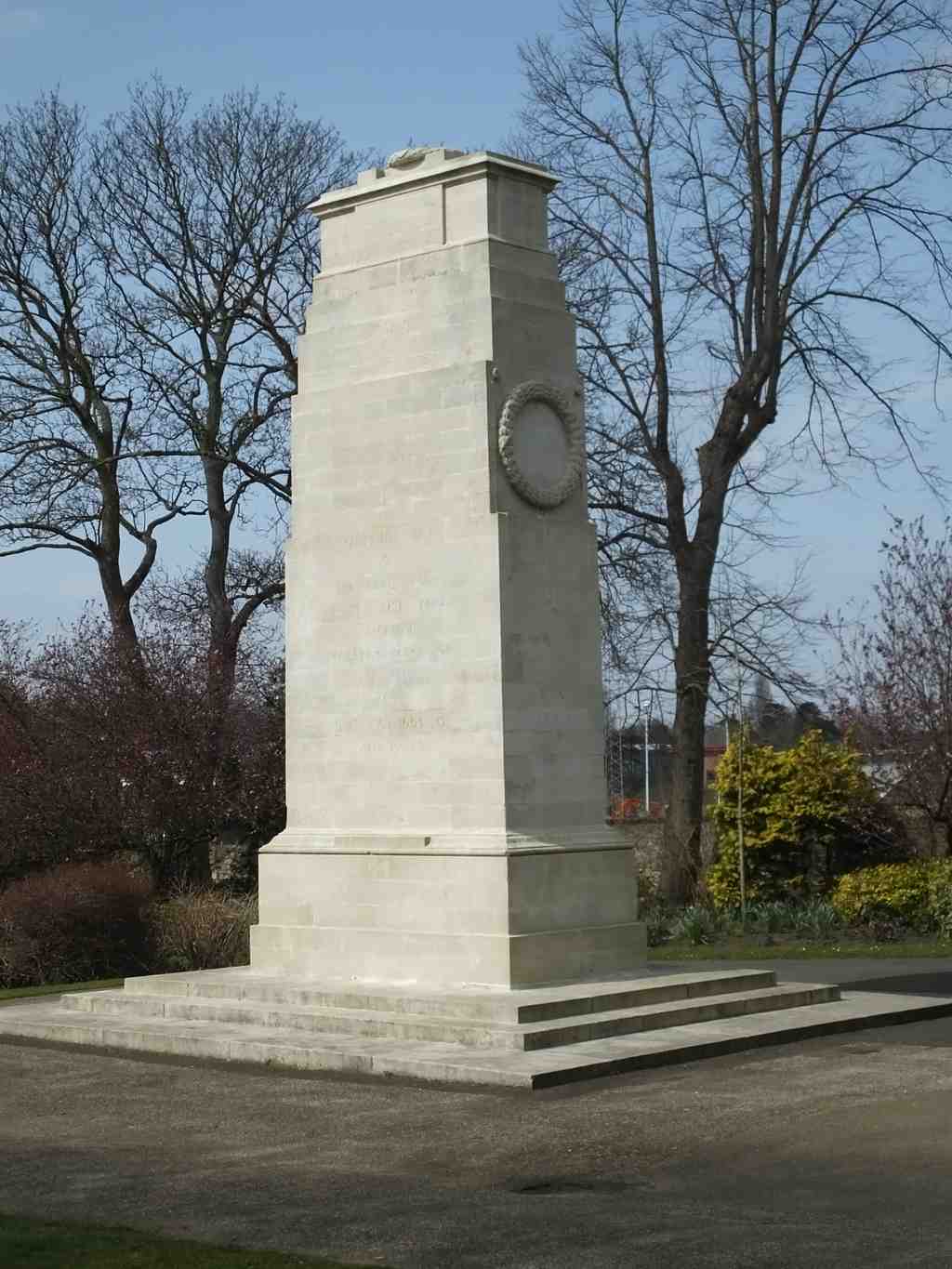
To spot the Queen's Own Royal West Kent Regiment Cenotaph, look for a tall, pale stone monument with clean, simple lines, three shallow steps leading up, and a circular laurel wreath sculpted on its side, all standing prominently in Brenchley Gardens.
Alright, take a moment to stand in front of this elegant monument-no, it’s not a giant vanilla ice cream block! What you see is the Queen's Own Royal West Kent Regiment Cenotaph, a grand but solemn memorial dedicated to the brave souls of the regiment who never came home after the First World War.
Let’s dial our minds back to 1918, when the guns finally fell silent and the world was holding its breath. The losses were hard to bear-nearly 6,866 members of this very regiment were gone in the blink of history’s eye. The people of Maidstone, grief-stricken but determined, decided there must be a lasting tribute. A committee formed, plans were made, and then-like asking a celebrity chef to bake your birthday cake-they turned to one of the most famous architects of the era, Sir Edwin Lutyens.
Now, Lutyens had quite the reputation. He was the mastermind behind London’s Whitehall Cenotaph, the centerpiece of Britain’s Remembrance Sunday. He was also the genius behind the humbling Thiepval Memorial in France, which is so big you could almost see it from space (or at least after a particularly strong cup of tea). For Maidstone, Lutyens agreed to create a slightly smaller twin of his Whitehall masterpiece-just two-thirds the size, but no less powerful.
The cenotaph itself, which means “empty tomb,” is as restrained as it is moving. There are no fussy decorations-just the pure, pale lines of Portland stone rising upwards, topped by a simple chest tomb and a carved laurel wreath. Step closer and you’ll see the dates of both world wars etched carefully into the stone, alongside the haunting words, “THE GLORIOUS DEAD OF THE QUEEN'S OWN ROYAL WEST KENT REGIMENT...” It’s quiet, dignified, and deeply respectful.
Imagine the atmosphere at the unveiling ceremony back on July 30, 1921. Crowds hushed in anticipation, the mood heavy with sorrow and pride. Major General Sir Edmund Leach did the honors, while the Archbishop of Canterbury himself spoke of sacrifice and hope. Suddenly, the breeze stirred as regimental colors-flags carried bravely through battle-were laid down, a final act of tribute.
But the story doesn’t end there. Over time, the memorial itself became a kind of hero. In 2015, during the centenary of the First World War, Lutyens’ war memorials across England were deemed a “national collection.” The Maidstone cenotaph was upgraded to grade II* listed status-a rare mark of honor for an already honored place.
So here it stands, quiet among the trees, holding the memory not just of battles and loss, but of a community’s promise: never to forget. A little mystery remains, though-look for the laurel wreaths carved on each side, the only decorative flourish in Lutyens’ strict design. They’re a silent nod to victory and respect, a detail small enough to miss if you rush by, but powerful when you pause.
One last thought-if these stones could talk, they’d whisper a joke about Lutyens secretly loving a perfect rectangle. After all, out of all shapes, it’s the rectangle that’s most likely to have straight answers! So give a respectful nod as you move on, but remember: this cenotaph isn’t just stone, it’s a story carved in memory.




