
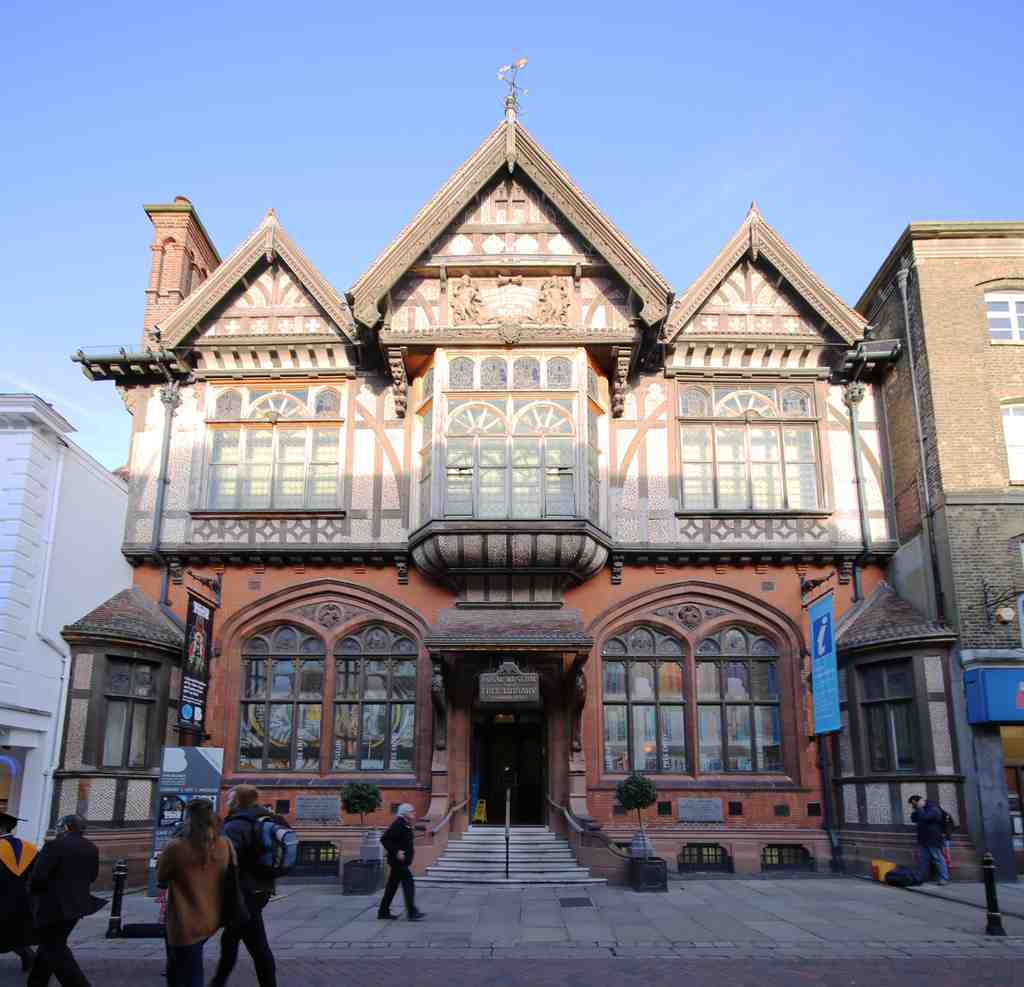
To spot the Beaney House of Art and Knowledge, look directly ahead for the building that stands out like something from a storybook. You’ll notice steep, pointed roofs, lots of decorative stonework, and big bay windows framed in detailed patterns. The brickwork is red and brown, with a mixture of fancy wood trim-the kind that almost looks hand-carved just for you. Find the wide steps leading up to a grand wooden doorway set in the middle, and you know you’ve found the Beaney!
Alright, take a deep breath-can you smell that? That’s the scent of old books, mysterious artifacts, and maybe just a hint of old museum polish drifting from inside. The Beaney House of Art and Knowledge looks a little bit like a grand Tudor mansion stuck in the middle of the city-it’s got a roofline that zig-zags like the teeth on a saw and windows that look like they’re bursting with stories.
This place is more than just a museum. It’s Canterbury’s ultimate treasure chest! For over a century, it’s been crammed with books, art, and so many odd objects that you half-expect a curious cat to poke its nose from a window. The building you see opened in 1899, thanks to Dr James George Beaney-he left a rather generous sum in his will for a place where working men could get a little culture. Although, if you ask me, I bet he also wanted a place where his portrait could look down on everyone!
When the doors first opened, the smell of fresh mahogany filled the halls-those display cases actually came from the British Museum, which is a bit like getting hand-me-downs from royalty. There’s a bit of drama, too… originally Canterbury was supposed to get even more money from Dr Beaney’s will, but at the last minute he changed his mind and Melbourne, Australia, got the big prize. You can almost hear the gasps of Canterbury’s council in the old days!
Over time, the museum gathered treasures from all over-books, art from the Victoria and Albert Museum, even rare pottery. Imagine the clatter and shuffle of people running up the stairs, hungry for knowledge, every time a new exhibition arrived. In fact, during the 1940s, the Beaney was inspiration for a film institute in “A Canterbury Tale”! And the tradition of pavement art right outside? It’s been going on here for over a hundred years. Some say the ghosts of artists past still whisper outside on chilly mornings.
Now, this place isn’t just about the past-it’s buzzing with exhibitions, workshops, and stories yet to be told. So, as you stand here, give a little nod to Dr Beaney-controversial, generous, and secretly proud of his portrait inside. Don’t worry, he’s harmless… unless you’re holding an overdue library book!




