
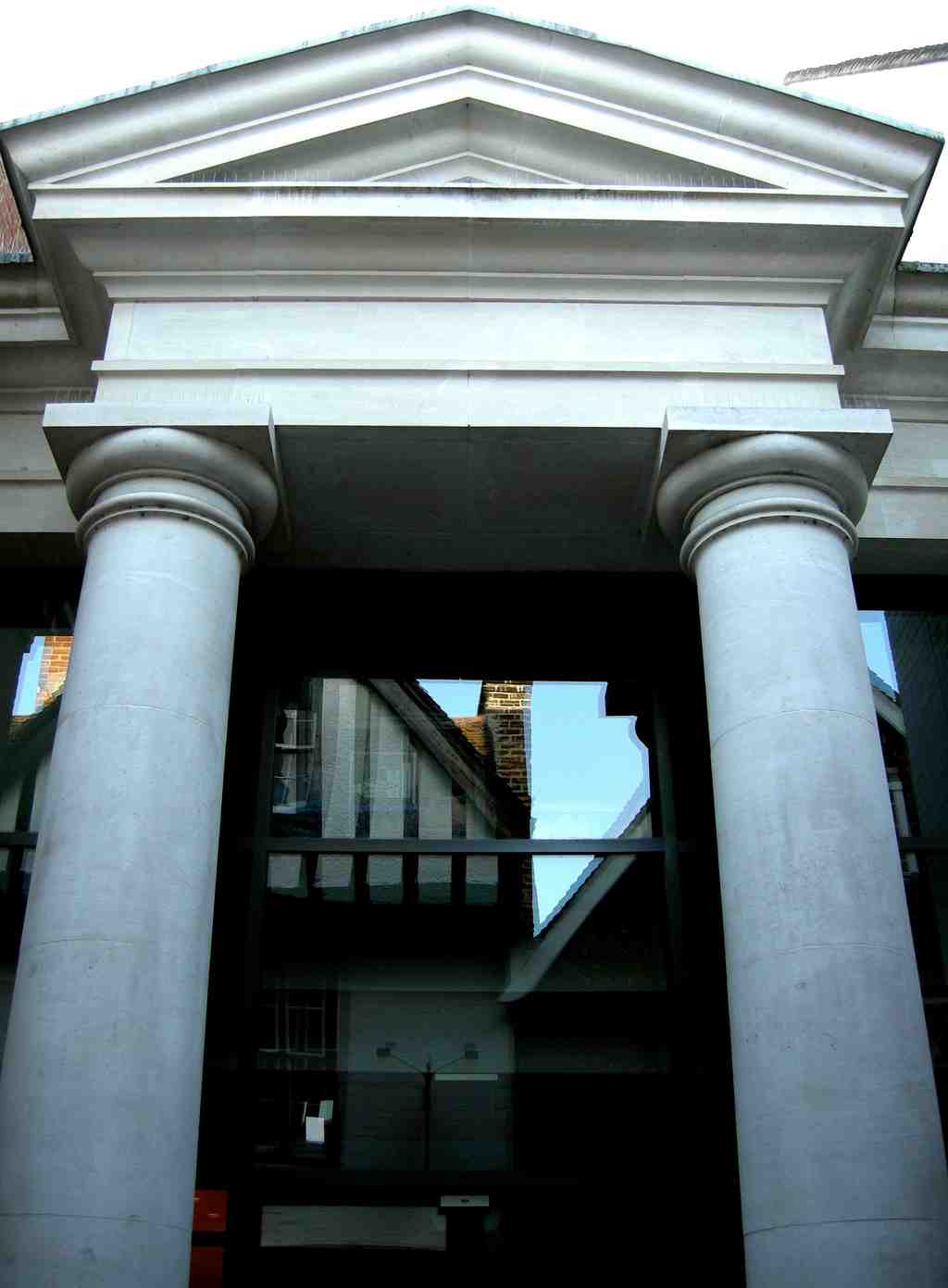
You’re almost at the Canterbury Roman Museum-look out for the tall, smooth white stone columns right in front of you, topped by a triangular roof that looks almost like it belongs on a Greek or Roman temple. The entrance is framed by these columns, and behind them you’ll notice a big glass window reflecting nearby buildings. If you’re feeling like Julius Caesar about to march into history-you’re in the right place!
Now, imagine stepping into a hidden time machine, where the city whirs and fades away beneath your feet. Below street level, tucked under modern Canterbury, lies an ancient secret: a beautifully preserved Roman pavement that once lay at the heart of a Roman townhouse. It’s been here-in one way or another-since about the year 300, when the Romans were the rulers of all they could see, and possibly a bit more, if you believe the stories.
This remarkable pavement, with its bright mosaics, was discovered quite by chance. After World War II bombing had given Canterbury a rather severe haircut, a group of archaeologists crept in, dusted off the debris, and-voila!-found themselves staring at a slice of Roman life, almost perfectly preserved. Since then, this spot has been treating visitors to treasures of all kinds: silver spoons, mysterious dice (were the Romans unlucky?), shiny bits of cavalry harness, and even the grand 'Canterbury Treasure'-a hoard of late Roman silver buried like a secret in the earth for over a thousand years.
Picture bustling Roman Canterbury in its prime: the smell of baking bread, the clatter of soldiers’ sandals by the city’s theatre and baths, the laughter echoing off mosaic floors. People chatted in winding corridors, residents argued over dinner, and ambitious builders tacked on new rooms and painted fresh scenes. By the way, if you ever worried about your house needing an extension, the Romans were experts-they seemed to change their homes as often as they changed their togas.
And don’t miss the magic below your shoes: each step down into this museum means you’re traveling backwards in time, about a hundred years with every layer of earth. When you’re next to that ancient floor, you’re right in the heart of Roman Canterbury, with all its secrets and stories just whispering beneath your feet.
So take a moment-close your eyes, maybe give a little bow to the long-gone Romans-and imagine what it would have been like to live here, through centuries of change, laughter, and maybe a few fierce debates about who actually won at dice.
Fascinated by the exhibits, listing details or the resolved fears of closure? Let's chat about it




