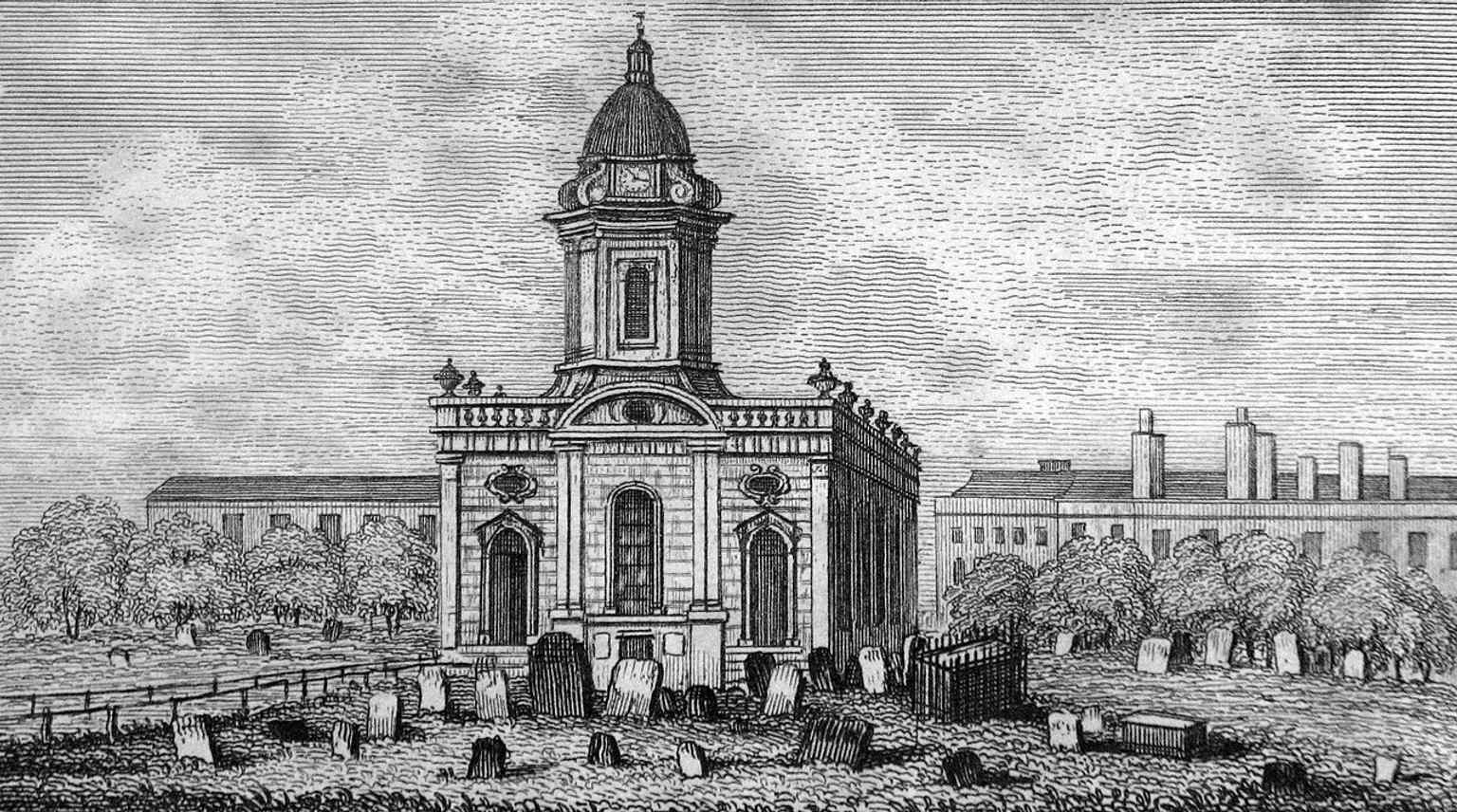
On your right, St Philip’s is a pale stone Baroque church with a sturdy square tower, tall evenly spaced windows, and a small lead dome with a lantern perched on top.
For all its calm, this building has done a fair bit of surviving. St Philip’s began because Birmingham outgrew its medieval parish church, St Martin’s in the Bull Ring, so in seventeen ten Robert Philips gave this patch of land, then called the Barley Close, and Thomas Archer designed a new church here. It opened in seventeen fifteen, dedicated to Saint Philip in a neat nod to the donor. Archer chose Baroque, the dramatic, slightly theatrical style that liked bold shapes and a bit of swagger. Even from out here, you can see that confidence in the tower and those crisp lines along the roof.
This site sits on one of the highest points in the district, and people liked to say it stood level with the cross on Saint Paul’s Cathedral in London. Birmingham has never been shy about measuring itself against bigger names. Fair enough.
For nearly two centuries, St Philip’s served as a parish church. Then Birmingham grew into a city, and in nineteen oh five Joseph Chamberlain and Bishop Charles Gore helped raise it to cathedral status, with Gore as the first bishop. Even churches, it turns out, get promoted.
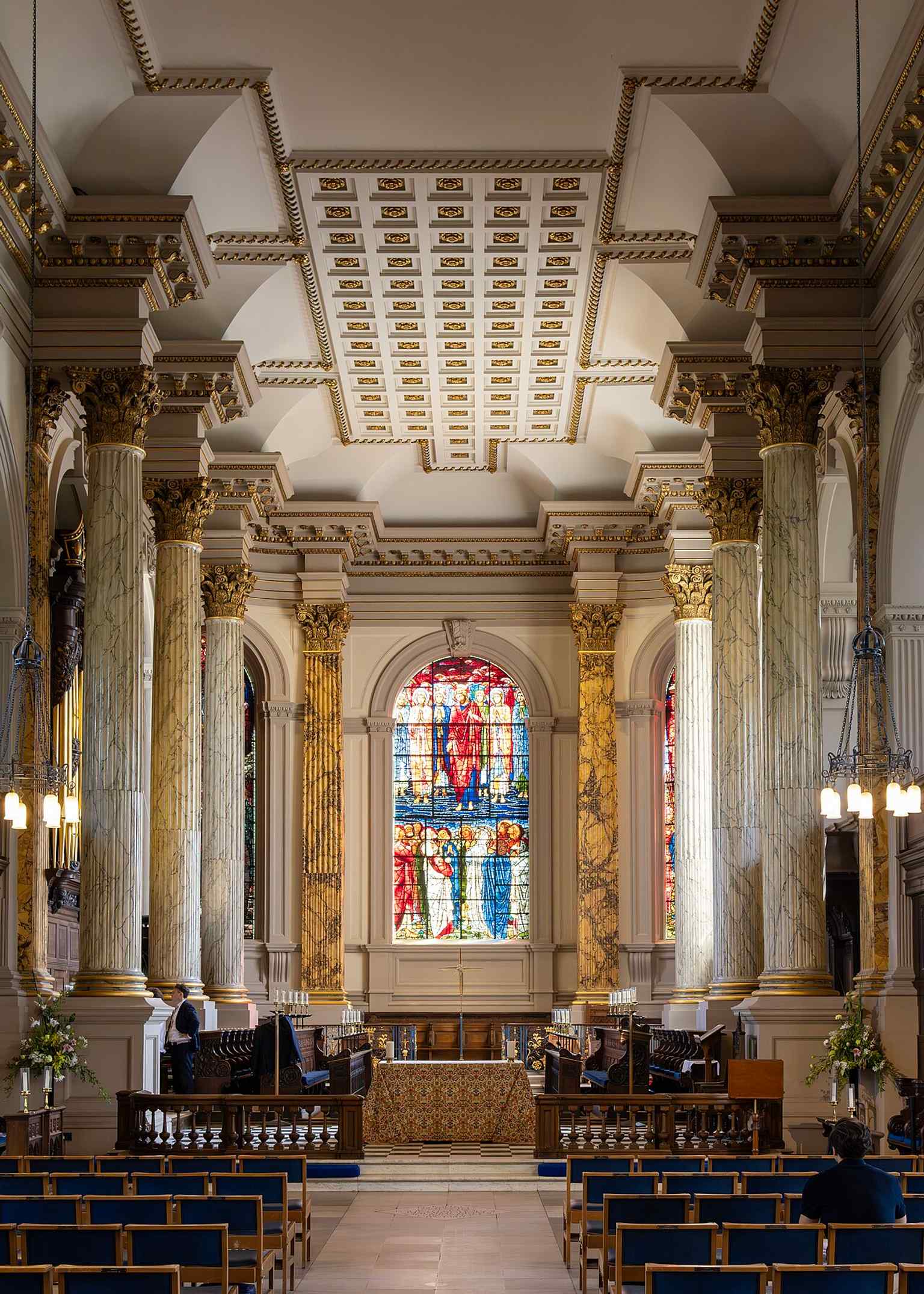
But the reason St Philip’s feels especially moving is not just growth. It is survival... active, practical, stubborn survival. On the seventh of November, nineteen forty, bombing gutted the cathedral. Fire tore through the interior. The shell you see standing here could easily have become a memorial to loss and nothing more. Instead, one crucial act happened before the bombs fell: Birmingham Civic Society removed the cathedral’s best-known stained glass windows by Edward Burne-Jones and stored them in a slate mine in Wales. That is wartime survival and salvage in a nutshell: foresight doing its best, and luck agreeing to cooperate for once.
Those windows mattered deeply. Burne-Jones was born nearby on Bennett’s Hill and baptized here as a baby, so his glass was not some distant commission. It was personal, almost a return home. His cycle began with an Ascension window in eighteen eighty-five, and when he saw it installed, he pushed for more. One donor, Emma Chadwick Villers-Wilkes, even insisted the Nativity should contain no oxen because she found them too brutish. A small private opinion, permanently fixed in public art... which is very human, really.
If you glance at the screen, image three shows those Burne-Jones windows inside, back where they belong after the war. And if you fancy it, the before-and-after image in the app shows how this cathedral kept its place while Birmingham gathered a denser city around it.
The building reopened after restoration in nineteen forty-eight. So what stands here is not untouched. It is chosen, repaired, and carried forward. That may be how cities endure: not by escaping disaster, but by deciding what cannot be surrendered. In a moment, we’ll head to the Old Joint Stock Theatre, just a one-minute walk away. If you want to return later, the cathedral is generally open from early morning into late afternoon, with slightly shorter hours on weekends.