
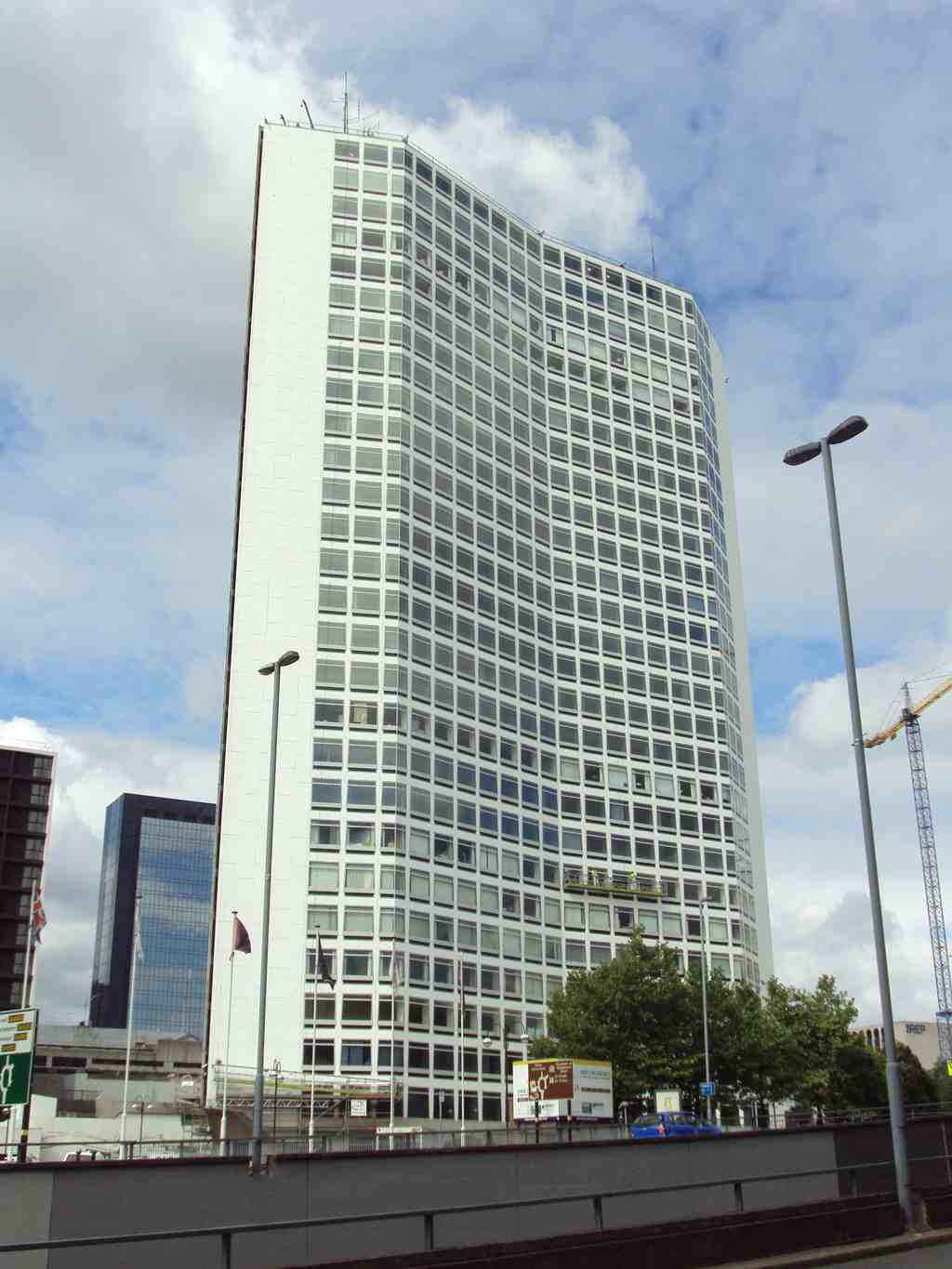
On your right, Alpha Tower is a tall rectangular slab of dark glass and pale concrete, with sharp vertical bands and a slightly offset service core that gives it a distinctive late-modern silhouette.
This is Birmingham’s media-age modernity in one clean gesture. Television had become glamour, technology, and civic bragging rights all at once... and modernity, apparently, needed a tower.
Alpha Tower opened as the headquarters of A-T-V, Associated Television, beside a new production complex called the A-T-V Centre. In the late nineteen sixties, I-T-V was preparing for colour broadcasts, and A-T-V’s old Aston studios had been designed for monochrome, meaning black-and-white only. So the company came here to build purpose-made colour studios off Broad Street, promoted at the time as Britain’s first purpose-built colour television studio.
If you glance at the image on your screen, you can see how the tower still reads as a self-contained statement, even after the rest of its campus disappeared. George Marsh, a Birmingham-born architect from Richard Seifert and Partners, designed it as a sleeker departure from the earlier Centre Point look he had helped shape in London.
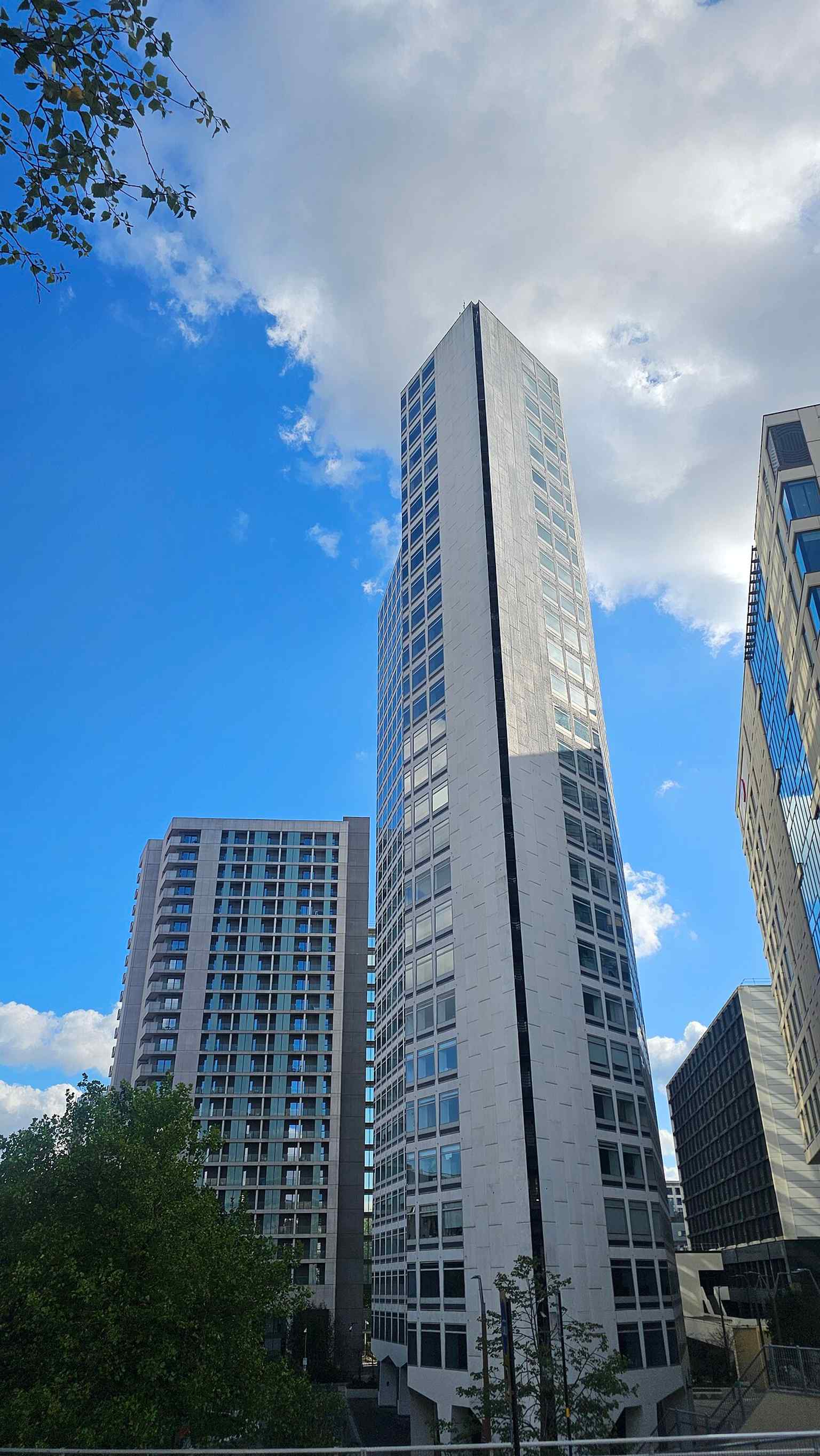
The original plan, unveiled in nineteen sixty-nine, aimed far higher. Developers imagined the Paradise Centre: shops, offices, a conference hall, an air terminal, a hotel, and a thirty-five-storey tower linked to the hotel in a zig-zag composition. Then reality arrived with paperwork. Objections from the General Post Office and the city council stalled things for three years, the scheme shrank to twenty-eight storeys, and the hotel vanished. A shorter companion tower was planned too, but never arrived.
That is the shift in Birmingham’s ambitions: not Victorian improvement in stone, but corporate futurism in glass, broadcast light, and boardroom confidence. At one hundred meters, Alpha still carries that mood. Even Cliff Richard used it for Take Me High in nineteen seventy-three, which feels exactly right.
The strange part is that this fragment survived. A-T-V closed in nineteen eighty-two, and the building became offices. In two thousand, planners allowed demolition of the old A-T-V Centre but specifically spared Alpha Tower. A campaign to protect it as a listed building, meaning legally protected for special historic interest, dragged on for years; after a real fight, it finally won Grade Two listed status in twenty fourteen.
By then it had been through a rough patch, falling from a sale at forty-two and a half million pounds to an asking price of ten and a quarter million, before new owners bought it for fourteen million in twenty fourteen and set about refurbishing it.
The grand future imagined here never fully arrived: no hotel, no air terminal, no second tower, just this one survivor, still upright and a little defiant. In about three minutes, we’ll continue to the Hall of Memory.





