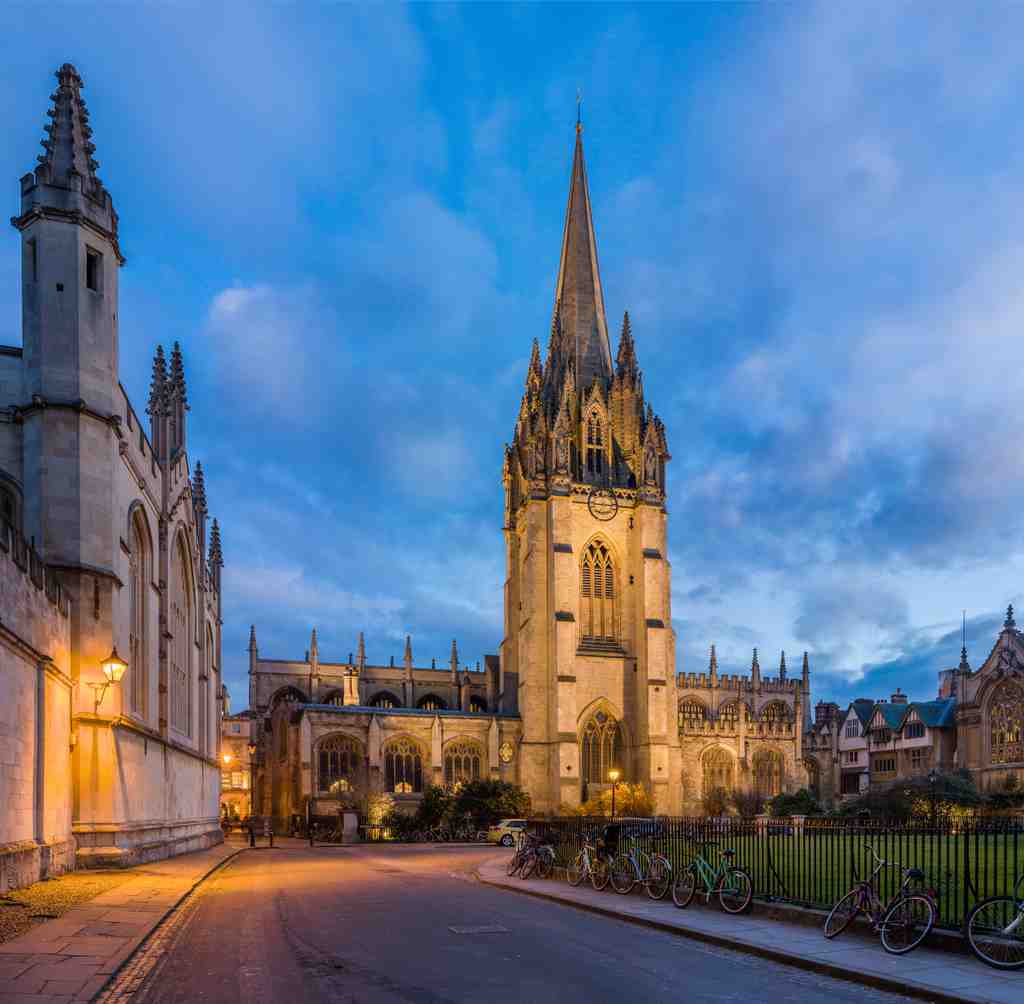
In front of you stands a pale stone church with a tall tapering spire, broad Gothic windows, and an extravagant porch twisted with spiral columns and a statue above the door.
This is St Mary the Virgin, and in a very real sense, this is where Oxford University first learned to be Oxford University. Long before colleges spread across the city, an Anglo-Saxon church stood here near the center of the old walled town, and by at least the mid-thirteenth century the university used this church as its meeting place, lecture hall, parliament, and degree venue... all tucked into one sacred building, which feels efficient and faintly chaotic.
Around thirteen twenty, the church gained a two-storey building beside the chancel, the space around the altar. Downstairs, university convocation met there; upstairs, books given by Thomas Cobham, Bishop of Worcester, formed the university’s first library. So before the Bodleian became the grand scholarly machine we know, Oxford’s books were starting out here, in much humbler quarters.
The church also tied itself closely to Oriel College through Adam de Brome, the rector who founded what became the college in the fourteen-twenties. He redirected church income to support it, which is a very Oxford kind of arrangement: prayer, property, and paperwork all shaking hands.
But St Mary’s also witnessed one of Oxford’s darkest scenes. In fifteen fifty-five, the trial of the Oxford Martyrs took place here: Latimer, Ridley, and then Cranmer, all charged with heresy. Inside, one pillar still preserves a cut-out ledge linked to Cranmer’s final appearance before his execution. He withdrew his recantations and declared that the hand which had signed them would burn first. It did.
Now look at the church’s south porch, the one facing the High Street. It is gloriously over the top: Baroque, meaning theatrical and full of movement, with spiral columns, a curling pediment, and a niche holding the Virgin and Child. If you want a closer look, check the image on your screen. In the sixteen thirties, puritans thought this porch looked suspiciously Roman Catholic, and they used it as evidence against Archbishop Laud at his trial. The statue still carries bullet marks from Cromwellian soldiers, which is one way to leave a review.
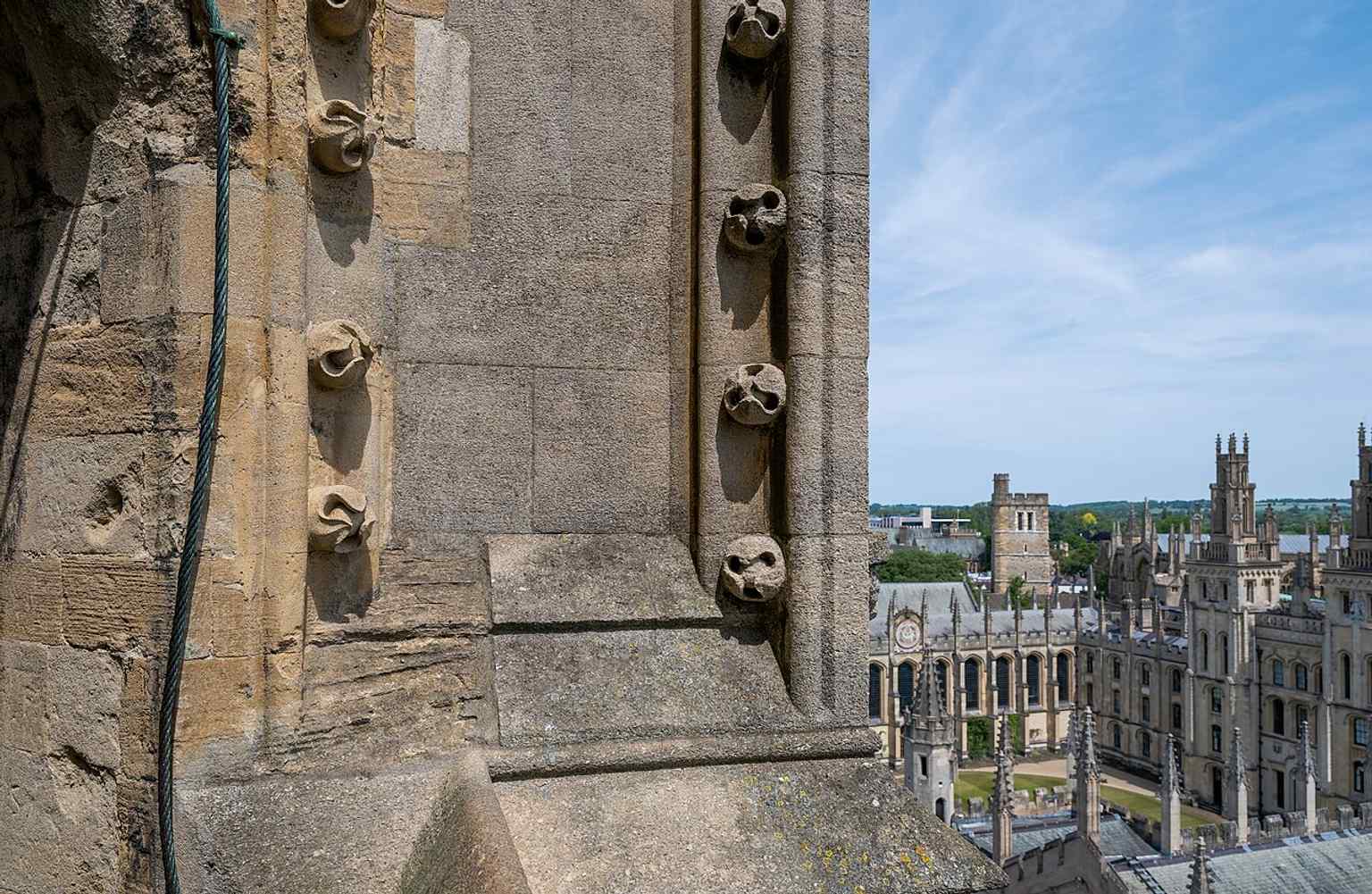
Lift your gaze to the tower and spire. The tower dates from around twelve seventy, and the spire followed in the thirteen twenties, bristling with pinnacles, gargoyles, and statues. Some historians call it one of the most beautiful spires in England, and for once that sort of claim doesn’t feel inflated. On your phone, image two gives you a fine close view of those details.
St Mary’s kept shaping ideas long after the Middle Ages. Later, John Wesley preached here and annoyed the university so thoroughly that he was never invited back. Then came John Henry Newman, and in eighteen thirty-three John Keble preached from the pulpit inside a sermon often seen as the start of the Oxford Movement, which tried to revive older Catholic spirituality within the Church of England.
If you want to go inside later, the church usually opens from nine thirty to five, and from noon to five on Sundays.
St Mary’s stands at the point where Oxford’s faith, scholarship, and argument all meet.
When you’re ready, continue on to University College for the next piece of the story.